$0.00
0

Data Matrix Barcode Labels: Symbology & Technical Guide

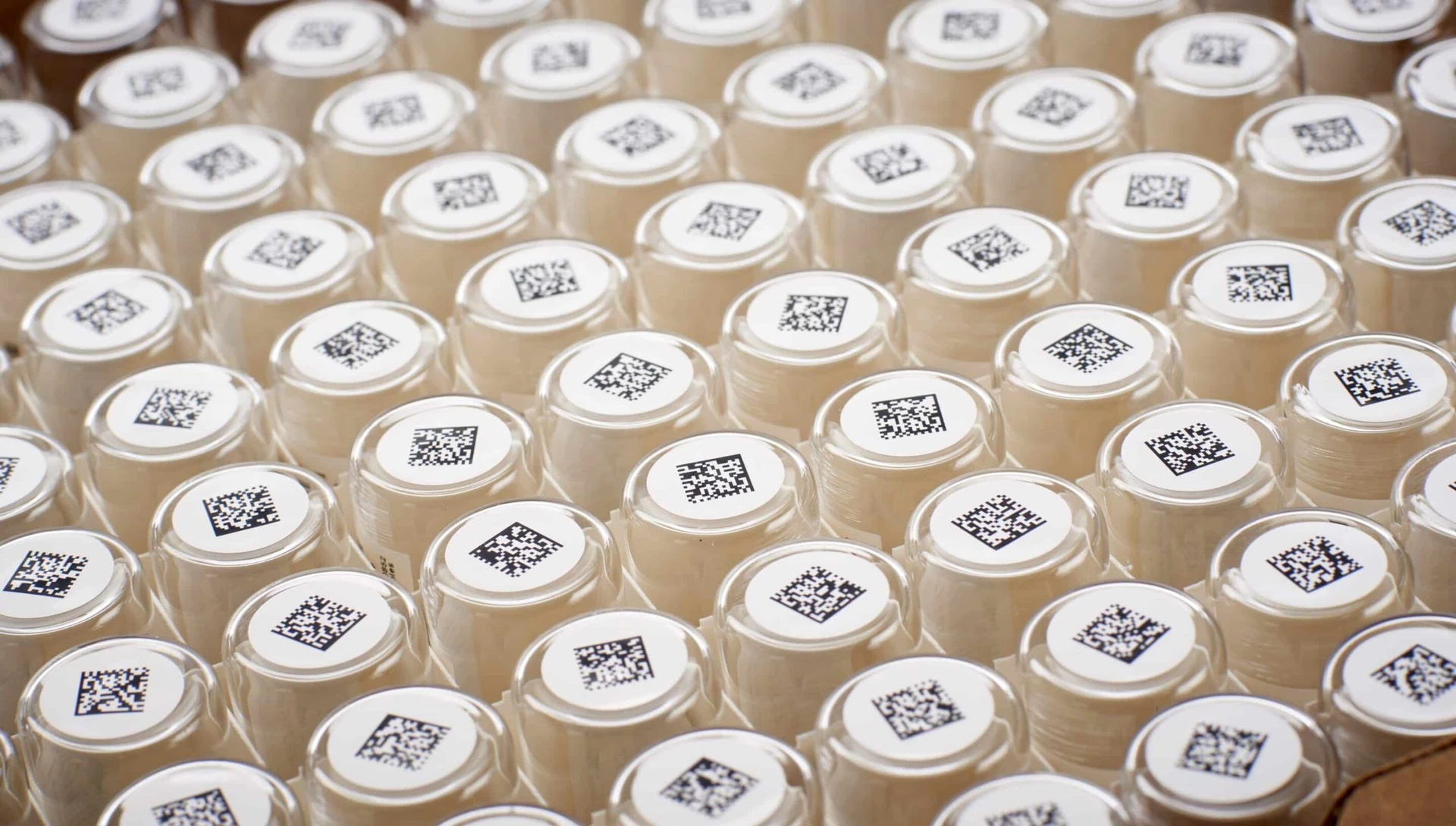
Organized Glass Vials

When space is limited but data can’t be compromised, Data Matrix barcode labels provide a compact, high-density solution. These 2D barcodes encode large amounts of information in remarkably small spaces, making them ideal for laboratory vials, printed circuit boards, medical devices, and other items where traditional linear barcodes simply don’t fit.

Unlike standard barcode labels, which rely on long linear bars to represent data, Data Matrix symbols use a grid of light and dark squares that can encode thousands of characters within a few millimeters. Their dense structure, combined with built-in error correction, allows reliable scanning even when the label is scratched, partially obscured, or applied to challenging surfaces.

For manufacturers, labs, and logistics providers, Data Matrix labels play a critical role in maintaining traceability, compliance, and data integrity. They’re used to mark everything from serialized medical tools to micro-sized electronic components—anywhere precision and permanence matter.

As labeling systems continue to evolve, understanding the structure, capacity, and print requirements of Data Matrix barcodes is essential for anyone designing or printing industrial barcode labels. This article explores how these symbols achieve such remarkable data density, how to size and print them correctly, and where they’re most valuable in modern identification workflows.

How Data Matrix Works: Modules, X-Dimension, and Structure

At its core, a Data Matrix barcode is a precise grid of tiny, square elements called modules. Each module represents a single bit of information—either dark (1) or light (0). These modules are arranged in a square or rectangular pattern and surrounded by a distinctive border that tells scanners how to locate, size, and interpret the code.

Two adjacent sides form a solid L-shaped finder pattern, which establishes the symbol’s orientation. The other two sides alternate light and dark squares, forming a timing pattern that defines the grid. This combination gives the scanner a visual “frame of reference,” enabling accurate decoding even when the label is printed at microscopic scales or applied to curved or reflective surfaces.

Every Data Matrix symbol also includes a quiet zone, an area of blank space—at least one module wide—around the symbol. Though often overlooked, the quiet zone is crucial: it isolates the code from background noise and ensures the scanner recognizes the symbol boundary cleanly. When designing barcode labels for dense layouts or small parts, maintaining this margin is one of the simplest ways to prevent read errors.

The X-dimension defines the physical size of each module, and it’s the key variable that connects digital encoding to print production. If a symbol is 20×20 modules and the X-dimension is 0.20 mm, the printed barcode will be 4 mm square, plus the quiet zone. Reducing the X-dimension makes the label smaller but also increases the demand on print resolution and substrate quality.

Choosing the right X-dimension depends on the printer’s dots per inch (DPI) and the scanning environment. For instance, at 600 DPI, a 0.20 mm module translates to roughly five printer dots—ideal for crisp edges and consistent reflectance contrast. Smaller modules risk edge bleed or insufficient resolution, which can lower verification grades and cause failed reads.

Understanding how these structural elements—modules, patterns, and dimensions—interact is the foundation for designing high-performance barcode labels that are compact, durable, and easily read across varied materials and environments.

Symbol Density, Capacity, and Encoding Efficiency

What makes Data Matrix barcode labels so remarkable is their ability to encode vast amounts of data within an exceptionally small area. A single symbol can hold anywhere from a few characters to several thousand—without sacrificing readability. This efficiency comes from the combination of high module density, smart data encoding, and advanced error correction built into the ECC 200 standard.

Each Data Matrix symbol consists of a specific number of rows and columns of modules, always forming an even-by-even grid. Common formats range from 10×10 modules (the smallest) up to 144×144 modules (the largest) for square symbols, with rectangular variants like 8×18 and 16×48 available for elongated label spaces. The number of available modules directly determines how much data the barcode can hold.

For example:

  • A 10×10 symbol can encode just a few dozen characters.
  • A 144×144 symbol can store up to 3,116 numeric digits, 2,335 alphanumeric characters, or 1,555 bytes of binary data.

The real secret to Data Matrix density lies in its encoding schemes. While traditional linear barcodes encode one character per symbol width, Data Matrix uses compact encoding modes such as ASCII, C40, Text, X12, EDIFACT, and Base 256. These modes group and compress characters to use fewer codewords per data unit. The symbol can even switch modes midstream to optimize space efficiency based on character type—essentially applying a built-in compression algorithm.

This modular encoding structure allows Data Matrix to remain highly scalable and versatile. You can encode long strings of alphanumeric data for traceability, short serial numbers for item-level identification, or binary data like configuration files for embedded systems.

In practical terms, this means Data Matrix labels can fit complex datasets—batch numbers, manufacturing dates, lot codes, or even URLs—onto labels that are only a few millimeters wide. When paired with precise printing and verification, this density enables reliable tracking and compliance in even the smallest available labeling real estate.

Reliability Through Error Correction

One of the greatest advantages of Data Matrix barcode labels is their built-in resilience. Even when part of the symbol is damaged, smudged, or missing, it can often still be decoded accurately. This reliability comes from ECC 200, the current Data Matrix standard that uses Reed–Solomon error correction to reconstruct lost or corrupted data.

Here’s how it works: every Data Matrix symbol contains not only the encoded data itself but also a series of mathematically derived “check” codewords. These codewords act like a backup system. If a few modules are unreadable—say the corner of a label is scratched or the print has faded—the scanner can use the remaining data and the error correction matrix to rebuild the missing information.

The larger the symbol, the more redundancy it contains. For example, a 144×144 symbol can correct errors across hundreds of modules, meaning the code can survive abrasion, partial obstruction, or even overprinting. This makes ECC 200 particularly valuable in industrial and laboratory environments, where labels might be exposed to heat, solvents, or rough handling.

Earlier generations of Data Matrix (like ECC 000–140) offered limited protection and are now considered obsolete. ECC 200, standardized under ISO/IEC 16022, introduced Reed–Solomon correction with interleaving—a technique that scatters data and error codewords evenly throughout the grid. This prevents localized damage from wiping out an entire portion of the message.

In practical use, error correction means less rework, fewer relabels, and more dependable data capture across the product lifecycle. A well-printed Data Matrix label can still decode even if up to 25–30% of the symbol is missing or degraded, depending on damage distribution and scanner quality.

For critical applications—such as medical device identification, blood sample tracking, or aerospace component marking—this level of fault tolerance ensures compliance and traceability even under harsh or unpredictable conditions.

Print Quality, Materials, and Verification Standards

Even the most efficient Data Matrix barcode label is only as reliable as the quality of its print. Because Data Matrix symbols rely on very fine module grids, small inconsistencies in printing, contrast, or substrate can dramatically affect readability. Achieving a high-grade code means engineering both the barcode and the label around precision, durability, and verification.

Print Resolution and the X-Dimension

The X-dimension—the width of each module—must align with the printer’s resolution. As a rule of thumb, each module should occupy at least 3–5 printer dots in both height and width for consistent edge definition.

  • A 300 dpi printer can produce modules as small as 0.20–0.25 mm.
  • A 600 dpi printer can drop that to 0.10–0.15 mm, ideal for micro-scale labels.

If modules are too small for the printer’s capability, ink or ribbon spread can blur the boundaries, lowering verification grades or creating unreadable “fill-in” areas. Precision thermal transfer printing is typically preferred for high-density barcode labels, especially when paired with resin ribbons that deliver sharp contrast and excellent durability.

Label Materials and Substrate Contrast

Surface quality and reflectance are equally critical. Matte or semi-gloss face stocks minimize glare and reflection, allowing scanners to detect clear transitions between light and dark modules.
Polyester and polypropylene labels with thermal transfer coatings are common for small-format Data Matrix labels, while high-heat or solvent-exposed environments may require topcoats, laminates, or metalized films. For curved surfaces—like test tubes or cables—select thinner, conformable materials to maintain flatness and scanner line of sight.

Verification and ISO Standards

Verification ensures printed symbols meet global readability criteria. For labels, ISO/IEC 15415 defines parameters such as:

  • Symbol contrast
  • Modulation and reflectance margin
  • Axial and grid nonuniformity
  • Fixed-pattern damage
  • Unused error correction

Direct part marks (DPM), like laser-etched codes, are evaluated under ISO/IEC TR 29158. The lowest of all measured parameters determines the final grade, with A or B grades typically required in regulated industries.

Consistent verification and correct print-to-material matching ensure every Data Matrix barcode label scans accurately—no matter how small, curved, or complex the application.

Applications and Use Cases

The combination of compact size, high data density, and exceptional reliability has made Data Matrix barcode labels indispensable across industries where space is limited but precision is critical. From micro-scale labware to industrial components, these symbols enable traceability in environments where other barcodes simply can’t fit.

Laboratories and Life Sciences

In laboratories and research environments, Data Matrix codes are used to track thousands of individual samples through complex workflows. Their small footprint allows full identification without obscuring the sample or interfering with optical sensors.

PCR labware—including strip tubes, divisible plates, and microtubes—illustrates this advantage perfectly. These containers are incredibly small, often only a few millimeters in diameter, leaving virtually no room for traditional barcode labels. A 2D Data Matrix label can encode sample IDs, lot numbers, and test parameters in a square only 3–5 mm wide while remaining machine-readable through frost, condensation, or curved surfaces.

For cryogenic or automated environments, Data Matrix codes maintain readability through thermal cycling, centrifugation, and robotic handling, ensuring sample integrity throughout the process.

Electronics and Semiconductor Manufacturing

In electronics, components are often marked before assembly using ultra-small Data Matrix codes—some less than a millimeter across. These codes store lot, wafer, or traceability data, enabling lifetime tracking of each component. The compact geometry and Reed–Solomon error correction make them readable even after soldering, coating, or reflow.

Medical Devices and Packaging

Regulated industries rely on Data Matrix for compliance with standards like the UDI (Unique Device Identification) system. Medical device housings, syringes, and ampoules are commonly labeled with permanent 2D codes for traceability from production to patient use.

Aerospace, Automotive, and Industrial Components

In manufacturing, Data Matrix ensures traceability on parts that experience heat, vibration, or wear. Barcode labels identify automotive parts through every process step, from assembly to maintenance.

In all these contexts, Data Matrix barcode labels excel where space, durability, and precision intersect—delivering full data integrity at micro scale without compromising on performance.

Best Practices and Design Tips

Even with the best encoding and materials, Data Matrix barcode labels demand precision in design and printing. These guidelines help ensure consistent readability, high verification grades, and long-term performance in demanding environments.

  • Maintain at least a 1× quiet zone.
    A full module-width margin isolates the symbol from background patterns and prevents misreads.
  • Match X-dimension to printer DPI.
    Each module should span at least three printer dots for crisp, distinct edges.
  • Use high-contrast color pairs.
    Black on white—or dark on light matte—maximizes reflectance difference for reliable scanning.
  • Avoid glossy or reflective finishes.
    Glare can obscure module boundaries and distort decoding, especially under angled lighting.
  • Verify symbols to ISO/IEC 15415.
    Target an A or B grade to guarantee readability in automated systems.
  • Keep modules square and evenly spaced.
    Uniform geometry maintains consistent timing patterns and reduces axial distortion.
  • Choose substrates for environment and curvature.
    Thin, conformable labels perform better on tubes, vials, and cables.
  • Select durable topcoats or laminates.
    Protection against abrasion, solvents, and heat preserves symbol contrast over time.
  • Avoid scaling or resizing symbols post-generation.
    Resize only by adjusting the X-dimension, not by image stretching.
  • Test with the actual scanner setup.
    Validation under real lighting, distance, and angle conditions prevents downstream read failures.

Implementing these practices early—during barcode design and print calibration—saves time, reduces labeling errors, and ensures every Data Matrix barcode label performs reliably in the field.

Conclusion: Why Density Drives Dependability

The strength of Data Matrix barcode labels lies in their balance of precision, density, and resilience. By encoding thousands of characters in just a few millimeters of space, they make it possible to identify and trace the smallest components, vials, and devices without compromising reliability. From PCR tubes in the lab to electronic microchips and medical instruments, these symbols preserve data integrity under the most demanding conditions.

Their modular design, optimized encoding efficiency, and powerful ECC 200 error correction ensure dependable readability—even when labels face abrasion, heat, or limited space. When paired with the right materials, print quality, and verification processes, Data Matrix becomes more than a barcode—it becomes the foundation of traceability and compliance across industries.

For organizations designing or printing high-density identification systems, understanding these fundamentals is key to success. Whether you’re labeling labware, electronics, or industrial parts, a well-engineered Data Matrix barcode label offers unmatched reliability in a compact footprint.

To explore how these codes fit into your broader identification strategy, visit our page on barcode labels for a deeper look at materials, printing methods, and design standards that elevate performance from the label up.

Continue Exploring Labeling Solutions

If you’re ready to take the next step, explore our most popular solutions:

0
    0
    Your Cart
    Your cart is emptyReturn to Shop

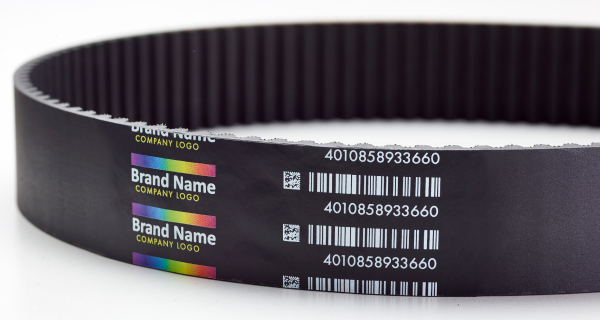
    High-impact belt branding with pre-printed films.

    Pre-printed belt marking films deliver bold, consistent branding and high-resolution graphics across repeat manufacturing applications. These solutions support detailed imagery, precise color matching, and uniform visual presentation for product lines requiring fixed branding, standardized identification, and elevated product appearance.

    Professionally printed high-resolution rubber belt branding films.

    Pre-printed belt marking films support more detailed and visually controlled designs than standard ribbon-based marking systems. These solutions enable complex graphics, consistent color reproduction, and elevated product presentation across repeat manufacturing applications.

    photorealistic graphics

    High-resolution printing supports detailed imagery, gradients, and complex visual elements beyond the capabilities of standard ribbon-based marking systems

    custom color matching

    Match specific brand colors and visual standards across belt product lines, packaging systems, and broader manufacturing identification programs

    consistent production

    Pre-printed films maintain uniform logos, layouts, and visual presentation across large production volumes and repeat manufacturing applications

    Pre-printed films are commonly used for permanent logos, product branding, belt sizes, standardized identifiers, and highly detailed visual designs. Advanced printing capabilities support precise color control, sharp graphic definition, and complex imagery that extends beyond standard ribbon-based marking.

    Print belt marking films with critical production data.

    Print-on-demand belt marking gives manufacturers the flexibility to apply critical production data directly within active manufacturing workflows. These systems support information that cannot be predefined, including slab location codes, manufacturer dates, lot information, production identifiers, and changing product data across belt runs and manufacturing environments.

    A simple setup can integrate real-time labeling directly into your workflow.

    durable films

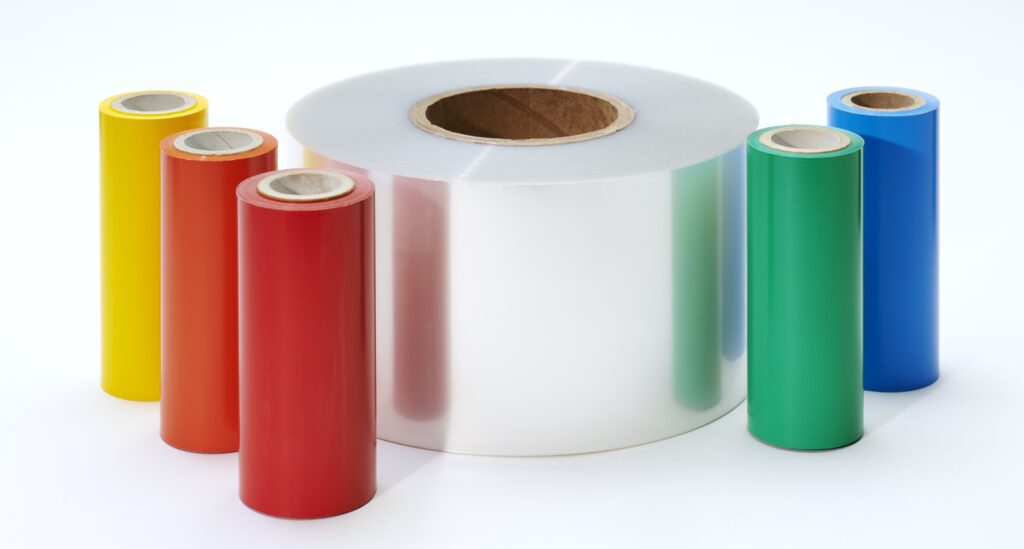
    Start with blank transfer films engineered for durable rubber belt marking.

    label software

    Create belt marking formats using label design and barcode software.

    compatible ribbons

    Use included thermal transfer ribbons to produce durable vibrant labels.

    industrial printers

    Use an industrial thermal transfer printer engineered for high duty cycles.

    Print-on-demand systems are designed for manufacturing environments where belt information changes continuously throughout production. Rather than relying on fixed inventory or pre-printed stock, these systems support dynamic marking requirements tied to production scheduling, traceability, and operational control.

    Reduce operational complexity with pre-printed labels.

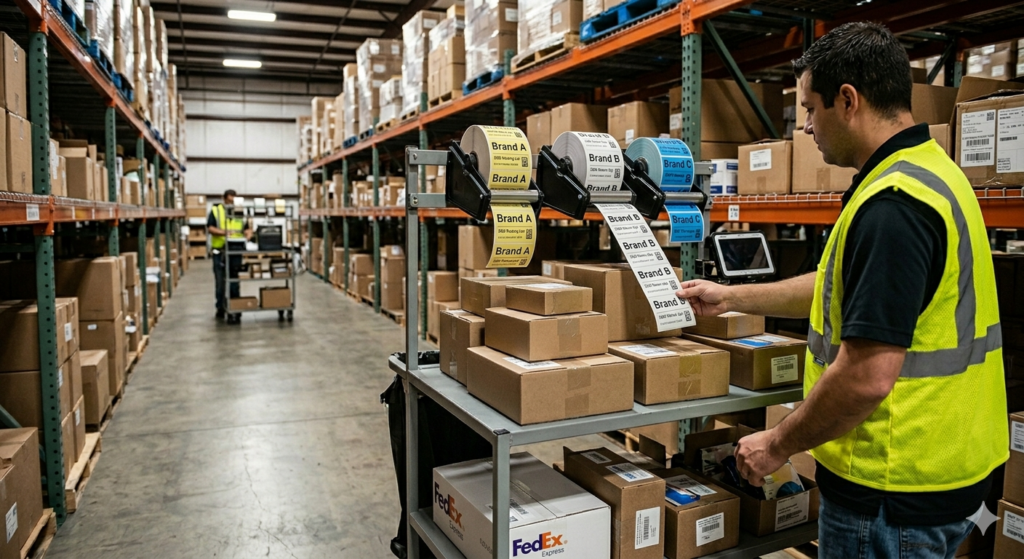
    Use pre-printed warehouse labels to apply location IDs, pallet labels, and sequential label sets without managing printing in-house. This path works best when your data is defined and your warehouse layout follows a structured system.

    A simple setup can integrate real-time labeling directly into your workflow.

    Plan your labeling system in advance, then receive labels ready to apply across your warehouse. This approach shifts the work from daily printing to upfront setup and production.

    consistency at scale

    Apply the same label formats, barcodes, and ID structures across racks, pallets, and storage locations without variation.

    efficient operations

    Eliminate the need for printers, ribbons, software, and label inventory by using labels that arrive ready to apply and scan.

    sequence management

    Use sequential beam labels and serialized label sets to maintain ordered location IDs and guarantee no duplicates.

    Use pre-printed labels when your warehouse layout is defined, your location IDs are established, and you need consistent labeling across large areas or multiple facilities. This approach supports structured storage systems, standardized pallet tracking, and efficient label rollout.

    Print labels when inventory data changes in real time.

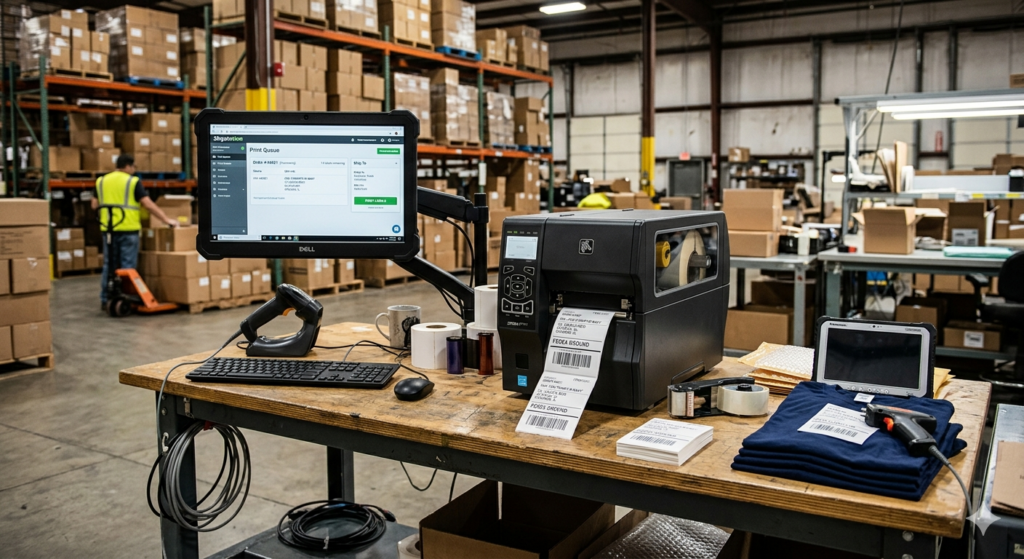
    Print warehouse labels in-house to create location IDs, pallet labels, and LPN labels as your warehouse changes. This path gives you direct control over how labels are created, updated, and applied across racks, bins, totes, and pallets.

    A simple setup can integrate real-time labeling directly into your workflow.

    durable labels

    Start with blank label stock engineered for racks, bins, totes, and pallets.

    label software

    Create warehouse label formats using label design and barcode software.

    compatible ribbons

    Use included thermal transfer ribbons to produce durable barcode labels.

    label printers

    Use a thermal transfer printer designed for warehouse label printing and daily use.

    Use print-on-demand labels when your warehouse layout changes, your team manages location IDs internally, or you need labels immediately without waiting on production. This approach supports flexible workflows, evolving storage systems, and real-time pallet and container tracking.

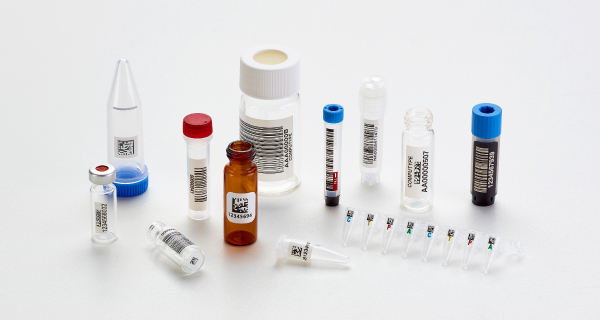
    Receive pre-barcoded tubes immediately ready-to-use.

    Receive tubes and vials with identifiers already applied through direct marking or integrated labeling. Eliminate labeling steps entirely while ensuring durable, consistent identification across storage, handling, and laboratory workflows.

    Pre-barcoded tubes for extreme durability and precision placement.

    Pre-barcoded labware removes labeling from your workflow entirely. Tubes arrive ready to use with verified identifiers, supporting faster processing, reduced handling, and consistent sample identification across storage and laboratory operations.

    consistency at scale

    Use pre-verified barcodes and markings to ensure consistent, accurate sample identification across all tubes and batches.

    efficient lab management

    Eliminate labeling steps and reduce manual handling during sample collection, processing, and storage workflows.

    labware prep™ services

    Receive labware sorted, packaged, and prepared to match your workflow, including options like tare weighing and kit assembly.

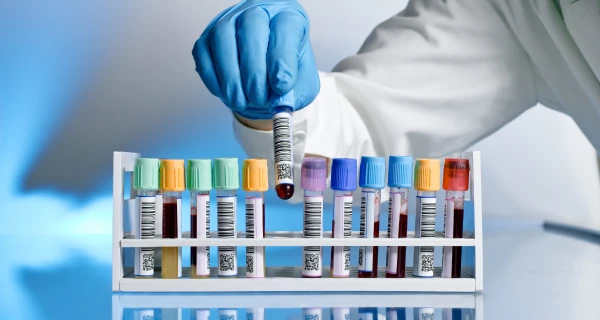
    Pre-barcoded labware fits high-throughput environments where labeling becomes a bottleneck or source of error. This includes biobanks managing large sample collections, clinical labs processing high volumes of patient samples, and research or CRO environments running automated or repeatable workflows where speed, consistency, and reduced handling drive efficiency and data integrity.

    Order pre-printed tube labels for guaranteed accuracy.

    Get tube labels professionally printed with controlled data, advanced converting, and durable materials. Eliminate in-house printing while ensuring every label meets performance requirements for laboratory use, including chemical exposure, handling, and storage conditions.

    Professionally printed laboratory tube labels for custom, sequential labels.

    Pre-printed labeling combines controlled printing, advanced converting, and durable materials to deliver consistent, ready-to-use tube labels. This approach removes variability from in-house printing and ensures every label meets your requirements for data accuracy and performance.

    unique ids

    Receive pre-printed labels with guaranteed unique barcode sequences, controlled serialization, and validated data across batches and production runs.

    custom design

    Use custom colors to organize samples, differentiate workflows, and improve visual identification across racks, boxes, and storage systems.

    durable finishing

    Use engineered label constructions with precoats and topcoats that improve resistance to chemicals, moisture, and routine laboratory handling.

    Pre-printed labeling fits laboratories that manage high volumes of consistent samples and require controlled, repeatable identification. This includes clinical labs processing patient samples, diagnostic labs running standardized assays, and research labs preparing large batches of tubes for studies or long-term storage where data does not change.

    Print tube labels on demand with real-time data.

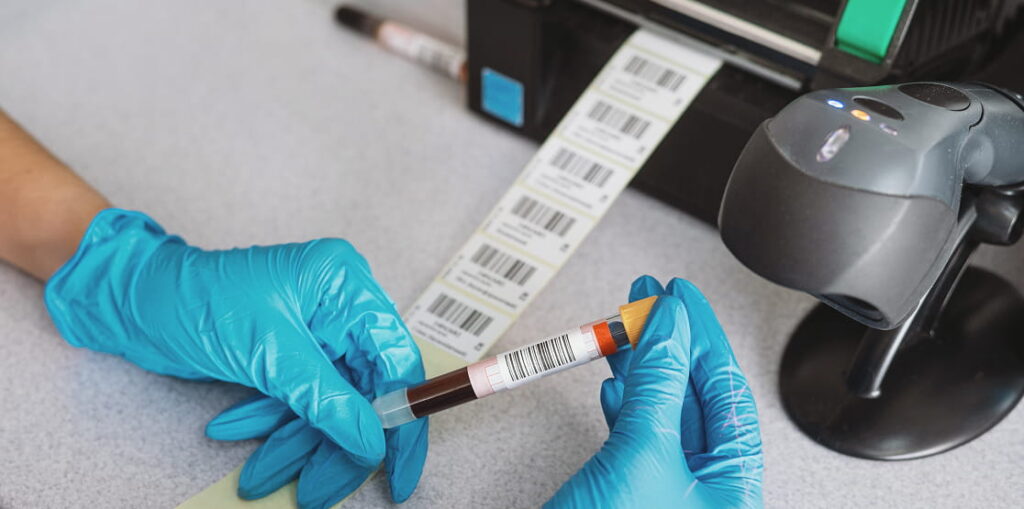
    Print tube labels as needed using live data from laboratory systems. Generate labels during sample collection, aliquoting, or processing, with unique identifiers, timestamps, and variable data applied at the point of use. This approach supports workflows where sample data changes frequently or requires immediate, accurate identification.

    A simple setup can integrate real-time labeling directly into your workflow.

    Set up a complete labeling workflow using the right materials and equipment to print and apply labels directly during laboratory processes.

    durable labels

    Start with blank label stock engineered for small diameter tubes and vials.

    label printers

    Print high-resolution barcodes and text for small-format tube labels.

    compatible ribbons

    Use included thermal transfer ribbons to produce durable barcode labels.

    tube labelers

    Integrate tube label applicators for automated print-and-apply labeling.

    Print-on-demand labeling fits laboratories that generate or modify sample data in real time. This includes research labs, clinical labs, and diagnostic environments where samples are collected, processed, and labeled on demand, and where workflows require immediate identification without waiting for pre-printed labels.

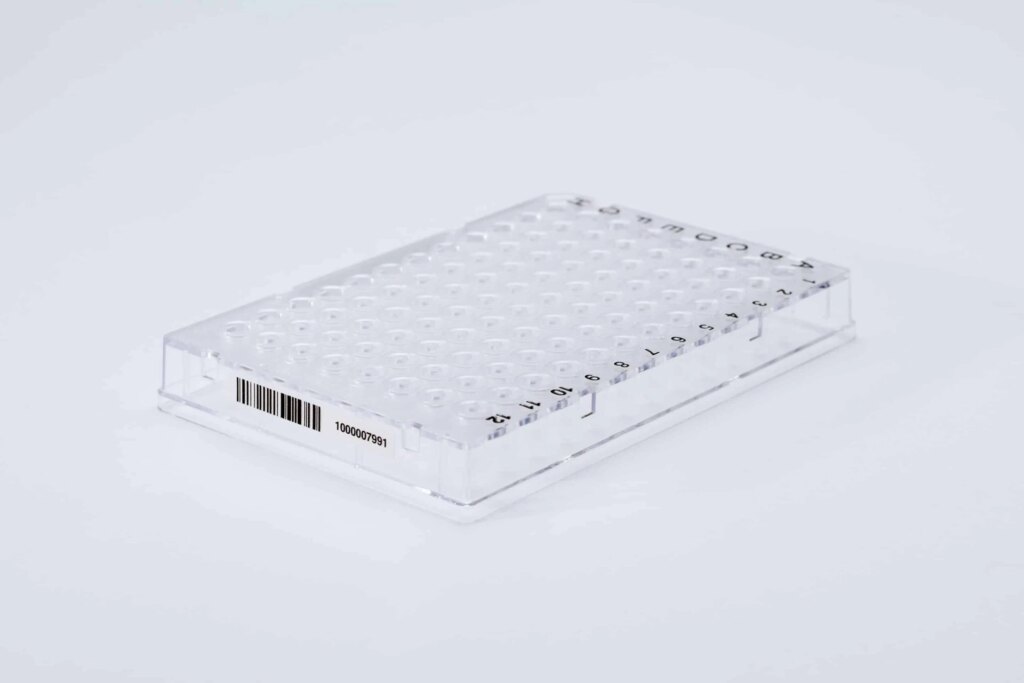
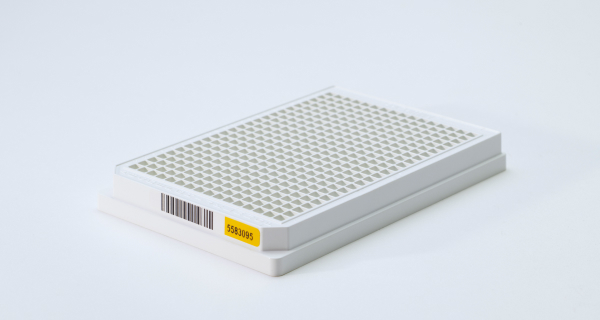
    Use pre-barcoded microplates for ready-to-use identification.

    Receive microplates with identifiers already applied, eliminating labeling steps during plate setup and processing. Ensure consistent, durable identification across assays, screening, and storage while reducing manual handling and improving workflow efficiency.

    Pre-barcoded microplates for ultimate laboratory efficiency.

    Pre-barcoded microplates arrive ready to use with verified identifiers applied before delivery. This approach removes labeling from your workflow and ensures consistent identification across plate handling, processing, and storage environments.

    laboratory efficiency

    Eliminate labeling steps during plate setup, loading, and processing workflows.

    consistent identification

    Use pre-verified plate IDs to maintain accuracy across batches and screening runs.

    integrated services

    Receive plates sorted, kitted, or prepared to match assay workflows and laboratory processes.

    Pre-barcoded microplates fit high-throughput environments where plates move rapidly through automated workflows and labeling can create delays or variability. This includes automated screening facilities, compound and plate libraries, and CROs running large-scale studies, as well as core labs managing shared plate resources where speed, consistency, and reduced handling drive efficiency and improve data integrity.

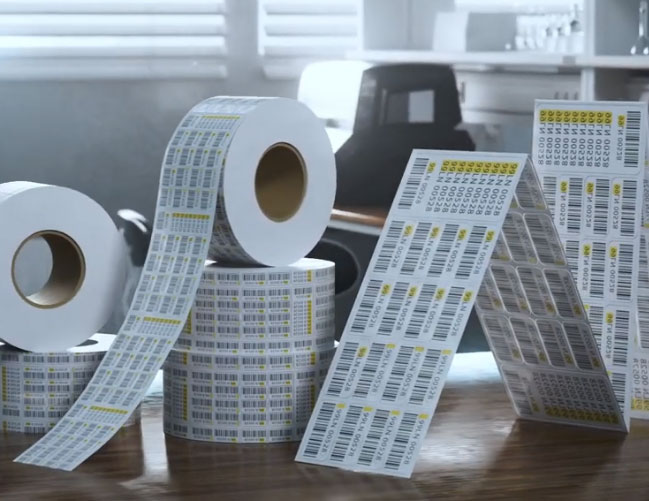
    Order pre-printed microplate labels with consistent accuracy.

    Get microplate labels professionally printed with controlled data, advanced converting, and durable materials. Ensure consistent plate identification across batches while eliminating in-house printing and reducing variability in labeling for assays, screening, and high-throughput workflows.

    Professionally printed custom microplate labels.

    Pre-printed plate labels combine controlled printing, advanced converting, and durable materials to deliver consistent, ready-to-use identification. This approach ensures every plate label meets requirements for data accuracy, layout consistency, and performance across handling and processing.

    unique ids

    Receive pre-printed plate labels with guaranteed unique IDs, controlled sequencing, and validated data across batches and runs.

    custom design

    Use color coding to differentiate assays, plate types, or workflows and improve visual organization across plate libraries.

    durable finishing

    Use engineered label constructions that resist chemicals, handling, and environmental exposure during plate processing and storage.

    Pre-printed labeling fits laboratories that run standardized plate workflows with fixed data structures. This includes screening labs running standardized assays, diagnostic labs processing consistent plate formats, and research environments where plate layouts and identifiers remain consistent across runs.

    Print microplate labels on demand with real-time data.

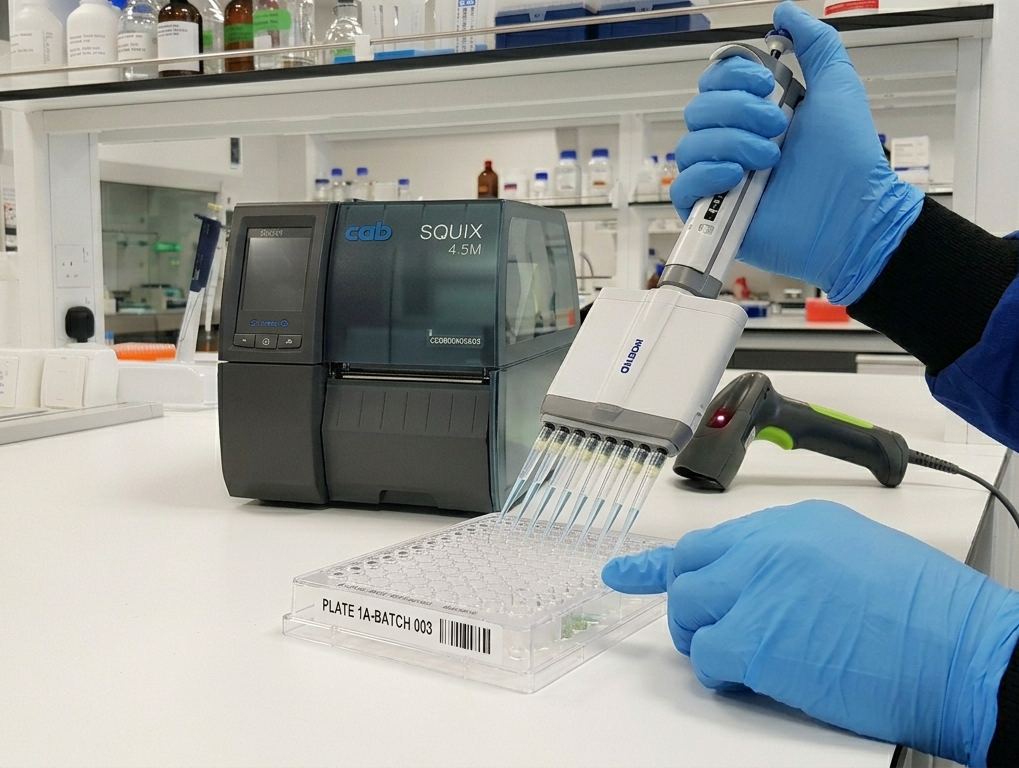
    Print microplate labels as needed using live data from laboratory systems. Generate labels during plate setup, sample loading, or assay preparation, with well IDs, plate IDs, and variable data applied at the point of use. This approach supports workflows where plate data changes frequently or requires immediate, accurate identification.

    A simple setup can integrate real-time labeling directly into your workflow.

    durable labels

    Blank plate labels designed for small formats, flat surfaces, and secure adhesion on plates.

    label printers

    Print high-resolution barcodes and text for plate IDs and sample tracking.

    compatible ribbons

    Thermal transfer ribbons produce durable images resistant to chemicals, moisture, and handling.

    microplate labelers

    Apply labels consistently to plates during setup or automated workflows.

    Print-on-demand labeling fits laboratories that generate or update plate data in real time. This includes screening labs, genomics workflows, and assay development environments where plates are created, modified, and labeled during processing, and where accurate, immediate identification is required.

    Print blood bag labels at collection points.

    Print blood bag labels as needed using live data from blood bank systems. Generate labels during collection, component processing, or labeling steps, with donation identification numbers, product codes, and variable data applied at the point of use. This approach supports workflows where blood data updates in real time and requires immediate, accurate identification.

    A simple setup can integrate real-time labeling directly into your workflow.

    Set up a complete labeling workflow using the right materials and equipment to print and apply labels directly during blood collection, component processing, and blood bank handling workflows.

    durable labels

    Start with blank label stock engineered for flexible PVC blood bags.

    label printers

    Print high-resolution barcodes and text for complex blood label layouts.

    compatible ribbons

    Use included thermal transfer ribbons to produce durable barcode labels.

    label software

    Integrate barcode software to generate ISBT 128 labels and DIN data.

    Print-on-demand labeling fits blood banks and collection centers that generate or update donation data in real time. This includes blood collection sites, processing labs, and transfusion services where blood bags are labeled on demand, and workflows require immediate, accurate identification without relying on pre-printed labels.

    Control blood bag labeling with pre-printed formats.

    Get blood bag labels professionally printed with controlled data, advanced converting, and durable materials. Eliminate in-house printing while ensuring every label meets performance requirements for blood bank use, including handling, cold storage, and transfusion.

    Guarantee no duplicates with professionally printed blood bag labels.

    Pre-printed labeling combines controlled printing, advanced converting, and durable materials to deliver consistent, ready-to-use blood bag labels. This approach removes variability from in-house printing and ensures every label meets requirements for DIN accuracy, barcode performance, and reliable identification across blood bank workflows.

    consistency at scale

    Receive pre-printed labels with guaranteed unique DIN sequences, controlled serialization, and validated data across batches and production runs.

    accurate din formats

    Maintain consistent DIN formats to ensure accurate identification across blood bags, segments, and associated components.

    durable finsihing

    Use engineered label constructions designed to resist edge lift, moisture, and routine handling, helping maintain adhesion and readability throughout blood collection.

    Pre-printed labeling fits blood banks and collection centers that manage high volumes of donations and require controlled, repeatable identification. This includes blood collection sites, processing facilities, and transfusion services where standardized labeling, consistent DIN assignment, and stable data support efficient, validated workflows without frequent changes.

    Support accurate workflows with real-time labeling.

    In laboratory environments, data often isn’t final until the last moment—at the bench, at the instrument, or during sample handling. Printing labels on demand helps ensure each tube or vial reflects the most accurate information, while fitting naturally into the way your work actually happens.

    Support accurate workflows with real-time labeling.

    In laboratory environments, data often isn’t final until the last moment—at the bench, at the instrument, or during sample handling. Printing labels on demand helps ensure each tube or vial reflects the most accurate information, while fitting naturally into the way your work actually happens.

    A simple setup can integrate real-time labeling directly into your workflow.

    In laboratory environments, data often isn’t final until the last moment—at the bench, at the instrument, or during sample handling. Printing labels on demand helps ensure each tube or vial reflects the most accurate information, while fitting naturally into the way your work actually happens.

    compatible ribbons

    Compatible resin ribbons ensuring clear, durable print for barcodes and text

    compatible ribbons

    Compatible resin ribbons ensuring clear, durable print for barcodes and text

    In laboratory environments, data often isn’t final until the last moment—at the bench, at the instrument, or during sample handling. Printing labels on demand helps ensure each tube or vial reflects the most accurate information, while fitting naturally into the way your work actually happens.

    Support accurate workflows with real-time labeling.

    In laboratory environments, data often isn’t final until the last moment—at the bench, at the instrument, or during sample handling. Printing labels on demand helps ensure each tube or vial reflects the most accurate information, while fitting naturally into the way your work actually happens.

    A simple setup can integrate real-time labeling directly into your workflow.

    compatible ribbons

    Compatible resin ribbons ensuring clear, durable print for barcodes and text

    compatible ribbons

    Compatible resin ribbons ensuring clear, durable print for barcodes and text

    compatible ribbons

    Compatible resin ribbons ensuring clear, durable print for barcodes and text

    compatible ribbons

    Compatible resin ribbons ensuring clear, durable print for barcodes and text

    In laboratory environments, data often isn’t final until the last moment—at the bench, at the instrument, or during sample handling. Printing labels on demand helps ensure each tube or vial reflects the most accurate information, while fitting naturally into the way your work actually happens.

    Support accurate workflows with real-time labeling.

    In laboratory environments, data often isn’t final until the last moment—at the bench, at the instrument, or during sample handling. Printing labels on demand helps ensure each tube or vial reflects the most accurate information, while fitting naturally into the way your work actually happens.

    A simple setup can integrate real-time labeling directly into your workflow.

    In laboratory environments, data often isn’t final until the last moment—at the bench, at the instrument, or during sample handling. Printing labels on demand helps ensure each tube or vial reflects the most accurate information, while fitting naturally into the way your work actually happens.

    durable labels

    Durable labels that stay attached through handling, storage, or cryogenic conditions

    compatible ribbons

    Compatible resin ribbons ensuring clear, durable print for barcodes and text

    reliable printer

    Compact, consistent, durable thermal transfer printing at the point of use

    label software

    Label management software to format labels and connect to sample data or LIMS

    In laboratory environments, data often isn’t final until the last moment—at the bench, at the instrument, or during sample handling. Printing labels on demand helps ensure each tube or vial reflects the most accurate information, while fitting naturally into the way your work actually happens.

    Request a quote

    Take advantage of our volume discounts for bulk orders. Reach out to us for a personalized quote tailored to your needs.

    "*" indicates required fields
    This field is for validation purposes and should be left unchanged.