$0.00
0

Barcodes serve as essential tools for optimizing operational efficiency across diverse industries. These unique identifiers, encoding information into parallel lines, have revolutionized inventory management, asset tracking, and data collection processes. However, traditional barcode systems encounter a fundamental limitation – their inherently single-use nature.

The concept of single-use arises from the unique identification function of barcodes. Once a barcode is scanned, its utility diminishes, rendering the associated product effectively limited to a single transaction or use. This constraint presents significant challenges, particularly in industries reliant on consumable goods, where the single-use nature of barcodes can result in inefficiencies and increased costs.

For nearly five decades, Computype has spearheaded innovations in barcode solutions, creating change and enhancing the way industries track and manage their assets. Now, standing on the cusp of a new era, we introduce a groundbreaking advancement: Virtual Barcodes. This proprietary technology represents a paradigm shift in asset tracking, offering organizations unprecedented flexibility, efficiency, and accuracy in managing their physical assets.

In this article, we delve into the innovative realm of virtual barcodes, exploring how this emerging technology addresses the limitations inherent in traditional barcode systems. We invite you to explore the limitless possibilities it offers for revolutionizing asset management practices. From durable barcode labeling solutions to advanced tracking software, each component of the virtual barcode ecosystem plays a crucial role in unlocking new efficiencies and driving organizational success.

What is a virtual barcode?

A virtual barcode is a digital representation of a unique physical identifier, offering a sophisticated solution to the limitations inherent in traditional barcode systems. Unlike physical barcodes, which are static and tied to a single use, virtual barcodes possess dynamic capabilities, enabling them to adapt and evolve over time.

At its core, a virtual barcode functions as a digital stand-in for a physical asset’s unique identifier. A single product may accumulate hundreds of virtual barcodes throughout its lifecycle, each representing a distinct cycle of usage. However, the product retains only one physical barcode and numeric ID, which serve as immutable identifiers for the physical product. When a product enters a new cycle, a new virtual barcode is generated, associated with the same physical barcode.

Virtual barcodes are transient markers, with each new cycle receiving a new virtual barcode. This distinction ensures clarity and continuity in asset tracking, even as products undergo multiple iterations of use.

For instance, let’s consider a storage box with the numeric identifier “80001234.” Upon its introduction into the system, it is assigned a virtual barcode, such as “8000123401,” marking the commencement of its first cycle. Throughout this cycle, the box is utilized, moved, and its activity meticulously tracked under the umbrella of the virtual barcode “8000123401.” Subsequent cycles usher in new virtual barcodes, such as “8000123402” and beyond, each encapsulating a discrete phase of the asset’s usage.

The beauty of virtual barcodes lies in their ability to facilitate asset reuse while preserving comprehensive historical tracking. Despite transitioning through multiple cycles, the physical asset remains unchanged, identified by its enduring physical barcode. Meanwhile, the virtual barcodes meticulously capture each cycle’s activity, ensuring data integrity and streamlined asset management.

Implementing a virtual barcode solution.

Implementing a virtual barcode solution requires a cohesive integration of hardware, software, and operational protocols. At the hardware level, traditional barcode scanners and printers remain important components, facilitating the initial identification and labeling of physical assets. These physical barcodes serve as the foundation upon which virtual barcodes are built, establishing a tangible link between the digital and physical realms.

While some adhesive barcode labels can withstand multiple years of use, certain applications may require a more permanent solution. In such cases, advanced barcoding and marking technologies offer innovative solutions to ensure the longevity and permanence of barcode labels. Techniques such as cured inks, ceramic bonding, laser etching, and other cutting-edge methods enable the direct marking of barcodes onto the surface of the product itself, eliminating the risk of label degradation or detachment over time.

Once the physical barcode is applied, the software will facilitate the check-in process and initiate the virtual barcode cycles.

Explaining Virtual Barcode Cycles

Virtual barcode cycles are distinct phases of usage that allow for comprehensive tracking and management of physical assets over time. When a product is initially entered into the system, the user sets the maximum number of cycles it can undergo. For example, if a physical asset is designated for reuse 100 times, this limit is established within the tracking software.

Throughout its lifecycle, the product progresses through multiple cycles, each represented by a unique virtual barcode. As the product moves from one cycle to the next, the tracking software monitors the cycle count. When a cycle reaches its designated limit, typically set by the user upon initial entry, the software deactivates the product, ensuring that it is not reused beyond its predetermined threshold.

For instance, if the previous cycle reached cycle 100, indicating the maximum allowed usage, the software will deactivate the product and refrain from generating a new virtual barcode for subsequent cycles. Conversely, if the cycle count is below the maximum limit, the software generates a new virtual barcode to initiate the next cycle of usage.

By implementing this cycle-based approach, organizations can effectively manage the lifespan of their physical assets, ensuring optimal utilization while maintaining adherence to predefined usage limits. This proactive approach enhances efficiency, minimizes operational risks, and promotes sustainable asset management practices.

How to manage virtual barcodes with asset tracking software.

Managing virtual barcodes with asset tracking software is essential for ensuring seamless integration, accurate data capture, and efficient asset management processes. Powered by atma.io by Avery Dennison, specialized tracking software, such as our LabTrackâ„¢ Software, provides organizations with the tools and capabilities to maximize the potential of virtual barcodes in their asset management workflows.

At its core, the tracking software offers comprehensive functionality to track item stock, monitor shipping logistics, manage storage conditions, document item history, and much more. This end-to-end visibility enables organizations to gain precise insights into their inventory, facilitating informed decision-making and proactive resource allocation.

Upon scanning a virtual barcode, users gain instant access to a wealth of information pertaining to the associated asset, including its history, current status, and relevant metadata. The software platform provides real-time information on the product’s current location, ensuring that users can monitor its movement and status at any given time. This visibility extends to the product’s history of movement, enabling users to track its journey through various workflows, locations, and interactions.

A key feature of our software is its ability to reconcile digital and physical barcodes seamlessly, mitigating the risk of confusion or discrepancies. Through advanced algorithms and intuitive user interfaces, users can effortlessly navigate between digital records and physical assets, ensuring accuracy and reliability in asset tracking processes.

Moreover, the tracking software serves as a centralized hub of data, seamlessly integrating with users’ existing platforms to ensure a cohesive and synchronized approach to asset management. By consolidating data from various sources into a unified interface, the software eliminates silos and streamlines operations, enhancing efficiency and productivity across the organization.

In essence, the successful implementation of a virtual barcode solution hinges on the seamless integration of hardware and software components, supported by robust operational protocols. By leveraging the combined power of physical and virtual barcodes, organizations can revolutionize their asset management practices, driving efficiency, transparency, and innovation across their operations.

Moreover, the tracking software serves as a centralized hub of data, seamlessly integrating with users’ existing platforms to ensure a cohesive and synchronized approach to asset management. By consolidating data from various sources into a unified interface, the software eliminates silos and streamlines operations, enhancing efficiency and productivity across the entire organization.

In essence, the successful implementation of a virtual barcode solution hinges on the seamless integration of hardware and software components, supported by robust operational protocols.

By leveraging the combined power of physical and virtual barcodes, organizations can revolutionize their asset management practices, driving efficiency, transparency, and innovation across their operations.

In conclusion, the advent of virtual barcode technology marks a pivotal moment in the evolution of asset management. By transcending the limitations of traditional barcodes, virtual barcodes offer organizations unparalleled flexibility, efficiency, and accuracy in tracking their physical assets. With the seamless integration of durable barcode labeling solutions and advanced tracking software, powered by platforms like atma.io by Avery Dennison, organizations can unlock new levels of visibility, control, and productivity.

Furthermore, virtual barcodes play a crucial role in supporting sustainability efforts by enabling the reuse of traditionally single-use items without compromising data and tracking capabilities. This innovative approach not only streamlines asset management processes but also contributes to reducing waste and environmental impact.

As industries continue to embrace the potential of virtual barcodes, we envision a future where asset management practices are streamlined, transparent, and data-driven. By harnessing the power of innovative technologies and leveraging the expertise of industry leaders like Computype, organizations can embark on a journey towards operational excellence and sustained competitive advantage.

At Computype, we remain committed to pushing the boundaries of innovation and empowering our customers to thrive in an increasingly complex business environment. With Virtual Barcodes, the possibilities are limitless. Join us as we pave the way for a new era of asset management excellence, one barcode at a time.

What is a Virtual Barcode? Advancements in Tracking Technology

Barcodes serve as essential tools for optimizing operational efficiency across diverse industries. These unique identifiers, encoding information into parallel lines, have revolutionized inventory management, asset tracking, and data collection processes. However, traditional barcode systems encounter a fundamental limitation – their inherently single-use nature.

The concept of single-use arises from the unique identification function of barcodes. Once a barcode is scanned, its utility diminishes, rendering the associated product effectively limited to a single transaction or use. This constraint presents significant challenges, particularly in industries reliant on consumable goods, where the single-use nature of barcodes can result in inefficiencies and increased costs.

For nearly five decades, Computype has spearheaded innovations in barcode solutions, creating change and enhancing the way industries track and manage their assets. Now, standing on the cusp of a new era, we introduce a groundbreaking advancement: Virtual Barcodes. This proprietary technology represents a paradigm shift in asset tracking, offering organizations unprecedented flexibility, efficiency, and accuracy in managing their physical assets.

In this article, we delve into the innovative realm of virtual barcodes, exploring how this emerging technology addresses the limitations inherent in traditional barcode systems. We invite you to explore the limitless possibilities it offers for revolutionizing asset management practices. From durable barcode labeling solutions to advanced tracking software, each component of the virtual barcode ecosystem plays a crucial role in unlocking new efficiencies and driving organizational success.

What is a virtual barcode?

A virtual barcode is a digital representation of a unique physical identifier, offering a sophisticated solution to the limitations inherent in traditional barcode systems. Unlike physical barcodes, which are static and tied to a single use, virtual barcodes possess dynamic capabilities, enabling them to adapt and evolve over time. 

At its core, a virtual barcode functions as a digital stand-in for a physical asset’s unique identifier. A single product may accumulate hundreds of virtual barcodes throughout its lifecycle, each representing a distinct cycle of usage. However, the product retains only one physical barcode and numeric ID, which serve as immutable identifiers for the physical product. When a product enters a new cycle, a new virtual barcode is generated, associated with the same physical barcode.

Virtual barcodes are transient markers, with each new cycle receiving a new virtual barcode. This distinction ensures clarity and continuity in asset tracking, even as products undergo multiple iterations of use.

For instance, let’s consider a storage box with the numeric identifier “80001234.” Upon its introduction into the system, it is assigned a virtual barcode, such as “8000123401,” marking the commencement of its first cycle. Throughout this cycle, the box is utilized, moved, and its activity meticulously tracked under the umbrella of the virtual barcode “8000123401.” Subsequent cycles usher in new virtual barcodes, such as “8000123402” and beyond, each encapsulating a discrete phase of the asset’s usage.

The beauty of virtual barcodes lies in their ability to facilitate asset reuse while preserving comprehensive historical tracking. Despite transitioning through multiple cycles, the physical asset remains unchanged, identified by its enduring physical barcode. Meanwhile, the virtual barcodes meticulously capture each cycle’s activity, ensuring data integrity and streamlined asset management.

Implementing a virtual barcode solution.

Implementing a virtual barcode solution requires a cohesive integration of hardware, software, and operational protocols. At the hardware level, traditional barcode scanners and printers remain important components, facilitating the initial identification and labeling of physical assets. These physical barcodes serve as the foundation upon which virtual barcodes are built, establishing a tangible link between the digital and physical realms.

While some adhesive barcode labels can withstand multiple years of use, certain applications may require a more permanent solution. In such cases, advanced barcoding and marking technologies offer innovative solutions to ensure the longevity and permanence of barcode labels. Techniques such as cured inks, ceramic bonding, laser etching, and other cutting-edge methods enable the direct marking of barcodes onto the surface of the product itself, eliminating the risk of label degradation or detachment over time.

Once the physical barcode is applied, the software will facilitate the check-in process and initiate the virtual barcode cycles.

Explaining Virtual Barcode Cycles

Virtual barcode cycles are distinct phases of usage that allow for comprehensive tracking and management of physical assets over time. When a product is initially entered into the system, the user sets the maximum number of cycles it can undergo. For example, if a physical asset is designated for reuse 100 times, this limit is established within the tracking software.

Throughout its lifecycle, the product progresses through multiple cycles, each represented by a unique virtual barcode. As the product moves from one cycle to the next, the tracking software monitors the cycle count. When a cycle reaches its designated limit, typically set by the user upon initial entry, the software deactivates the product, ensuring that it is not reused beyond its predetermined threshold.

For instance, if the previous cycle reached cycle 100, indicating the maximum allowed usage, the software will deactivate the product and refrain from generating a new virtual barcode for subsequent cycles. Conversely, if the cycle count is below the maximum limit, the software generates a new virtual barcode to initiate the next cycle of usage.

By implementing this cycle-based approach, organizations can effectively manage the lifespan of their physical assets, ensuring optimal utilization while maintaining adherence to predefined usage limits. This proactive approach enhances efficiency, minimizes operational risks, and promotes sustainable asset management practices.

How to manage virtual barcodes with asset tracking software.

Managing virtual barcodes with asset tracking software is essential for ensuring seamless integration, accurate data capture, and efficient asset management processes. Powered by atma.io by Avery Dennison, specialized tracking software, such as our LabTrackâ„¢ Software, provides organizations with the tools and capabilities to maximize the potential of virtual barcodes in their asset management workflows.

At its core, the tracking software offers comprehensive functionality to track item stock, monitor shipping logistics, manage storage conditions, document item history, and much more. This end-to-end visibility enables organizations to gain precise insights into their inventory, facilitating informed decision-making and proactive resource allocation.

Upon scanning a virtual barcode, users gain instant access to a wealth of information pertaining to the associated asset, including its history, current status, and relevant metadata. The software platform provides real-time information on the product’s current location, ensuring that users can monitor its movement and status at any given time. This visibility extends to the product’s history of movement, enabling users to track its journey through various workflows, locations, and interactions.

A key feature of our software is its ability to reconcile digital and physical barcodes seamlessly, mitigating the risk of confusion or discrepancies. Through advanced algorithms and intuitive user interfaces, users can effortlessly navigate between digital records and physical assets, ensuring accuracy and reliability in asset tracking processes.

Moreover, the tracking software serves as a centralized hub of data, seamlessly integrating with users’ existing platforms to ensure a cohesive and synchronized approach to asset management. By consolidating data from various sources into a unified interface, the software eliminates silos and streamlines operations, enhancing efficiency and productivity across the organization.

In essence, the successful implementation of a virtual barcode solution hinges on the seamless integration of hardware and software components, supported by robust operational protocols. By leveraging the combined power of physical and virtual barcodes, organizations can revolutionize their asset management practices, driving efficiency, transparency, and innovation across their operations.

Moreover, the tracking software serves as a centralized hub of data, seamlessly integrating with users’ existing platforms to ensure a cohesive and synchronized approach to asset management. By consolidating data from various sources into a unified interface, the software eliminates silos and streamlines operations, enhancing efficiency and productivity across the entire organization.

In essence, the successful implementation of a virtual barcode solution hinges on the seamless integration of hardware and software components, supported by robust operational protocols.

By leveraging the combined power of physical and virtual barcodes, organizations can revolutionize their asset management practices, driving efficiency, transparency, and innovation across their operations.

In conclusion, the advent of virtual barcode technology marks a pivotal moment in the evolution of asset management. By transcending the limitations of traditional barcodes, virtual barcodes offer organizations unparalleled flexibility, efficiency, and accuracy in tracking their physical assets. With the seamless integration of durable barcode labeling solutions and advanced tracking software, powered by platforms like atma.io by Avery Dennison, organizations can unlock new levels of visibility, control, and productivity.

Furthermore, virtual barcodes play a crucial role in supporting sustainability efforts by enabling the reuse of traditionally single-use items without compromising data and tracking capabilities. This innovative approach not only streamlines asset management processes but also contributes to reducing waste and environmental impact.

As industries continue to embrace the potential of virtual barcodes, we envision a future where asset management practices are streamlined, transparent, and data-driven. By harnessing the power of innovative technologies and leveraging the expertise of industry leaders like Computype, organizations can embark on a journey towards operational excellence and sustained competitive advantage.

At Computype, we remain committed to pushing the boundaries of innovation and empowering our customers to thrive in an increasingly complex business environment. With Virtual Barcodes, the possibilities are limitless. Join us as we pave the way for a new era of asset management excellence, one barcode at a time.
0
    0
    Your Cart
    Your cart is emptyReturn to Shop

    High-impact belt branding with pre-printed films.

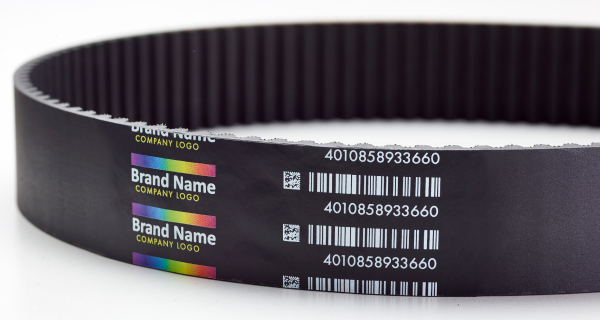
    Pre-printed belt marking films deliver bold, consistent branding and high-resolution graphics across repeat manufacturing applications. These solutions support detailed imagery, precise color matching, and uniform visual presentation for product lines requiring fixed branding, standardized identification, and elevated product appearance.

    Professionally printed high-resolution rubber belt branding films.

    Pre-printed belt marking films support more detailed and visually controlled designs than standard ribbon-based marking systems. These solutions enable complex graphics, consistent color reproduction, and elevated product presentation across repeat manufacturing applications.

    photorealistic graphics

    High-resolution printing supports detailed imagery, gradients, and complex visual elements beyond the capabilities of standard ribbon-based marking systems

    custom color matching

    Match specific brand colors and visual standards across belt product lines, packaging systems, and broader manufacturing identification programs

    consistent production

    Pre-printed films maintain uniform logos, layouts, and visual presentation across large production volumes and repeat manufacturing applications

    Pre-printed films are commonly used for permanent logos, product branding, belt sizes, standardized identifiers, and highly detailed visual designs. Advanced printing capabilities support precise color control, sharp graphic definition, and complex imagery that extends beyond standard ribbon-based marking.

    Print belt marking films with critical production data.

    Print-on-demand belt marking gives manufacturers the flexibility to apply critical production data directly within active manufacturing workflows. These systems support information that cannot be predefined, including slab location codes, manufacturer dates, lot information, production identifiers, and changing product data across belt runs and manufacturing environments.

    A simple setup can integrate real-time labeling directly into your workflow.

    durable films

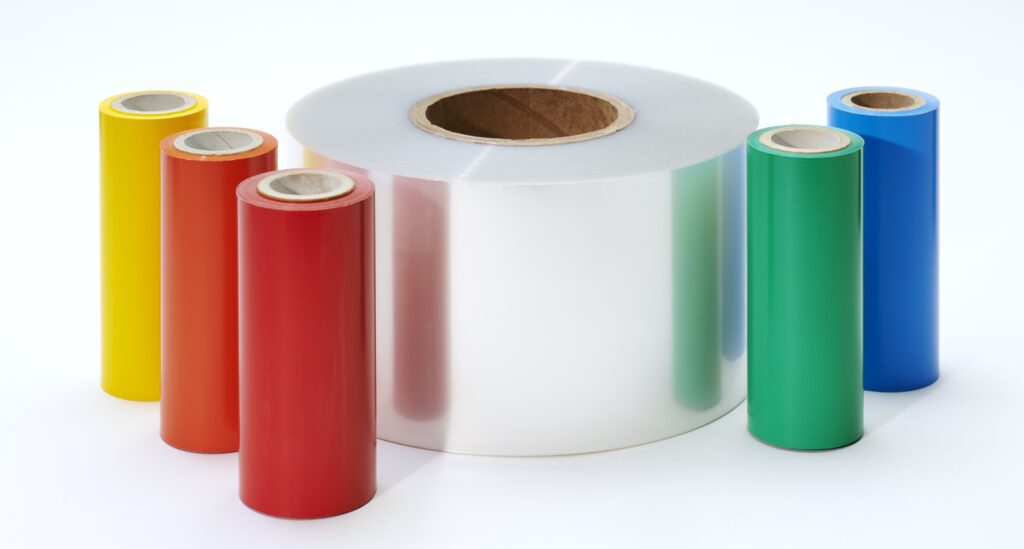
    Start with blank transfer films engineered for durable rubber belt marking.

    label software

    Create belt marking formats using label design and barcode software.

    compatible ribbons

    Use included thermal transfer ribbons to produce durable vibrant labels.

    industrial printers

    Use an industrial thermal transfer printer engineered for high duty cycles.

    Print-on-demand systems are designed for manufacturing environments where belt information changes continuously throughout production. Rather than relying on fixed inventory or pre-printed stock, these systems support dynamic marking requirements tied to production scheduling, traceability, and operational control.

    Reduce operational complexity with pre-printed labels.

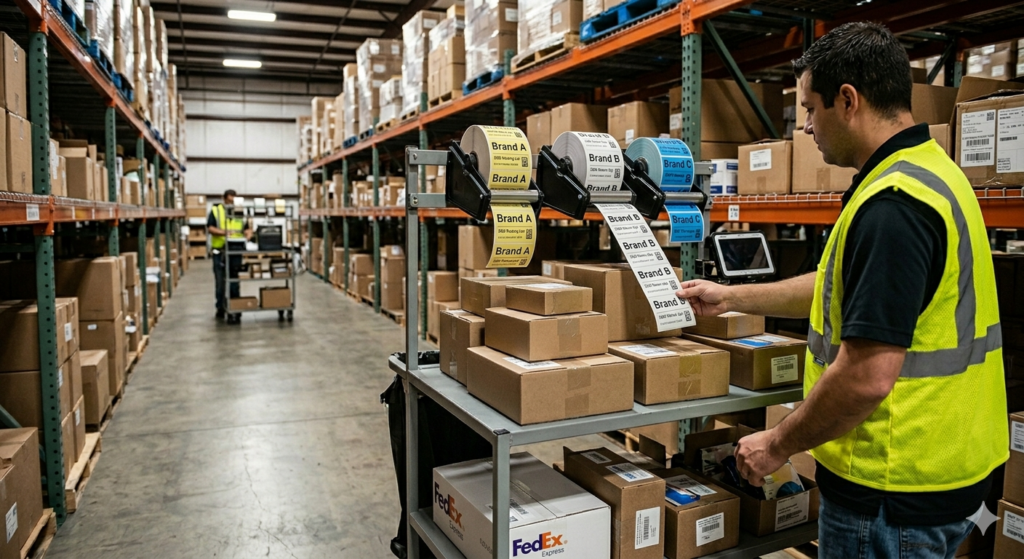
    Use pre-printed warehouse labels to apply location IDs, pallet labels, and sequential label sets without managing printing in-house. This path works best when your data is defined and your warehouse layout follows a structured system.

    A simple setup can integrate real-time labeling directly into your workflow.

    Plan your labeling system in advance, then receive labels ready to apply across your warehouse. This approach shifts the work from daily printing to upfront setup and production.

    consistency at scale

    Apply the same label formats, barcodes, and ID structures across racks, pallets, and storage locations without variation.

    efficient operations

    Eliminate the need for printers, ribbons, software, and label inventory by using labels that arrive ready to apply and scan.

    sequence management

    Use sequential beam labels and serialized label sets to maintain ordered location IDs and guarantee no duplicates.

    Use pre-printed labels when your warehouse layout is defined, your location IDs are established, and you need consistent labeling across large areas or multiple facilities. This approach supports structured storage systems, standardized pallet tracking, and efficient label rollout.

    Print labels when inventory data changes in real time.

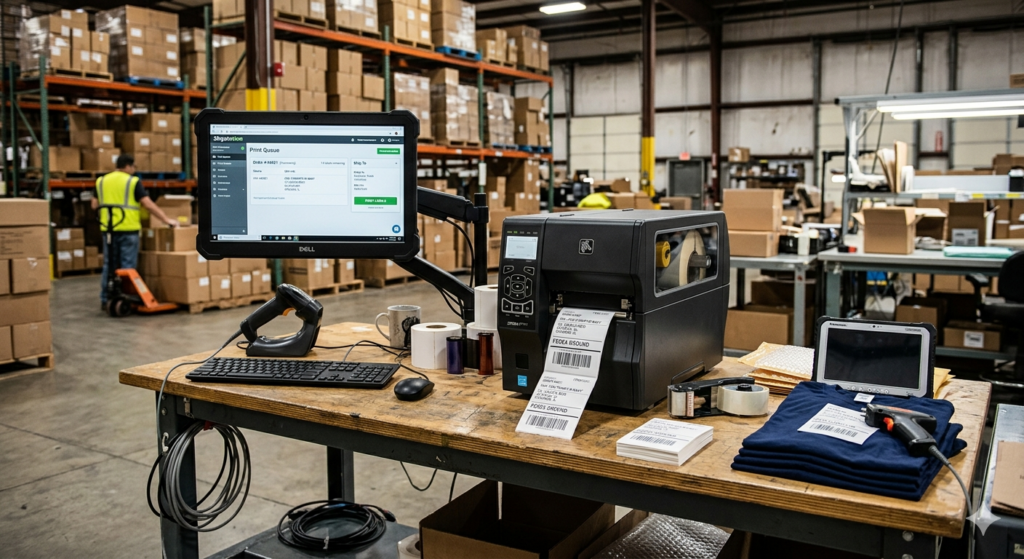
    Print warehouse labels in-house to create location IDs, pallet labels, and LPN labels as your warehouse changes. This path gives you direct control over how labels are created, updated, and applied across racks, bins, totes, and pallets.

    A simple setup can integrate real-time labeling directly into your workflow.

    durable labels

    Start with blank label stock engineered for racks, bins, totes, and pallets.

    label software

    Create warehouse label formats using label design and barcode software.

    compatible ribbons

    Use included thermal transfer ribbons to produce durable barcode labels.

    label printers

    Use a thermal transfer printer designed for warehouse label printing and daily use.

    Use print-on-demand labels when your warehouse layout changes, your team manages location IDs internally, or you need labels immediately without waiting on production. This approach supports flexible workflows, evolving storage systems, and real-time pallet and container tracking.

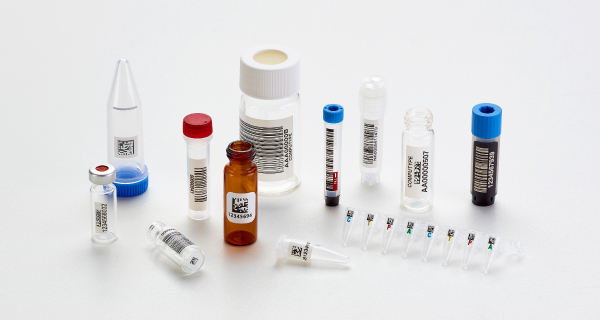
    Receive pre-barcoded tubes immediately ready-to-use.

    Receive tubes and vials with identifiers already applied through direct marking or integrated labeling. Eliminate labeling steps entirely while ensuring durable, consistent identification across storage, handling, and laboratory workflows.

    Pre-barcoded tubes for extreme durability and precision placement.

    Pre-barcoded labware removes labeling from your workflow entirely. Tubes arrive ready to use with verified identifiers, supporting faster processing, reduced handling, and consistent sample identification across storage and laboratory operations.

    consistency at scale

    Use pre-verified barcodes and markings to ensure consistent, accurate sample identification across all tubes and batches.

    efficient lab management

    Eliminate labeling steps and reduce manual handling during sample collection, processing, and storage workflows.

    labware prepâ„¢ services

    Receive labware sorted, packaged, and prepared to match your workflow, including options like tare weighing and kit assembly.

    Pre-barcoded labware fits high-throughput environments where labeling becomes a bottleneck or source of error. This includes biobanks managing large sample collections, clinical labs processing high volumes of patient samples, and research or CRO environments running automated or repeatable workflows where speed, consistency, and reduced handling drive efficiency and data integrity.

    Order pre-printed tube labels for guaranteed accuracy.

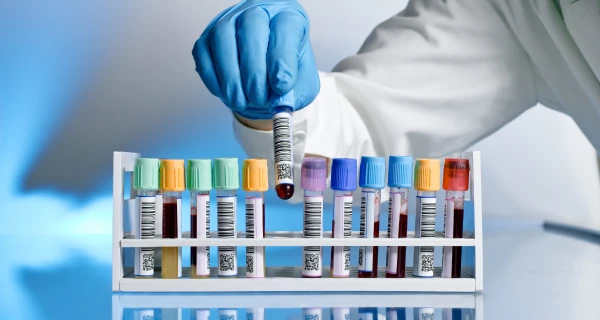
    Get tube labels professionally printed with controlled data, advanced converting, and durable materials. Eliminate in-house printing while ensuring every label meets performance requirements for laboratory use, including chemical exposure, handling, and storage conditions.

    Professionally printed laboratory tube labels for custom, sequential labels.

    Pre-printed labeling combines controlled printing, advanced converting, and durable materials to deliver consistent, ready-to-use tube labels. This approach removes variability from in-house printing and ensures every label meets your requirements for data accuracy and performance.

    unique ids

    Receive pre-printed labels with guaranteed unique barcode sequences, controlled serialization, and validated data across batches and production runs.

    custom design

    Use custom colors to organize samples, differentiate workflows, and improve visual identification across racks, boxes, and storage systems.

    durable finishing

    Use engineered label constructions with precoats and topcoats that improve resistance to chemicals, moisture, and routine laboratory handling.

    Pre-printed labeling fits laboratories that manage high volumes of consistent samples and require controlled, repeatable identification. This includes clinical labs processing patient samples, diagnostic labs running standardized assays, and research labs preparing large batches of tubes for studies or long-term storage where data does not change.

    Print tube labels on demand with real-time data.

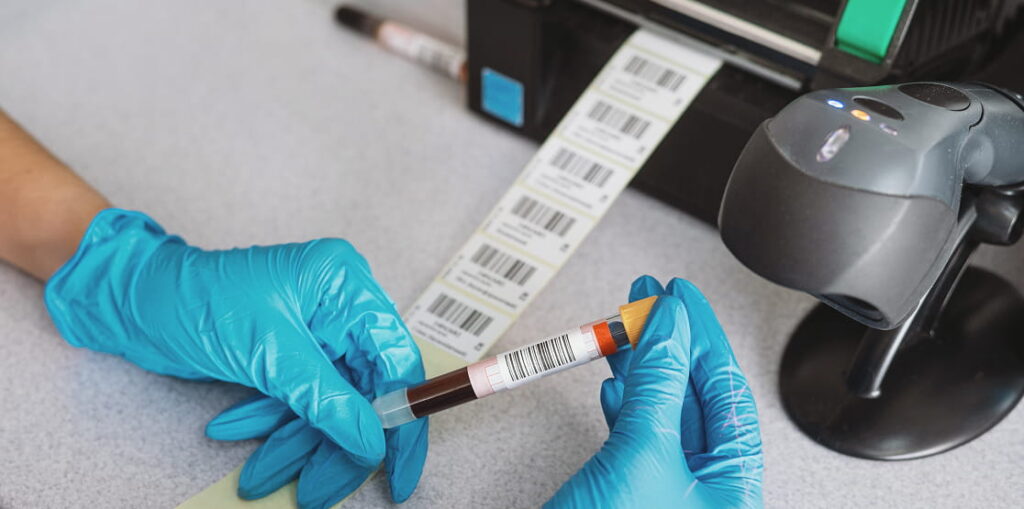
    Print tube labels as needed using live data from laboratory systems. Generate labels during sample collection, aliquoting, or processing, with unique identifiers, timestamps, and variable data applied at the point of use. This approach supports workflows where sample data changes frequently or requires immediate, accurate identification.

    A simple setup can integrate real-time labeling directly into your workflow.

    Set up a complete labeling workflow using the right materials and equipment to print and apply labels directly during laboratory processes.

    durable labels

    Start with blank label stock engineered for small diameter tubes and vials.

    label printers

    Print high-resolution barcodes and text for small-format tube labels.

    compatible ribbons

    Use included thermal transfer ribbons to produce durable barcode labels.

    tube labelers

    Integrate tube label applicators for automated print-and-apply labeling.

    Print-on-demand labeling fits laboratories that generate or modify sample data in real time. This includes research labs, clinical labs, and diagnostic environments where samples are collected, processed, and labeled on demand, and where workflows require immediate identification without waiting for pre-printed labels.

    Use pre-barcoded microplates for ready-to-use identification.

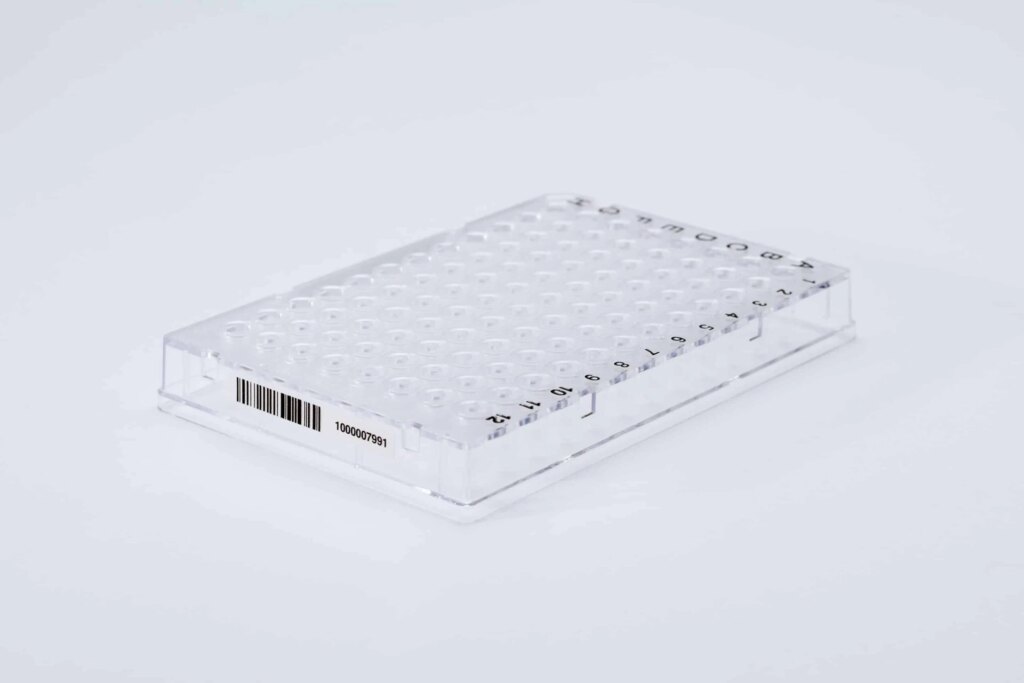
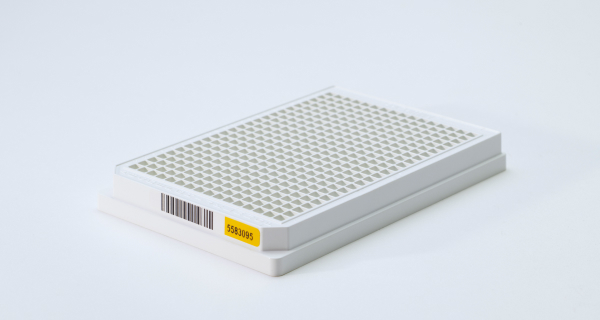
    Receive microplates with identifiers already applied, eliminating labeling steps during plate setup and processing. Ensure consistent, durable identification across assays, screening, and storage while reducing manual handling and improving workflow efficiency.

    Pre-barcoded microplates for ultimate laboratory efficiency.

    Pre-barcoded microplates arrive ready to use with verified identifiers applied before delivery. This approach removes labeling from your workflow and ensures consistent identification across plate handling, processing, and storage environments.

    laboratory efficiency

    Eliminate labeling steps during plate setup, loading, and processing workflows.

    consistent identification

    Use pre-verified plate IDs to maintain accuracy across batches and screening runs.

    integrated services

    Receive plates sorted, kitted, or prepared to match assay workflows and laboratory processes.

    Pre-barcoded microplates fit high-throughput environments where plates move rapidly through automated workflows and labeling can create delays or variability. This includes automated screening facilities, compound and plate libraries, and CROs running large-scale studies, as well as core labs managing shared plate resources where speed, consistency, and reduced handling drive efficiency and improve data integrity.

    Order pre-printed microplate labels with consistent accuracy.

    Get microplate labels professionally printed with controlled data, advanced converting, and durable materials. Ensure consistent plate identification across batches while eliminating in-house printing and reducing variability in labeling for assays, screening, and high-throughput workflows.

    Professionally printed custom microplate labels.

    Pre-printed plate labels combine controlled printing, advanced converting, and durable materials to deliver consistent, ready-to-use identification. This approach ensures every plate label meets requirements for data accuracy, layout consistency, and performance across handling and processing.

    unique ids

    Receive pre-printed plate labels with guaranteed unique IDs, controlled sequencing, and validated data across batches and runs.

    custom design

    Use color coding to differentiate assays, plate types, or workflows and improve visual organization across plate libraries.

    durable finishing

    Use engineered label constructions that resist chemicals, handling, and environmental exposure during plate processing and storage.

    Pre-printed labeling fits laboratories that run standardized plate workflows with fixed data structures. This includes screening labs running standardized assays, diagnostic labs processing consistent plate formats, and research environments where plate layouts and identifiers remain consistent across runs.

    Print microplate labels on demand with real-time data.

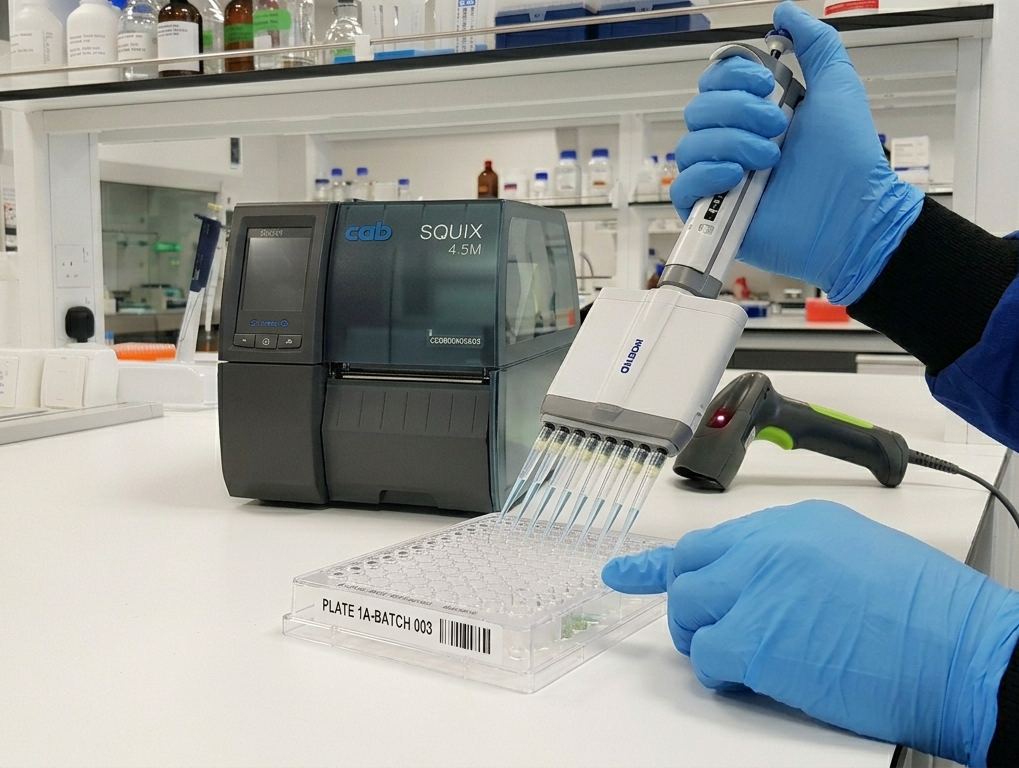
    Print microplate labels as needed using live data from laboratory systems. Generate labels during plate setup, sample loading, or assay preparation, with well IDs, plate IDs, and variable data applied at the point of use. This approach supports workflows where plate data changes frequently or requires immediate, accurate identification.

    A simple setup can integrate real-time labeling directly into your workflow.

    durable labels

    Blank plate labels designed for small formats, flat surfaces, and secure adhesion on plates.

    label printers

    Print high-resolution barcodes and text for plate IDs and sample tracking.

    compatible ribbons

    Thermal transfer ribbons produce durable images resistant to chemicals, moisture, and handling.

    microplate labelers

    Apply labels consistently to plates during setup or automated workflows.

    Print-on-demand labeling fits laboratories that generate or update plate data in real time. This includes screening labs, genomics workflows, and assay development environments where plates are created, modified, and labeled during processing, and where accurate, immediate identification is required.

    Print blood bag labels at collection points.

    Print blood bag labels as needed using live data from blood bank systems. Generate labels during collection, component processing, or labeling steps, with donation identification numbers, product codes, and variable data applied at the point of use. This approach supports workflows where blood data updates in real time and requires immediate, accurate identification.

    A simple setup can integrate real-time labeling directly into your workflow.

    Set up a complete labeling workflow using the right materials and equipment to print and apply labels directly during blood collection, component processing, and blood bank handling workflows.

    durable labels

    Start with blank label stock engineered for flexible PVC blood bags.

    label printers

    Print high-resolution barcodes and text for complex blood label layouts.

    compatible ribbons

    Use included thermal transfer ribbons to produce durable barcode labels.

    label software

    Integrate barcode software to generate ISBT 128 labels and DIN data.

    Print-on-demand labeling fits blood banks and collection centers that generate or update donation data in real time. This includes blood collection sites, processing labs, and transfusion services where blood bags are labeled on demand, and workflows require immediate, accurate identification without relying on pre-printed labels.

    Control blood bag labeling with pre-printed formats.

    Get blood bag labels professionally printed with controlled data, advanced converting, and durable materials. Eliminate in-house printing while ensuring every label meets performance requirements for blood bank use, including handling, cold storage, and transfusion.

    Guarantee no duplicates with professionally printed blood bag labels.

    Pre-printed labeling combines controlled printing, advanced converting, and durable materials to deliver consistent, ready-to-use blood bag labels. This approach removes variability from in-house printing and ensures every label meets requirements for DIN accuracy, barcode performance, and reliable identification across blood bank workflows.

    consistency at scale

    Receive pre-printed labels with guaranteed unique DIN sequences, controlled serialization, and validated data across batches and production runs.

    accurate din formats

    Maintain consistent DIN formats to ensure accurate identification across blood bags, segments, and associated components.

    durable finsihing

    Use engineered label constructions designed to resist edge lift, moisture, and routine handling, helping maintain adhesion and readability throughout blood collection.

    Pre-printed labeling fits blood banks and collection centers that manage high volumes of donations and require controlled, repeatable identification. This includes blood collection sites, processing facilities, and transfusion services where standardized labeling, consistent DIN assignment, and stable data support efficient, validated workflows without frequent changes.

    Support accurate workflows with real-time labeling.

    In laboratory environments, data often isn’t final until the last moment—at the bench, at the instrument, or during sample handling. Printing labels on demand helps ensure each tube or vial reflects the most accurate information, while fitting naturally into the way your work actually happens.

    Support accurate workflows with real-time labeling.

    In laboratory environments, data often isn’t final until the last moment—at the bench, at the instrument, or during sample handling. Printing labels on demand helps ensure each tube or vial reflects the most accurate information, while fitting naturally into the way your work actually happens.

    A simple setup can integrate real-time labeling directly into your workflow.

    In laboratory environments, data often isn’t final until the last moment—at the bench, at the instrument, or during sample handling. Printing labels on demand helps ensure each tube or vial reflects the most accurate information, while fitting naturally into the way your work actually happens.

    compatible ribbons

    Compatible resin ribbons ensuring clear, durable print for barcodes and text

    compatible ribbons

    Compatible resin ribbons ensuring clear, durable print for barcodes and text

    In laboratory environments, data often isn’t final until the last moment—at the bench, at the instrument, or during sample handling. Printing labels on demand helps ensure each tube or vial reflects the most accurate information, while fitting naturally into the way your work actually happens.

    Support accurate workflows with real-time labeling.

    In laboratory environments, data often isn’t final until the last moment—at the bench, at the instrument, or during sample handling. Printing labels on demand helps ensure each tube or vial reflects the most accurate information, while fitting naturally into the way your work actually happens.

    A simple setup can integrate real-time labeling directly into your workflow.

    compatible ribbons

    Compatible resin ribbons ensuring clear, durable print for barcodes and text

    compatible ribbons

    Compatible resin ribbons ensuring clear, durable print for barcodes and text

    compatible ribbons

    Compatible resin ribbons ensuring clear, durable print for barcodes and text

    compatible ribbons

    Compatible resin ribbons ensuring clear, durable print for barcodes and text

    In laboratory environments, data often isn’t final until the last moment—at the bench, at the instrument, or during sample handling. Printing labels on demand helps ensure each tube or vial reflects the most accurate information, while fitting naturally into the way your work actually happens.

    Support accurate workflows with real-time labeling.

    In laboratory environments, data often isn’t final until the last moment—at the bench, at the instrument, or during sample handling. Printing labels on demand helps ensure each tube or vial reflects the most accurate information, while fitting naturally into the way your work actually happens.

    A simple setup can integrate real-time labeling directly into your workflow.

    In laboratory environments, data often isn’t final until the last moment—at the bench, at the instrument, or during sample handling. Printing labels on demand helps ensure each tube or vial reflects the most accurate information, while fitting naturally into the way your work actually happens.

    durable labels

    Durable labels that stay attached through handling, storage, or cryogenic conditions

    compatible ribbons

    Compatible resin ribbons ensuring clear, durable print for barcodes and text

    reliable printer

    Compact, consistent, durable thermal transfer printing at the point of use

    label software

    Label management software to format labels and connect to sample data or LIMS

    In laboratory environments, data often isn’t final until the last moment—at the bench, at the instrument, or during sample handling. Printing labels on demand helps ensure each tube or vial reflects the most accurate information, while fitting naturally into the way your work actually happens.

    Request a quote

    Take advantage of our volume discounts for bulk orders. Reach out to us for a personalized quote tailored to your needs.

    "*" indicates required fields

    This field is for validation purposes and should be left unchanged.