

Labeling metal surfaces presents unique challenges, including oxidation, contamination, and varying finishes like bare, coated, or painted metals. These factors impact label adhesion and durability. Industries such as automotive, electronics, and aerospace require reliable labeling solutions to ensure proper identification and tracking of metal parts and products.

Metal is a strong, durable material characterized by its ability to conduct electricity and heat, and is commonly used in various industries. In theory, its high surface energy should make adhesive bonding easier – however, this advantage is often overshadowed by the challenging environments metals are exposed to, such as oxidation and mechanical stress.
Metals have a high surface energy, meaning they strongly attract adhesives and liquids, which generally enhances adhesive bonding.
Bare metal surfaces may develop oxidation, creating surface irregularities that reduce adhesion and label performance.
Painted metal surfaces can be sensitive to aggressive adhesives, requiring strong adhesives that will not damage the paint layer.
Metal surfaces require labels with high resistance to mechanical stress to endure impacts, vibrations, and other physical forces
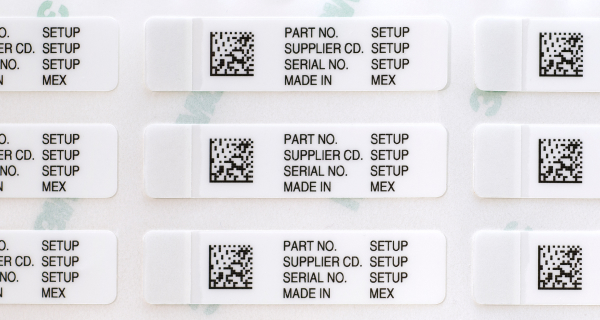
While metals have high surface energy, which generally promotes easier adhesion, the demanding environments in which metals are used often negate this advantage. Adhesives must withstand thermal expansion as metals expand and contract with temperature changes. Chemical exposure and contamination from dirty or oily surfaces can degrade standard adhesives, necessitating robust solutions.
An acrylic solvent adhesive is often preferred over acrylic or acrylic emulsion adhesives due to its superior resistance to harsh chemicals and ability to maintain a strong bond on contaminated surfaces. Additionally, these adhesives need to remain flexible to accommodate coated or painted metals and resist mechanical stress from impacts and abrasions.
Labeling metal surfaces is essential across various industries, each with specific requirements for durability and performance. Different applications present unique challenges that require specialized labeling solutions. Below, we explore the specific needs and examples of labels used in these critical sectors.

In the automotive industry, labels must withstand high temperatures, exposure to oils and solvents, and mechanical stress.
Brake pads and engine parts require high-temperature resistant labels with strong adhesives to ensure they remain intact and legible.
Labels with a removable laminate are also useful for parts that will be painted after labeling, providing protection during the painting process.
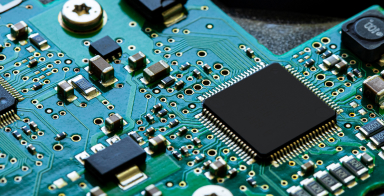
For the electronics industry, particularly for printed circuit boards, labels need to resist heat during soldering processes and remain legible in compact spaces.
These labels must have strong adhesives to stay attached during manufacturing and maintenance.
Additionally, they should be able to endure potential exposure to cleaning chemicals and varying temperatures within electronic devices.

Aerospace applications demand labels that can endure extreme temperature variations, UV exposure, and high-altitude conditions.
Durability and adhesive strength are critical to ensure labels remain secure and readable throughout the lifespan of the aircraft components.
Labels used in aerospace must also comply with stringent industry standards for reliability and performance.
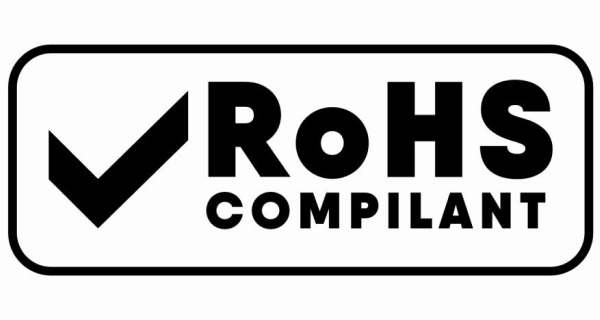
Two key regulations to consider are REACH (Registration, Evaluation, Authorization, and Restriction of Chemicals) and RoHS (Restriction of Hazardous Substances). REACH ensures that the chemicals used in labels are safe for human health and the environment, while RoHS mandates that labels do not contain hazardous substances that could harm electronic products.
Additionally, specific OEM spec requirements may apply, particularly in the automotive industry. Leading automotive brands often have their own stringent standards for labeling materials to ensure compatibility, durability, and safety. Ensuring that your labeling solutions meet these regulations and specifications is essential for compliance and optimal performance in your applications.
Labels for metal need to be carefully constructed and engineered based on their use case and application. The right combination of materials ensures durability, adhesion, and performance in demanding environments. Understanding the components and their properties is essential for selecting the best labeling solution for metal surfaces.
We maintain a comprehensive inventory of solvents, acids, bases, and industrial chemicals for material testing.
T-peel, 180-degree peel, and shear tests are crucial for evaluating how well labels stick to metal surfaces.
Our advanced equipment is capable of testing label performance fom as low as -296°C all the way up to 600°C.
We use the Taber abrader to help us determine how well labels materials can withstand wear and tear in demanding environments.
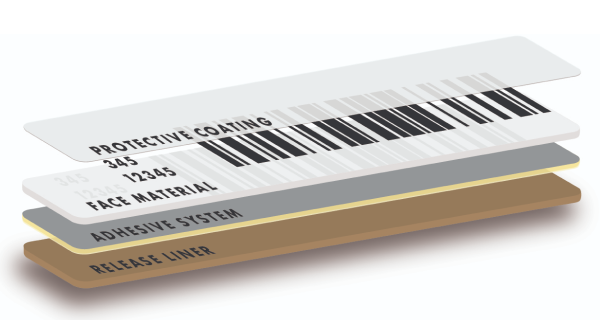
Our label materials are engineered to adhere to metal surfaces, ensuring durability and performance. We use high-quality face stocks like polyester and polyimide, combined with robust acrylic solvent adhesive formulations. Our thermal transfer ribbons, particularly our premium resin ribbons, deliver superior resistance.
We offer advanced solutions for labeling metal surfaces, designed to meet specific needs. Specialty labels include the innovative paint patch label, which features a removable overlaminate that protects the label during painting processes, ensuring the label underneath remains intact and readable. We also provide high-precision laser etching for small metal parts, delivering clear and long-lasting markings.
Additionally, our labels with laminate coats offer enhanced durability and resistance to environmental factors, making them ideal for challenging conditions. Laminate covers provide further protection, ensuring labels remain legible and secure in harsh environments. These advanced solutions are tailored to provide the highest level of performance and reliability for your metal labeling needs.
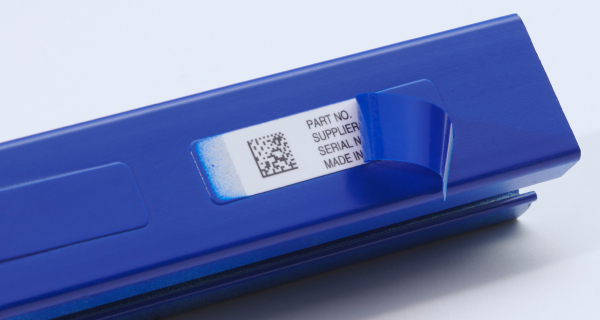
Ensure our labeling solutions meet your metal product requirements. Submit your information to qualify our materials for your specific applications.
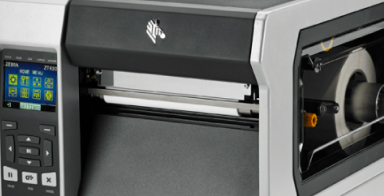
The Zebra ZT Printer Series offers reliable, high-volume label printing. Designed for durability and performance in industrial environments.
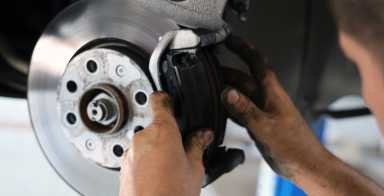
Durable labels for automotive parts ensure clear identification in challenging environments. They withstand heat, chemicals, and mechanical wear.
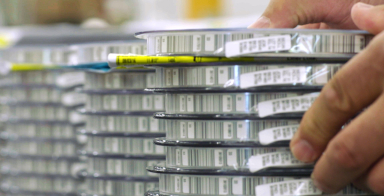
Tire bead labels are built to survive high temperatures and curing processes. They provide reliable tracking throughout tire manufacturing.
Pre-printed belt marking films deliver bold, consistent branding and high-resolution graphics across repeat manufacturing applications. These solutions support detailed imagery, precise color matching, and uniform visual presentation for product lines requiring fixed branding, standardized identification, and elevated product appearance.
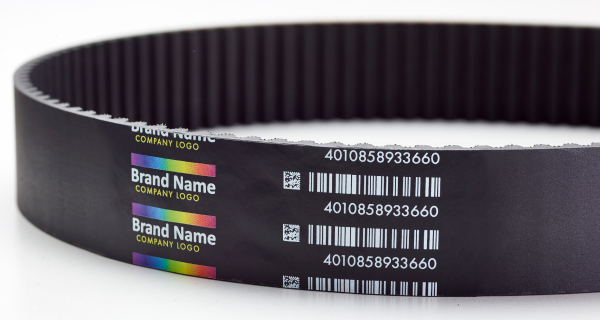
Pre-printed belt marking films support more detailed and visually controlled designs than standard ribbon-based marking systems. These solutions enable complex graphics, consistent color reproduction, and elevated product presentation across repeat manufacturing applications.
High-resolution printing supports detailed imagery, gradients, and complex visual elements beyond the capabilities of standard ribbon-based marking systems
Match specific brand colors and visual standards across belt product lines, packaging systems, and broader manufacturing identification programs
Pre-printed films maintain uniform logos, layouts, and visual presentation across large production volumes and repeat manufacturing applications
Pre-printed films are commonly used for permanent logos, product branding, belt sizes, standardized identifiers, and highly detailed visual designs. Advanced printing capabilities support precise color control, sharp graphic definition, and complex imagery that extends beyond standard ribbon-based marking.
Print-on-demand belt marking gives manufacturers the flexibility to apply critical production data directly within active manufacturing workflows. These systems support information that cannot be predefined, including slab location codes, manufacturer dates, lot information, production identifiers, and changing product data across belt runs and manufacturing environments.
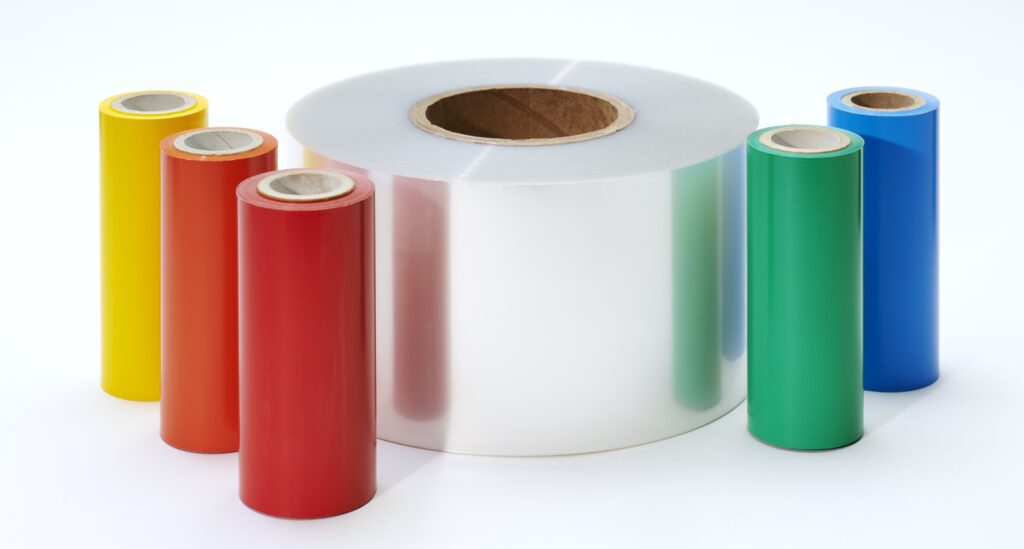
Start with blank transfer films engineered for durable rubber belt marking.
Create belt marking formats using label design and barcode software.
Use included thermal transfer ribbons to produce durable vibrant labels.
Use an industrial thermal transfer printer engineered for high duty cycles.
Print-on-demand systems are designed for manufacturing environments where belt information changes continuously throughout production. Rather than relying on fixed inventory or pre-printed stock, these systems support dynamic marking requirements tied to production scheduling, traceability, and operational control.
Use pre-printed warehouse labels to apply location IDs, pallet labels, and sequential label sets without managing printing in-house. This path works best when your data is defined and your warehouse layout follows a structured system.
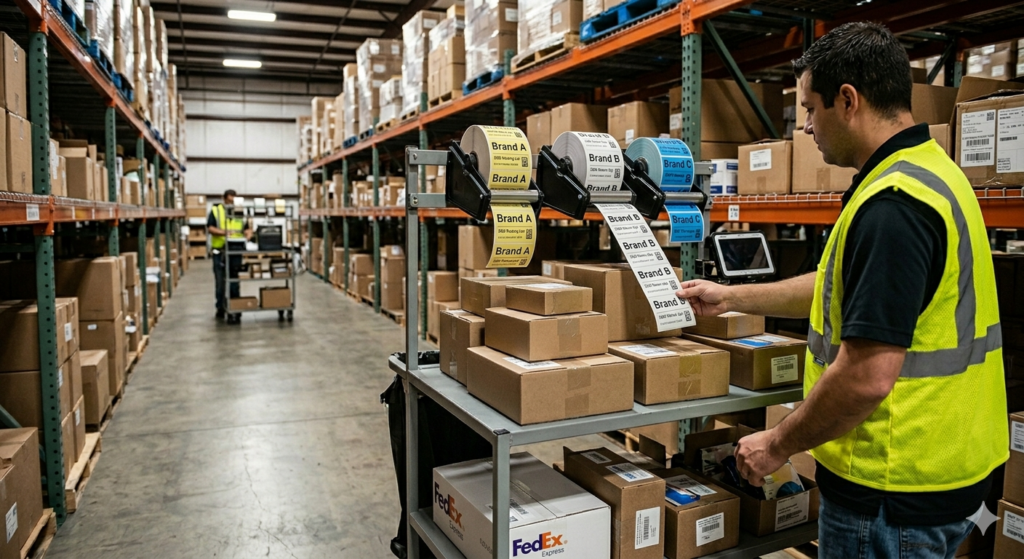
Plan your labeling system in advance, then receive labels ready to apply across your warehouse. This approach shifts the work from daily printing to upfront setup and production.
Apply the same label formats, barcodes, and ID structures across racks, pallets, and storage locations without variation.
Eliminate the need for printers, ribbons, software, and label inventory by using labels that arrive ready to apply and scan.
Use sequential beam labels and serialized label sets to maintain ordered location IDs and guarantee no duplicates.
Use pre-printed labels when your warehouse layout is defined, your location IDs are established, and you need consistent labeling across large areas or multiple facilities. This approach supports structured storage systems, standardized pallet tracking, and efficient label rollout.
Print warehouse labels in-house to create location IDs, pallet labels, and LPN labels as your warehouse changes. This path gives you direct control over how labels are created, updated, and applied across racks, bins, totes, and pallets.
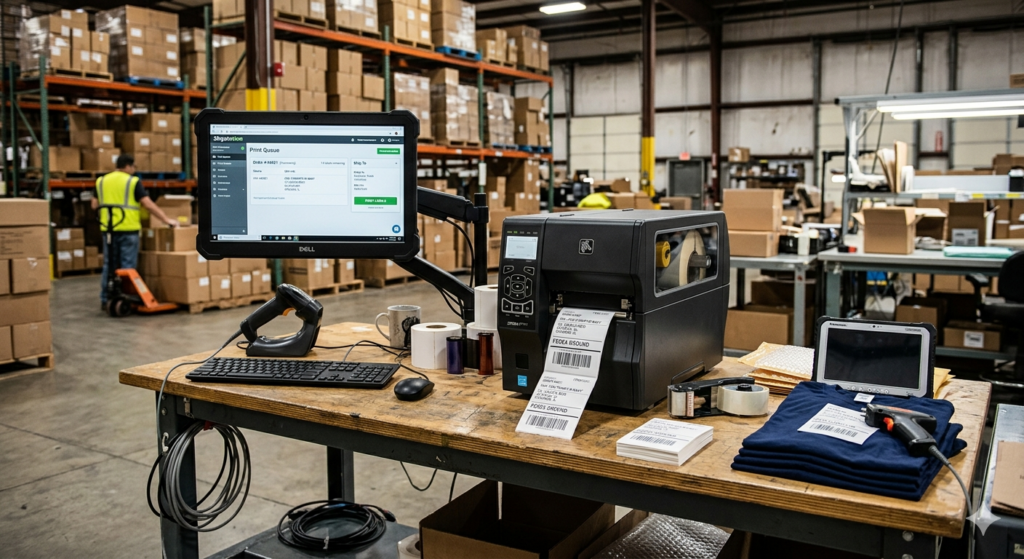
Start with blank label stock engineered for racks, bins, totes, and pallets.
Create warehouse label formats using label design and barcode software.
Use included thermal transfer ribbons to produce durable barcode labels.
Use a thermal transfer printer designed for warehouse label printing and daily use.
Use print-on-demand labels when your warehouse layout changes, your team manages location IDs internally, or you need labels immediately without waiting on production. This approach supports flexible workflows, evolving storage systems, and real-time pallet and container tracking.
Receive tubes and vials with identifiers already applied through direct marking or integrated labeling. Eliminate labeling steps entirely while ensuring durable, consistent identification across storage, handling, and laboratory workflows.
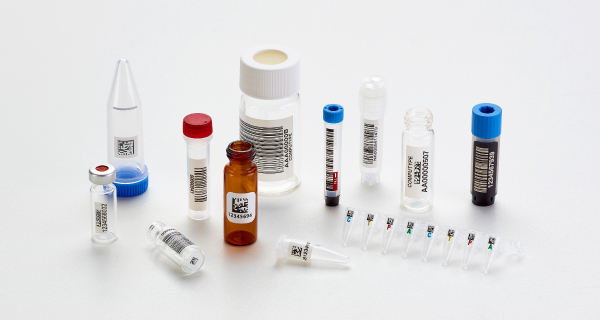
Pre-barcoded labware removes labeling from your workflow entirely. Tubes arrive ready to use with verified identifiers, supporting faster processing, reduced handling, and consistent sample identification across storage and laboratory operations.
Use pre-verified barcodes and markings to ensure consistent, accurate sample identification across all tubes and batches.
Eliminate labeling steps and reduce manual handling during sample collection, processing, and storage workflows.
Receive labware sorted, packaged, and prepared to match your workflow, including options like tare weighing and kit assembly.
Pre-barcoded labware fits high-throughput environments where labeling becomes a bottleneck or source of error. This includes biobanks managing large sample collections, clinical labs processing high volumes of patient samples, and research or CRO environments running automated or repeatable workflows where speed, consistency, and reduced handling drive efficiency and data integrity.
Get tube labels professionally printed with controlled data, advanced converting, and durable materials. Eliminate in-house printing while ensuring every label meets performance requirements for laboratory use, including chemical exposure, handling, and storage conditions.
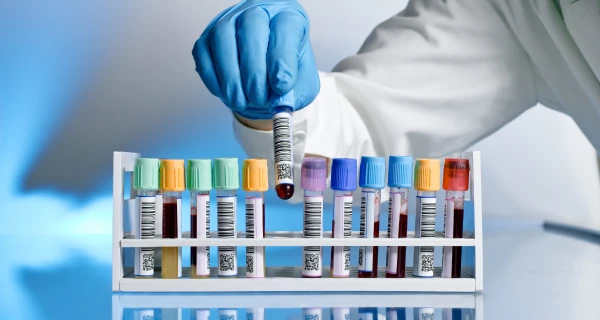
Pre-printed labeling combines controlled printing, advanced converting, and durable materials to deliver consistent, ready-to-use tube labels. This approach removes variability from in-house printing and ensures every label meets your requirements for data accuracy and performance.
Receive pre-printed labels with guaranteed unique barcode sequences, controlled serialization, and validated data across batches and production runs.
Use custom colors to organize samples, differentiate workflows, and improve visual identification across racks, boxes, and storage systems.
Use engineered label constructions with precoats and topcoats that improve resistance to chemicals, moisture, and routine laboratory handling.
Pre-printed labeling fits laboratories that manage high volumes of consistent samples and require controlled, repeatable identification. This includes clinical labs processing patient samples, diagnostic labs running standardized assays, and research labs preparing large batches of tubes for studies or long-term storage where data does not change.
Print tube labels as needed using live data from laboratory systems. Generate labels during sample collection, aliquoting, or processing, with unique identifiers, timestamps, and variable data applied at the point of use. This approach supports workflows where sample data changes frequently or requires immediate, accurate identification.
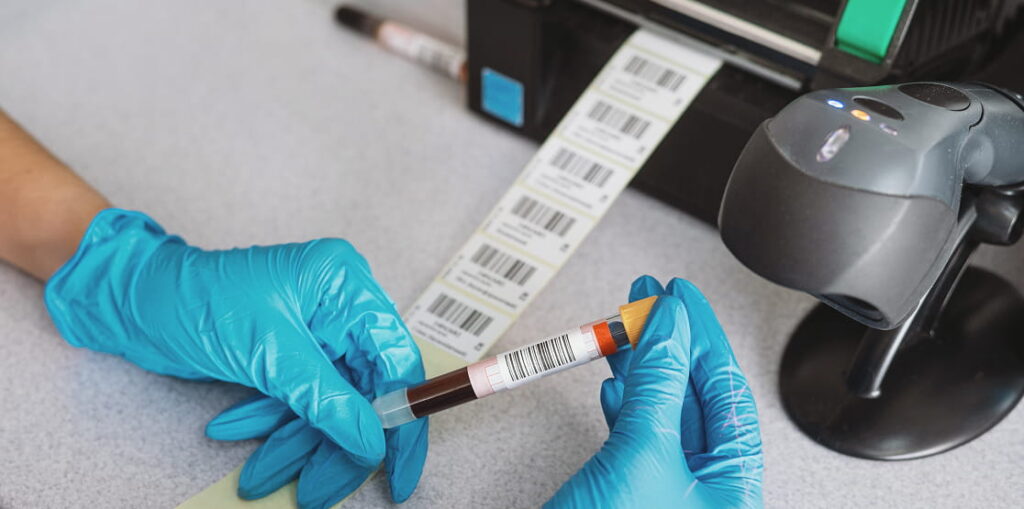
Set up a complete labeling workflow using the right materials and equipment to print and apply labels directly during laboratory processes.
Start with blank label stock engineered for small diameter tubes and vials.
Print high-resolution barcodes and text for small-format tube labels.
Use included thermal transfer ribbons to produce durable barcode labels.
Integrate tube label applicators for automated print-and-apply labeling.
Print-on-demand labeling fits laboratories that generate or modify sample data in real time. This includes research labs, clinical labs, and diagnostic environments where samples are collected, processed, and labeled on demand, and where workflows require immediate identification without waiting for pre-printed labels.
Receive microplates with identifiers already applied, eliminating labeling steps during plate setup and processing. Ensure consistent, durable identification across assays, screening, and storage while reducing manual handling and improving workflow efficiency.
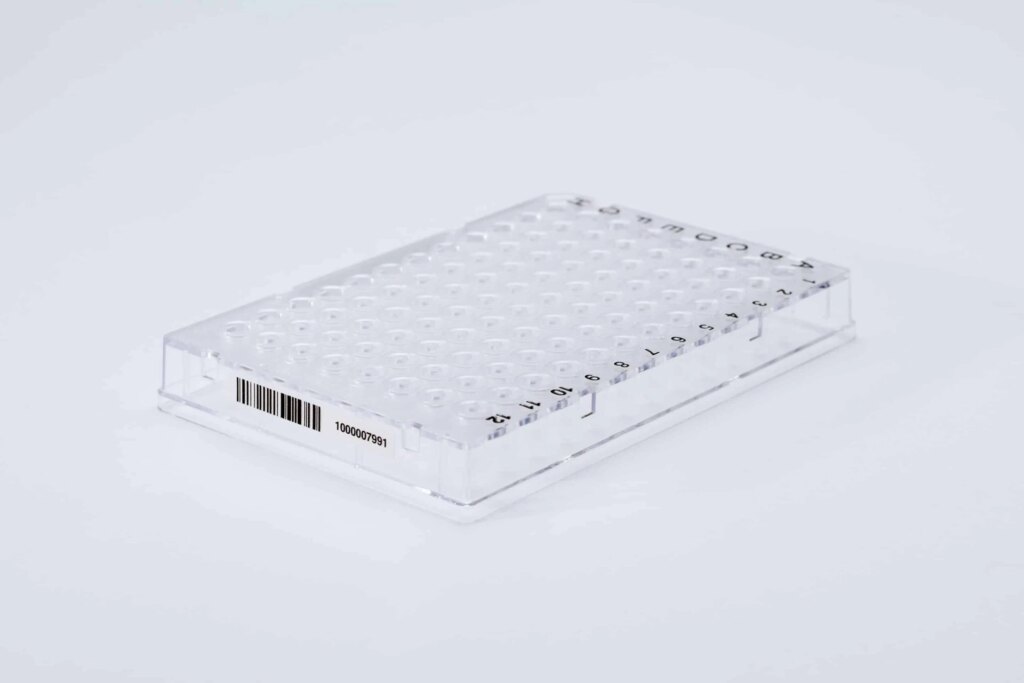
Pre-barcoded microplates arrive ready to use with verified identifiers applied before delivery. This approach removes labeling from your workflow and ensures consistent identification across plate handling, processing, and storage environments.
Eliminate labeling steps during plate setup, loading, and processing workflows.
Use pre-verified plate IDs to maintain accuracy across batches and screening runs.
Receive plates sorted, kitted, or prepared to match assay workflows and laboratory processes.
Pre-barcoded microplates fit high-throughput environments where plates move rapidly through automated workflows and labeling can create delays or variability. This includes automated screening facilities, compound and plate libraries, and CROs running large-scale studies, as well as core labs managing shared plate resources where speed, consistency, and reduced handling drive efficiency and improve data integrity.
Get microplate labels professionally printed with controlled data, advanced converting, and durable materials. Ensure consistent plate identification across batches while eliminating in-house printing and reducing variability in labeling for assays, screening, and high-throughput workflows.
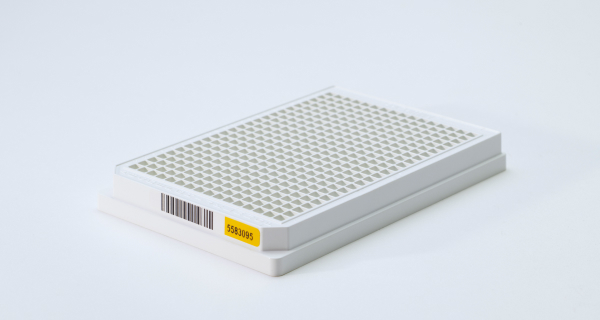
Pre-printed plate labels combine controlled printing, advanced converting, and durable materials to deliver consistent, ready-to-use identification. This approach ensures every plate label meets requirements for data accuracy, layout consistency, and performance across handling and processing.
Receive pre-printed plate labels with guaranteed unique IDs, controlled sequencing, and validated data across batches and runs.
Use color coding to differentiate assays, plate types, or workflows and improve visual organization across plate libraries.
Use engineered label constructions that resist chemicals, handling, and environmental exposure during plate processing and storage.
Pre-printed labeling fits laboratories that run standardized plate workflows with fixed data structures. This includes screening labs running standardized assays, diagnostic labs processing consistent plate formats, and research environments where plate layouts and identifiers remain consistent across runs.
Print microplate labels as needed using live data from laboratory systems. Generate labels during plate setup, sample loading, or assay preparation, with well IDs, plate IDs, and variable data applied at the point of use. This approach supports workflows where plate data changes frequently or requires immediate, accurate identification.
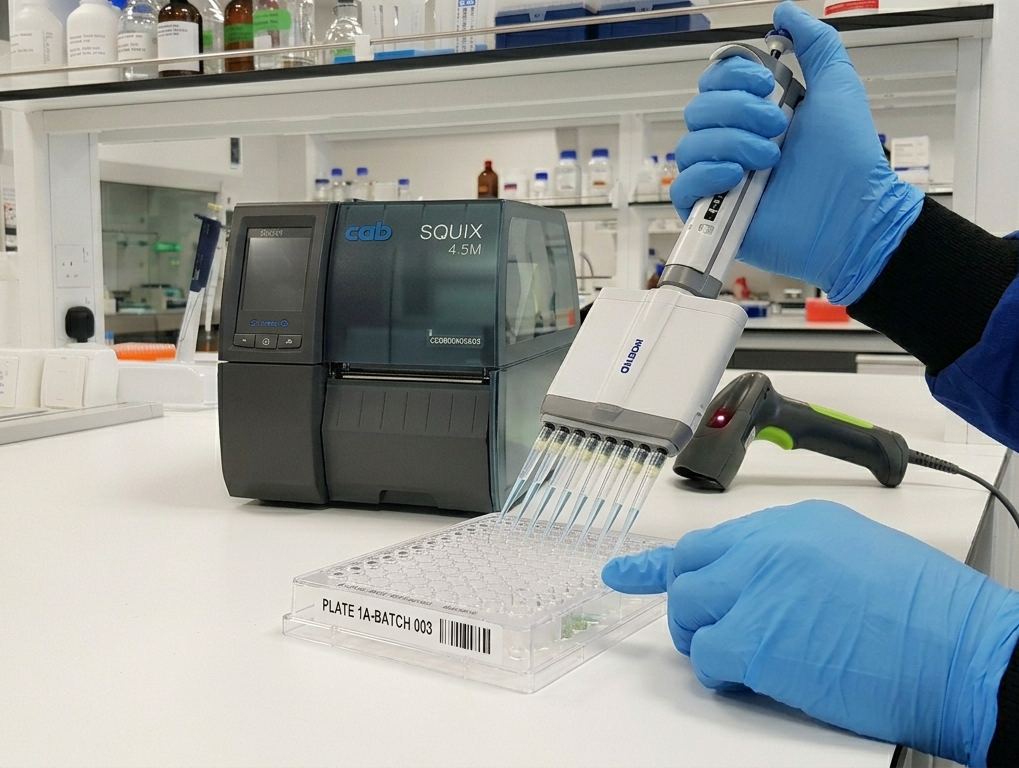
Blank plate labels designed for small formats, flat surfaces, and secure adhesion on plates.
Print high-resolution barcodes and text for plate IDs and sample tracking.
Thermal transfer ribbons produce durable images resistant to chemicals, moisture, and handling.
Apply labels consistently to plates during setup or automated workflows.
Print-on-demand labeling fits laboratories that generate or update plate data in real time. This includes screening labs, genomics workflows, and assay development environments where plates are created, modified, and labeled during processing, and where accurate, immediate identification is required.
Print blood bag labels as needed using live data from blood bank systems. Generate labels during collection, component processing, or labeling steps, with donation identification numbers, product codes, and variable data applied at the point of use. This approach supports workflows where blood data updates in real time and requires immediate, accurate identification.
Set up a complete labeling workflow using the right materials and equipment to print and apply labels directly during blood collection, component processing, and blood bank handling workflows.
Start with blank label stock engineered for flexible PVC blood bags.
Print high-resolution barcodes and text for complex blood label layouts.
Use included thermal transfer ribbons to produce durable barcode labels.
Integrate barcode software to generate ISBT 128 labels and DIN data.
Print-on-demand labeling fits blood banks and collection centers that generate or update donation data in real time. This includes blood collection sites, processing labs, and transfusion services where blood bags are labeled on demand, and workflows require immediate, accurate identification without relying on pre-printed labels.
Get blood bag labels professionally printed with controlled data, advanced converting, and durable materials. Eliminate in-house printing while ensuring every label meets performance requirements for blood bank use, including handling, cold storage, and transfusion.
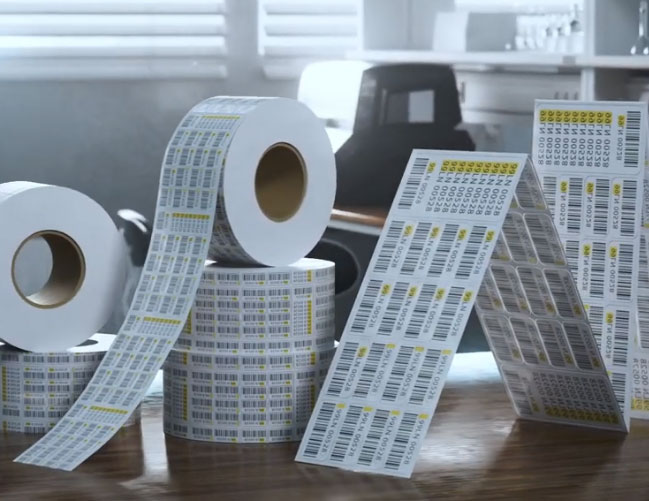
Pre-printed labeling combines controlled printing, advanced converting, and durable materials to deliver consistent, ready-to-use blood bag labels. This approach removes variability from in-house printing and ensures every label meets requirements for DIN accuracy, barcode performance, and reliable identification across blood bank workflows.
Receive pre-printed labels with guaranteed unique DIN sequences, controlled serialization, and validated data across batches and production runs.
Maintain consistent DIN formats to ensure accurate identification across blood bags, segments, and associated components.
Use engineered label constructions designed to resist edge lift, moisture, and routine handling, helping maintain adhesion and readability throughout blood collection.
Pre-printed labeling fits blood banks and collection centers that manage high volumes of donations and require controlled, repeatable identification. This includes blood collection sites, processing facilities, and transfusion services where standardized labeling, consistent DIN assignment, and stable data support efficient, validated workflows without frequent changes.
In laboratory environments, data often isn’t final until the last moment—at the bench, at the instrument, or during sample handling. Printing labels on demand helps ensure each tube or vial reflects the most accurate information, while fitting naturally into the way your work actually happens.
In laboratory environments, data often isn’t final until the last moment—at the bench, at the instrument, or during sample handling. Printing labels on demand helps ensure each tube or vial reflects the most accurate information, while fitting naturally into the way your work actually happens.
In laboratory environments, data often isn’t final until the last moment—at the bench, at the instrument, or during sample handling. Printing labels on demand helps ensure each tube or vial reflects the most accurate information, while fitting naturally into the way your work actually happens.
Compatible resin ribbons ensuring clear, durable print for barcodes and text
Compatible resin ribbons ensuring clear, durable print for barcodes and text
In laboratory environments, data often isn’t final until the last moment—at the bench, at the instrument, or during sample handling. Printing labels on demand helps ensure each tube or vial reflects the most accurate information, while fitting naturally into the way your work actually happens.
In laboratory environments, data often isn’t final until the last moment—at the bench, at the instrument, or during sample handling. Printing labels on demand helps ensure each tube or vial reflects the most accurate information, while fitting naturally into the way your work actually happens.
Compatible resin ribbons ensuring clear, durable print for barcodes and text
Compatible resin ribbons ensuring clear, durable print for barcodes and text
Compatible resin ribbons ensuring clear, durable print for barcodes and text
Compatible resin ribbons ensuring clear, durable print for barcodes and text
In laboratory environments, data often isn’t final until the last moment—at the bench, at the instrument, or during sample handling. Printing labels on demand helps ensure each tube or vial reflects the most accurate information, while fitting naturally into the way your work actually happens.
In laboratory environments, data often isn’t final until the last moment—at the bench, at the instrument, or during sample handling. Printing labels on demand helps ensure each tube or vial reflects the most accurate information, while fitting naturally into the way your work actually happens.
In laboratory environments, data often isn’t final until the last moment—at the bench, at the instrument, or during sample handling. Printing labels on demand helps ensure each tube or vial reflects the most accurate information, while fitting naturally into the way your work actually happens.
Durable labels that stay attached through handling, storage, or cryogenic conditions
Compatible resin ribbons ensuring clear, durable print for barcodes and text
Compact, consistent, durable thermal transfer printing at the point of use
Label management software to format labels and connect to sample data or LIMS
In laboratory environments, data often isn’t final until the last moment—at the bench, at the instrument, or during sample handling. Printing labels on demand helps ensure each tube or vial reflects the most accurate information, while fitting naturally into the way your work actually happens.
Take advantage of our volume discounts for bulk orders. Reach out to us for a personalized quote tailored to your needs.
"*" indicates required fields