

Chemical-resistant labels safeguard critical information in environments where standard labels fail. Built with specialized materials, they maintain legibility and adhesion when exposed to solvents, acids, and aggressive cleaners. These durable adhesive labels endure anything from brief splashes to full chemical submersion. Industries like pharmaceuticals, manufacturing, and chemical processing depend on them for safety, traceability, and compliance.
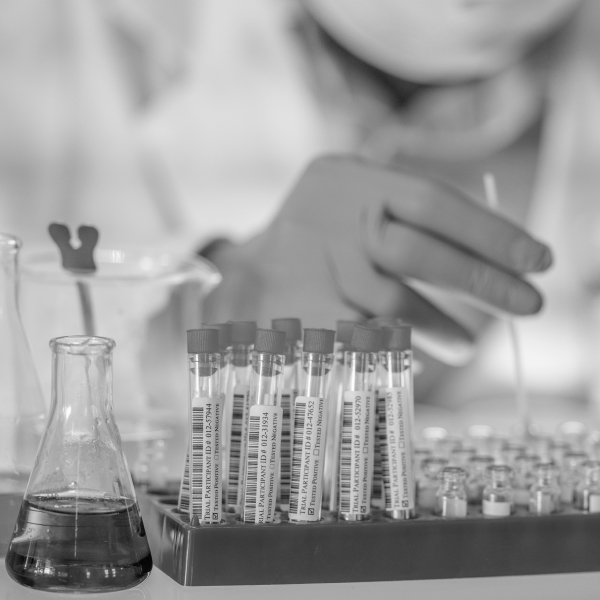
Different chemicals attack labels in different ways, dissolving inks, degrading adhesives, or weakening face stocks. Chemical resistant labels are engineered to withstand specific exposure types such as solvents, alcohols, acids, oils, and oxidizing cleaners. By matching the label construction to the chemicals present in an environment, these labels help preserve adhesion, readability, and barcode performance even in demanding laboratory and industrial conditions.
Organic solvents such as MEK, xylene, toluene, acetone, and DMSO can dissolve inks, soften coatings, and break down standard adhesives. Solvent-resistant labels use durable synthetic films, solvent-stable adhesives, and high-performance printing systems such as thermal transfer resin ribbons or cured inks. These constructions maintain barcode readability and label integrity in laboratories, electronics manufacturing, and industrial cleaning environments.
Alcohol exposure is common in laboratories, healthcare environments, and pharmaceutical production where surfaces are frequently cleaned with ethanol or methanol. Alcohol-resistant labels are built with films, coatings, and print systems that resist smearing and ink dissolution during repeated wipe-downs. These constructions preserve barcodes, text, and identification marks even when labels are regularly exposed to alcohol disinfectants.
Acids like hydrochloric acid (HCl), sulfuric acid, and nitric acid can degrade many conventional label materials through corrosion and chemical attack. Acid-resistant labels rely on chemically stable films and protective coatings that maintain structural integrity and print durability in these environments. These labels are commonly used for chemical containers, laboratory reagents, and industrial processing equipment exposed to acidic substances.
Bleach and oxidizing disinfectants are widely used in laboratories, medical facilities, and sanitation environments. These chemicals can fade inks, damage coatings, and degrade standard label constructions. Bleach-resistant labels use chemically stable films, protective coatings, and durable print systems to preserve barcode readability and identification even when exposed to bleach solutions or oxidizing cleaning agents.
Industrial oils and fluids can penetrate standard adhesives and weaken the bond between a label and its surface. Oil-resistant labels use adhesive systems designed to maintain strong adhesion despite contact with lubricants, hydraulic fluids, and brake fluid. These labels are widely used in automotive manufacturing, heavy equipment environments, and industrial machinery where oil exposure is unavoidable.
Request a sample to see how these chemical-resistant labels hold up under your toughest lab or manufacturing conditions.
Chemical resistant labels must survive aggressive environments without losing adhesion or readability. Solvents like MEK and xylene can dissolve inks. Alcohols such as ethanol can degrade coatings during repeated wipe-downs. Acids, oils, and oxidizing cleaners like bleach can weaken adhesives or fade printed information. Label construction, printing methods, testing, and surface compatibility all determine long-term chemical durability.
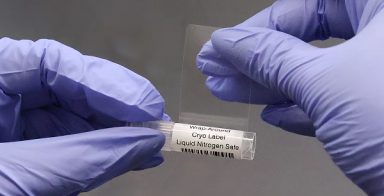
Print-on-demand chemical-resistant labels let users add variable information such as barcodes, lot numbers, dates, and sample IDs at the point of use. This approach supports changing data while still using durable label materials built for chemical exposure. It is especially useful in laboratories, manufacturing, and other environments where flexibility is essential.
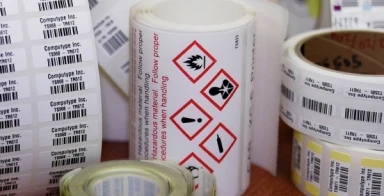
Pre-printed chemical-resistant labels are professionally produced with fixed text, branding, colors, and other repeatable content already in place. This format is ideal when durability, consistency, and production efficiency matter most. It works well for high-volume applications where the label design stays the same across products, containers, or equipment.
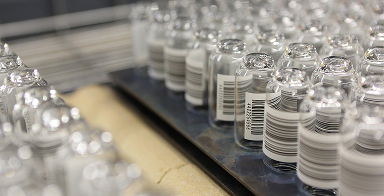
Direct marked chemical-resistant labware are pre-marked with barcodes, sequences, or other identification already applied before delivery. These labels are widely used in laboratories where tubes, vials, plates, and other labware require permanent identification before samples are introduced. Pre-marking ensures consistent barcode quality and eliminates the need for on-site sample prep.
UV-cured inks and protective coatings prevent smudging or fading when exposed to chemicals like xylene, ethanol, and bleach.
Labels remain secure even after repeated disinfection, spray-downs, or exposure to solvents during cleaning or processing.
For thermal transfer workflows, wraparound and laminate-over labels protect printed areas from exposure to wipes and splashes.
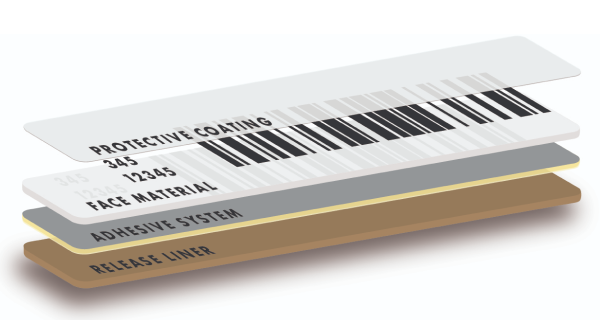
Chemical-resistant labels are labels engineered to maintain adhesion, structure, and print readability when exposed to aggressive chemicals. These chemicals include solvents such as MEK, acetone, xylene, and toluene, alcohols such as ethanol and methanol, oxidizing cleaners such as bleach, industrial fluids such as brake fluid, and corrosive acids such as hydrochloric acid.
Chemical resistance comes from the entire label construction. A chemical-resistant label is not a single material. It is a system of materials designed to work together. The system includes the face stock, adhesive, coatings, and printing method. If any component fails, the label fails.
Most chemical-resistant labels use synthetic film face stocks instead of paper. Polyester and polypropylene films are common. Synthetic films resist moisture absorption and chemical attack and maintain dimensional stability in harsh environments. Polyester labels are widely used in chemical and industrial environments because they resist heat, moisture, abrasion, and many chemicals.
Adhesives must also be engineered for chemical exposure. Pressure-sensitive adhesives form a bond when pressure is applied to the label during installation. Adhesive performance depends on surface energy, cleanliness, and the chemical environment.
The printed image is equally important. Chemical-resistant labels commonly use thermal transfer printing with resin ribbons. Resin ribbons melt during printing and fuse to synthetic label surfaces, producing images that resist chemicals, abrasion, and moisture.
When these elements are engineered together, labels remain legible and securely bonded even when exposed to aggressive laboratory and industrial chemicals.
Chemical-resistant labels exist because many chemicals destroy conventional labels. Chemical exposure can damage a label in several ways. The most common failure mechanisms are ink dissolution, polymer degradation, and adhesive breakdown.
Organic solvents are one of the most aggressive threats to labels. Chemicals such as MEK, toluene, xylene, acetone, and DMSO dissolve many inks and coatings. Solvents can also soften or swell plastic films. When this happens, printed barcodes smear and the label surface becomes unstable.
Alcohols such as ethanol and methanol behave differently. Alcohol exposure typically occurs during repeated wipe-downs in laboratories and medical environments. Alcohol wipes gradually dissolve poorly bonded inks and weaken protective coatings. Over time, the printed image fades or smears.
Acids attack labels through corrosion and polymer degradation. Hydrochloric acid and other strong acids can break down coatings and weaken the structure of some plastic films. Acid vapors can also damage labels even without direct liquid contact.
Industrial fluids create another failure mechanism. Fluids such as brake fluid, lubricants, and hydraulic oils penetrate label edges and interfere with adhesives. When oil penetrates the adhesive layer, the bond between the label and the container weakens.
Bleach and oxidizing cleaners cause a different type of damage. Oxidizers break down dyes and pigments in inks. This causes fading, discoloration, and loss of barcode contrast.
Chemical-resistant labels are engineered specifically to prevent these failure mechanisms.
Chemical-resistant labels require printing systems that produce durable images capable of surviving solvent exposure, alcohol wipes, oils, and corrosive chemicals. Standard printing methods often fail in these environments. Ink can dissolve, smear, or fade when exposed to chemicals such as MEK, acetone, ethanol, or bleach.
Professionally printed labels often provide the highest level of durability. Flexographic printing, digital printing, and hybrid printing systems can apply specialized inks and protective coatings that resist chemical exposure. These processes allow manufacturers to use thicker ink films, UV-cured inks, and protective laminates that improve resistance to solvents, abrasion, and environmental wear. Professionally printed labels are commonly used for chemical containers, industrial equipment, and long-term identification applications.
Print-on-demand chemical-resistant labels are typically produced using thermal transfer printers with resin ribbons. Resin ribbons melt during printing and fuse to synthetic label materials such as polyester or polypropylene. This process creates durable images that resist solvents, oils, alcohol wipes, and abrasion. Thermal transfer printing is widely used in laboratories and manufacturing environments where variable information such as barcodes, lot numbers, or sample IDs must be printed at the point of use.
When printing methods are matched with durable label materials and chemical-stable adhesives, labels can maintain readability and adhesion even in demanding chemical environments.
Chemical-resistant labels must be validated through testing. Durability claims are not theoretical. Labels are tested against real chemicals and real exposure conditions.
One common method is solvent wipe testing. A cloth soaked in a chemical such as MEK, ethanol, or acetone is repeatedly wiped across the label surface. The test measures whether the printed image smears, fades, or transfers to the cloth.
Another method is chemical immersion testing. Labels are submerged in chemicals such as solvents, acids, or cleaning agents for a defined period. After immersion, the label is evaluated for print readability, surface degradation, and adhesive performance.
Abrasion testing is also important. Chemical environments often involve mechanical wear from wiping, handling, or friction. Abrasion tests verify that barcodes remain readable after repeated contact.
Adhesion testing verifies that labels remain bonded after chemical exposure. Oils, brake fluid, solvents, and water can interfere with adhesive performance. Adhesion tests measure whether the label lifts, curls, or detaches after exposure.
Testing ensures labels perform in real environments. Laboratories may expose labels to ethanol, methanol, DMSO, or xylene. Industrial facilities may expose labels to oils, solvents, or corrosive chemicals. Testing verifies that labels remain legible and securely bonded under these conditions.
Chemical resistance alone does not guarantee label performance. Labels must also bond properly to the surface they are applied to. Surface compatibility is critical for chemical-resistant labels.
Most chemical containers and laboratory vessels are made from materials such as glass, polypropylene, polyethylene, or metal. Each surface has different properties that affect adhesion. Surface energy, texture, and contamination influence how well a label adhesive bonds.
Pressure-sensitive labels form a bond when pressure is applied during installation. Proper surface preparation improves bonding performance. Surfaces should be clean, dry, and free of oils or residues before labeling.
Chemical exposure can also affect adhesion. Oils and industrial fluids can migrate into adhesive layers. Solvents can soften adhesives and weaken the bond. For this reason, chemical-resistant labels use adhesives designed to maintain adhesion in challenging environments.
Container shape also matters. Cylindrical bottles, laboratory tubes, and curved surfaces place mechanical stress on labels. Flexible synthetic films help labels conform to these surfaces while maintaining adhesion.
When the correct label construction and adhesive are matched to the container material, chemical-resistant labels remain securely bonded and readable even in demanding laboratory and industrial environments.
Not all labels are built the same. Share a few details about your product or environment, and we’ll recommend a label designed to stick, stay readable, and hold up under pressure.
Chemical resistant labels are used anywhere chemicals could damage standard labeling. Laboratories rely on durable labels for reagents, slides, and sample containers exposed to solvents and alcohols. Industrial environments require labels that withstand oils, cleaners, and corrosive chemicals. From medical laboratories to automotive manufacturing, chemical-resistant labeling ensures identification remains readable throughout demanding processes and environments.
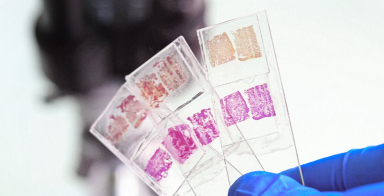
Ensure barcodes remain readable through xylene, alcohol, and heat exposure during slide staining, tissue embedding, and cassette processing.
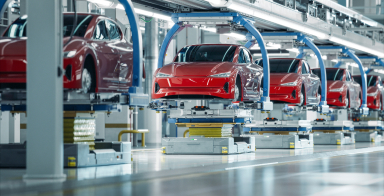
Label plastic or metal parts exposed to toluene-based cleaners, degreasers, or solvents throughout manufacturing, assembly, or quality control.
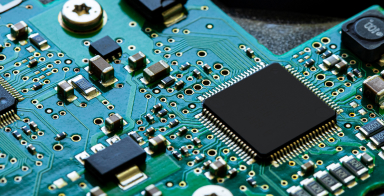
Identify circuit boards and electronic parts exposed to MEK during surface prep, cleaning, or rework in electronics manufacturing environments.
Label tubes used with DMSO, ethanol, or acetone in chemical prep, sample storage, or long-term lab workflows.
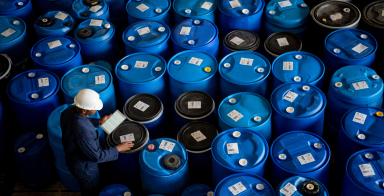
Label drums and bulk containers exposed to aggressive chemicals during handling, storage, or waste processing in industrial settings.
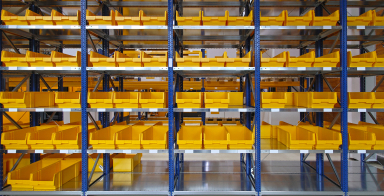
Label bins and supply containers wiped daily with bleach or peroxide in clinical, diagnostic, or hospital inventory systems.

Have questions? We’re here to help.
Contact us to connect with a specialist who understands your industry and can provide the right solutions for your business. Let’s start a conversation.
Take advantage of our volume discounts for bulk orders. Reach out to us for a personalized quote tailored to your needs.
"*" indicates required fields