zebra zd printers
Zebra ZD desktop label printers built for performance.
The Zebra ZD Series desktop printers deliver reliable, durable label printing in a compact, industrial-grade design built for consistent performance.
- Availabel in 203 and 300 dpi
- Compact, space-saving design
- Supports roll-fed and fan-fold labels
Perfect for labs, production lines, and logistics stations, the Zebra ZD adapts easily to any workflow. With optimized media handling and thermal transfer technology, it ensures labels perform as hard as you do.
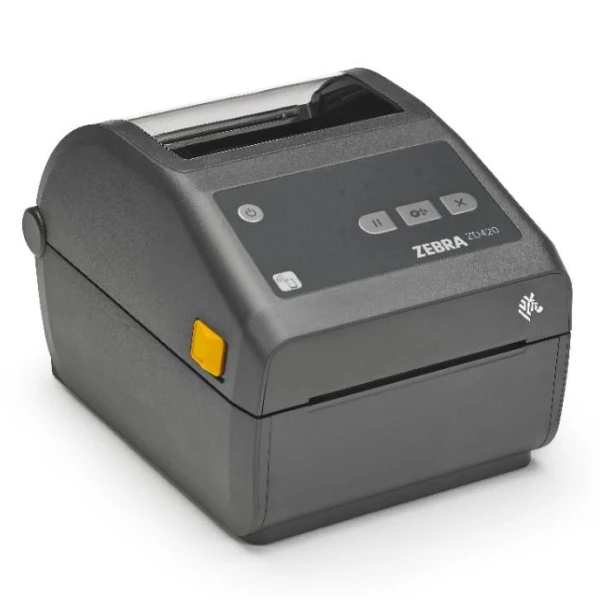
Zebra ZD printers for reliable label printing.
Zebra ZD printers combine dependable desktop performance with simplicity and precision. Compact yet durable, these thermal printers support both direct thermal and thermal transfer labeling for clear, consistent results. Paired with the right durable labels, they deliver lasting adhesion, crisp barcodes, and dependable readability in demanding environments.
zd200 Series
Entry-level desktop printers built for simple, cost-effective label production. Zebra ZD220 and ZD230 models deliver dependable 203 dpi printing for basic labeling tasks. Ideal for low-volume applications, these printers pair best with paper or lightweight synthetic labels for shipping, product, and inventory identification.
Best for: budget-friendly simplicity
zd400 Series
Mid-range printers designed for flexibility and day-to-day reliability. The ZD411 and ZD421 offer faster speeds, optional thermal transfer printing, and multiple connectivity choices. These models handle a wide range of label materials and sizes, supporting laboratory, healthcare, and logistics operations that need consistent performance.
Best for: versatile media handling
zd600 series
Premium desktop printers for high-demand environments. The ZD611 and ZD621 combine top-tier print quality, advanced security, and faster throughput. With robust media handling and precise thermal control, they’re suited to durable label materials like polyester or polypropylene for long-term, high-resolution identification.
Best for: high-volume printing
Zebra ZD series printer specifications.
Zebra ZD printers deliver desktop printing with resolutions up to 300 dpi and speeds suited for high-volume labeling. Supporting a range of media types, they provide consistent barcode quality and dependable output, making them ideal for applications requiring precision in compact workspaces.
300 dpi
Print Resolution
Available in 203 and 300 dpi, depending on the selected model.
203 mm/s
Print Speed
102, 152, and 203 mm/s based on model version and print resolution.
118 mm
Label Width
15 mm to 118 mm label width (approximately 0.5 to 4.25 inches).
127 mm
Roll Diameter
Accommodates rolls up to 5 inches in diameter for extended print runs.
Available in 203 and 300 dpi configurations, ZD printers deliver crisp text and barcodes on even the smallest labels. This resolution range supports both standard inventory tags and detailed identification labels for laboratory, electronic, and industrial use.
Built for workspaces where efficiency matters, ZD printers combine industrial-grade print mechanics with a compact, lightweight frame. Their simple loading system, accessible media path, and minimal footprint make them ideal for lab benches, packing stations, and production lines.
Thermal transfer uses heat to bond ribbon resin directly to the label surface, creating sharp, high-density prints that withstand abrasion, moisture, and chemical exposure. This method delivers exceptional print permanence and legibility under demanding conditions.
Compatible labels for Zebra ZD printers.
Labels designed for smooth transport through Zebra ZD printers balance the right dimensions, material flexibility, and liner release characteristics. When label size or stiffness falls outside tolerance, feed issues, misalignment, or ribbon wrinkles often occur—not because of printer faults, but due to mismatched label engineering. Optimizing both the size and the construction of the label ensures clean print quality and consistent sensor performance across ZD models.
tube labels
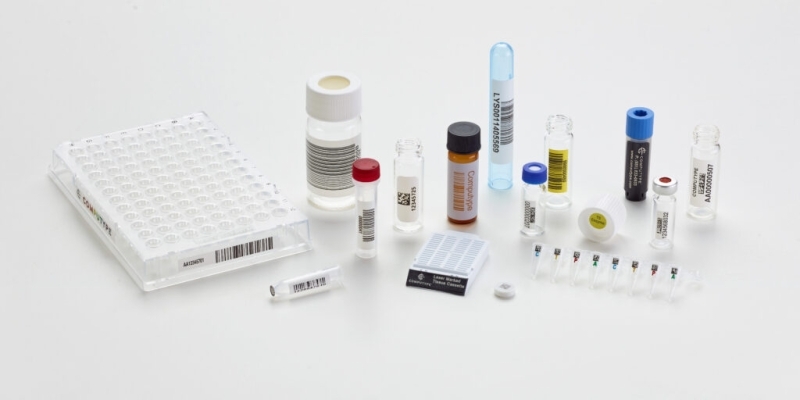
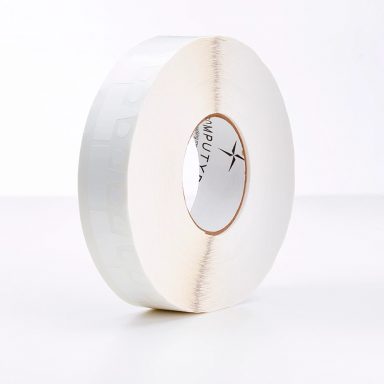
Sized for small-diameter labware and available in both roll and fan-fold formats, these labels pair with matching ribbons for clear, durable prints on benchtop thermal transfer printers.

cryo labels
Supplied in compact rolls compatible with desktop printers like the ZD421, these labels produce crisp thermal transfer prints and feed smoothly for consistent results in cryogenic storage applications.
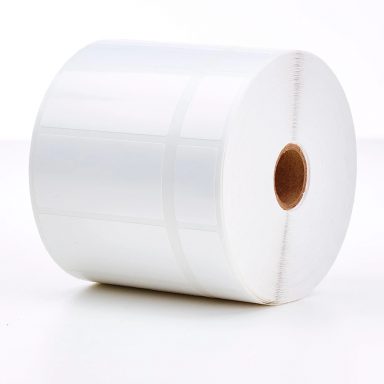
library labels
Delivered on 1-inch core rolls for seamless desktop loading, these polyester labels deliver sharp barcode contrast and dependable adhesion—ideal for cataloging, circulation, and archival systems.
Label stiffness, liner release, and coating thickness influence media tracking and print consistency. Labels engineered for ZD printers prevent drift and misfeeds, ensuring seamless print performance and clear, scannable identification.
Ribbon formulation affects how ink bonds to the label surface and how long that image lasts under heat, abrasion, or chemical exposure. Each compatible ribbon is selected for both printer performance and material chemistry, ensuring every print remains sharp and durable.
ZD printers are designed for 1-inch (25.4 mm) core label rolls, matching our standard label constructions to ensure smooth media tracking, consistent tension, and reliable sensor alignment. Compatible roll-fed, fan-fold, and black-mark labels expand integration flexibility.
For ZD printers, label width typically ranges from 0.5 in (15 mm) to 4.25 in (118 mm), with a maximum roll diameter of 5 in (127 mm). Core diameters are typically 1 in (25.4 mm), though narrower media often requires adapters for precise tracking. Mismatched roll geometry can cause skewed feeding, ribbon creasing, or incorrect gap sensing. Even subtle differences in liner caliper or roll tension may affect media handling, so construction consistency matters as much as dimensions. Proper roll design ensures alignment through the platen, leading to smooth peel performance and print accuracy over long runs.
Ribbon width should slightly exceed label width for optimal coverage and to prevent residue buildup at print edges. ZD-series thermal transfer printers accommodate ribbons from 74 m to 300 m depending on model. Ribbon and facestock chemistry must align—wax ribbons suit paper stocks, while resin and wax/resin blends work best with synthetics like polyester or polypropylene. Improper pairings often result in smudging, poor image density, or head wear. Engineering compatibility between ribbons and coatings not only extends printhead life but also guarantees barcode readability in high-throughput operations.
Facestock rigidity plays a major role in feed consistency. ZD printers perform best with materials that maintain flexibility under moderate heat and tension. Excessively stiff films can cause print voids or gap detection errors, while materials with memory curl may catch on guides. Films such as polyester or polypropylene should have balanced modulus values to conform through the path without distortion. Controlled caliper uniformity and dimensional stability prevent drift that can lead to cumulative registration errors across multiple labels.
Liner performance directly affects feeding accuracy. Too much friction increases motor load and waste, while overly slick liners can slip during acceleration. Smooth kraft or glassine liners with consistent release coatings maintain a predictable peel force and clean signal for gap and black-mark sensors. Uniform liner opacity is also important for transmissive sensing modes. Inconsistent liner coatings often cause false gap reads, skewing label placement. Consistent liner quality ensures reliable performance over extended print cycles.
The ZD’s media path tolerates a wide range of adhesives, but performance is optimal with permanent acrylics that balance tack and shear without bleed. Hot-melt or highly aggressive formulations can transfer onto rollers, leading to residue buildup or jams. Adhesives with moderate cold flow perform best for long dwell times without shifting under printhead pressure. Testing adhesive release against the liner ensures clean separation at high speeds and low temperatures. A well-balanced adhesive formulation maintains clean print edges, smooth feeding, and strong long-term adhesion post-application.
Desktop printer model comparison.
The following table presents a side-by-side comparison of three desktop printer models: the Zebra ZD421, the TSC TC310, and the CAB MACH 4S. Specifications are outlined to help identify key differences and determine which printer best matches specific labeling requirements.
specification
zebra zd421
tsc tc310
cab mach 4s
print speed
Up to 152 mm/s (6 in./sec)
102 mm/sec (4 in./sec)
Up to 300 mm/sec (12 in./sec)
print resolution
203 dpi or 300 dpi
300 dpi
203, 300, 600 dpi
print width
Up to 104 mm (4.09 in.)
Up to 105.6 mm (4.15 in.)
Up to 108.4 mm (4.27 in.)
memory
512 MB Flash, 256 MB SDRAM
128 MB Flash, 64 MB SDRAM
256 MB RAM, 50 MB Flash
connectivity
USB 2.0, USB Host, optional Ethernet, Serial, Wi-Fi, Bluetooth
USB, RS-232, Ethernet, USB Host, optional Bluetooth
USB 2.0, RS232C, Ethernet, WLAN
media types
Roll-fed or fan-fold, die-cut, continuous, tag stock, wristbands
Continuous, die-cut, black mark, fan-fold
Rolls or fanfold, continuous media
label width
15 - 118 mm (0.585 - 4.65 in.)
20 - 112 mm (0.79 - 4.4 in.)
5 - 120 mm (0.19 - 4.72 in.)
roll diameter
127 mm (5 in.)
127 mm (5 in.)
205 mm (8 in.)
ribbon length/width
300 m / 33.8 - 109.2 mm (984 ft. / 1.33 - 4.3 in.)
360 m / 25 - 114 mm (1181 ft. / 0.98 - 4.5 in.)
360 m / 25 - 114 mm (1181 ft. / 0.98 - 4.5 in.)
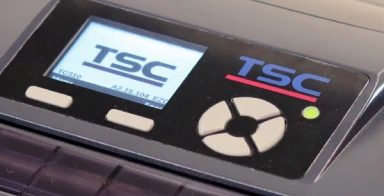
tsc tc series
Reliable desktop printers designed for everyday labeling tasks. The TC Series offers easy operation, fast print speeds, and dependable performance in offices, labs, and other compact work environments.
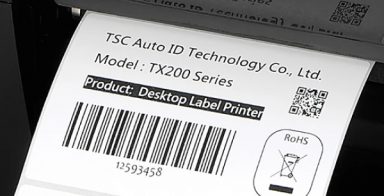
tsc tx series
Flexible desktop printers that balance speed and resolution. The TX Series supports diverse labeling applications, providing efficient, high-quality output in compact designs suited for multiple business needs.
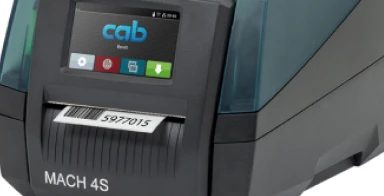
cab mach 4s
A compact industrial printer combining advanced performance with a small footprint. The MACH 4S handles diverse media types and delivers consistent, high-quality output for efficient labeling workflows.

Let’s get labeling.
Have questions? We’re here to help.
Contact us to connect with a specialist who understands your industry and can provide the right solutions for your business. Let’s start a conversation.