

Barcode labels support identification, traceability, and data accuracy across demanding environments. Sequence management, duplicate prevention, variable data control, and reliable scanning must align with production scale and operational workflows. Matching barcode design, data integrity, and durable label materials ensures barcodes function as dependable infrastructure—not just printed symbols.
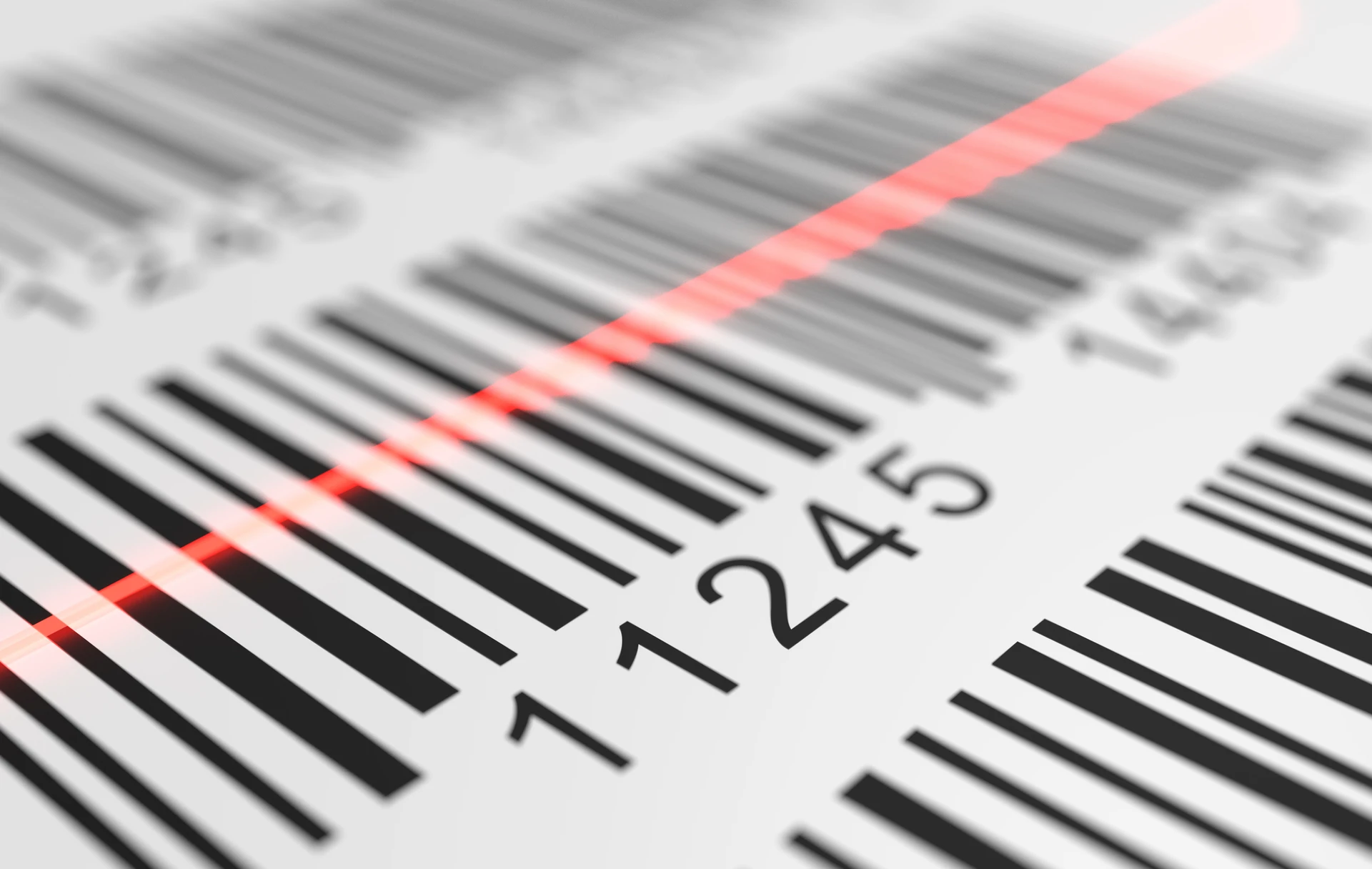
Barcode labels support identification, tracking, and traceability across laboratories, manufacturing facilities, warehouses, and regulated industries. Organizations rely on barcode systems to manage assets, track samples, control inventory, and meet compliance requirements. Each application requires different label materials, barcode formats, and durability levels. The categories below represent the most common environments where barcode labels enable accurate data capture and reliable scanning.
Identify individual assets across laboratories, hospitals, warehouses, and libraries. Asset tracking barcode labels mark equipment, instruments, laptops, tools, and book collections with durable identification that survives years of use. Systems assign a unique ID to each item, enabling maintenance tracking, ownership records, and audits. Labels commonly encode identifiers using Code 128, QR Codes, or Data Matrix.
Manage stored items and cataloged collections across warehouses, libraries, and archives. Facilities label warehouse bins, garment tags, library spine labels, and storage containers to support inventory control and retrieval. Inventory barcode labels link items to databases that track stock levels, locations, and circulation records. Labels frequently use Code 128, EAN-13, or ITF barcodes for fast scanning.
Support regulated industries that require standardized labeling systems. Blood bags, pharmaceutical containers, medical devices, and chemical containers often include barcodes as part of compliance labeling. These labels must follow strict formatting and data structures defined by regulatory standards. Applications frequently encode structured identifiers using formats like ISBT 128, GS1-128, Data Matrix, or PDF417.
Support accurate specimen identification across research, diagnostics, and biobanking. Laboratories label sample tubes, cryogenic vials, histology slides, and microplates to track specimens through testing, storage, and analysis. These labels resist solvents, freezing temperatures, and autoclave conditions while maintaining precise scan performance. Small formats often use high-density barcodes such as Data Matrix, Code 128, or QR.
Identify products throughout manufacturing, assembly, and product lifecycles. Facilities apply barcode labels to automotive parts, electronics, printed circuit boards, and tires to maintain traceability during production and distribution. Durable materials withstand soldering temperatures, industrial cleaners, and mechanical wear. Manufacturers commonly encode serial numbers and product IDs using Code 128, Data Matrix, or QR Codes.
Request a barcode label sample to test durability, scanning performance, and print quality in your laboratory, warehouse, or manufacturing environment.
Barcodes must follow precise structural rules to scan reliably across different printers, scanners, and environments. Barcode labels depend on correct symbology selection, module size, quiet zones, and print contrast to maintain readability. Understanding these fundamentals helps organizations design barcode labels that scan quickly, minimize errors, and maintain accuracy across manufacturing, laboratory, and logistics workflows.
Different barcode symbologies store and structure data in unique ways. Linear formats like Code 128 support fast scanning in logistics systems, while two-dimensional codes like Data Matrix and QR store dense information in small spaces. Selecting the correct symbology ensures barcode labels meet space constraints, scanning requirements, and industry standards across manufacturing, laboratories, and supply chains.
Barcode labels store structured identifiers that connect physical items to digital systems. Product numbers, serial numbers, batch numbers, and expiration dates often appear within barcode data strings. Standards such as GS1 use defined application identifiers to organize this information so scanners and software systems can interpret the encoded data consistently across global supply chains.
Barcode labels must be designed so scanners can interpret the symbol quickly and accurately. Proper barcode dimensions, spacing, and contrast ensure scanners detect bars, spaces, and modules without errors. Label materials, printing methods, and barcode size all influence scan performance. Optimized barcode labels reduce scanning failures and support fast data capture in warehouses, laboratories, and automated manufacturing environments.
Well-structured barcode data links serialized identifiers, lot numbers, and product codes to databases for consistent tracking and traceability.
Proper barcode dimensions, contrast, and spacing allow scanners to decode symbols quickly and accurately across warehouse and lab workflows.
Effective barcode design balances symbology, size, and print quality to ensure barcode labels scan consistently in real-world environments.
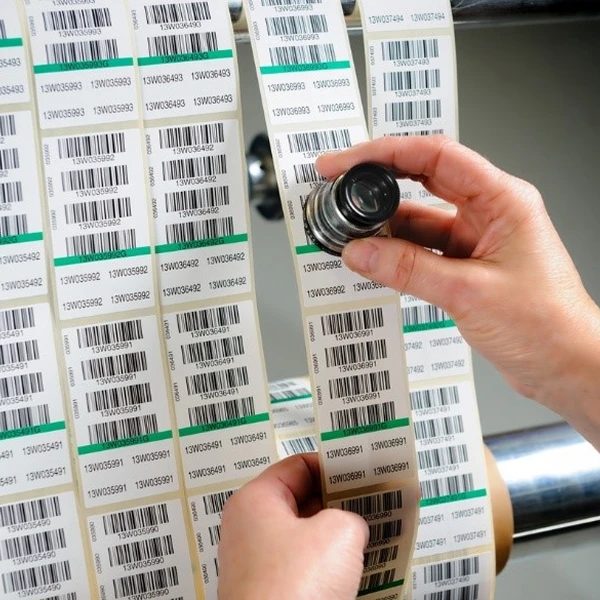
Code 128 labels are one of the most common choices for industrial barcode labels because they combine high data density with flexible character support. The symbology encodes the full ASCII character set and allows switching between three character subsets to optimize how data is stored. Numeric data can be compressed—pairing digits and significantly increasing density compared with older linear barcodes.
Each Code 128 barcode is built from symbol characters composed of 11 modules arranged as bars and spaces. A start character defines the initial character set, followed by encoded data, a calculated check character, and a stop pattern. The checksum uses a modulo-103 algorithm to verify data integrity during scanning.
Code 128 barcode labels scan extremely well with both laser scanners and imaging scanners, which is why they dominate logistics and warehouse systems. The symbology tolerates moderate print variation and works reliably on thermal transfer labels commonly used in industrial environments.
In practice, Code 128 labels appear on shipping labels, pallet identification labels, warehouse bin labels, equipment asset tags, and manufacturing tracking labels. Many supply chain labels also use GS1-128, which builds directly on the Code 128 structure to encode standardized logistics identifiers.
Data Matrix labels are widely used when label space is limited but traceability requirements demand dense barcode encoding. The symbol consists of a grid of square modules surrounded by a distinctive L-shaped finder pattern that allows imaging scanners to detect orientation quickly. The remaining borders form timing patterns that guide decoding across the symbol matrix.
Data Matrix barcode labels support several encoding modes, including ASCII, C40, Text, EDIFACT, and Base256. These modes allow the encoder to compress different types of data efficiently, which is particularly valuable when storing serialized identifiers or multiple data fields. Error correction uses Reed-Solomon algorithms, enabling scanners to decode the symbol even if a portion of the printed code is damaged.
Because of this resilience and density, Data Matrix performs exceptionally well for very small barcode labels. High-resolution printing allows the symbology to remain readable even when printed only a few millimeters wide.
Manufacturers frequently use Data Matrix labels for electronics traceability, medical device identification, and automotive components. In laboratory environments, the symbology appears on sample tube labels, cryogenic vial labels, histology slide labels, and microplate labels where small barcode sizes and reliable decoding are critical.
QR code labels provide high data capacity and flexible scanning performance in environments that rely on imaging scanners or mobile devices. The symbol uses a square matrix of modules with three large position detection patterns in the corners. These patterns allow scanners to quickly determine the orientation of the code and decode it even when the label is rotated or partially obscured.
QR code barcode labels support multiple encoding modes, including numeric, alphanumeric, binary, and Kanji. The symbol can scale across several versions that increase the module grid size, allowing thousands of characters to be encoded if needed. Error correction levels allow designers to trade capacity for durability, enabling reliable scanning even if a portion of the symbol becomes damaged.
Because QR codes store more information than most linear barcodes, organizations often use them when a label must connect physical assets to digital information systems. Imaging scanners read QR codes extremely quickly, and most smartphones can decode them without specialized hardware.
Common uses include product authentication labels, equipment identification labels that link to maintenance records, warehouse signage labels, and packaging labels that direct users to documentation, product databases, or digital instructions.
Interleaved 2 of 5 labels remain a practical choice for numeric barcode labels used in logistics and packaging environments. The symbology encodes digits in pairs by interleaving bars from one digit with spaces from the second digit. This structure reduces overall barcode width and allows efficient numeric encoding while maintaining reliable scanning performance.
Each encoded digit uses a pattern of five elements composed of two wide elements and three narrow elements. Because digits are encoded in pairs, Interleaved 2 of 5 barcode labels require an even number of numeric characters. Many implementations include a modulo-10 check digit to improve scanning accuracy.
The symbol structure begins with a start pattern and ends with a stop pattern that allow scanners to detect the barcode boundaries. Adequate quiet zones on both sides are critical to ensure reliable decoding, particularly with laser scanners used in high-speed distribution systems.
Interleaved 2 of 5 barcode labels are commonly printed directly onto corrugated packaging or applied as carton labels in supply chains. Typical applications include warehouse case labels, pallet identification labels, distribution center carton labels, and shipping container labels where numeric identifiers dominate.
Code 39 labels remain widely used for industrial barcode labels that require straightforward alphanumeric encoding. The symbology supports uppercase letters, digits, and several special characters, making it useful for part numbers, asset identifiers, and equipment IDs.
Each encoded character uses nine elements composed of bars and spaces, with three wide elements and six narrow elements defining the symbol pattern. Barcode scanners detect these patterns to interpret the encoded characters sequentially. A start and stop character defines the barcode boundaries, allowing scanners to reliably identify the symbol.
Many implementations optionally include a modulo-43 checksum to improve data validation during scanning. Although Code 39 barcodes are less dense than newer symbologies such as Code 128, the structure remains extremely tolerant of printing variation.
Industrial environments frequently use Code 39 barcode labels for equipment asset tags, automotive part identification labels, tool tracking labels, and warehouse location labels. Because nearly every scanner supports the symbology, Code 39 remains a dependable choice for legacy systems and broad scanner compatibility.
GS1 barcode labels follow standardized data structures used across global supply chains. Rather than representing a single barcode type, the GS1 system defines how product identifiers, serial numbers, lot numbers, and expiration dates should be encoded within specific symbologies.
Common GS1 barcode formats include UPC and EAN retail barcodes, GS1-128 linear barcodes, and GS1 DataMatrix symbols. These formats use application identifiers to define the meaning of each data element within the encoded string. Scanning systems interpret these identifiers to extract structured information such as product numbers, batch numbers, and expiration dates.
GS1 barcode labels allow organizations to exchange product and logistics data consistently across different systems and trading partners. Retailers, healthcare providers, pharmaceutical manufacturers, and logistics providers rely heavily on GS1 standards to support traceability and inventory management.
Typical examples include retail product labels, pharmaceutical packaging labels, medical device identification labels, and shipping container labels that encode standardized supply chain identifiers used throughout global distribution networks.
Not all labels are built the same. Share a few details about your product or environment, and we’ll recommend a label designed to stick, stay readable, and hold up under pressure.
Organizations produce barcode labels using several printing strategies depending on volume, durability requirements, and data management needs. Some operations rely on print-on-demand barcode label printing inside their facility, while others use professionally printed barcode labels produced in large batches. Barcode printing software and modern print technologies allow companies to generate serialized identifiers, maintain sequence integrity, and produce high-resolution barcode labels that scan reliably.
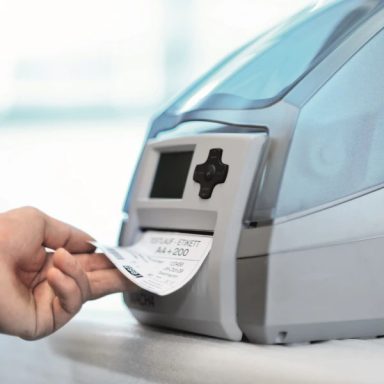
Pre-printed barcode labels deliver consistent print quality for large volumes of serialized labels. Professional printing methods produce high-resolution barcodes with precise bar widths, strong contrast, and durable materials. Many organizations choose pre-printed barcode labels for asset tracking, laboratory identification, manufacturing traceability, and regulated labeling applications.
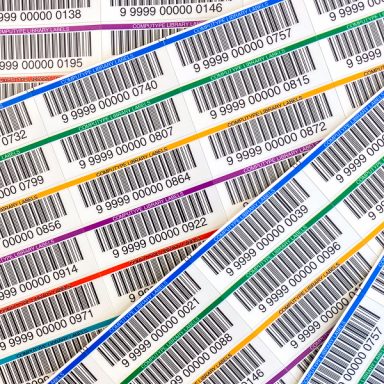
Print-on-demand barcode labels allow organizations to generate labels as needed using thermal transfer or direct thermal printers. This approach supports dynamic data such as serial numbers, lot numbers, and expiration dates. Warehouses, laboratories, and manufacturing facilities commonly print barcode labels on demand to support inventory tracking, shipping labels, and workflow identification.
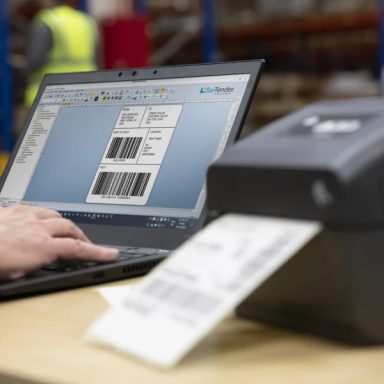
Barcode printing software generates barcode images and manages the data behind barcode labels. Systems control serialization, check digits, and barcode formatting to ensure consistent label generation. Platforms like BarTender or Loftware connect barcode label printing with databases, ERP systems, and laboratory information systems to automate barcode label creation and maintain sequence integrity.
Professional printing methods produce precise bar widths and high contrast, helping barcode labels scan quickly and accurately.
Barcode printing systems manage sequential identifiers to prevent duplication and maintain accurate tracking across large label sets.
Industrial barcode labels use specialized materials, coatings, and ribbons to maintain scan performance under chemicals, abrasion, and temperature extremes.
Barcode labels must scan reliably and maintain accurate data throughout their lifecycle. Barcode verification and validation help organizations confirm that barcode labels meet quality standards, preserve sequence integrity, and support traceability requirements. Verification systems evaluate barcode print quality, while validation processes confirm that encoded data remains accurate, unique, and compliant with industry standards.
Serialized barcode labels must remain unique to maintain reliable tracking systems. Duplicate identifiers can disrupt inventory records, asset tracking systems, and laboratory workflows. Barcode label generation systems prevent duplicates by managing serialized data, controlling identifier formats, and ensuring each barcode label represents a distinct record.
Barcode systems rely on structured numbering sequences to track products, assets, and samples. Barcode printing software and database integrations manage sequential identifiers so barcode labels follow consistent numbering patterns. Proper sequence management prevents skipped numbers, duplicates, and data conflicts in large label sets.
Many industries require traceable barcode labels for regulatory compliance and quality control. Structured identifiers allow organizations to track products, samples, and assets across production, storage, and distribution processes. Barcode systems support compliance with traceability standards used in healthcare, manufacturing, logistics, and laboratory environments.
Well-designed and verified barcode labels scan consistently across handheld scanners, mobile devices, and automated systems.
Validated barcode labels maintain unique identifiers, supporting accurate tracking of assets, samples, and products.
Verified barcode labels reduce misreads, rescans, and data entry errors in laboratories, manufacturing, and warehouse operations.
Barcode verification evaluates whether a printed barcode meets defined quality standards and will scan reliably across different scanners and environments. Unlike normal barcode scanning—which simply reads the data—verification measures the print quality and structural accuracy of the symbol itself.
Verification systems analyze multiple characteristics of a barcode, including contrast between bars and spaces, edge definition, quiet zones, dimensional accuracy, and defects in the printed image. Specialized verification devices capture a scan reflectance profile, allowing software to evaluate how scanners will interpret the barcode under controlled conditions.
These measurements help determine whether a barcode label will scan reliably in real workflows such as warehouse picking, laboratory sample tracking, or manufacturing traceability systems. Verification is particularly important when organizations produce large volumes of serialized labels or operate automated scanning environments.
For example, manufacturers may verify Code 128 or Data Matrix labels used on automotive components or printed circuit boards before products enter distribution. Laboratories may verify small sample tube labels or cryogenic vial labels to ensure scanners can read them quickly during high-throughput workflows.
By verifying barcode labels during production, organizations can identify printing problems—such as poor contrast, distorted bars, or printing defects—before labels enter the supply chain. This process reduces scanning failures, prevents operational delays, and helps maintain reliable barcode-based identification systems.
Barcode validation focuses on the accuracy and integrity of the encoded data, rather than the physical print quality of the symbol. While verification evaluates how well a barcode prints and scans, validation confirms that the barcode contains the correct information and structure for the intended application.
Validation systems check that barcode data follows the required format, contains valid identifiers, and remains unique within the system generating the labels. For example, serialized barcode labels used in asset tracking systems must maintain unique identifiers so equipment, samples, or products can be tracked individually throughout their lifecycle.
In regulated industries, barcode validation also confirms that encoded information complies with established data standards. Pharmaceutical packaging, medical devices, and laboratory specimens often use structured identifiers that combine product numbers, lot numbers, expiration dates, and serial numbers within a single barcode string.
Validation processes commonly integrate with barcode printing software, databases, and enterprise systems to confirm data before labels are printed. This prevents duplicate identifiers, formatting errors, or incomplete records from entering production environments.
Organizations rely on barcode validation when printing labels for applications such as warehouse inventory tracking, laboratory specimen identification, and manufacturing traceability. By ensuring that barcode labels encode correct and consistent data, validation helps maintain accurate records, regulatory compliance, and reliable digital connections between physical items and database systems.
Barcode grading assigns a measurable quality score to a printed barcode based on standardized verification metrics. Verification devices analyze barcode characteristics and calculate an overall grade that predicts how reliably scanners will read the symbol in real-world conditions.
Most grading systems follow international barcode quality standards that assign numeric scores from 4.0 (highest quality) to 0.0 (failure), often represented as letter grades from A to F. These grades reflect the barcode’s ability to maintain consistent contrast, clear bar edges, and accurate dimensions across the printed symbol.
For linear barcodes such as Code 128 or GS1-128, verification systems evaluate parameters including symbol contrast, edge determination, modulation, defects, and decodability. These factors determine how easily scanners can distinguish the bars and spaces that represent encoded data.
Barcode grading is widely used during label production to confirm that printed barcode labels meet internal quality requirements or external industry standards. For example, logistics labels printed for distribution centers must achieve acceptable quality grades to ensure reliable scanning on high-speed conveyor systems.
Similarly, manufacturers may grade Data Matrix or QR code labels used for product traceability to confirm they meet scanning requirements across different devices. By measuring barcode quality during production, grading helps organizations prevent scanning failures and maintain consistent identification performance across their operations.
ISO/IEC 15416 is the international standard used to evaluate the print quality of linear barcodes such as Code 128, Code 39, EAN-13, and other one-dimensional symbols printed on labels. The standard defines a structured methodology for measuring barcode quality and assigning an overall grade based on multiple performance parameters.
Verification systems following ISO/IEC 15416 measure characteristics such as minimum reflectance, edge contrast, modulation, defects, decodability, and quiet zones. These factors determine whether scanners can reliably distinguish bars and spaces during decoding.
To calculate a quality score, verification devices capture multiple scan lines across the height of the barcode. Each scan line receives an individual grade, and the overall barcode grade reflects the combined results of those measurements.
ISO/IEC 15416 provides a consistent framework for comparing barcode quality across different printers, materials, and production environments. Organizations commonly use this standard when producing barcode labels for retail products, warehouse shipping labels, asset tracking labels, and manufacturing traceability systems.
By applying ISO verification standards during barcode label production, companies can identify printing problems early and maintain consistent scanning performance across supply chains and automated systems.
ISO/IEC 15415 defines the international method for evaluating the print quality of two-dimensional barcode symbols such as Data Matrix, QR codes, and other matrix-based codes used on barcode labels. The standard establishes how verification systems measure and grade these symbols to ensure reliable decoding by imaging scanners.
Unlike linear barcodes, 2D codes store data within a grid of modules. ISO/IEC 15415 evaluates characteristics such as symbol contrast, modulation, fixed pattern damage, axial and grid non-uniformity, and unused error correction capacity. These measurements determine how accurately scanners can locate the symbol, interpret its structure, and recover encoded data.
Verification devices analyze the entire barcode symbol and calculate an overall quality grade that predicts scanning reliability. This grading helps organizations confirm that printed labels will perform consistently across different scanning devices and environmental conditions.
Industries that rely heavily on 2D barcode labels—including electronics manufacturing, medical device production, and laboratory sample identification—often apply ISO/IEC 15415 verification during label production. For example, Data Matrix labels used on printed circuit boards or small laboratory tubes must maintain high-quality grades to ensure scanners can decode them quickly despite limited label space.
By verifying 2D barcode labels against ISO standards, organizations maintain reliable traceability and prevent scanning failures in high-volume identification systems.
The GS1 General Specifications define data structures (Application Identifiers), permitted carriers (EAN/UPC, ITF-14, GS1-128, GS1 DataMatrix, GS1 QR), HRI rules, and carrier-specific size/placement requirements (X-dimension ranges, magnification, bearer bars for ITF-14, quiet zones, symbol heights). They also standardize check-digit algorithms (Mod-10) and date/lot encodings, enabling interoperability from manufacturing to retail and healthcare. Implementers map business data (GTIN, lot, expiry, serial, SSCC, GIAI/GRAI) to AIs, select an appropriate carrier per packaging level, and validate that printed symbols meet both GS1 carrier rules and ISO print-quality grades. The Specs unify what you encode and how you present it so trading partners and regulators decode consistently.
With over 50 years of experience designing and producing barcode labeling solutions, our engineers have solved nearly every challenge imaginable. From data structure and symbology selection to print durability and scanning performance, we’ve seen it all—and we’re sharing the insights that help ensure every barcode you print performs flawlessly.
Generating and printing barcode labels starts with defining the data and barcode type you need. Use barcode labeling software to create templates, assign data fields, and generate barcodes automatically from your database or spreadsheet. Thermal transfer printers are the most common choice because they offer sharp, durable print quality on label materials suited for different environments. Match your label size and resolution to the barcode density so symbols are easily scannable. Before mass printing, verify the barcode using a verifier to confirm it meets ISO/IEC standards for contrast and readability. Always test printed labels under real scanning conditions, as lighting, curvature, or material finish can affect scan performance.
Barcode labeling software should match how your data is managed and how your labels are printed. For most organizations, the key factors are database connectivity, template flexibility, and printer compatibility. Software like BarTender or Loftware integrates directly with systems such as LIMS, ERP, or warehouse management software to automate data flow and prevent errors. Look for tools that support your required barcode symbologies, GS1 formatting, and variable data printing. Features like user access control, version tracking, and serialization management are important for regulated environments. A good solution simplifies label creation and reduces manual steps, ensuring consistent and compliant output across all printers and production sites.
Selecting a barcode symbology depends on how much data you need to encode, how the barcode will be scanned, and any standards you must follow. Linear (1D) barcodes such as Code 128 or ITF-14 are ideal for short identifiers and fast, long-distance scanning. Two-dimensional (2D) barcodes like Data Matrix, QR, or PDF417 hold much more data in less space and include error correction for damaged or curved surfaces. Many industries, including healthcare and logistics, follow GS1 standards, which dictate the specific symbology and data structure to use. When space is limited or labeling curved items like vials or PCBs, 2D barcodes are often the best choice. Always confirm symbology requirements with your trading partners or regulatory body before implementation.
Barcode density increases as modules or bars get smaller, allowing more data to fit into a smaller area. However, higher density also reduces scanning tolerance—especially under motion, distance, or low contrast. Compact barcodes require higher print resolution and precise registration to maintain edge clarity. Larger bar or module sizes make scanning easier and more forgiving, particularly when labels are curved or read by fixed-position scanners. In most cases, it’s better to balance data capacity with real-world scan distance and label durability rather than pursuing maximum density. Verify the barcode under the same lighting, angle, and motion speed expected in use to ensure consistent first-pass read rates.
Different printing technologies produce different results for barcode accuracy and durability. Thermal transfer printing offers the best consistency and sharpness for high-contrast, long-lasting barcodes. Direct thermal printing is convenient but fades over time, making it unsuitable for long-term use or heat exposure. Inkjet and laser printing can achieve high resolution, but ink spread, substrate absorption, or glare may reduce readability. Flexographic printing is excellent for large production runs but requires precise plate control to maintain narrow bars. For harsh environments, use a durable face stock and a compatible resin ribbon or protective laminate. Always test print samples for optical clarity and resistance to chemicals, abrasion, and temperature before full production.
Many barcode failures stem from small encoding or formatting errors. Common issues include using the wrong character set (for example, switching Code 128 subsets incorrectly), omitting check digits, or misplacing FNC1 characters in GS1 symbols. Variable-length fields without proper separators often make barcodes unreadable, and dropping leading zeros can change meaning entirely. Another frequent problem is truncating symbol height or compressing bar widths below minimum X-dimension. Always validate data strings before printing using a rules-based verifier or software validator. Then, test live labels with the same scanners used in your workflow. This ensures that each barcode decodes correctly under real-world conditions and prevents costly relabeling.
Yes. 2D barcodes like Data Matrix and QR can carry encrypted or digitally signed data, allowing them to act as secure identifiers. They can include authentication tokens, public-key signatures, or serialized URLs linked to secure verification servers. In anti-counterfeiting applications, each code is unique and verified against a controlled database. Error correction also helps preserve data integrity even when a label is partially damaged. For the best results, pair secure codes with durable label materials and printing methods resistant to tampering or chemical removal. Remember that barcode security relies as much on how the data is managed and verified as on the printed symbol itself.

Have questions? We’re here to help.
Contact us to connect with a specialist who understands your industry and can provide the right solutions for your business. Let’s start a conversation.
Take advantage of our volume discounts for bulk orders. Reach out to us for a personalized quote tailored to your needs.
"*" indicates required fields