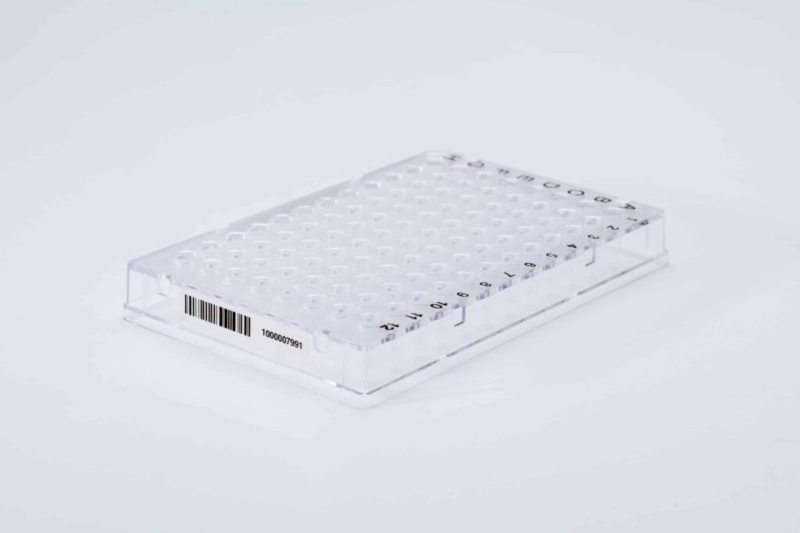
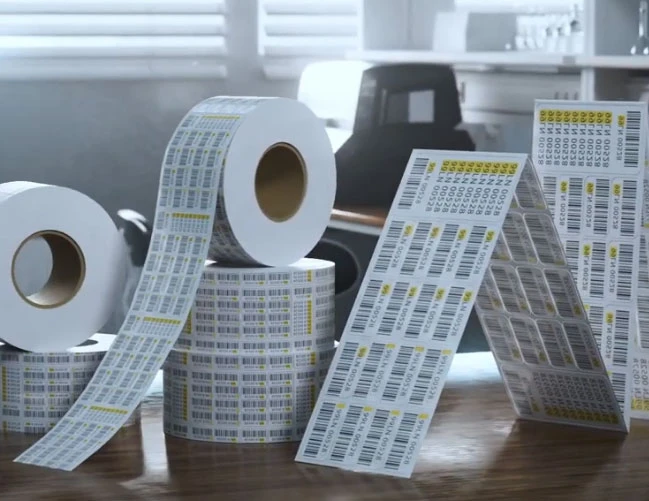
Fused inks for direct marking glass labware.
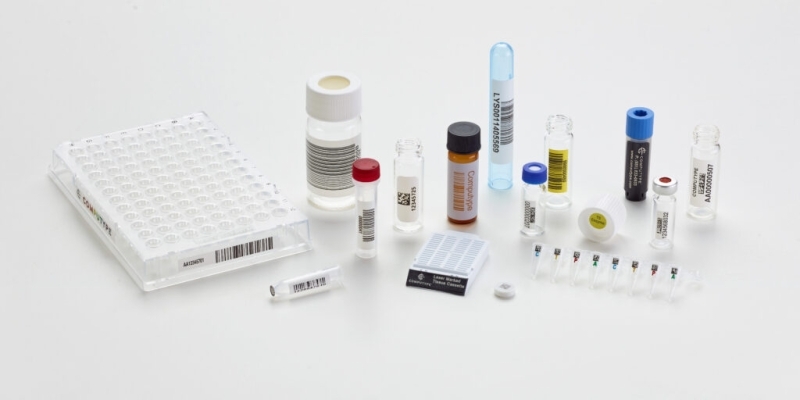
One of the most durable options for pre-barcoded labware, fused ink imaging permanently bonds barcodes and identification codes directly to glass surfaces. Through our Labware Prep™ Services program, we apply this process to create highly resilient markings that withstand harsh chemicals, solvents, and demanding laboratory environments without fading or degrading.
- Permanent glassware marking
- Extreme chemical resistance
- Cryogenic and heat resistance
- High-volume sequential barcoding
What is fused ink marking?
Fused ink marking is a direct part marking technology that permanently bonds barcodes and identification codes directly onto glass labware using heat. Designed for high-volume pre-barcoding of vials and similar labware, it is especially effective for sequential identification and large sample collections. The fused ink forms an extremely durable mark that resists chemicals, heat, cryogenic temperatures, and abrasion without the need for adhesive labels. This approach creates long-lasting, automation-friendly identification for demanding laboratory environments.
Pre-barcoded laboratory glassware.
Fused ink imaging provides an exceptionally durable solution for permanently identifying glass labware with high precision. This process uses heat to fuse the ink directly into the glass surface, creating permanent barcodes and identification marks without the need for adhesive labels. The result is a highly resilient mark that withstands harsh chemicals, solvents, extreme temperatures, and cryogenic storage.
Designed primarily for high-volume pre-barcoding of vials and similar labware, fused ink imaging supports large-scale sequential identification and sample tracking. The fused marks remain stable through demanding laboratory processes and repeated handling, maintaining readability for scanners and automated systems. Unlike traditional labels, the markings cannot peel, shift, or degrade over time. For laboratories that require permanent identification and maximum durability, fused ink imaging provides a reliable long-term solution for glass labware.
permanent glass marking
Fused ink imaging permanently bonds identification marks directly to the surface of glass labware using controlled heat. This process embeds the ink into the glass rather than leaving it on the surface, creating a stable, long-lasting barcode or identification code. Because the mark becomes part of the glass itself, it cannot peel, shift, or detach like adhesive labels.
extreme durability
The fused marking process produces one of the most resilient identification methods available for laboratory glassware. The resulting marks withstand exposure to harsh chemicals, solvents, extreme heat, cryogenic storage, and repeated handling. Even in demanding laboratory workflows, the fused barcode remains intact and consistently readable.
sequential barcoding
Fused ink imaging is particularly well suited for pre-barcoding large volumes of vials and other glass labware. The process enables precise, consistent marking of sequential barcodes and identification numbers, supporting large-scale sample collections and long-term tracking systems. This ensures every vial enters the laboratory workflow with a permanent, machine-readable identity.
Durable, high-resolution marking.
Fused ink marking technology provides one of the most durable options for permanently identifying glass labware. Using heat to bond the ink directly to the glass surface, this process creates highly resilient barcodes that withstand chemicals, abrasion, extreme temperatures, and cryogenic storage. The resulting marks maintain excellent readability and precision, making them well suited for laboratories that require long-term sample tracking.
This method is especially effective for high-volume pre-barcoding of vials and similar labware, where sequential barcodes and identification numbers must remain stable throughout demanding lab workflows. By permanently marking the glass surface, fused ink imaging eliminates concerns about labels peeling, shifting, or degrading over time.
- Permanent marking for laboratory glassware
- 720 dpi print resolution
- Sequential barcoding and identification
specification
cured ink
fused ink
laser
ceramic
plastic labware
Yes
No
Sometimes
No
glass labware
Yes
Yes
Sometimes
Yes
chemical resistant (splash/wipe)
Yes
Yes
Yes
Yes
chemical resistant (submersion)
No
Yes
Yes
Yes
cryo resistant
Yes
Yes
Yes
Yes
heat resistant
Sometimes
Yes
Yes
Yes
abrasion resistant
Sometimes
Yes
Yes
Yes
Additional labware marking options.
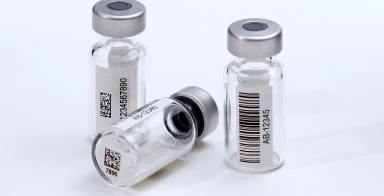
Ceramic labels are permanently fused to glass or metal labware through high-temperature bonding. The result is an impervious, abrasion-resistant mark that withstands extreme conditions. Ideal for high-value assets, ceramic labels ensure reliable, long-term identification.
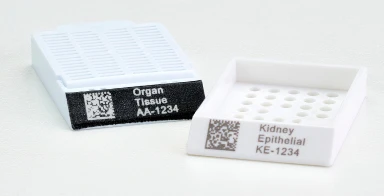
Laser etching creates precise, permanent markings by vaporizing the surface of glass, metal, or plastic. Resistant to wear and environmental factors, the mark lasts as long as the material itself. This method supports barcodes, text, and intricate designs for critical identification.

cured ink
Cured inks deliver versatile, high-resolution markings applied directly to labware surfaces. This technology supports colors, logos, barcodes, and grad lines for maximum customization. Durable and resistant to most chemicals, cured inks are ideal for flexible identification needs.

Let’s get labeling.
Have questions? We’re here to help.
Contact us to connect with a specialist who understands your industry and can provide the right solutions for your business. Let’s start a conversation.