label printing services
Professional printing for custom labels.
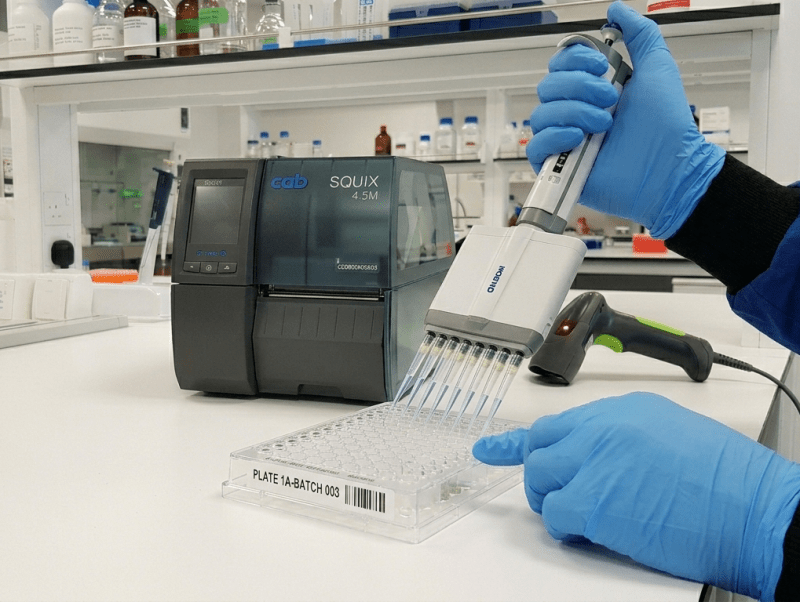
Custom label printing services support identification, traceability, and compliance across demanding environments. Serialized labels, variable data printing, color control, and durable barcode printing must align with production scale and operational demands. Matching print technology, data, and durability requirements ensures custom labels function as infrastructure—not decoration.
A comphrehensive approach to label printing.
Effective label printing brings design, durability and data together into a complete identification solution. Our label printing services address each of these requirements through technical knowledge and advanced production capabilities. Custom label printing adds the flexibility to accommodate specialized applications, balancing how labels look, how printed information performs and how critical data is managed throughout production.
Print Durability.
Materials, inks, printing technologies and protective finishes are matched to application requirements so printed information remains clear, readable and scannable through demanding conditions and handling.
Label Design.
Professional label design brings barcodes, text, color, graphics and other required elements together within the available space while accounting for readability, scanning and production requirements.
Data Integrity.
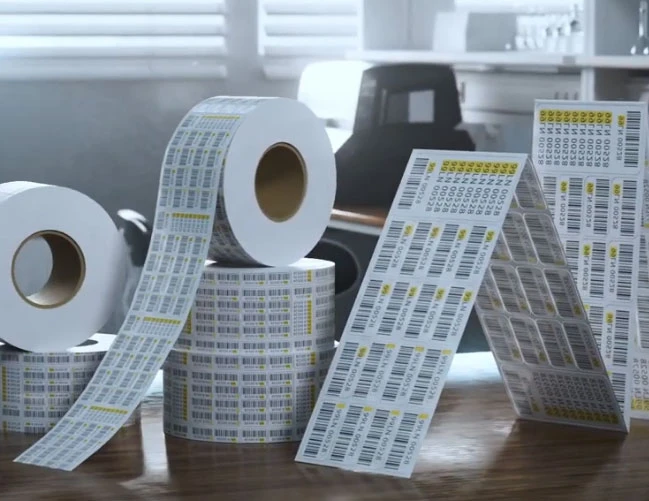
Variable and sequential data are managed with rigorous controls to maintain sequence integrity, prevent duplicate identifiers and ensure the right information is printed on every label.
Pre-Printed Labels.
- custom color
- durable print
- variable data
Bring us your artwork, data and requirements—or start with just the application. We’ll help turn what you have into professionally printed labels ready for your process.
Advanced technologies for professional label printing.
Advanced print technologies determine how custom label production balances scale, data complexity, and durability. Flexographic printing supports high-volume efficiency, while digital printing enables variable data printing and serialized barcode generation. Hybrid printing systems integrate both methods to maintain sequence integrity, color control, and production consistency across demanding industrial applications.
Flexographic Printing.
High-volume roll printing.
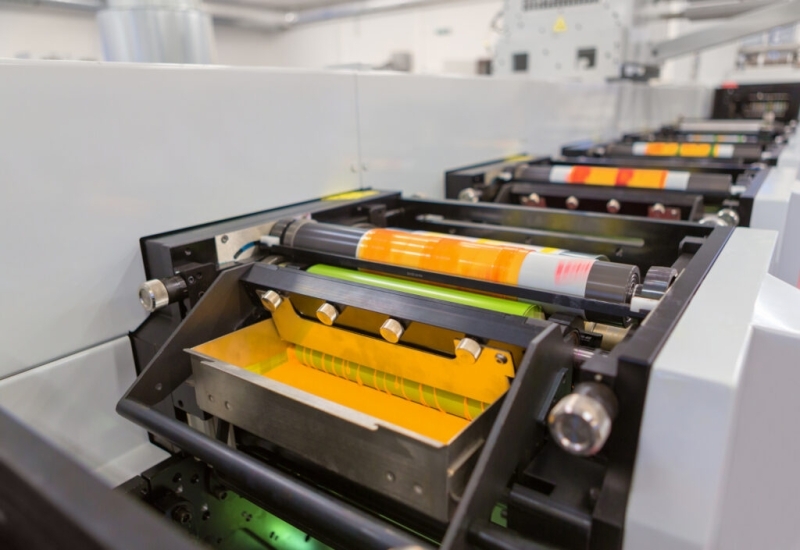
Flexographic printing transfers ink from flexible relief plates onto continuous rolls of label material.Flexographic presses produce large volumes of consistent labels at high speeds using dedicated printing plates for each color. The process supports a broad range of inks, face stocks, coatings and finishing techniques. Flexographic printing works especially well for long production runs where repeatability, throughput and efficient unit costs matter.
Digital Printing.
Plate-free variable printing.
Digital printing transfers digital artwork directly onto label materials without physical printing plates.Digital presses eliminate printing plates and allow artwork, text, barcodes and other elements to change digitally between jobs or labels. This flexibility supports shorter production runs, multiple versions and variable data while maintaining high image quality. Digital printing also reduces setup requirements when projects involve frequent artwork changes or smaller quantities.
Digital Offset Printing.
High-resolution digital printing.
Digital offset printing combines digital image control with offset transfer for precise, high-quality label printing.Digital offset presses create an electronically generated image and transfer it through an intermediate blanket before printing onto the label material. This process produces sharp text, fine details, smooth gradients and tightly controlled color without conventional printing plates. It suits labels that require sophisticated graphics, high image quality, versioning or variable content.
Hybrid Printing.
Digital and flexographic combined.
Hybrid printing integrates digital and flexographic technologies within one production process for greater manufacturing flexibility.Hybrid presses combine the variable capabilities of digital printing with flexographic printing, coating and converting stations. A single production line can manage variable data, high-quality graphics, spot colors, coatings and other label features. This approach brings multiple printing and finishing capabilities together when a label construction requires more than one production technology.
Thermal Transfer Printing.
Ribbon-based variable printing.
Thermal transfer printing uses heat to transfer ribbon ink onto a label surface for durable identification.Thermal transfer printers selectively heat a ribbon to create barcodes, text, serialized data and other variable information. Matching the ribbon formulation to the label surface produces durable printed images with strong resistance properties. While thermal transfer commonly supports print-on-demand workflows, production printers also produce pre-printed labels with serialized or variable data at scale.
Direct Marking.
Pre-barcoded products.
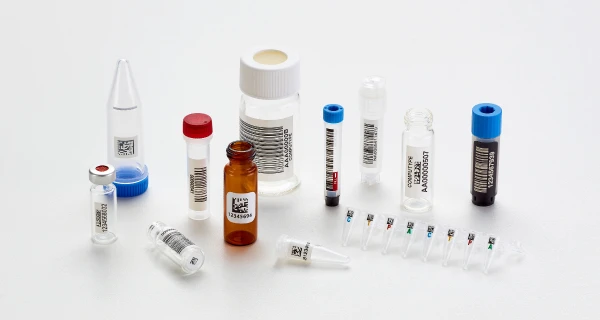
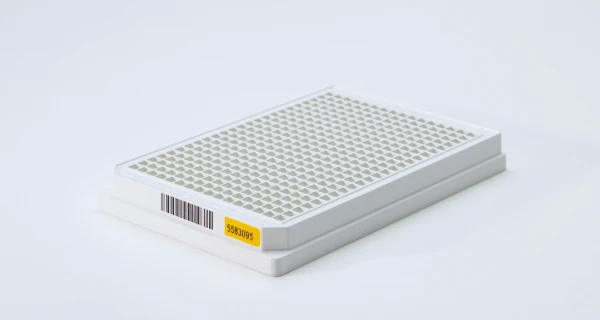
We offer direct marking via our Labware Prep™ Services program to directly barcode and mark glass, plastic, and metal labware parts.Direct marking places barcodes, text, symbols and other identification directly onto the labware surface. Technologies such as laser marking and cured ink create permanent or highly durable images without a separate label construction. Direct marking suits applications where available space, environmental exposure, product geometry or process requirements make traditional pressure sensitive labels less practical.
Flexographic Printing.
High-volume roll printing.
Flexographic printing transfers ink from flexible relief plates onto continuous rolls of label material.Flexographic presses produce large volumes of consistent labels at high speeds using dedicated printing plates for each color. The process supports a broad range of inks, face stocks, coatings and finishing techniques. Flexographic printing works especially well for long production runs where repeatability, throughput and efficient unit costs matter.
Digital Printing.
Plate-free variable printing.
Digital printing transfers digital artwork directly onto label materials without physical printing plates.Digital presses eliminate printing plates and allow artwork, text, barcodes and other elements to change digitally between jobs or labels. This flexibility supports shorter production runs, multiple versions and variable data while maintaining high image quality. Digital printing also reduces setup requirements when projects involve frequent artwork changes or smaller quantities.
Digital Offset Printing.
High-resolution digital printing.
Digital offset printing combines digital image control with offset transfer for precise, high-quality label printing.Digital offset presses create an electronically generated image and transfer it through an intermediate blanket before printing onto the label material. This process produces sharp text, fine details, smooth gradients and tightly controlled color without conventional printing plates. It suits labels that require sophisticated graphics, high image quality, versioning or variable content.
Hybrid Printing.
Digital and flexographic combined.
Hybrid printing integrates digital and flexographic technologies within one production process for greater manufacturing flexibility.Hybrid presses combine the variable capabilities of digital printing with flexographic printing, coating and converting stations. A single production line can manage variable data, high-quality graphics, spot colors, coatings and other label features. This approach brings multiple printing and finishing capabilities together when a label construction requires more than one production technology.
Thermal Transfer Printing.
Ribbon-based variable printing.
Thermal transfer printing uses heat to transfer ribbon ink onto a label surface for durable identification.Thermal transfer printers selectively heat a ribbon to create barcodes, text, serialized data and other variable information. Matching the ribbon formulation to the label surface produces durable printed images with strong resistance properties. While thermal transfer commonly supports print-on-demand workflows, production printers also produce pre-printed labels with serialized or variable data at scale.
Direct Marking.
Pre-barcoded products.
We offer direct marking via our Labware Prep™ Services program to directly barcode and mark glass, plastic, and metal labware parts.Direct marking places barcodes, text, symbols and other identification directly onto the labware surface. Technologies such as laser marking and cured ink create permanent or highly durable images without a separate label construction. Direct marking suits applications where available space, environmental exposure, product geometry or process requirements make traditional pressure sensitive labels less practical.
Print is part of performance.
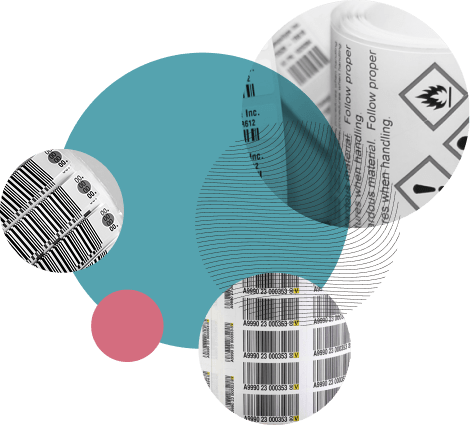
From custom graphics and color to barcodes and variable data, every printed detail on your labels needs to be accurate and built to last. Advanced printing, durable imaging and rigorous quality controls deliver labels you can trust to stay sharp, scan reliably and carry the right information every time.
Print durability in demanding environments.
Durable print depends on more than selecting a high-performance ink. The printing method, label material, ink system and protective finishes all influence how the finished image performs. Matching these elements to your application keeps critical text, graphics and barcodes readable through the environmental conditions and handling your labels encounter.
Print Compatibility.
Inks and print technologies are selected for compatibility with the label material, using specialized coatings or other treatments when needed to create a strong, durable printed image.
Image Durability.
Print requirements are matched to your application so barcodes, text and graphics maintain their integrity through exposure to chemicals, abrasion, moisture, temperature and repeated handling.
Protective Finishes.
Topcoats, laminates and other protective finishes add another layer of durability when the printed image requires additional resistance to demanding environmental or handling conditions.
uv cured inks
UV cured inks use ultraviolet energy to initiate polymerization, rapidly converting the applied ink into a solid, crosslinked film. They are widely used in label printing, including flexographic applications, and provide strong resistance to abrasion, chemicals and moisture when properly matched to the substrate. Their fast curing and durable image formation make them well suited to labels intended for demanding environments.
UV-cured inks and resin-based systems improve chemical resistance by forming crosslinked surfaces that resist smearing and fading. Overlaminates and protective topcoats further shield durable barcode printing from surface attack. Without proper ink adhesion and surface protection, chemical contact can reduce contrast, distort edges, and compromise scan reliability.
In chemically demanding environments, print durability must preserve barcode integrity throughout cleaning cycles, reagent exposure, and continuous handling.
water based inks
Water based inks use water as the primary liquid carrier for pigments, binders and other formulation components. Commonly used in flexographic label printing, they form the printed image as water evaporates and the remaining components create a film on the substrate. Formulation and substrate compatibility are important to adhesion, image quality and durability, particularly when printing on nonporous films rather than absorbent materials.
solvent based inks
Solvent based inks use organic solvents as the primary liquid carrier and form an image as those solvents evaporate after printing. They offer strong wetting and adhesion characteristics across many substrates and can provide excellent durability. Solvent chemistry, substrate compatibility, drying conditions and end-use requirements all influence performance, making proper ink selection important for demanding label applications.
custom color inks
Custom color inks are formulated to reproduce specific colors beyond standard process printing. They can support precise brand colors as well as functional uses such as warnings, identification and visual categorization. Color formulation is separate from ink chemistry—a custom color may be produced using different ink systems depending on the printing process, substrate and performance requirements of the finished label.
thermal transfer ribbons
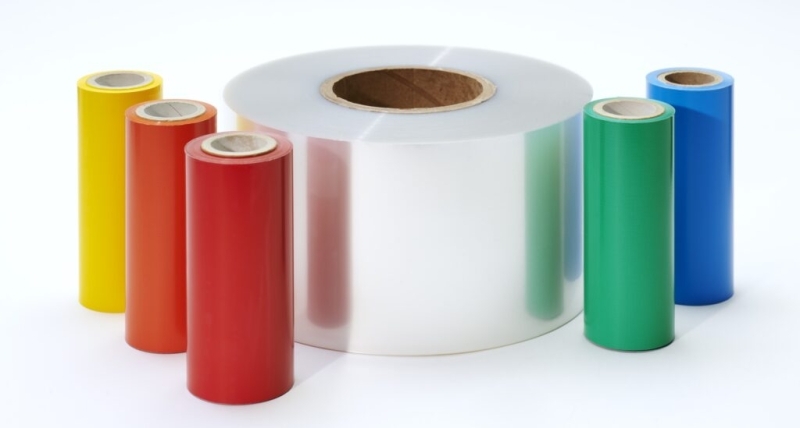
Thermal transfer printing uses a coated ribbon rather than a liquid ink. Heat from the printhead transfers the ribbon’s imaging material onto the label surface to form text, graphics and barcodes. Ribbons are generally classified as wax, wax/resin or resin formulations, with different balances of substrate compatibility and durability. Properly matched resin ribbons provide particularly strong chemical and abrasion resistance for demanding identification applications.
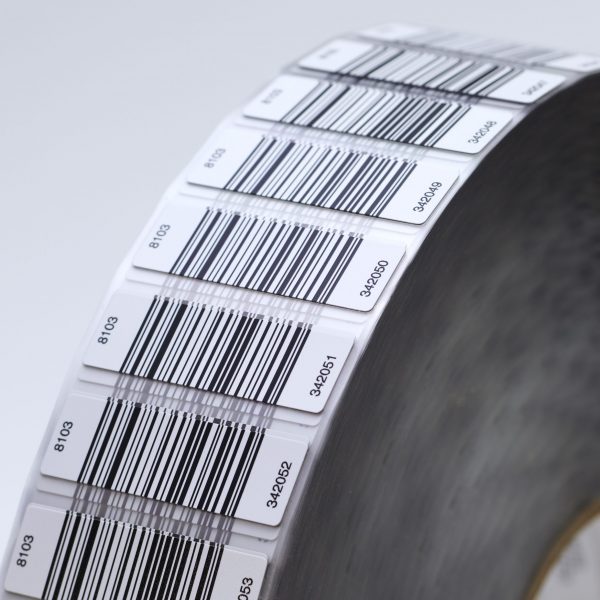
Professional label design for complex requirements.
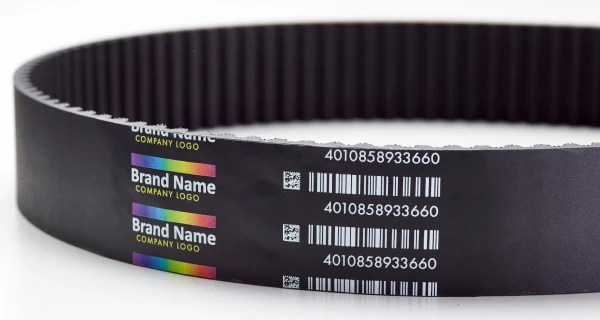
A well-designed label brings every piece of information together with a clear purpose. Professional label printing services include design support which balances barcodes, variable data, text, graphics, color and other required elements within the available space while accounting for readability, scanning and production requirements. The result is a functional label that communicates clearly, performs reliably and presents your information professionally.
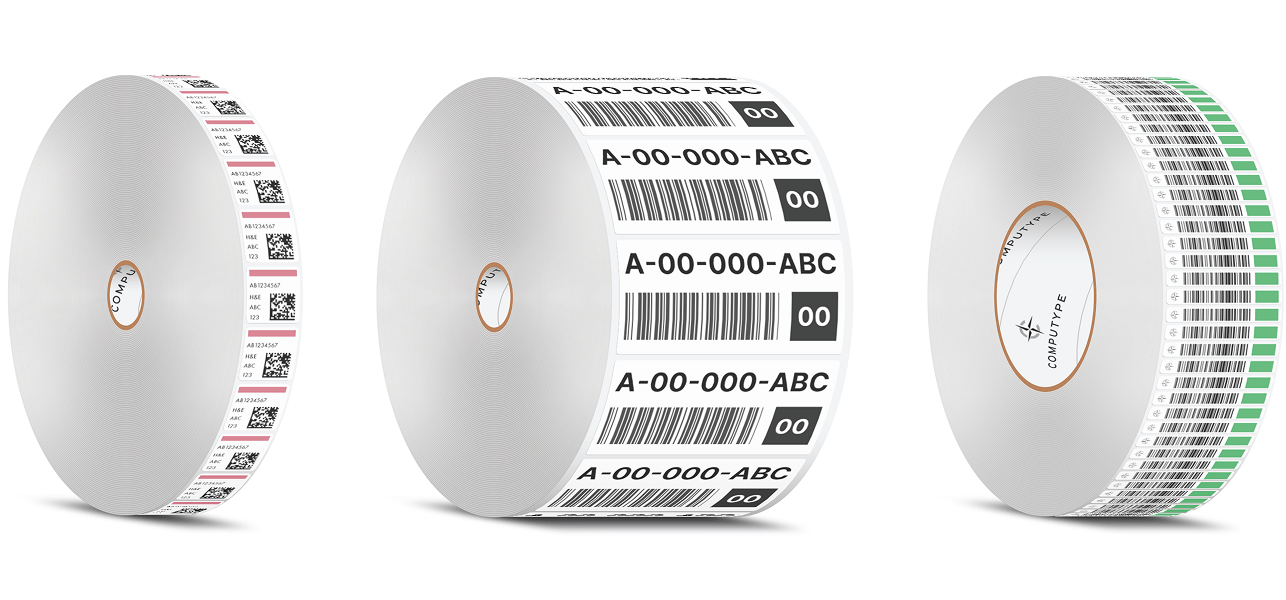
we bring your requirements together
A label may need to identify, inform, track and represent your brand within a remarkably small space. Professional design brings those requirements together into a clear, functional layout built around your application.
Barcodes.
1D and 2D barcodes are designed around available space, scanning requirements and surrounding information to support reliable identification throughout your process.
Color.
Custom colors add visual distinction while supporting branding, warnings, categorization and other functional requirements that need to be recognized quickly and consistently.
Sequences.
Sequential and serialized identifiers give individual labels unique data, supporting applications that require traceability, controlled identification or accurate tracking across an entire label set.
Text & Instructions.
Human-readable text, instructions and other critical information are organized for clarity and legibility while making efficient use of the label’s available printable area.
Symbols & Icons.
Symbols and icons communicate information quickly and efficiently, from standardized marks and warnings to custom visual cues designed around your application.
Logos & Branding.
Logos, typography and other brand elements are incorporated alongside functional information to create labels that remain professional and visually consistent without compromising usability.

Labels have limited space and a lot of work to do. Barcodes, variable data, text, color, graphics and branding all need to coexist without compromising clarity, readability or identification. Professional label printing brings those requirements together into one functional, finished design.
Managing data integrity in label printing.
Printing unique and variable information requires careful control throughout production. Barcode printing, variable data and sequence management bring changing information into professionally printed labels while maintaining the integrity of the finished set. From individual identifiers to large sequential runs, established data controls support accurate, reliable identification across labels produced for demanding tracking and identification applications.
Barcode Verification.
Barcode quality and readability assessment.
Barcode verification evaluates printed barcode quality against defined parameters, identifying characteristics that affect readability and providing objective confirmation of barcode performance rather than relying on a simple scan test.Barcode verification evaluates the quality of a printed barcode using defined measurement criteria rather than determining only whether a scanner can decode it. Depending on the barcode type and applicable standard, verification assesses characteristics such as contrast, symbol structure, dimensional accuracy and print defects that influence scanning performance. The resulting evaluation provides a standardized measure of print quality, supporting consistent machine readability across different scanners and operating conditions. Verification is distinct from validating the encoded data, which addresses whether the barcode contains the intended information.
Sequence Management.
Unique identifier sequence control.
Sequence management controls sequential and serialized identifiers throughout label production, maintaining the intended sequence while preventing duplicate, missing or incorrectly ordered values within the finished label set.Sequential and serialized labels depend on each identifier maintaining its intended position and uniqueness throughout production. Sequence management applies controls to variable data so identifiers remain accounted for as labels are produced, inspected and completed. This is particularly important when each label represents a unique asset, sample, product or record. Missing identifiers, unintended duplicates or sequencing errors can compromise traceability and create discrepancies between the physical labels and the identification system in which those labels are used.
Barcode Verification.
Barcode quality and readability assessment.
Barcode verification evaluates printed barcode quality against defined parameters, identifying characteristics that affect readability and providing objective confirmation of barcode performance rather than relying on a simple scan test.Barcode verification evaluates the quality of a printed barcode using defined measurement criteria rather than determining only whether a scanner can decode it. Depending on the barcode type and applicable standard, verification assesses characteristics such as contrast, symbol structure, dimensional accuracy and print defects that influence scanning performance. The resulting evaluation provides a standardized measure of print quality, supporting consistent machine readability across different scanners and operating conditions. Verification is distinct from validating the encoded data, which addresses whether the barcode contains the intended information.
Sequence Management.
Unique identifier sequence control.
Sequence management controls sequential and serialized identifiers throughout label production, maintaining the intended sequence while preventing duplicate, missing or incorrectly ordered values within the finished label set.Sequential and serialized labels depend on each identifier maintaining its intended position and uniqueness throughout production. Sequence management applies controls to variable data so identifiers remain accounted for as labels are produced, inspected and completed. This is particularly important when each label represents a unique asset, sample, product or record. Missing identifiers, unintended duplicates or sequencing errors can compromise traceability and create discrepancies between the physical labels and the identification system in which those labels are used.
Sequence controls protect unique identification by preventing gaps and duplicate values from compromising serialized and sequential label sets.
Barcode verification evaluates printed symbols for defined quality characteristics, supporting reliable scanning throughout the label’s intended identification process.
Combine static and changing information within a single production run while maintaining consistency across the complete set of printed labels.
Label printing backed by proven experience.
Custom label printing requires more than putting the right information on a label. We bring printing, materials, design, data management and quality control together to deliver a complete identification solution. From straightforward printed labels to demanding applications with complex requirements, you gain a partner with the technical capabilities to take more of the work off your plate.
Expertise.
Decades of experience with demanding identification applications inform decisions around print technology, materials, durability, design and data, giving complex label requirements a knowledgeable path into production.
Flexibility.
Multiple printing technologies, materials, ink systems and finishing capabilities give each application room to follow the production strategy that best fits its technical and operational requirements.
Reliability.
Quality controls throughout production support consistent print quality, accurate information and dependable barcode performance across individual labels, complete sequences and repeat production runs.
Bring together printing, materials, finishing, barcode verification, variable data and other specialized requirements without coordinating multiple production partners.
Support changing production needs with label printing strategies designed for individual projects, repeat orders and established identification programs.
Shift design, printing, verification and production work upstream to reduce the equipment, consumables, maintenance and operator involvement required at your facility.
pre-printed vs print-on-demand labels
Pre-printed labels offer controlled manufacturing conditions that improve print durability, color consistency, and long-term barcode performance. Flexographic, digital, or hybrid label printing allows optimized ink curing, tighter registration control, and durable barcode printing designed for chemical resistance, abrasion resistance, and thermal stability.
Print-on-demand labels, often produced with thermal transfer printing, provide flexibility for variable data and smaller runs. They support serialized labels, lot codes, and dynamic content, but durability depends on ribbon selection, substrate compatibility, and environmental exposure.
Pre-printed custom labels typically perform better in high-volume production, regulated manufacturing, and harsh environments. Print-on-demand label printing works well for controlled internal workflows where speed and flexibility matter more than extreme durability.
The right choice depends on production scale, data complexity, and performance requirements.
what is the best print technology for serialized labels?
Serialized labels require print technology that supports variable data printing, sequence integrity, and structured barcode generation. Digital label printing and hybrid printing systems typically provide the most efficient solution for serialized barcode labels because they integrate directly with data management systems.
Digital label printing allows real-time variable data printing, including sequential numbering, UID codes, lot numbers, and custom text. Hybrid label printing combines flexographic efficiency for static elements with digital overlay for serialized barcode printing.
Flexographic printing works best for high-volume static labels, while thermal transfer printing supports print-on-demand serialized labels in controlled environments.
The best print technology depends on production scale, data management requirements, and durability expectations for custom barcode labels.
how to ensure durability for custom labels
Custom barcode labels can achieve high levels of print durability when production methods align with environmental demands. Chemical-resistant label printing protects barcode clarity against solvents, alcohol, and laboratory reagents. Abrasion-resistant label printing prevents surface wear during handling and repeated scanning.
Heat-resistant label printing maintains barcode contrast during reflow solder exposure, autoclave cycles, and industrial processing. Durable barcode printing also depends on ink adhesion, curing control, and compatible face stocks.
Pre-printed labels often deliver stronger long-term performance because controlled manufacturing environments optimize ink systems and surface protection. Thermal transfer labels can also achieve strong durability when paired with resin ribbons and compatible materials.
Print durability should match the application’s chemical, thermal, and mechanical stresses.
can labels integrate serialized and custom data?
Custom label printing supports both serialized data and visual customization within the same label layout. Variable data printing enables sequential numbering, serialized barcodes, lot codes, and dynamic text, while flexographic, digital, or hybrid printing integrates logos, branding elements, compliance graphics, and color-coded identifiers.
Digital label printing platforms allow structured layout control so serialized barcode printing aligns with fixed graphics and custom text. Hybrid label printing maintains production efficiency while applying variable data overlays with sequence integrity.
Custom labels can combine high-contrast barcode printing, brand color matching, and complex data structures without sacrificing readability or durability. Proper layout planning ensures that serialized labels remain functional while meeting branding and operational requirements.
how are custom label layouts structured?
Custom label layouts must balance barcode placement, text hierarchy, and graphic elements to preserve readability and scan reliability. Effective custom label printing organizes serialized barcodes, custom text, and color identifiers within defined print zones that prevent crowding and distortion.
Layout structure affects barcode contrast, quiet zones, and edge definition, all of which influence scan performance. Variable data printing requires alignment control to maintain sequence integrity and avoid misregistration.
Well-structured custom labels support operational workflows by prioritizing critical identification elements over decorative features. Labels function as infrastructure, so layout design must reinforce clarity, durability, and reliable tracking across the product lifecycle.

Let’s get labeling.
Have questions? We’re here to help.
Contact us to connect with a specialist who understands your industry and can provide the right solutions for your business. Let’s start a conversation.