$0.00
0

How Belt Marking Evolved with Modern Printing

In industrial manufacturing, especially in sectors like automotive and machinery, rubber drive belts are essential components. These belts must be clearly and reliably marked with critical information — from part numbers and logos to batch codes and regulatory details. Over time, the methods used to mark these belts have evolved dramatically to meet growing demands for durability, traceability, speed, and environmental responsibility.

For decades, screen printing was the standard for marking rubber belts. Known for its durability and ability to withstand harsh environments, screen printing provided consistent results for large production runs. But as manufacturing priorities have shifted toward leaner, more agile processes — and as environmental concerns have come to the forefront — many manufacturers are rethinking their approach.

Today, thermal transfer printing and digital printing are transforming how belt marking is done. These technologies support just-in-time production, handle variable data with ease, and reduce both setup time and material waste. With thermal transfer, manufacturers gain in-house control over marking, while digital offset printing delivers unmatched design flexibility and precision.

This article explores the evolution of industrial belt marking — from the legacy of screen printing to the rise of modern alternatives. Whether you’re looking to improve efficiency, reduce environmental impact, or enable high-resolution branding, understanding today’s print technologies can help you make better choices for your operation.
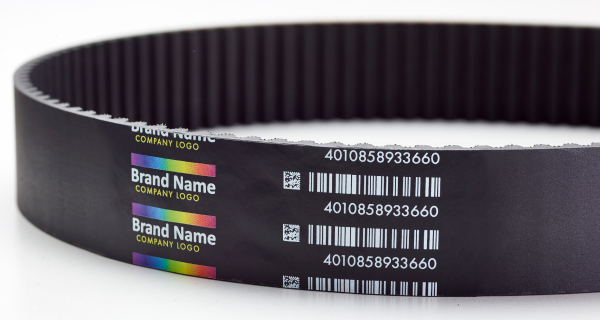
Screen printing as the original standard.

For decades, screen printing was the standard method for marking industrial rubber belts. It offered strong adhesion to rubber surfaces, excellent resistance to abrasion, and clear, legible print that could hold up under the stresses of industrial use. From automotive belts to HVAC and heavy machinery applications, screen printing delivered the durability manufacturers needed.

How screen printing works.

The process involves pushing ink through a fine mesh screen onto the surface of the belt. Each screen is created for a specific design—whether it’s a brand name, part number, or regulatory mark. After printing, the ink must be cured to ensure the image is fully set. Once cured, screen-printed markings are durable and resistant to heat, oil, and mechanical wear.

Why it dominated for so long.

Screen printing was favored for its ability to:

  • Create highly durable prints suitable for harsh environments
  • Adhere well to rubber and other challenging materials
  • Produce consistent results over large production runs
  • Handle simple, static graphics reliably

In high-volume manufacturing environments where designs rarely changed, these qualities made it a trusted and efficient method.

The challenges of screen printing today.

As production needs shifted toward agility, traceability, and environmental responsibility, screen printing’s drawbacks became harder to overlook:

  1. Screen printing requires significant setup time. Creating screens and aligning them for each new design or product variation is a manual and time-intensive process. While acceptable in high-volume, low-variation manufacturing, this setup becomes a major inefficiency in today’s more agile production environments.
  2. Screen printing is inherently limited when it comes to variable data. It’s not designed to easily print serial numbers, lot codes, or individualized product details that change from belt to belt. As traceability and customization have become more important across industries, this inability to handle variable information has made screen printing increasingly impractical.
  3. Environmental concerns have also contributed to screen printing’s decline. The process often uses solvent-based inks that emit volatile organic compounds (VOCs). These VOCs are harmful to the environment, contribute to air pollution, and pose health risks to workers in production facilities. Stricter environmental regulations and growing sustainability goals have made many manufacturers reconsider their use of solvent-based screen printing altogether.
  4. Screen printing is often cost-prohibitive for short runs or frequent design changes. The labor and material costs associated with creating new screens and cleaning equipment between jobs make it an inefficient option for low-volume or quick-turnaround projects. As customers demand faster lead times and smaller, more customized batches, screen printing has struggled to keep pace.

Despite these limitations, screen printing still sees use in some high-volume belt manufacturing operations, especially where durability is prioritized above all else. But for manufacturers seeking flexibility, efficiency, and sustainability, it’s no longer the most strategic choice.

As manufacturing evolves, so too must the tools used to mark critical components. The shift away from screen printing has opened the door for new technologies — like thermal transfer printing and digital offset printing — that better align with modern production demands.
Thermal transfer printing for rubber belts.

As screen printing began to fall short of modern manufacturing demands, thermal transfer printing emerged as a more flexible and responsive option for marking rubber belts. It quickly became a go-to solution for manufacturers needing in-house control, efficient changeovers, and consistent print quality—especially when variable data and traceability came into play.

How thermal transfer printing works.

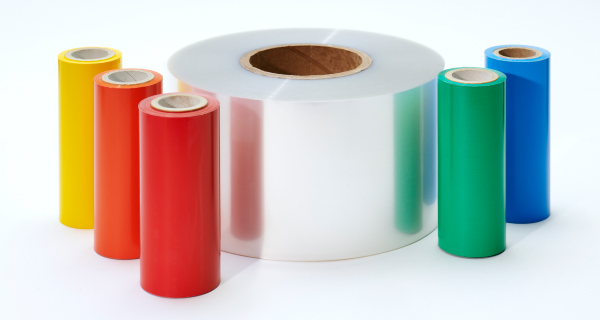
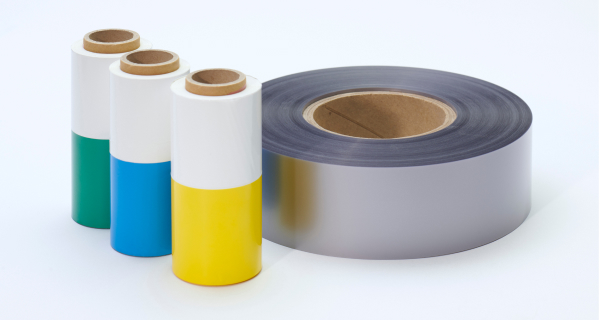
Thermal transfer printing uses heat to transfer ink from a ribbon onto the belt surface or onto a transfer film that’s later applied to the belt. The ribbon is coated with wax, resin, or a combination of both, depending on the durability requirements. When heat is applied, the ink is released and permanently bonded to the surface, creating a crisp, long-lasting image.

Benefits for belt marking.

Thermal transfer offers several advantages that make it especially suited for rubber belts:

  • On-demand printing without screens or stencils
  • Support for variable data like barcodes, serial numbers, and lot codes
  • Durable print that resists heat, oil, abrasion, and chemicals
  • Cleaner and safer process with no solvents or VOCs
  • Scalable technology, from desktop units to full automation

Ideal for fast-paced production.

With thermal transfer, there’s no need to pause production for setup or screen changes. Design changes can be made instantly with a digital file, making this method ideal for just-in-time manufacturing or high-mix, low-volume operations. Manufacturers gain the flexibility to label belts on the fly, reduce inventory waste, and respond to customer needs more quickly.

In-house control and consistency.

Thermal transfer printing allows manufacturers to control their marking process in-house, rather than relying on pre-printed inventory or external suppliers. This improves consistency, reduces lead times, and ensures markings are always up to date.

Whether you’re a small shop producing specialty belts or a global manufacturer running large volumes, thermal transfer printing offers the balance of durability, flexibility, and speed that modern production environments demand.
Digital printing for photo-realistic belt marking.

While thermal transfer printing brought much-needed flexibility to belt marking, digital printing has opened the door to even greater design freedom, precision, and visual impact. As manufacturers place more emphasis on branding, compliance, and traceability, digital printing has become an increasingly valuable part of the belt marking toolkit.

Digital printing refers to technologies that apply high-resolution images to a transfer film, which is later applied to the surface of the belt. Unlike screen printing or thermal transfer, there’s no need for physical plates, screens, or ribbons—everything is printed directly from a digital file. This makes it exceptionally fast to set up, change designs, and produce sharp, detailed graphics.

When visual clarity and branding matter

Digital printing excels in applications where design complexity and visual quality are priorities. Logos, safety instructions, multilingual text, color coding, and high-density barcodes can all be rendered with precision. This makes digital a preferred option for belts that will be inspected visually, exported globally, or used in customer-facing products where branding must remain intact and legible.

Because digital printing is done on a transfer film rather than directly on the belt, it allows for careful control over the materials used. The films can be engineered to withstand high temperatures, friction, chemicals, and bending without degrading the print quality.

Built for variability and customization

Like thermal transfer, digital printing is ideal for variable data. It can produce unique labels or images for each belt in a batch—serial numbers, lot codes, QR codes, and customer-specific markings—with no additional setup. This capability is especially useful for manufacturers who need to ensure traceability or meet strict documentation requirements.

Design changes are easy to implement, and switching between product lines requires no hardware reconfiguration—just a new file. This makes digital printing a natural fit for high-mix, low-volume production and frequent short runs.

A more sustainable print process

Compared to screen printing, digital printing also offers significant environmental benefits. Many systems use water-based inks that contain little to no VOCs, reducing air pollution and improving workplace safety. Because the process doesn’t require screens or cleaning solvents, there’s far less hazardous waste generated between jobs.

Digital printing also helps reduce material waste. With accurate control over the design and layout, manufacturers can avoid overprinting or producing excess labels. For belt producers focused on sustainable operations, this aligns with lean manufacturing goals and waste reduction initiatives.

Common use cases and adoption trends

Digital belt marking is especially popular for:

  • Pre-printed identification strips or sleeves

  • Branding and logo printing on belts

  • Multi-label sets with complex or varied data

  • OEM belts requiring private labeling

  • Color-coded or multilingual applications

  • Compliance with international labeling standards

While some manufacturers use digital printing exclusively, it’s more often adopted as part of a hybrid strategy. In this model, a digital press is used to create high-quality base labels or films that include graphics, logos, and fixed data. These are then finished in-house using thermal transfer to add variable data like serial numbers or barcodes. This approach combines the strengths of both technologies: digital quality with thermal transfer flexibility.

As digital printing systems become more accessible, more belt manufacturers are exploring how to bring this capability in-house or collaborate with print partners who specialize in durable films. Even operations that don’t print labels internally can benefit by sourcing pre-printed, ready-to-apply films that integrate seamlessly into their process.

For manufacturers who need to balance branding, durability, traceability, and agility, digital printing is no longer just a specialty option—it’s becoming an industry standard.
Hybrid workflows for efficient belt marking.

As belt marking requirements become more complex, many manufacturers are turning to hybrid workflows that combine the strengths of both digital and thermal transfer printing. This approach allows for high-quality branding and design alongside flexible, in-house control over variable data—making it one of the most efficient and scalable solutions available today.

A hybrid workflow typically starts with pre-printed transfer films produced using digital printing. These films carry fixed content like logos, part numbers, and safety icons in high resolution. Because digital printing supports detailed graphics and full-color designs, it’s ideal for establishing a consistent brand identity and meeting international labeling standards.

Once the digital layer is complete, the films can be sent to the manufacturer or converter, where a thermal transfer printer is used to add variable elements. These might include serial numbers, date codes, barcodes, or even customer-specific information. This two-stage process lets manufacturers respond to changing needs without sacrificing quality or speed.

Why hybrid workflows make sense

Combining digital and thermal transfer methods gives manufacturers the best of both worlds:

  • Consistent branding across all production runs

  • Fast updates to variable or traceable data

  • Lower cost for frequent design changes

  • Minimal setup time between product variations

  • Scales from small batches to high volume

This is especially valuable in industries with complex SKUs, export requirements, or tight production timelines. Instead of printing an entirely new label every time specs change, manufacturers can update just the variable layer—saving time and reducing costs.

A path for gradual adoption

Hybrid workflows also offer a low-risk way to modernize. For companies currently reliant on screen printing, transitioning to a hybrid model allows them to upgrade part of the process without completely overhauling operations. Digital printing can be outsourced at first—through a print partner or label supplier—while thermal transfer equipment is brought in-house. Over time, manufacturers can choose to expand their digital capabilities based on volume and demand.

This incremental model makes it easier to manage change, control costs, and train staff gradually rather than all at once.

Custom solutions for belt marking

Hybrid workflows are also highly customizable. Some facilities may choose to apply transfer films using heat and pressure in a post-processing step. Others may integrate film application directly into the production line. Label materials, adhesives, and coatings can all be tailored to meet specific durability and environmental requirements.

Whether used for drive belts, timing belts, or conveyor belts, a hybrid approach can be engineered to match the physical demands of the product and the operational goals of the business.

For manufacturers seeking to stay competitive without compromising on quality, hybrid workflows offer a smart, scalable path forward.

Choosing the right belt marking strategy.

Rubber belt marking has come a long way from its origins in traditional screen printing. What was once the gold standard for durability and consistency is now giving way to more adaptable and sustainable solutions. As industries shift toward leaner production models and demand greater customization, manufacturers are rethinking how they identify, brand, and track their products.

Screen printing still has a place in large, unchanging production environments—but its limitations around setup time, variable data, and environmental safety make it less viable for today’s dynamic workflows. For many manufacturers, the need to move quickly, reduce waste, and meet traceability requirements has made it clear that other technologies are better suited to the job.

Thermal transfer printing has become a widely adopted alternative, offering durability, in-house control, and compatibility with variable data. It allows manufacturers to react in real time to design changes or labeling requirements without halting production or increasing cost. Its low setup time and excellent print durability make it a reliable choice for most belt marking operations.

Digital printing brings even more flexibility, supporting detailed graphics, branding, and high-resolution imagery. When used in a hybrid workflow, it combines seamlessly with thermal transfer printing—giving manufacturers the ability to pre-print complex elements and add variable data on demand.

Each method has strengths, and choosing the right approach depends on your production environment, labeling needs, and long-term goals. Whether you’re replacing screen printing entirely or layering digital and thermal capabilities for maximum flexibility, the evolution of belt marking offers better options than ever before.

Modern marking is no longer just about printing—it’s about precision, responsiveness, and making the most of every belt that leaves your facility.

0
    0
    Your Cart
    Your cart is emptyReturn to Shop

    High-impact belt branding with pre-printed films.

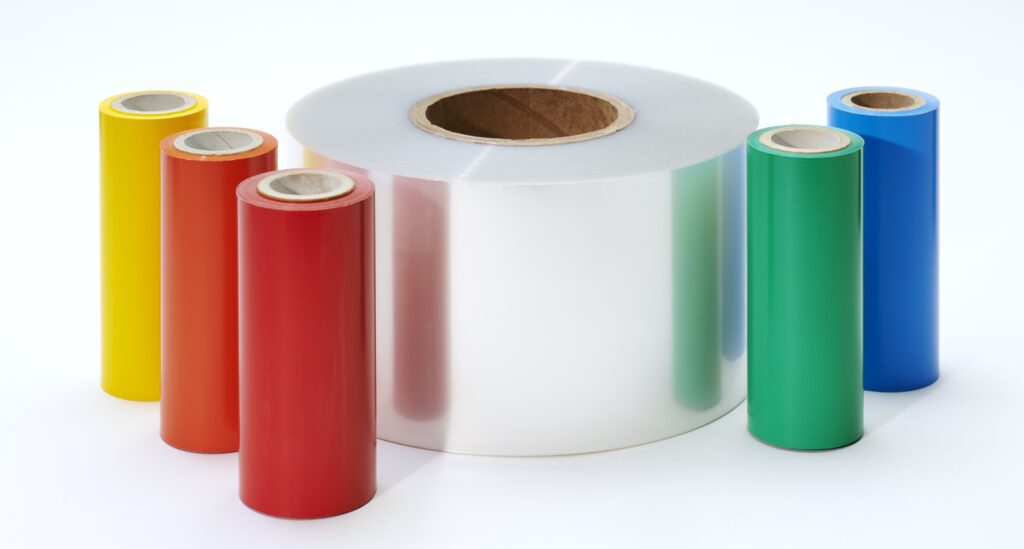
    Pre-printed belt marking films deliver bold, consistent branding and high-resolution graphics across repeat manufacturing applications. These solutions support detailed imagery, precise color matching, and uniform visual presentation for product lines requiring fixed branding, standardized identification, and elevated product appearance.

    Professionally printed high-resolution rubber belt branding films.

    Pre-printed belt marking films support more detailed and visually controlled designs than standard ribbon-based marking systems. These solutions enable complex graphics, consistent color reproduction, and elevated product presentation across repeat manufacturing applications.

    photorealistic graphics

    High-resolution printing supports detailed imagery, gradients, and complex visual elements beyond the capabilities of standard ribbon-based marking systems

    custom color matching

    Match specific brand colors and visual standards across belt product lines, packaging systems, and broader manufacturing identification programs

    consistent production

    Pre-printed films maintain uniform logos, layouts, and visual presentation across large production volumes and repeat manufacturing applications

    Pre-printed films are commonly used for permanent logos, product branding, belt sizes, standardized identifiers, and highly detailed visual designs. Advanced printing capabilities support precise color control, sharp graphic definition, and complex imagery that extends beyond standard ribbon-based marking.

    Print belt marking films with critical production data.

    Print-on-demand belt marking gives manufacturers the flexibility to apply critical production data directly within active manufacturing workflows. These systems support information that cannot be predefined, including slab location codes, manufacturer dates, lot information, production identifiers, and changing product data across belt runs and manufacturing environments.

    A simple setup can integrate real-time labeling directly into your workflow.

    durable films

    Start with blank transfer films engineered for durable rubber belt marking.

    label software

    Create belt marking formats using label design and barcode software.

    compatible ribbons

    Use included thermal transfer ribbons to produce durable vibrant labels.

    industrial printers

    Use an industrial thermal transfer printer engineered for high duty cycles.

    Print-on-demand systems are designed for manufacturing environments where belt information changes continuously throughout production. Rather than relying on fixed inventory or pre-printed stock, these systems support dynamic marking requirements tied to production scheduling, traceability, and operational control.

    Reduce operational complexity with pre-printed labels.

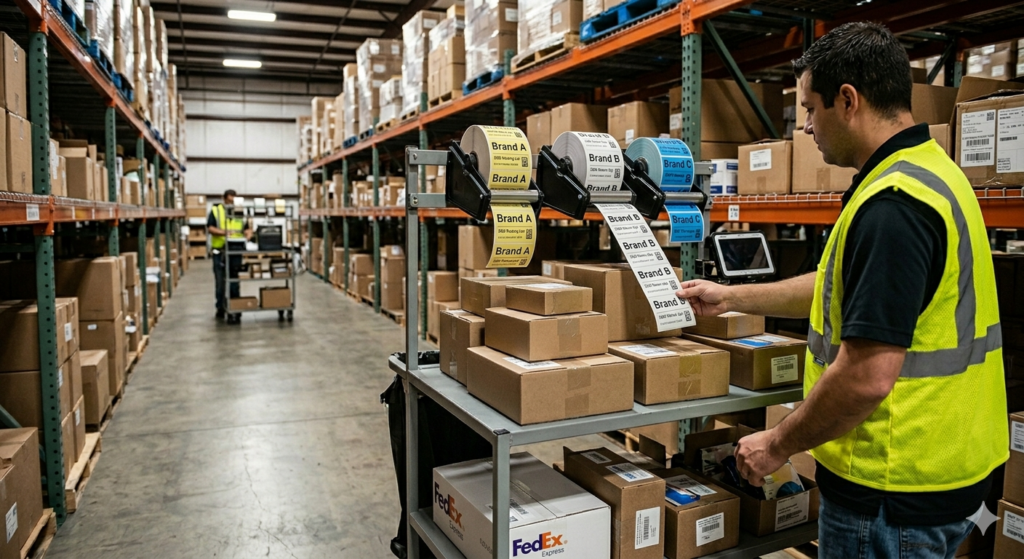
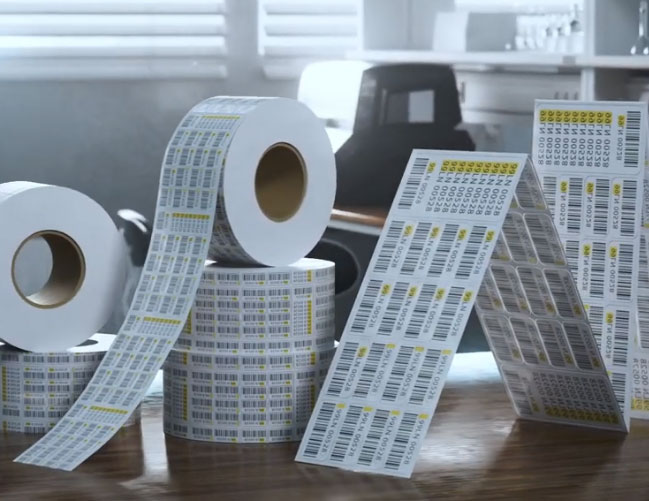
    Use pre-printed warehouse labels to apply location IDs, pallet labels, and sequential label sets without managing printing in-house. This path works best when your data is defined and your warehouse layout follows a structured system.

    A simple setup can integrate real-time labeling directly into your workflow.

    Plan your labeling system in advance, then receive labels ready to apply across your warehouse. This approach shifts the work from daily printing to upfront setup and production.

    consistency at scale

    Apply the same label formats, barcodes, and ID structures across racks, pallets, and storage locations without variation.

    efficient operations

    Eliminate the need for printers, ribbons, software, and label inventory by using labels that arrive ready to apply and scan.

    sequence management

    Use sequential beam labels and serialized label sets to maintain ordered location IDs and guarantee no duplicates.

    Use pre-printed labels when your warehouse layout is defined, your location IDs are established, and you need consistent labeling across large areas or multiple facilities. This approach supports structured storage systems, standardized pallet tracking, and efficient label rollout.

    Print labels when inventory data changes in real time.

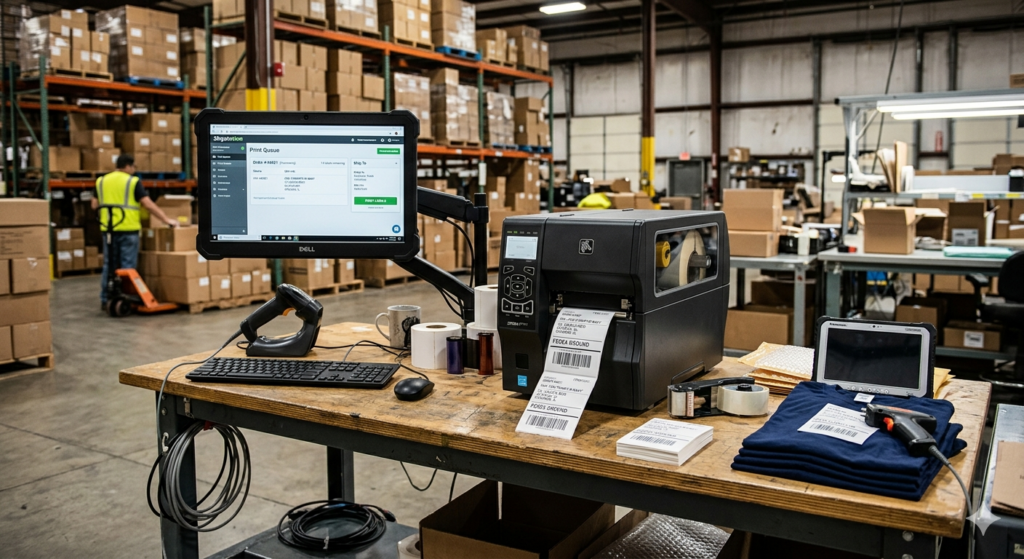
    Print warehouse labels in-house to create location IDs, pallet labels, and LPN labels as your warehouse changes. This path gives you direct control over how labels are created, updated, and applied across racks, bins, totes, and pallets.

    A simple setup can integrate real-time labeling directly into your workflow.

    durable labels

    Start with blank label stock engineered for racks, bins, totes, and pallets.

    label software

    Create warehouse label formats using label design and barcode software.

    compatible ribbons

    Use included thermal transfer ribbons to produce durable barcode labels.

    label printers

    Use a thermal transfer printer designed for warehouse label printing and daily use.

    Use print-on-demand labels when your warehouse layout changes, your team manages location IDs internally, or you need labels immediately without waiting on production. This approach supports flexible workflows, evolving storage systems, and real-time pallet and container tracking.

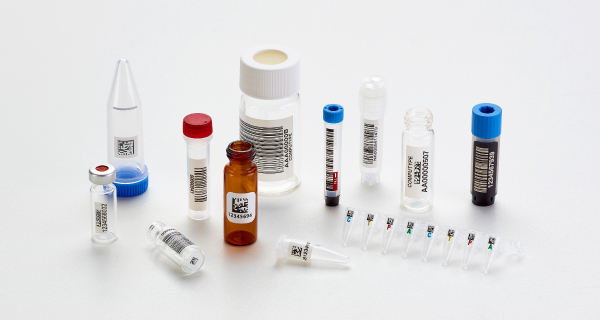
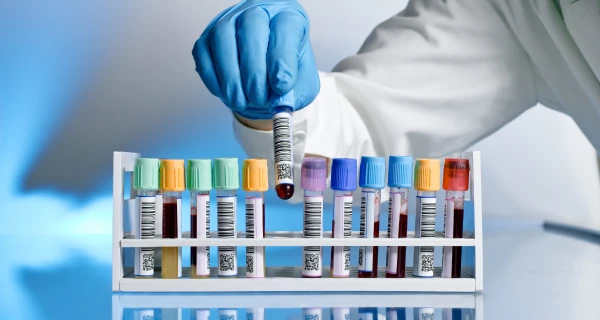
    Receive pre-barcoded tubes immediately ready-to-use.

    Receive tubes and vials with identifiers already applied through direct marking or integrated labeling. Eliminate labeling steps entirely while ensuring durable, consistent identification across storage, handling, and laboratory workflows.

    Pre-barcoded tubes for extreme durability and precision placement.

    Pre-barcoded labware removes labeling from your workflow entirely. Tubes arrive ready to use with verified identifiers, supporting faster processing, reduced handling, and consistent sample identification across storage and laboratory operations.

    consistency at scale

    Use pre-verified barcodes and markings to ensure consistent, accurate sample identification across all tubes and batches.

    efficient lab management

    Eliminate labeling steps and reduce manual handling during sample collection, processing, and storage workflows.

    labware prep™ services

    Receive labware sorted, packaged, and prepared to match your workflow, including options like tare weighing and kit assembly.

    Pre-barcoded labware fits high-throughput environments where labeling becomes a bottleneck or source of error. This includes biobanks managing large sample collections, clinical labs processing high volumes of patient samples, and research or CRO environments running automated or repeatable workflows where speed, consistency, and reduced handling drive efficiency and data integrity.

    Order pre-printed tube labels for guaranteed accuracy.

    Get tube labels professionally printed with controlled data, advanced converting, and durable materials. Eliminate in-house printing while ensuring every label meets performance requirements for laboratory use, including chemical exposure, handling, and storage conditions.

    Professionally printed laboratory tube labels for custom, sequential labels.

    Pre-printed labeling combines controlled printing, advanced converting, and durable materials to deliver consistent, ready-to-use tube labels. This approach removes variability from in-house printing and ensures every label meets your requirements for data accuracy and performance.

    unique ids

    Receive pre-printed labels with guaranteed unique barcode sequences, controlled serialization, and validated data across batches and production runs.

    custom design

    Use custom colors to organize samples, differentiate workflows, and improve visual identification across racks, boxes, and storage systems.

    durable finishing

    Use engineered label constructions with precoats and topcoats that improve resistance to chemicals, moisture, and routine laboratory handling.

    Pre-printed labeling fits laboratories that manage high volumes of consistent samples and require controlled, repeatable identification. This includes clinical labs processing patient samples, diagnostic labs running standardized assays, and research labs preparing large batches of tubes for studies or long-term storage where data does not change.

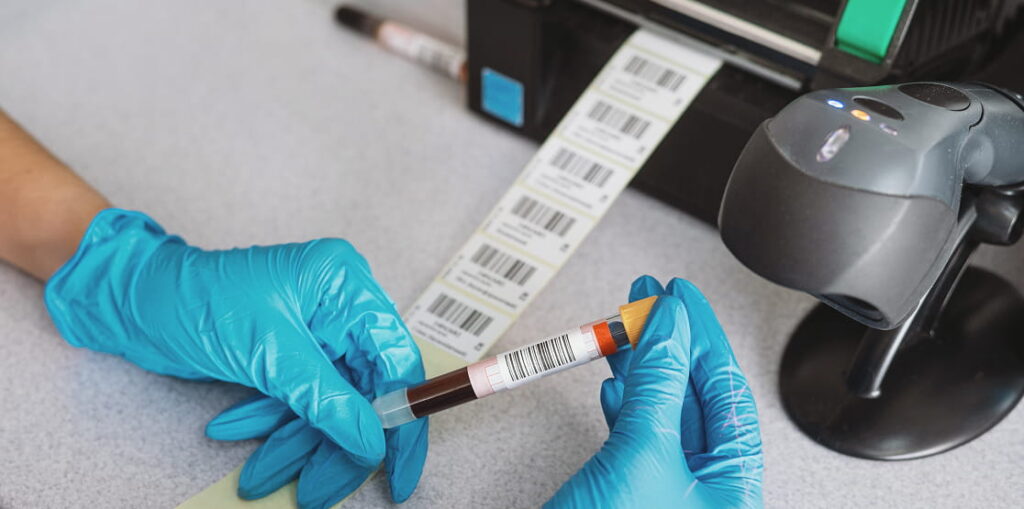
    Print tube labels on demand with real-time data.

    Print tube labels as needed using live data from laboratory systems. Generate labels during sample collection, aliquoting, or processing, with unique identifiers, timestamps, and variable data applied at the point of use. This approach supports workflows where sample data changes frequently or requires immediate, accurate identification.

    A simple setup can integrate real-time labeling directly into your workflow.

    Set up a complete labeling workflow using the right materials and equipment to print and apply labels directly during laboratory processes.

    durable labels

    Start with blank label stock engineered for small diameter tubes and vials.

    label printers

    Print high-resolution barcodes and text for small-format tube labels.

    compatible ribbons

    Use included thermal transfer ribbons to produce durable barcode labels.

    tube labelers

    Integrate tube label applicators for automated print-and-apply labeling.

    Print-on-demand labeling fits laboratories that generate or modify sample data in real time. This includes research labs, clinical labs, and diagnostic environments where samples are collected, processed, and labeled on demand, and where workflows require immediate identification without waiting for pre-printed labels.

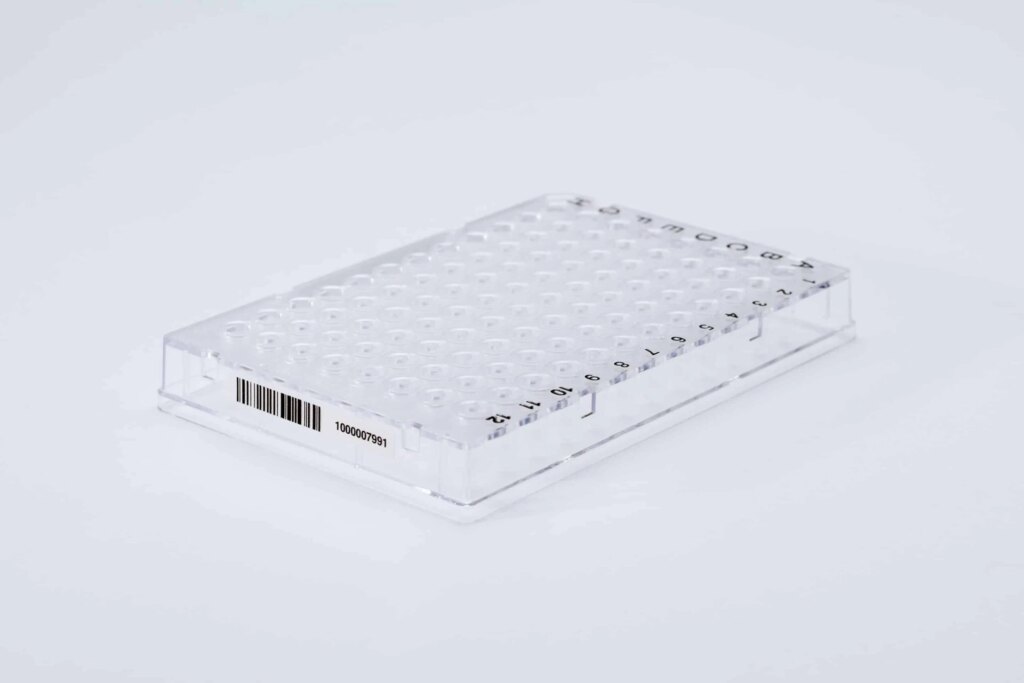
    Use pre-barcoded microplates for ready-to-use identification.

    Receive microplates with identifiers already applied, eliminating labeling steps during plate setup and processing. Ensure consistent, durable identification across assays, screening, and storage while reducing manual handling and improving workflow efficiency.

    Pre-barcoded microplates for ultimate laboratory efficiency.

    Pre-barcoded microplates arrive ready to use with verified identifiers applied before delivery. This approach removes labeling from your workflow and ensures consistent identification across plate handling, processing, and storage environments.

    laboratory efficiency

    Eliminate labeling steps during plate setup, loading, and processing workflows.

    consistent identification

    Use pre-verified plate IDs to maintain accuracy across batches and screening runs.

    integrated services

    Receive plates sorted, kitted, or prepared to match assay workflows and laboratory processes.

    Pre-barcoded microplates fit high-throughput environments where plates move rapidly through automated workflows and labeling can create delays or variability. This includes automated screening facilities, compound and plate libraries, and CROs running large-scale studies, as well as core labs managing shared plate resources where speed, consistency, and reduced handling drive efficiency and improve data integrity.

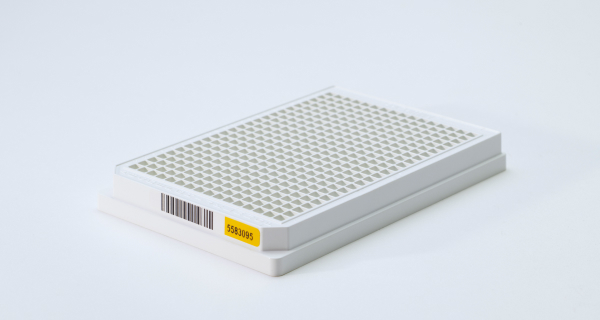
    Order pre-printed microplate labels with consistent accuracy.

    Get microplate labels professionally printed with controlled data, advanced converting, and durable materials. Ensure consistent plate identification across batches while eliminating in-house printing and reducing variability in labeling for assays, screening, and high-throughput workflows.

    Professionally printed custom microplate labels.

    Pre-printed plate labels combine controlled printing, advanced converting, and durable materials to deliver consistent, ready-to-use identification. This approach ensures every plate label meets requirements for data accuracy, layout consistency, and performance across handling and processing.

    unique ids

    Receive pre-printed plate labels with guaranteed unique IDs, controlled sequencing, and validated data across batches and runs.

    custom design

    Use color coding to differentiate assays, plate types, or workflows and improve visual organization across plate libraries.

    durable finishing

    Use engineered label constructions that resist chemicals, handling, and environmental exposure during plate processing and storage.

    Pre-printed labeling fits laboratories that run standardized plate workflows with fixed data structures. This includes screening labs running standardized assays, diagnostic labs processing consistent plate formats, and research environments where plate layouts and identifiers remain consistent across runs.

    Print microplate labels on demand with real-time data.

    Print microplate labels as needed using live data from laboratory systems. Generate labels during plate setup, sample loading, or assay preparation, with well IDs, plate IDs, and variable data applied at the point of use. This approach supports workflows where plate data changes frequently or requires immediate, accurate identification.

    A simple setup can integrate real-time labeling directly into your workflow.

    durable labels

    Blank plate labels designed for small formats, flat surfaces, and secure adhesion on plates.

    label printers

    Print high-resolution barcodes and text for plate IDs and sample tracking.

    compatible ribbons

    Thermal transfer ribbons produce durable images resistant to chemicals, moisture, and handling.

    microplate labelers

    Apply labels consistently to plates during setup or automated workflows.

    Print-on-demand labeling fits laboratories that generate or update plate data in real time. This includes screening labs, genomics workflows, and assay development environments where plates are created, modified, and labeled during processing, and where accurate, immediate identification is required.

    Print blood bag labels at collection points.

    Print blood bag labels as needed using live data from blood bank systems. Generate labels during collection, component processing, or labeling steps, with donation identification numbers, product codes, and variable data applied at the point of use. This approach supports workflows where blood data updates in real time and requires immediate, accurate identification.

    A simple setup can integrate real-time labeling directly into your workflow.

    Set up a complete labeling workflow using the right materials and equipment to print and apply labels directly during blood collection, component processing, and blood bank handling workflows.

    durable labels

    Start with blank label stock engineered for flexible PVC blood bags.

    label printers

    Print high-resolution barcodes and text for complex blood label layouts.

    compatible ribbons

    Use included thermal transfer ribbons to produce durable barcode labels.

    label software

    Integrate barcode software to generate ISBT 128 labels and DIN data.

    Print-on-demand labeling fits blood banks and collection centers that generate or update donation data in real time. This includes blood collection sites, processing labs, and transfusion services where blood bags are labeled on demand, and workflows require immediate, accurate identification without relying on pre-printed labels.

    Control blood bag labeling with pre-printed formats.

    Get blood bag labels professionally printed with controlled data, advanced converting, and durable materials. Eliminate in-house printing while ensuring every label meets performance requirements for blood bank use, including handling, cold storage, and transfusion.

    Guarantee no duplicates with professionally printed blood bag labels.

    Pre-printed labeling combines controlled printing, advanced converting, and durable materials to deliver consistent, ready-to-use blood bag labels. This approach removes variability from in-house printing and ensures every label meets requirements for DIN accuracy, barcode performance, and reliable identification across blood bank workflows.

    consistency at scale

    Receive pre-printed labels with guaranteed unique DIN sequences, controlled serialization, and validated data across batches and production runs.

    accurate din formats

    Maintain consistent DIN formats to ensure accurate identification across blood bags, segments, and associated components.

    durable finsihing

    Use engineered label constructions designed to resist edge lift, moisture, and routine handling, helping maintain adhesion and readability throughout blood collection.

    Pre-printed labeling fits blood banks and collection centers that manage high volumes of donations and require controlled, repeatable identification. This includes blood collection sites, processing facilities, and transfusion services where standardized labeling, consistent DIN assignment, and stable data support efficient, validated workflows without frequent changes.

    Support accurate workflows with real-time labeling.

    In laboratory environments, data often isn’t final until the last moment—at the bench, at the instrument, or during sample handling. Printing labels on demand helps ensure each tube or vial reflects the most accurate information, while fitting naturally into the way your work actually happens.

    Support accurate workflows with real-time labeling.

    In laboratory environments, data often isn’t final until the last moment—at the bench, at the instrument, or during sample handling. Printing labels on demand helps ensure each tube or vial reflects the most accurate information, while fitting naturally into the way your work actually happens.

    A simple setup can integrate real-time labeling directly into your workflow.

    In laboratory environments, data often isn’t final until the last moment—at the bench, at the instrument, or during sample handling. Printing labels on demand helps ensure each tube or vial reflects the most accurate information, while fitting naturally into the way your work actually happens.

    compatible ribbons

    Compatible resin ribbons ensuring clear, durable print for barcodes and text

    compatible ribbons

    Compatible resin ribbons ensuring clear, durable print for barcodes and text

    In laboratory environments, data often isn’t final until the last moment—at the bench, at the instrument, or during sample handling. Printing labels on demand helps ensure each tube or vial reflects the most accurate information, while fitting naturally into the way your work actually happens.

    Support accurate workflows with real-time labeling.

    In laboratory environments, data often isn’t final until the last moment—at the bench, at the instrument, or during sample handling. Printing labels on demand helps ensure each tube or vial reflects the most accurate information, while fitting naturally into the way your work actually happens.

    A simple setup can integrate real-time labeling directly into your workflow.

    compatible ribbons

    Compatible resin ribbons ensuring clear, durable print for barcodes and text

    compatible ribbons

    Compatible resin ribbons ensuring clear, durable print for barcodes and text

    compatible ribbons

    Compatible resin ribbons ensuring clear, durable print for barcodes and text

    compatible ribbons

    Compatible resin ribbons ensuring clear, durable print for barcodes and text

    In laboratory environments, data often isn’t final until the last moment—at the bench, at the instrument, or during sample handling. Printing labels on demand helps ensure each tube or vial reflects the most accurate information, while fitting naturally into the way your work actually happens.

    Support accurate workflows with real-time labeling.

    In laboratory environments, data often isn’t final until the last moment—at the bench, at the instrument, or during sample handling. Printing labels on demand helps ensure each tube or vial reflects the most accurate information, while fitting naturally into the way your work actually happens.

    A simple setup can integrate real-time labeling directly into your workflow.

    In laboratory environments, data often isn’t final until the last moment—at the bench, at the instrument, or during sample handling. Printing labels on demand helps ensure each tube or vial reflects the most accurate information, while fitting naturally into the way your work actually happens.

    durable labels

    Durable labels that stay attached through handling, storage, or cryogenic conditions

    compatible ribbons

    Compatible resin ribbons ensuring clear, durable print for barcodes and text

    reliable printer

    Compact, consistent, durable thermal transfer printing at the point of use

    label software

    Label management software to format labels and connect to sample data or LIMS

    In laboratory environments, data often isn’t final until the last moment—at the bench, at the instrument, or during sample handling. Printing labels on demand helps ensure each tube or vial reflects the most accurate information, while fitting naturally into the way your work actually happens.

    Request a quote

    Take advantage of our volume discounts for bulk orders. Reach out to us for a personalized quote tailored to your needs.

    "*" indicates required fields
    This field is for validation purposes and should be left unchanged.