$0.00
0

RFID and the Differences in Passive, Semi-Passive, and Active Tags

RFID tags can be classified in a number of ways. The most common of these include passive, semi-passive or active.

While you may already know these terms, you might also be wondering what they mean to you and your specific application; if thatโ€™s the case, youโ€™re in the right place.

Here weโ€™ll cover what makes these types of tags different in terms of their structure, functions, features, and ideal applications.

Passive

Passive tags are typically made up of two parts โ€“ an integrated circuit and an antenna. No additional moving parts or batteries, just the bare necessities.

Without a battery, these tags receive power as they are being read through a process called coupling. This is where they get their name โ€“ a passive tag must be activated by a reader in order to transfer data. Without the presence of a reader, the passive tag remains in a passive state.

Since passive tags only operate when needed, they tend to have a long and stable lifespan. Additionally, the lack of moving parts reduces failure points.

These benefits donโ€™t come without trade-offs however. A few downsides include minimal data storage, inability to add features, and the need for data middleware or software to perform the heavy lifting.

To some, the lack of features may be a deal-breaker, but to others simplicity is exactly what makes passive tags so appealing.

The long lifespan and reliability of passive RFID tags make them an excellent choice when tracking and identifying anything stored for an extended period of time. Theyโ€™re also a great choice for assets that only need to be tracked for a very short period of time due to their cost effectiveness.

Semi-passive

At their most basic, semi-passive tags contain an integrated circuit, antenna and battery โ€“ but they arenโ€™t limited to those three components. The inclusion of a battery allows for a longer read range and the application of additional features such as environmental sensors, real-time tracking, and sound notifications.

Thereโ€™s one main thing you wonโ€™t find in a semi-passive tag, and thatโ€™s an onboard transmitter โ€“ the main differentiating factor between semi-passive and active tags.

Without an onboard transmitter, the read range of a semi-passive tag is still somewhat limited, and with the added battery, so is its lifespan. These potential downsides wonโ€™t impact their performance when used in the right application.

Semi-passive RFID is best suited for applications where additional features such as environmental monitoring are necessary, but the tagged items are within range of the reader or can be scanned regularly.

Active

The most complex of the three categories weโ€™re covering here is the active tag. Active tags are made up of an integrated circuit, antenna, battery, and an on-board transmitter.

The on-board transmitter sends energy directly to the reader rather than reflecting back the energy from the reader (as occurs during coupling). This increases the read range and allows the tag to actively communicate to a reader within range.

The battery combined with the capabilities of the on-board transmitter allow active tags to adopt numerous additional features including an extremely long read range, integrated sensors, increased memory and added logic.

Since active tags contain more parts than any other type of tag and are optimized to host extra features, they tend to take up more physical space than passive or semi-passive tags. The increased materials involved also lead to increased cost.

Additionally, like semi-passive tags, active tags have limited energy since they rely on a battery for power. Their lifespan is further shortened by the on-board transmitter and any additional moving parts. With thoughtful planning and integration, your partner should be able to help you work around these potential downfalls.

Businesses working with valuable goods that need constant real-time tracking and/or environmental control are going to be the most likely to benefit from an active RFID system. Active tags can greatly simplify the processes involved in keeping high-value and/or sensitive assets safe and secure.

Hopefully, with this knowledge youโ€™re now one step closer to finding your ideal RFID strategy!

0
    0
    Your Cart
    Your cart is emptyReturn to Shop

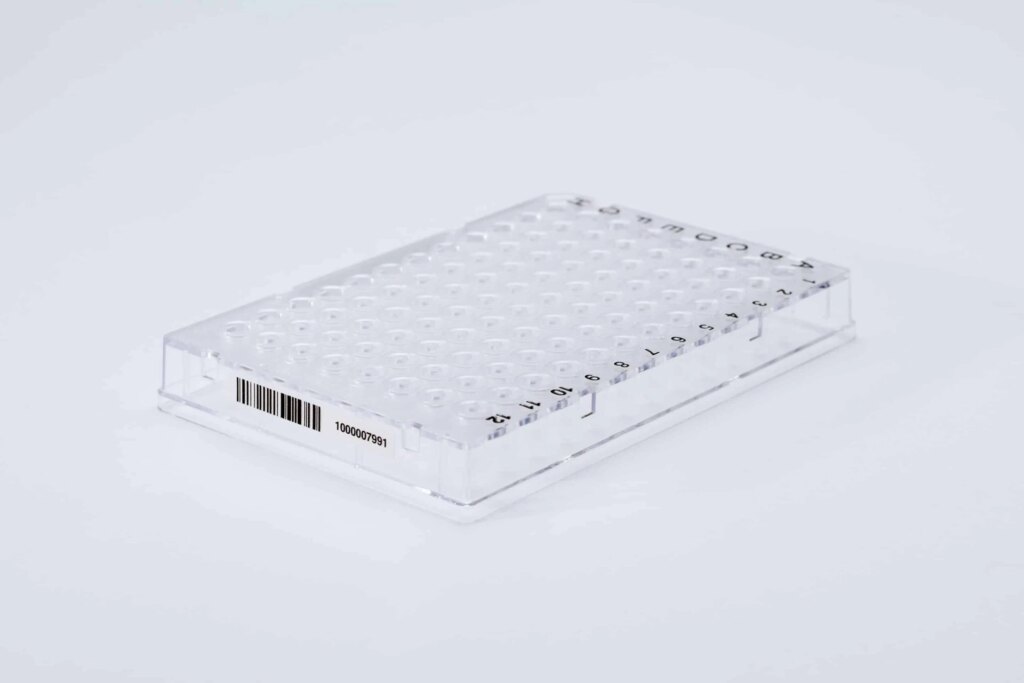
    Use pre-barcoded microplates for ready-to-use identification.

    Receive microplates with identifiers already applied, eliminating labeling steps during plate setup and processing. Ensure consistent, durable identification across assays, screening, and storage while reducing manual handling and improving workflow efficiency.

    Pre-barcoded microplates for ultimate laboratory efficiency.

    Pre-barcoded microplates arrive ready to use with verified identifiers applied before delivery. This approach removes labeling from your workflow and ensures consistent identification across plate handling, processing, and storage environments.

    laboratory efficiency

    Eliminate labeling steps during plate setup, loading, and processing workflows.

    consistent identification

    Use pre-verified plate IDs to maintain accuracy across batches and screening runs.

    integrated services

    Receive plates sorted, kitted, or prepared to match assay workflows and laboratory processes.

    Pre-barcoded microplates fit high-throughput environments where plates move rapidly through automated workflows and labeling can create delays or variability. This includes automated screening facilities, compound and plate libraries, and CROs running large-scale studies, as well as core labs managing shared plate resources where speed, consistency, and reduced handling drive efficiency and improve data integrity.

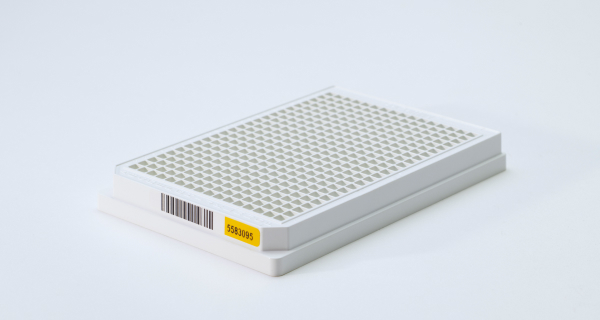
    Order pre-printed microplate labels with consistent accuracy.

    Get microplate labels professionally printed with controlled data, advanced converting, and durable materials. Ensure consistent plate identification across batches while eliminating in-house printing and reducing variability in labeling for assays, screening, and high-throughput workflows.

    Professionally printed custom microplate labels.

    Pre-printed plate labels combine controlled printing, advanced converting, and durable materials to deliver consistent, ready-to-use identification. This approach ensures every plate label meets requirements for data accuracy, layout consistency, and performance across handling and processing.

    unique ids

    Receive pre-printed plate labels with guaranteed unique IDs, controlled sequencing, and validated data across batches and runs.

    custom design

    Use color coding to differentiate assays, plate types, or workflows and improve visual organization across plate libraries.

    durable finishing

    Use engineered label constructions that resist chemicals, handling, and environmental exposure during plate processing and storage.

    Pre-printed labeling fits laboratories that run standardized plate workflows with fixed data structures. This includes screening labs running standardized assays, diagnostic labs processing consistent plate formats, and research environments where plate layouts and identifiers remain consistent across runs.

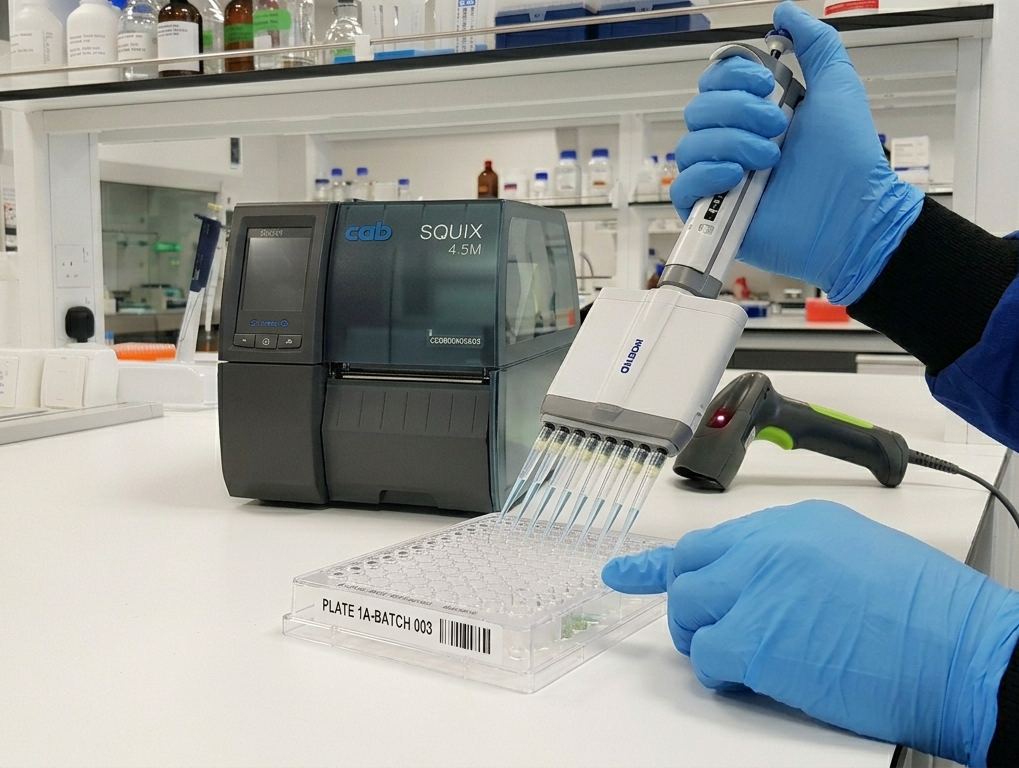
    Print microplate labels on demand with real-time data.

    Print microplate labels as needed using live data from laboratory systems. Generate labels during plate setup, sample loading, or assay preparation, with well IDs, plate IDs, and variable data applied at the point of use. This approach supports workflows where plate data changes frequently or requires immediate, accurate identification.

    A simple setup can integrate real-time labeling directly into your workflow.

    durable labels

    Blank plate labels designed for small formats, flat surfaces, and secure adhesion on plates.

    label printers

    Print high-resolution barcodes and text for plate IDs and sample tracking.

    compatible ribbons

    Thermal transfer ribbons produce durable images resistant to chemicals, moisture, and handling.

    microplate labelers

    Apply labels consistently to plates during setup or automated workflows.

    Print-on-demand labeling fits laboratories that generate or update plate data in real time. This includes screening labs, genomics workflows, and assay development environments where plates are created, modified, and labeled during processing, and where accurate, immediate identification is required.

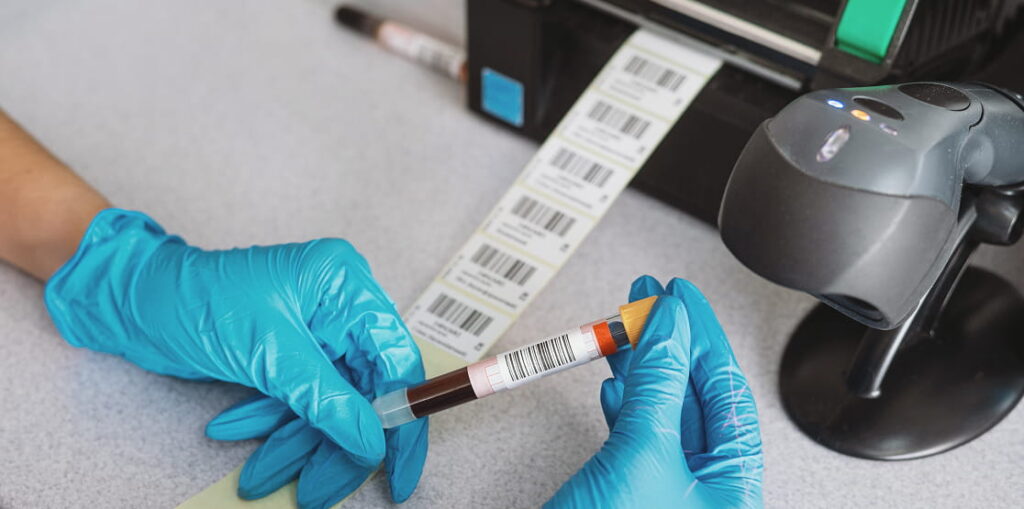
    Print blood bag labels at collection points.

    Print blood bag labels as needed using live data from blood bank systems. Generate labels during collection, component processing, or labeling steps, with donation identification numbers, product codes, and variable data applied at the point of use. This approach supports workflows where blood data updates in real time and requires immediate, accurate identification.

    A simple setup can integrate real-time labeling directly into your workflow.

    Set up a complete labeling workflow using the right materials and equipment to print and apply labels directly during blood collection, component processing, and blood bank handling workflows.

    durable labels

    Start with blank label stock engineered for flexible PVC blood bags.

    label printers

    Print high-resolution barcodes and text for complex blood label layouts.

    compatible ribbons

    Use included thermal transfer ribbons to produce durable barcode labels.

    label software

    Integrate barcode software to generate ISBT 128 labels and DIN data.

    Print-on-demand labeling fits blood banks and collection centers that generate or update donation data in real time. This includes blood collection sites, processing labs, and transfusion services where blood bags are labeled on demand, and workflows require immediate, accurate identification without relying on pre-printed labels.

    Control blood bag labeling with pre-printed formats.

    Get blood bag labels professionally printed with controlled data, advanced converting, and durable materials. Eliminate in-house printing while ensuring every label meets performance requirements for blood bank use, including handling, cold storage, and transfusion.

    Guarantee no duplicates with professionally printed blood bag labels.

    Pre-printed labeling combines controlled printing, advanced converting, and durable materials to deliver consistent, ready-to-use blood bag labels. This approach removes variability from in-house printing and ensures every label meets requirements for DIN accuracy, barcode performance, and reliable identification across blood bank workflows.

    consistency at scale

    Receive pre-printed labels with guaranteed unique DIN sequences, controlled serialization, and validated data across batches and production runs.

    accurate din formats

    Maintain consistent DIN formats to ensure accurate identification across blood bags, segments, and associated components.

    durable finsihing

    Use engineered label constructions designed to resist edge lift, moisture, and routine handling, helping maintain adhesion and readability throughout blood collection.

    Pre-printed labeling fits blood banks and collection centers that manage high volumes of donations and require controlled, repeatable identification. This includes blood collection sites, processing facilities, and transfusion services where standardized labeling, consistent DIN assignment, and stable data support efficient, validated workflows without frequent changes.

    Support accurate workflows with real-time labeling.

    In laboratory environments, data often isnโ€™t final until the last momentโ€”at the bench, at the instrument, or during sample handling. Printing labels on demand helps ensure each tube or vial reflects the most accurate information, while fitting naturally into the way your work actually happens.

    Support accurate workflows with real-time labeling.

    In laboratory environments, data often isnโ€™t final until the last momentโ€”at the bench, at the instrument, or during sample handling. Printing labels on demand helps ensure each tube or vial reflects the most accurate information, while fitting naturally into the way your work actually happens.

    A simple setup can integrate real-time labeling directly into your workflow.

    In laboratory environments, data often isnโ€™t final until the last momentโ€”at the bench, at the instrument, or during sample handling. Printing labels on demand helps ensure each tube or vial reflects the most accurate information, while fitting naturally into the way your work actually happens.

    compatible ribbons

    Compatible resin ribbons ensuring clear, durable print for barcodes and text

    compatible ribbons

    Compatible resin ribbons ensuring clear, durable print for barcodes and text

    In laboratory environments, data often isnโ€™t final until the last momentโ€”at the bench, at the instrument, or during sample handling. Printing labels on demand helps ensure each tube or vial reflects the most accurate information, while fitting naturally into the way your work actually happens.

    Support accurate workflows with real-time labeling.

    In laboratory environments, data often isnโ€™t final until the last momentโ€”at the bench, at the instrument, or during sample handling. Printing labels on demand helps ensure each tube or vial reflects the most accurate information, while fitting naturally into the way your work actually happens.

    A simple setup can integrate real-time labeling directly into your workflow.

    compatible ribbons

    Compatible resin ribbons ensuring clear, durable print for barcodes and text

    compatible ribbons

    Compatible resin ribbons ensuring clear, durable print for barcodes and text

    compatible ribbons

    Compatible resin ribbons ensuring clear, durable print for barcodes and text

    compatible ribbons

    Compatible resin ribbons ensuring clear, durable print for barcodes and text

    In laboratory environments, data often isnโ€™t final until the last momentโ€”at the bench, at the instrument, or during sample handling. Printing labels on demand helps ensure each tube or vial reflects the most accurate information, while fitting naturally into the way your work actually happens.

    Support accurate workflows with real-time labeling.

    In laboratory environments, data often isnโ€™t final until the last momentโ€”at the bench, at the instrument, or during sample handling. Printing labels on demand helps ensure each tube or vial reflects the most accurate information, while fitting naturally into the way your work actually happens.

    A simple setup can integrate real-time labeling directly into your workflow.

    In laboratory environments, data often isnโ€™t final until the last momentโ€”at the bench, at the instrument, or during sample handling. Printing labels on demand helps ensure each tube or vial reflects the most accurate information, while fitting naturally into the way your work actually happens.

    durable labels

    Durable labels that stay attached through handling, storage, or cryogenic conditions

    compatible ribbons

    Compatible resin ribbons ensuring clear, durable print for barcodes and text

    reliable printer

    Compact, consistent, durable thermal transfer printing at the point of use

    label software

    Label management software to format labels and connect to sample data or LIMS

    In laboratory environments, data often isnโ€™t final until the last momentโ€”at the bench, at the instrument, or during sample handling. Printing labels on demand helps ensure each tube or vial reflects the most accurate information, while fitting naturally into the way your work actually happens.

    Request a quote

    Take advantage of our volume discounts for bulk orders. Reach out to us for a personalized quote tailored to your needs.

    "*" indicates required fields

    This field is for validation purposes and should be left unchanged.