$0.00
0
HPLC Chromatography Vial, Screw Cap

3 Reasons to Stop Hand Labeling Your Chromatography Vials

HPLC Chromatography Vial, Screw Cap

Sample management and workflow efficiency is critical in the laboratory. An accurate labeling system goes a long way toward facilitating a structured and efficient research environment.¹ Using sample tracking technologies such as 1D and 2D barcodes ensures sample integrity, reduces the loss of samples due to mislabeling, assists with storage and safety, and provides a way to track samples and sample-related information.

Automation continues to grow in research environments requiring the use of barcodes on sample containers and labware.² Reducing errors while increasing throughput, especially in terms of sample identification, is key as more automated processes are utilized.

Laboratory research and studies require collection, processing, analysis, and storage of many samples that are often handled by various departments. Workflows can be long with multiple steps and transfers in the process.

Labware preparation for research and study collection, processing and analysis is time consuming. Handwritten labeling or application of printed labels is challenging and prone to human errors (especially on small chromatography vials). To resolve these issues, we recommend removing label application from your lab, and instead ordering your chromatography vials with barcodes pre-applied.

In addition to eliminating a tedious step from your processes, pre-labeled containers can enhance your processes in other ways – keep reading for details on three ways your lab might benefit from making the switch to a pre-barcoded strategy.

Why use barcodes in chromatography?

The question of why barcodes should be used in chromatography is multifaceted, encompassing several critical aspects of laboratory operations. Compared to handwritten markings, a barcode system certainly has a lower margin for error – eliminating legibility factors and reducing opportunities for human error. For example, a big risk is placing a vial in the incorrect location in the autosampler or listing the sample in the incorrect place in the sequence table. Scanning provides better certainty as to what was placed where, significantly reducing that risk.

Furthermore, good laboratory practices point to proper sample and sub-sample tracking for each stage along the analytical process,³ as Ronald E. Majors points out. Dr. Majors also writes that “Proper identification of the collected primary sample by … application of a bar code for automatic reading … incorporation of RFI devices, or other means of documentation must be performed properly to ensure that later stages of processing can be traced unequivocally to the original primary sample.”

A proper sequence management system will further reduce the opportunity for error by seeking out duplicate and otherwise unusable barcodes post-printing. Systems like these can be a hassle to manage in-house, but any trustworthy supplier of pre-printed barcodes should have some system in place to ensure the quality of the barcodes you receive.

  1. Accuracy and Precision: Handwritten labels and notes are prone to errors, whether due to illegible handwriting, transcription mistakes, or human memory lapses. Barcodes offer a reliable and standardized method for sample identification, minimizing the risk of errors and ensuring accurate and precise analytical results.
  2. Efficiency and Productivity: Manual data entry and sample tracking consume valuable time and resources, leading to inefficiencies in laboratory workflows. By automating sample identification through barcode scanning, laboratories can streamline processes, reduce turnaround times, and increase overall productivity.
  3. Data Management and Traceability: Barcodes facilitate comprehensive data management by providing a unique identifier for each sample. This allows laboratories to track samples throughout the entire analytical process, from sample preparation to result reporting, ensuring traceability and accountability.
  4. Sample Tracking and Audit Trails: In today’s regulatory environment, maintaining detailed audit trails is essential for compliance with quality standards and regulations. Barcoded samples enable laboratories to create comprehensive audit trails, documenting each step of the analytical process and providing a transparent record of sample handling and analysis.
  5. Knowledge Sharing and Collaboration: Standardized barcode systems facilitate seamless data exchange and collaboration among research institutions, academic laboratories, and industry partners. By adopting a universal barcode format, laboratories can easily share analytical data, compare results, and collaborate on joint research projects, fostering transparency and reproducibility in scientific research.

How to use barcodes effectively in chromatography

Implementing barcode systems in chromatography requires careful planning and execution to ensure optimal performance and integration with existing laboratory workflows. Here are key steps to effectively use barcodes in chromatography:

  1. Barcode Labeling: Assign a unique barcode to each sample vial and associate essential information such as sample ID, batch number, and preparation date to the metadata in your LIMS. Use standardized barcode formats such as Code 128 or Data Matrix codes to ensure compatibility with barcode readers and software systems.
  2. Autosampler Integration: Select autosamplers with barcode readers or scanners capable of decoding barcode information from sample vials. Ensure seamless integration with autosampler software to enable automatic sample identification and tracking. There are several barcode-enabled autosamplers on the market, some of our favorites include: Gerstel-MPS, Shimadzu HS-20, CTC PAL RSI and RTC, and these models from Agilent.
  3. Training and Adoption: Provide comprehensive training to laboratory staff on the use of barcode technology in chromatography. Emphasize the importance of adherence to standardized procedures for barcode labeling, scanning, and data entry to ensure consistent and reliable results.

Where can I find pre-barcoded chromatography vials?

You can source pre-barcoded labware from certain labware manufacturers or from your identification and tracking service provider.

It’s fairly common for labware manufacturers to offer pre-marked labware in their catalog, however, options for chromatography applications are often minimal.

Today, the most reliable resource for pre-barcoded chromatography vials is working with a labware service provider to build a custom solution. Placing your vial labeling in the hands of labware labeling experts also offers additional perks, such as higher quality print options and precise automated application without investing in costly equipment yourself.

Our Labware Prepâ„¢ Services solution offers these additional services as well:

Labware Procurement

We understand that in the lab, it’s not only important to have the right label for the job, but the right labware. We maintain connections with major labware manufacturers in order to ensure our customers get the labware they need. Just let us know your preference and we’ll take care of placing the order.

Nase-Controlled Production

Rest assured, your labware is meticulously unpacked, marked, and re-packaged within our RNase/DNase-free environment, ensuring that your pre-labeled labware is ready for use when avoiding DNA or RNA contamination is crucial. This allows your staff to focus on their primary tasks.

Barcoding, Marking, Labeling

Our team of experts will use our in-house automation to apply adhesive barcode labels to your labware, or you may take advantage of our advanced marking technologies for a more permanent identification solution, depending on your needs and environment.

Tare-Weighing, Kitting

Upon request, our team can take on specific prep tasks, including tare-weighing, capping or de-capping, plugging, racking, and sorting tasks. Your labware and kits are assembled to your bespoke specifications, including brand standards, and you will receive your labware immediately, ready to use upon delivery.

Order fully prepared chromatography vials

We offer two prepared chromatography kits to promote accuracy and efficiency in your laboratory. Each kit includes 100 pre-barcoded glass vials and their accompanying closures, conveniently packaged for easy use.

We utilize our cured ink direct mark barcode technology to ensure scannability and permanence.

These kits can significantly reduce the amount of time dedicated to prep work in your lab and protect your samples through HPLC, GC, and MS analysis. 

Final thoughts

Barcodes are being introduced to the chromatography process to improve the tracking and identification of samples. While printed barcodes are much simpler to prepare than handwritten markings, we want you to be aware that eliminating label application from your facility is an option that’s available to boost efficiencies even further.

In addition to reduced effort on your part, your partner will likely be able to ensure you receive barcodes with high enough resolution to be scanned consistently despite their small size. Improved durability and precision placement can further enhance your chromatography vials’ ability to withstand harsh exposures and interact with automated equipment.

If you’re considering barcodes for your 12×32 autosampler vials or even larger headspace vials, take a moment to evaluate whether outsourcing services offer benefits that align with your needs, challenges, and goals.

1. Janzen W, Admirand E, Andrews J, et al. (2019) Establishing and Maintaining a Robust Sample Management System. SLAS Technology. 24 (3), 256-268.
2. Liscouski, J. (2018). Some considerations in the automation of laboratory procedures. Unpublished. https://doi.org/10.13140/RG.2.2.27991.73125
3. Majors, R. (2013) Sample Preparation Fundamentals for Chromatography. Agilent Technologies Inc. 5991-3326EN
0
    0
    Your Cart
    Your cart is emptyReturn to Shop

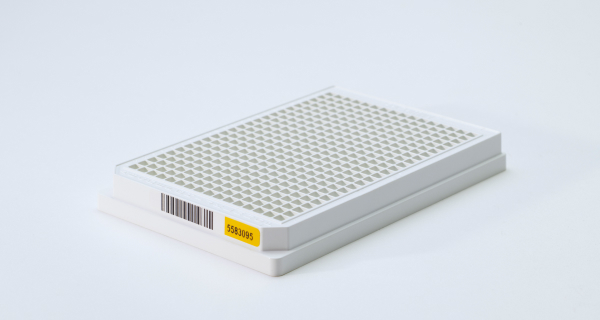
    Use pre-barcoded microplates for ready-to-use identification.

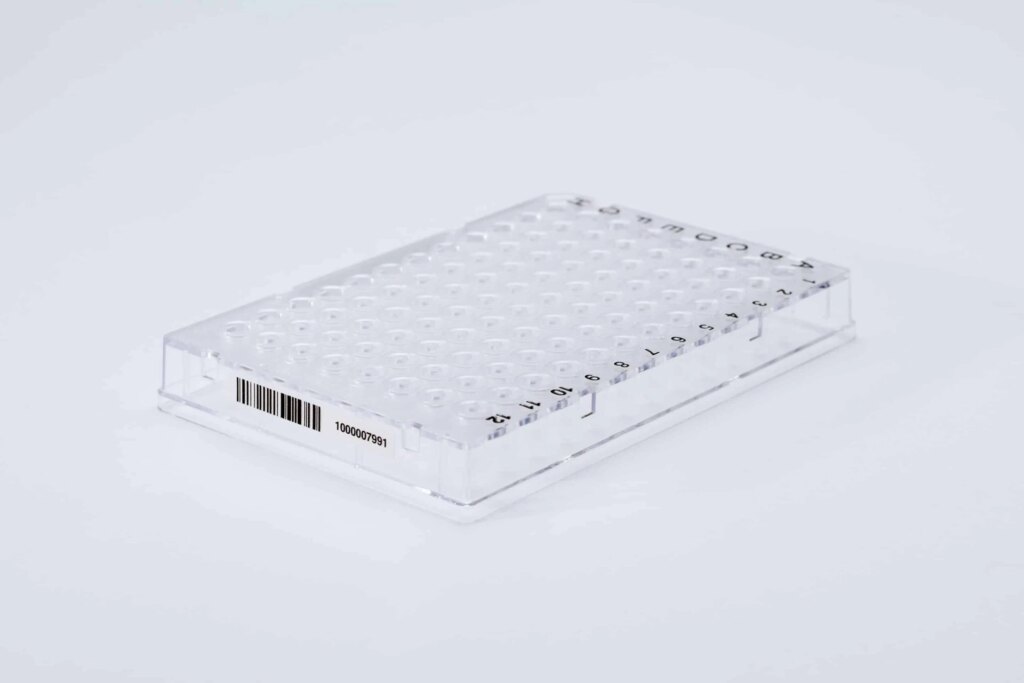
    Receive microplates with identifiers already applied, eliminating labeling steps during plate setup and processing. Ensure consistent, durable identification across assays, screening, and storage while reducing manual handling and improving workflow efficiency.

    Pre-barcoded microplates for ultimate laboratory efficiency.

    Pre-barcoded microplates arrive ready to use with verified identifiers applied before delivery. This approach removes labeling from your workflow and ensures consistent identification across plate handling, processing, and storage environments.

    laboratory efficiency

    Eliminate labeling steps during plate setup, loading, and processing workflows.

    consistent identification

    Use pre-verified plate IDs to maintain accuracy across batches and screening runs.

    integrated services

    Receive plates sorted, kitted, or prepared to match assay workflows and laboratory processes.

    Pre-barcoded microplates fit high-throughput environments where plates move rapidly through automated workflows and labeling can create delays or variability. This includes automated screening facilities, compound and plate libraries, and CROs running large-scale studies, as well as core labs managing shared plate resources where speed, consistency, and reduced handling drive efficiency and improve data integrity.

    Order pre-printed microplate labels with consistent accuracy.

    Get microplate labels professionally printed with controlled data, advanced converting, and durable materials. Ensure consistent plate identification across batches while eliminating in-house printing and reducing variability in labeling for assays, screening, and high-throughput workflows.

    Professionally printed custom microplate labels.

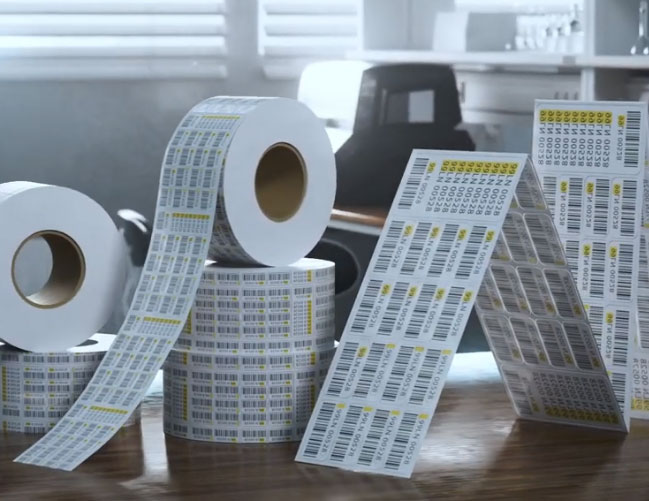
    Pre-printed plate labels combine controlled printing, advanced converting, and durable materials to deliver consistent, ready-to-use identification. This approach ensures every plate label meets requirements for data accuracy, layout consistency, and performance across handling and processing.

    unique ids

    Receive pre-printed plate labels with guaranteed unique IDs, controlled sequencing, and validated data across batches and runs.

    custom design

    Use color coding to differentiate assays, plate types, or workflows and improve visual organization across plate libraries.

    durable finishing

    Use engineered label constructions that resist chemicals, handling, and environmental exposure during plate processing and storage.

    Pre-printed labeling fits laboratories that run standardized plate workflows with fixed data structures. This includes screening labs running standardized assays, diagnostic labs processing consistent plate formats, and research environments where plate layouts and identifiers remain consistent across runs.

    Print microplate labels on demand with real-time data.

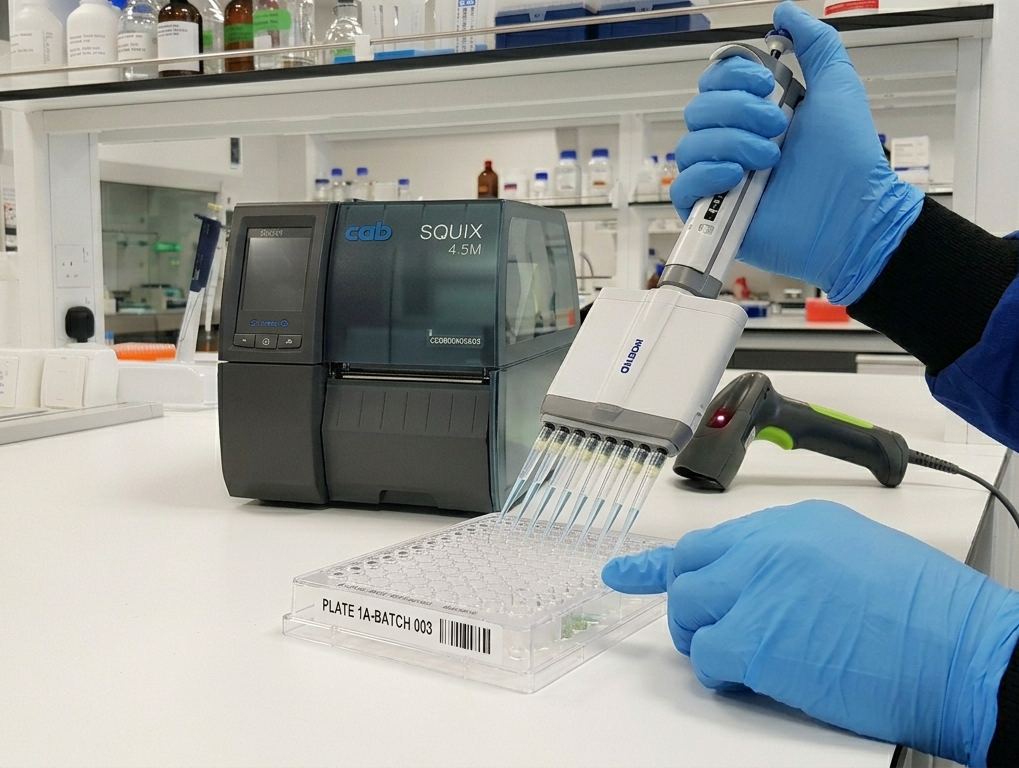
    Print microplate labels as needed using live data from laboratory systems. Generate labels during plate setup, sample loading, or assay preparation, with well IDs, plate IDs, and variable data applied at the point of use. This approach supports workflows where plate data changes frequently or requires immediate, accurate identification.

    A simple setup can integrate real-time labeling directly into your workflow.

    durable labels

    Blank plate labels designed for small formats, flat surfaces, and secure adhesion on plates.

    label printers

    Print high-resolution barcodes and text for plate IDs and sample tracking.

    compatible ribbons

    Thermal transfer ribbons produce durable images resistant to chemicals, moisture, and handling.

    microplate labelers

    Apply labels consistently to plates during setup or automated workflows.

    Print-on-demand labeling fits laboratories that generate or update plate data in real time. This includes screening labs, genomics workflows, and assay development environments where plates are created, modified, and labeled during processing, and where accurate, immediate identification is required.

    Print blood bag labels at collection points.

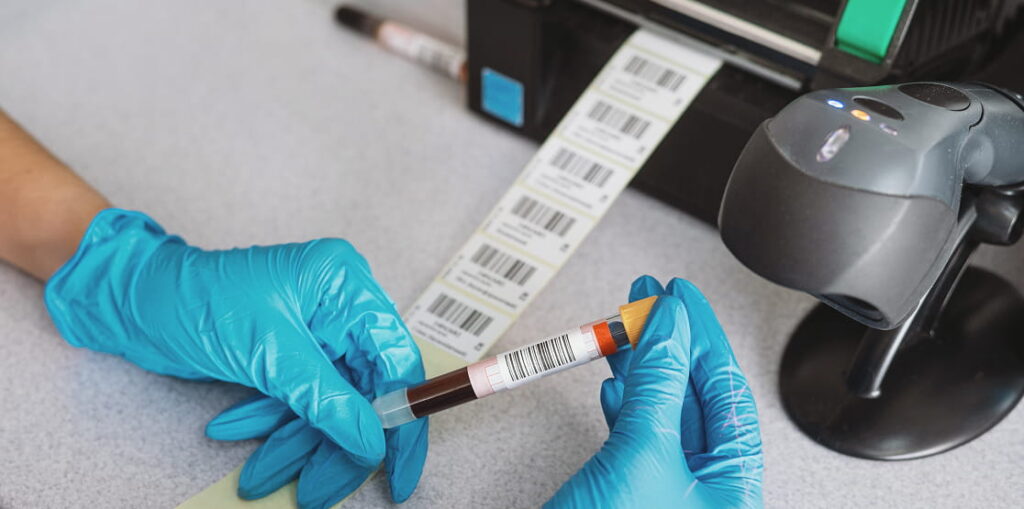
    Print blood bag labels as needed using live data from blood bank systems. Generate labels during collection, component processing, or labeling steps, with donation identification numbers, product codes, and variable data applied at the point of use. This approach supports workflows where blood data updates in real time and requires immediate, accurate identification.

    A simple setup can integrate real-time labeling directly into your workflow.

    Set up a complete labeling workflow using the right materials and equipment to print and apply labels directly during blood collection, component processing, and blood bank handling workflows.

    durable labels

    Start with blank label stock engineered for flexible PVC blood bags.

    label printers

    Print high-resolution barcodes and text for complex blood label layouts.

    compatible ribbons

    Use included thermal transfer ribbons to produce durable barcode labels.

    label software

    Integrate barcode software to generate ISBT 128 labels and DIN data.

    Print-on-demand labeling fits blood banks and collection centers that generate or update donation data in real time. This includes blood collection sites, processing labs, and transfusion services where blood bags are labeled on demand, and workflows require immediate, accurate identification without relying on pre-printed labels.

    Control blood bag labeling with pre-printed formats.

    Get blood bag labels professionally printed with controlled data, advanced converting, and durable materials. Eliminate in-house printing while ensuring every label meets performance requirements for blood bank use, including handling, cold storage, and transfusion.

    Guarantee no duplicates with professionally printed blood bag labels.

    Pre-printed labeling combines controlled printing, advanced converting, and durable materials to deliver consistent, ready-to-use blood bag labels. This approach removes variability from in-house printing and ensures every label meets requirements for DIN accuracy, barcode performance, and reliable identification across blood bank workflows.

    consistency at scale

    Receive pre-printed labels with guaranteed unique DIN sequences, controlled serialization, and validated data across batches and production runs.

    accurate din formats

    Maintain consistent DIN formats to ensure accurate identification across blood bags, segments, and associated components.

    durable finsihing

    Use engineered label constructions designed to resist edge lift, moisture, and routine handling, helping maintain adhesion and readability throughout blood collection.

    Pre-printed labeling fits blood banks and collection centers that manage high volumes of donations and require controlled, repeatable identification. This includes blood collection sites, processing facilities, and transfusion services where standardized labeling, consistent DIN assignment, and stable data support efficient, validated workflows without frequent changes.

    Support accurate workflows with real-time labeling.

    In laboratory environments, data often isn’t final until the last moment—at the bench, at the instrument, or during sample handling. Printing labels on demand helps ensure each tube or vial reflects the most accurate information, while fitting naturally into the way your work actually happens.

    Support accurate workflows with real-time labeling.

    In laboratory environments, data often isn’t final until the last moment—at the bench, at the instrument, or during sample handling. Printing labels on demand helps ensure each tube or vial reflects the most accurate information, while fitting naturally into the way your work actually happens.

    A simple setup can integrate real-time labeling directly into your workflow.

    In laboratory environments, data often isn’t final until the last moment—at the bench, at the instrument, or during sample handling. Printing labels on demand helps ensure each tube or vial reflects the most accurate information, while fitting naturally into the way your work actually happens.

    compatible ribbons

    Compatible resin ribbons ensuring clear, durable print for barcodes and text

    compatible ribbons

    Compatible resin ribbons ensuring clear, durable print for barcodes and text

    In laboratory environments, data often isn’t final until the last moment—at the bench, at the instrument, or during sample handling. Printing labels on demand helps ensure each tube or vial reflects the most accurate information, while fitting naturally into the way your work actually happens.

    Support accurate workflows with real-time labeling.

    In laboratory environments, data often isn’t final until the last moment—at the bench, at the instrument, or during sample handling. Printing labels on demand helps ensure each tube or vial reflects the most accurate information, while fitting naturally into the way your work actually happens.

    A simple setup can integrate real-time labeling directly into your workflow.

    compatible ribbons

    Compatible resin ribbons ensuring clear, durable print for barcodes and text

    compatible ribbons

    Compatible resin ribbons ensuring clear, durable print for barcodes and text

    compatible ribbons

    Compatible resin ribbons ensuring clear, durable print for barcodes and text

    compatible ribbons

    Compatible resin ribbons ensuring clear, durable print for barcodes and text

    In laboratory environments, data often isn’t final until the last moment—at the bench, at the instrument, or during sample handling. Printing labels on demand helps ensure each tube or vial reflects the most accurate information, while fitting naturally into the way your work actually happens.

    Support accurate workflows with real-time labeling.

    In laboratory environments, data often isn’t final until the last moment—at the bench, at the instrument, or during sample handling. Printing labels on demand helps ensure each tube or vial reflects the most accurate information, while fitting naturally into the way your work actually happens.

    A simple setup can integrate real-time labeling directly into your workflow.

    In laboratory environments, data often isn’t final until the last moment—at the bench, at the instrument, or during sample handling. Printing labels on demand helps ensure each tube or vial reflects the most accurate information, while fitting naturally into the way your work actually happens.

    durable labels

    Durable labels that stay attached through handling, storage, or cryogenic conditions

    compatible ribbons

    Compatible resin ribbons ensuring clear, durable print for barcodes and text

    reliable printer

    Compact, consistent, durable thermal transfer printing at the point of use

    label software

    Label management software to format labels and connect to sample data or LIMS

    In laboratory environments, data often isn’t final until the last moment—at the bench, at the instrument, or during sample handling. Printing labels on demand helps ensure each tube or vial reflects the most accurate information, while fitting naturally into the way your work actually happens.

    Request a quote

    Take advantage of our volume discounts for bulk orders. Reach out to us for a personalized quote tailored to your needs.

    "*" indicates required fields

    This field is for validation purposes and should be left unchanged.