

Blood bag labels support accurate identification from collection through transfusion. They keep donation data, product codes, and ABO/Rh information clear and scannable at every step. Strong adhesion, flexible constructions, and high-contrast barcodes help labels stay secure and readable on blood bags during handling, storage, and transport.
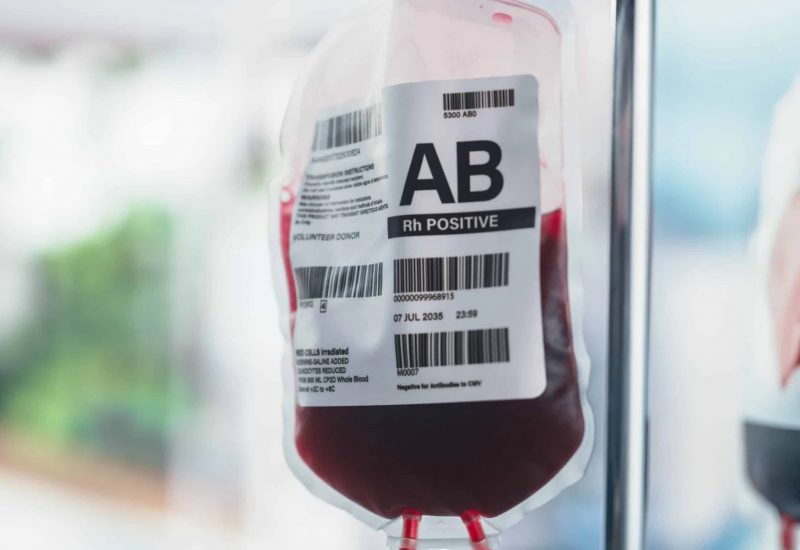
Blood bag labels come in standard ISBT 128 sizes and DIN formats to support consistent identification and layout requirements. Matte and gloss finishes help balance scan performance and readability, while high-contrast print surfaces keep barcodes and variable data clear. Durable constructions and reliable adhesion keep labels secure on flexible blood bags through handling, storage, and transport.
Blood bank labels must support ISBT 128 formats, secondary overlays, and extended dwell times while maintaining barcode clarity and human-readable data throughout collection, processing, cold storage, transport, and transfusion workflows.
Blood collection labels for tubes must accommodate small formats, tight placement tolerances, and repeated scanning while supporting high-volume patient blood draw workflows and downstream laboratory automation.
Blood component labels identify standard and modified RBC units, including washed, frozen, irradiated, or divided products. Print clarity and adhesion guarantee safe transfusion compatibility and compliance.
Blood bag labels use specialized adhesive constructions to prevent edge lift and winging on flexible PVC, supporting long dwell times, cold storage exposure, and FDA 21 CFR 175.105 compliance.
ISBT 128 defines the global standard for coding, identifying, and labeling blood products. It enables consistent traceability from collection through transfusion, allowing blood centers, transfusion services, and testing laboratories to identify, verify, and track every unit with confidence. Blood labeling systems must follow ISBT 128 formats and structures to support safety, interoperability, and regulatory expectations worldwide.
Every data element on the label follows a globally defined structure. This prevents ambiguity across facilities, ensuring that product codes, attributes, and donor identifiers remain consistent and universally recognized in both text and machine-readable formats.
ISBT 128 mandates machine readability using linear Code 128 barcodes. Each required element must be duplicated in human-readable form. Barcode print quality must meet ISO/ANSI standards, guaranteeing scannability through storage, freezing, thawing, and handling.
Information must appear in standardized positions so every blood bag or tube label looks familiar regardless of facility. ISBT 128 regulations indicate that DINs sit at the top, ABO/Rh is bold and prominent, and auxiliary labels mark exceptions or special handling needs.
13 characters; includes facility ID, year, serial; globally unique for 100 years
Must use ISBT 128 standardized codes; exact to prepared product
Printed in large bold font; verified serologically; barcoded for automation
Must show both date and time; varies by component type
Mandatory on every label; ties donation to facility
Examples: irradiated, leukoreduced, CMV–, pathogen-reduced, frozen; required if applicable
Autologous, directed, emergency release, or research use; must be clear to prevent misuse
Required for plasma or pooled components; must be accurate to unit
Blood bag and blood tube labels must remain securely bonded and readable through refrigeration, frozen plasma storage, and repeated handling. These labels experience moisture, temperature changes, agitation, and daily wear throughout blood bank and laboratory workflows. Durable blood labels protect traceability by resisting edge lift, abrasion, and barcode degradation across the full lifecycle of blood collection, processing, storage, and use.
Blood bag labels must perform across refrigerated storage, frozen plasma conditions, and platelet incubation environments. Label constructions must remain bonded and readable from cryogenic storage at -196°C through controlled warming and room-temperature handling.
Condensation, disinfectants, and direct fluid contact challenge both adhesion and print durability. Blood label face stocks, inks, and coatings must resist smudging and degradation, while adhesives maintain bond strength under wet conditions and routine cleaning exposure.
Repeated handling, centrifugation, and agitation place continuous stress on blood bag and tube labels. Materials must resist abrasion, edge lift, and fading to ensure barcodes remain scannable throughout collection, processing, storage, and transfusion workflows.
Face stocks for blood labeling must withstand curved plastic surfaces, temperature fluctuations, and chemical exposure. We utilize a variety of synthetic films—including specially treated polypropylene and other engineered plastics—designed to maintain stability and print quality under stress. These materials resist shrinkage, winging, and delamination when exposed to common medical cleaning agents, UV light, and cold storage. Their dimensional stability ensures scan reliability for barcodes throughout the lifecycle of the blood product. Certain face stocks are specifically formulated for high-speed label applicators, minimizing static and improving registration accuracy. Selection is driven by compatibility with adhesives, label format (e.g., full bag vs. segment), and intended print method. Material thicknesses and finishes can be customized to support legibility, scannability, and durability. All face stocks used in blood label constructions are vetted for performance on plasticized PVC and similar medical-grade substrates.
Adhesion to blood bags presents unique challenges due to the use of plasticizers in flexible PVC films, which can interfere with long-term bond integrity. Our adhesives are engineered to resist plasticizer migration and maintain adhesion across a wide temperature range, from refrigerated storage to ambient use. Permanent acrylic systems—including both emulsion and solvent formulations—are selected for their high initial tack and long-term shear resistance. We offer specialized constructions such as double-layer (piggyback) adhesives for label transfer and multi-stage applications, frequently used for DIN and quadrant labels. All blood bag adhesives are compliant with FDA 21 CFR 175.105, ensuring suitability for indirect contact with blood containers. Performance testing includes rub resistance, temperature cycling, and compatibility with automated label applicators. We tailor bond strength and dwell time based on your application method, surface texture, and intended storage conditions.
Surface coatings and laminates play a critical role in preserving print integrity and enhancing resistance to environmental exposure. For thermal transfer and digital print compatibility, we offer topcoats that crosslink with resin ribbons or toner systems to lock in printed images, making them resistant to alcohols, disinfectants, and water. In high-abrasion environments, optional overlaminates—available in clear, matte, or UV-filtered variants—can be applied to shield variable data and barcode fields without affecting readability. Laminates may be applied edge-to-edge or in selective zones depending on label format. Coating formulations are selected to minimize static buildup and support high-speed application. Label constructions for cryogenic plasma storage or long-term freezer use can incorporate coatings with added flexibility and cold-crack resistance. All coatings and laminates are tested for compatibility with the specific face stock and adhesive used in the label structure.
Barcode and identifier permanence is essential in blood labeling. We support a wide range of resin and resin-enhanced thermal transfer ribbons engineered for chemical and abrasion resistance, especially when printed onto coated synthetic face stocks. These ribbons produce high-density, sharp barcodes suitable for ISBT 128 and other symbologies. For digital workflows, our label materials are compatible with toner-based and inkjet systems, and can be pre-coated to enhance toner anchorage or ink receptivity. Inks used for pre-printed static content (e.g., facility ID, label borders) are tested for bleed resistance and long-term legibility on curved plastic bags. Print durability is validated using rub and wipe tests simulating alcohol and bleach exposure. When print-on-demand is required, ribbon and label pairings are optimized together to maintain scannability in cold or variable storage environments.
Blood label geometries must accommodate a wide range of products and packaging formats, from full-size bags to tubing segments and sample tubes. We offer customizable label sizes to fit common blood bag layouts, including standard 4″ × 4″, 4″ x 2″, and 2″ × 2″ formats, DIN-notch designs, and integrated quadrant/segment labels. Small-format labels for test tubes and segment strips are precision-cut to remain secure on narrow diameters and smooth surfaces. Our die-cutting capabilities support complex shapes, peel-off sections, and multiple label components per liner to enable modular labeling strategies. Adhesive-free zones, perforations, and tamper indicators can also be incorporated. Dimensional tolerances are tightly controlled to support high-speed applicators and ensure label placement accuracy in both manual and automated workflows. Label sets can be delivered in rolls, fanfolds, or sheeted formats as needed.
Blood labels must perform reliably across a wide range of physical, chemical, and environmental conditions. We engineer durability into every layer of the construction—from face stock to adhesive to topcoat—to ensure resistance to abrasion, moisture, cleaning agents, and temperature extremes. Labels for blood bags are designed to stay intact on flexible PVC surfaces during handling, transport, and refrigeration, while segment labels maintain print integrity even on narrow tubing. Materials are tested for resistance to alcohol wipes, bleach, water immersion, and blood contamination, with constructions available to withstand temperatures from deep freeze (-80°C) to ambient processing environments. For high-volume workflows, surface durability is critical to ensure that barcodes remain scannable and text remains legible throughout the unit’s lifecycle. In-house testing includes rub tests, chemical exposure, and temperature cycling to validate label performance under real-world conditions.
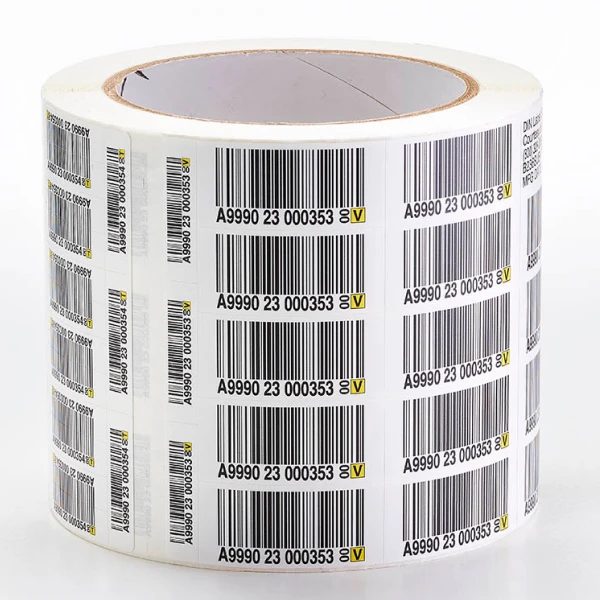
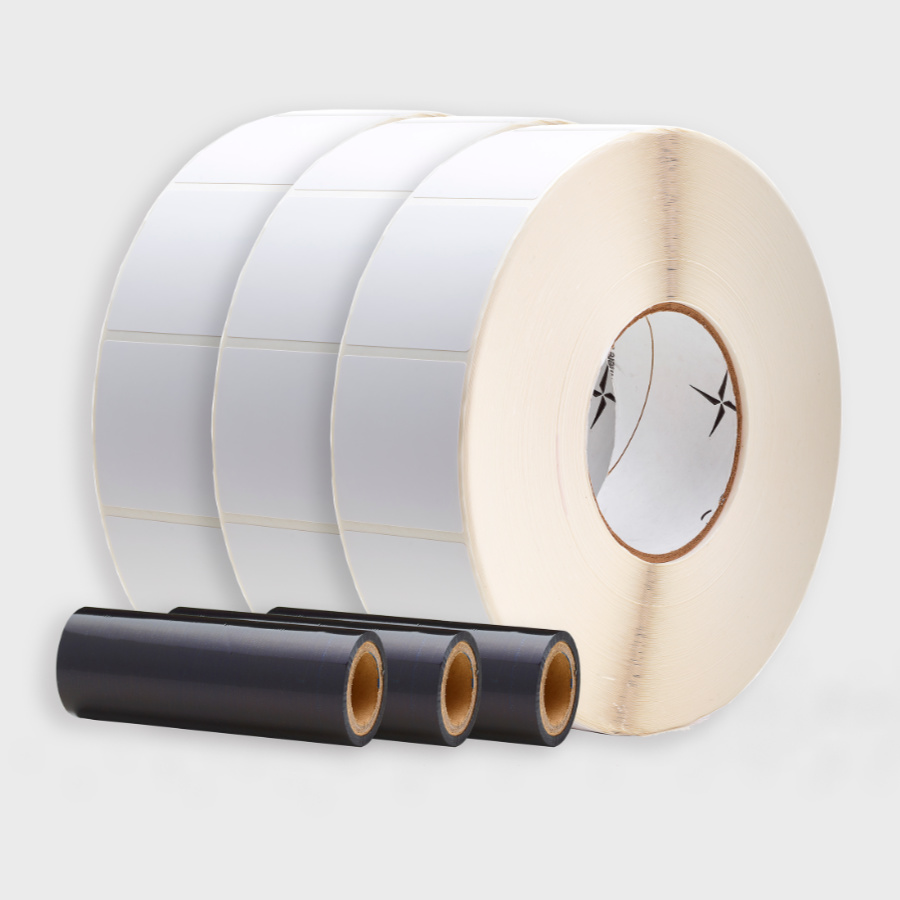
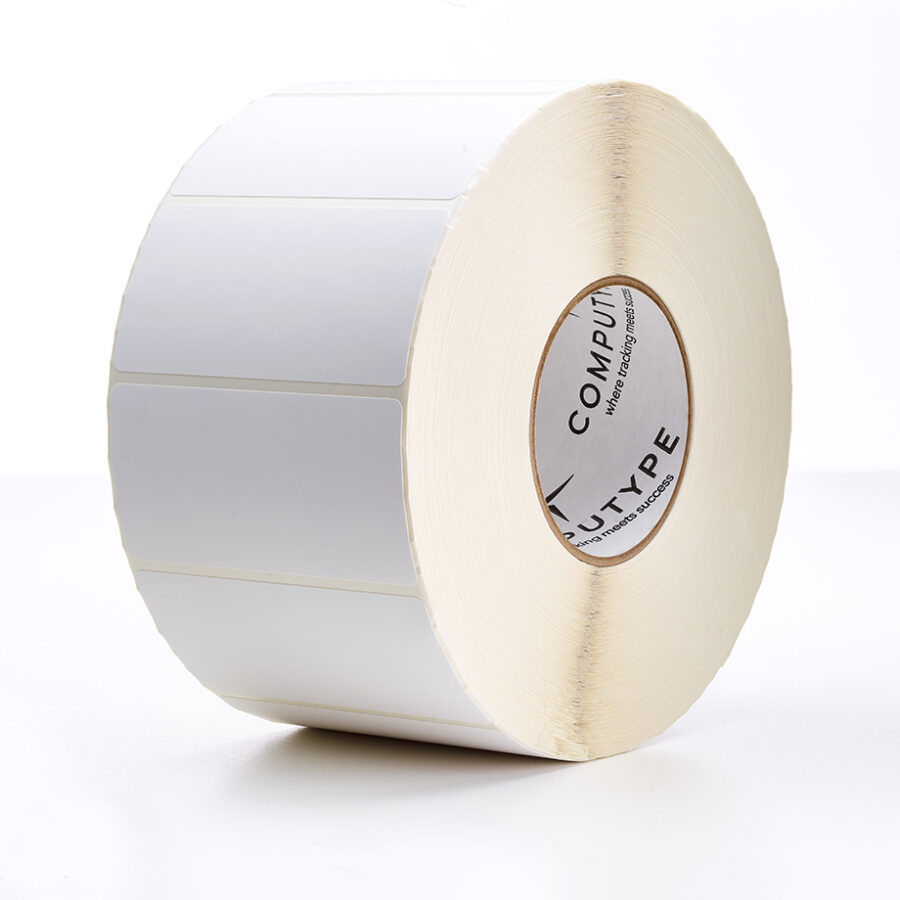
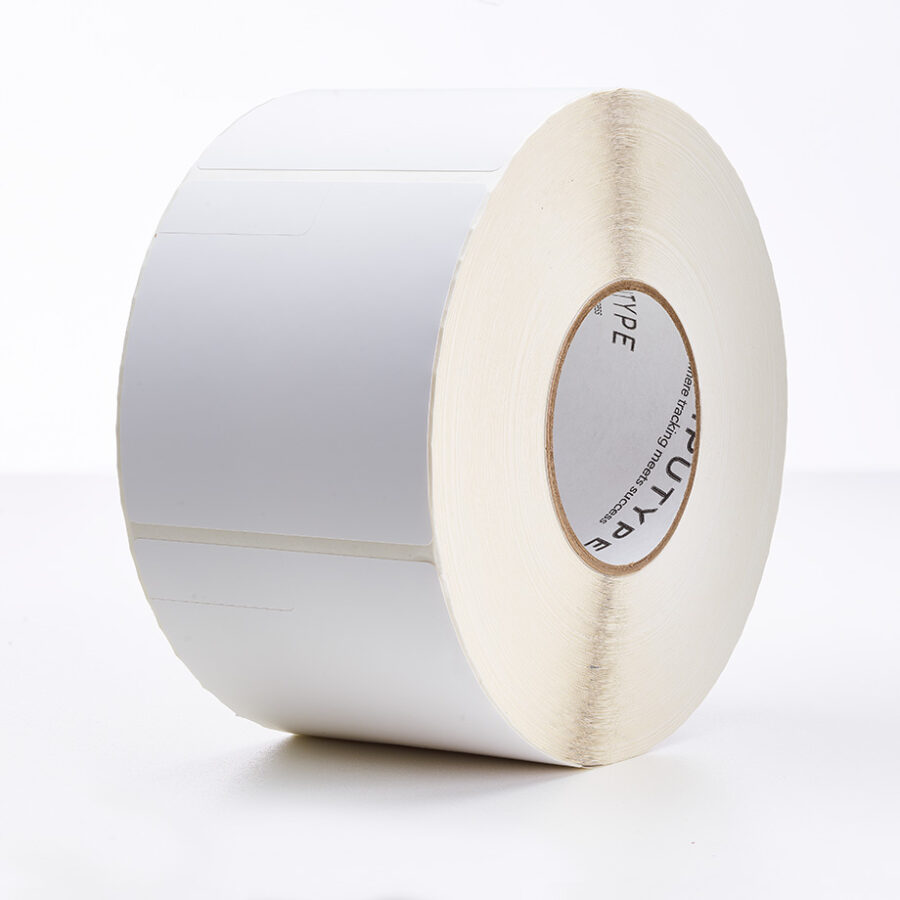
Shop blank label sets built for thermal transfer printing—each paired with compatible ribbons and designed for durability, compliance, and reliable barcode performance across blood bags, tubes, and segment formats.
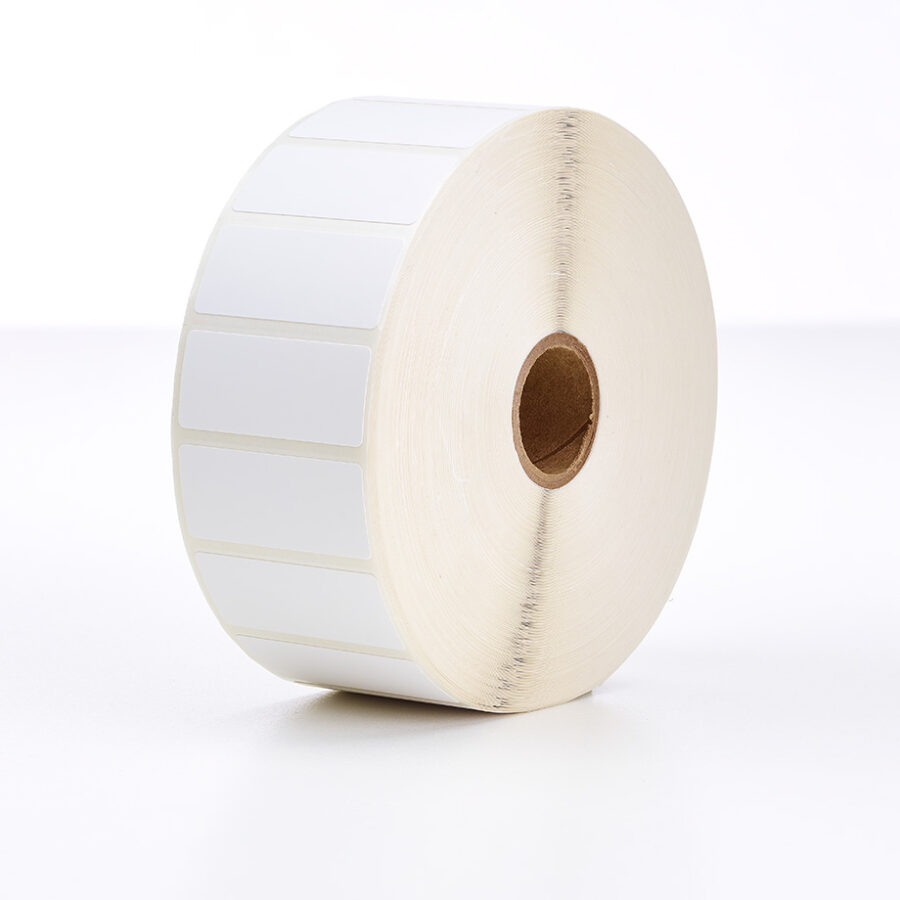
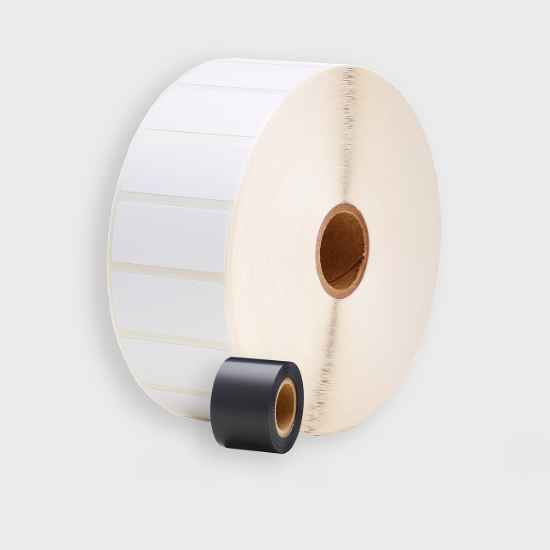

Have questions? We’re here to help.
Contact us to connect with a specialist who understands your industry and can provide the right solutions for your business. Let’s start a conversation.
Blood bag labels must remain legible and securely bonded through collection, processing, storage, transport, and transfusion. Labels are exposed to refrigeration, handling, condensation, and disinfectants, often over extended periods. Identification errors at this level affect chain-of-custody and patient safety, making consistent adhesion, readability, and data integrity essential throughout the full lifecycle.
Blood tube labels are applied in fast-paced patient blood draw workflows involving multiple tubes per draw and repeated handling. Small label formats, tight placement tolerances, and barcode readability are common challenges. Blood collection labels must support reliable scanning and identification as tubes move through racks, analyzers, storage, and transport without slowing clinical or laboratory processes.
Blood component labeling often occurs after separation, pooling, or modification, requiring labels to bond reliably to existing containers and, in some cases, over other labels. These labels must support updated identifiers, component codes, and dates without obscuring critical information. Relabeling increases risk, so placement accuracy and long-term readability are critical to maintaining traceability.
DIN label sets are applied at collection and accessioning to establish a single, traceable identity across multiple containers and records. These sets must maintain sequence integrity and consistent readability across all labels. Errors in numbering, duplication, or application can compromise traceability downstream, making controlled sets and clear differentiation between labels essential from the start.
Plasma and frozen blood component labels operate in extreme cold environments where moisture, frost, and condensation are common. Labels must remain readable and attached during freezing, frozen storage, and thawing. Failures often occur when labels crack, lift, or lose scan quality in cold chain conditions, making construction and performance under frozen handling especially important.
Not sure which label fits your workflow? Request samples to evaluate durability, readability, and fit before making a decision.
In laboratory environments, data often isn’t final until the last moment—at the bench, at the instrument, or during sample handling. Printing labels on demand helps ensure each tube or vial reflects the most accurate information, while fitting naturally into the way your work actually happens.
Compatible resin ribbons ensuring clear, durable print for barcodes and text
Compatible resin ribbons ensuring clear, durable print for barcodes and text
Compatible resin ribbons ensuring clear, durable print for barcodes and text
Compatible resin ribbons ensuring clear, durable print for barcodes and text
In laboratory environments, data often isn’t final until the last moment—at the bench, at the instrument, or during sample handling. Printing labels on demand helps ensure each tube or vial reflects the most accurate information, while fitting naturally into the way your work actually happens.
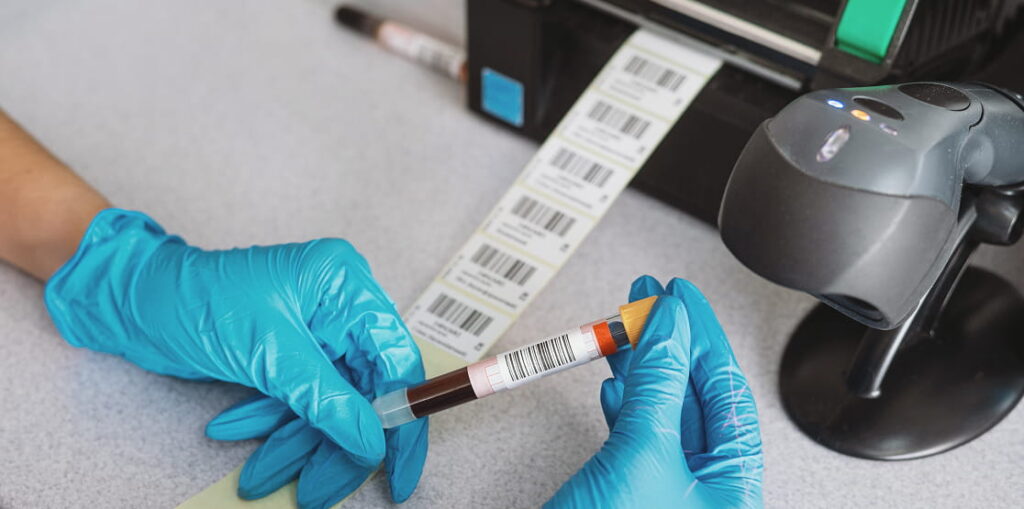
In laboratory environments, data often isn’t final until the last moment—at the bench, at the instrument, or during sample handling. Printing labels on demand helps ensure each tube or vial reflects the most accurate information, while fitting naturally into the way your work actually happens.
In laboratory environments, data often isn’t final until the last moment—at the bench, at the instrument, or during sample handling. Printing labels on demand helps ensure each tube or vial reflects the most accurate information, while fitting naturally into the way your work actually happens.
Durable labels that stay attached through handling, storage, or cryogenic conditions
Compatible resin ribbons ensuring clear, durable print for barcodes and text
Compact, consistent, durable thermal transfer printing at the point of use
Label management software to format labels and connect to sample data or LIMS
In laboratory environments, data often isn’t final until the last moment—at the bench, at the instrument, or during sample handling. Printing labels on demand helps ensure each tube or vial reflects the most accurate information, while fitting naturally into the way your work actually happens.
Print blood bag labels as needed using live data from blood bank systems. Generate labels during collection, component processing, or labeling steps, with donation identification numbers, product codes, and variable data applied at the point of use. This approach supports workflows where blood data updates in real time and requires immediate, accurate identification.
Set up a complete labeling workflow using the right materials and equipment to print and apply labels directly during blood collection, component processing, and blood bank handling workflows.
Start with blank label stock engineered for flexible PVC blood bags.
Print high-resolution barcodes and text for complex blood label layouts.
Use included thermal transfer ribbons to produce durable barcode labels.
Integrate barcode software to generate ISBT 128 labels and DIN data.
Print-on-demand labeling fits blood banks and collection centers that generate or update donation data in real time. This includes blood collection sites, processing labs, and transfusion services where blood bags are labeled on demand, and workflows require immediate, accurate identification without relying on pre-printed labels.
Get blood bag labels professionally printed with controlled data, advanced converting, and durable materials. Eliminate in-house printing while ensuring every label meets performance requirements for blood bank use, including handling, cold storage, and transfusion.
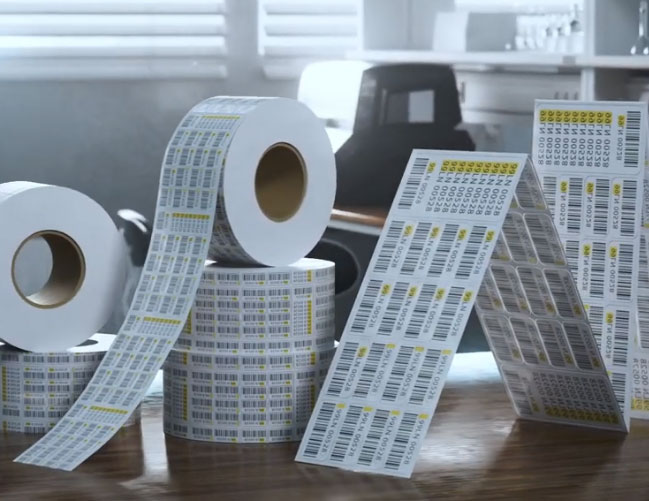
Pre-printed labeling combines controlled printing, advanced converting, and durable materials to deliver consistent, ready-to-use blood bag labels. This approach removes variability from in-house printing and ensures every label meets requirements for DIN accuracy, barcode performance, and reliable identification across blood bank workflows.
Receive pre-printed labels with guaranteed unique DIN sequences, controlled serialization, and validated data across batches and production runs.
Maintain consistent DIN formats to ensure accurate identification across blood bags, segments, and associated components.
Use engineered label constructions designed to resist edge lift, moisture, and routine handling, helping maintain adhesion and readability throughout blood collection.
Pre-printed labeling fits blood banks and collection centers that manage high volumes of donations and require controlled, repeatable identification. This includes blood collection sites, processing facilities, and transfusion services where standardized labeling, consistent DIN assignment, and stable data support efficient, validated workflows without frequent changes.
In laboratory environments, data often isn’t final until the last moment—at the bench, at the instrument, or during sample handling. Printing labels on demand helps ensure each tube or vial reflects the most accurate information, while fitting naturally into the way your work actually happens.
In laboratory environments, data often isn’t final until the last moment—at the bench, at the instrument, or during sample handling. Printing labels on demand helps ensure each tube or vial reflects the most accurate information, while fitting naturally into the way your work actually happens.
In laboratory environments, data often isn’t final until the last moment—at the bench, at the instrument, or during sample handling. Printing labels on demand helps ensure each tube or vial reflects the most accurate information, while fitting naturally into the way your work actually happens.
Compatible resin ribbons ensuring clear, durable print for barcodes and text
Compatible resin ribbons ensuring clear, durable print for barcodes and text
In laboratory environments, data often isn’t final until the last moment—at the bench, at the instrument, or during sample handling. Printing labels on demand helps ensure each tube or vial reflects the most accurate information, while fitting naturally into the way your work actually happens.
Request a label product sample to get started.
"*" indicates required fields
Take advantage of our volume discounts for bulk orders. Reach out to us for a personalized quote tailored to your needs.
"*" indicates required fields