

Protect your workplace and employees by clearly identifying hazardous materials and ensuring adherence to safety regulations. Our hazard communication labels are designed to withstand harsh environments, ensuring that vital safety information remains visible and legible at all times. Industries ranging from manufacturing to laboratories can rely on our solutions for their critical safety needs.
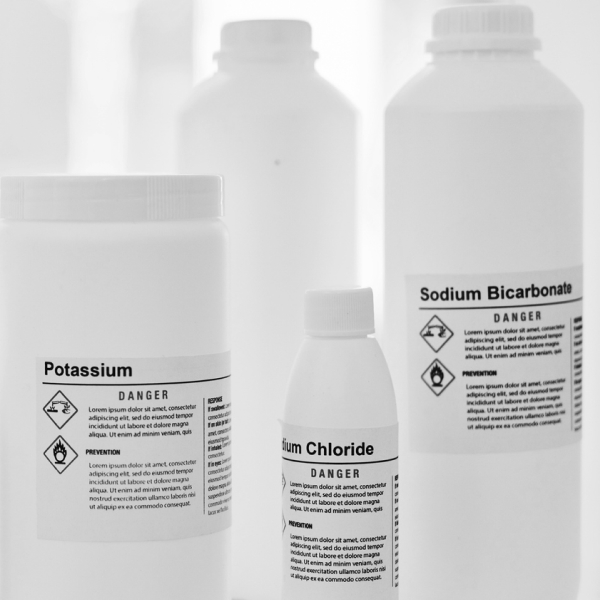
Hazard communication labels are essential tools for identifying and communicating the dangers associated with hazardous chemicals. These labels provide critical safety information, ensuring that workers and handlers are aware of potential risks and know how to protect themselves. They are a key component of workplace safety and regulatory compliance, used across various industries to prevent accidents and injuries.
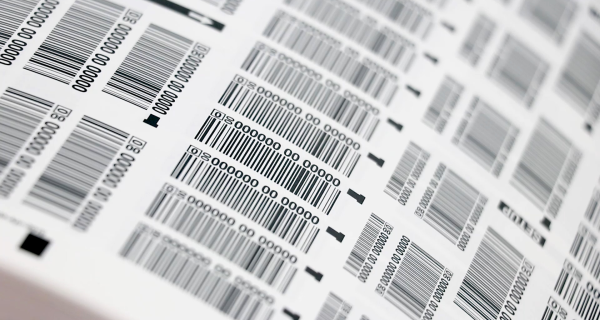
Achieving effective hazard communication requires selecting the right type of label for your specific environment and ensuring that all necessary information is clearly displayed. Labels must be durable, able to withstand exposure to chemicals, moisture, and other harsh conditions while remaining legible.
Different regulations, such as GHS, OSHA, and DOT, dictate the specific requirements for hazard labels, making compliance a key aspect of effective labeling. Standardization across these labels is essential, as it ensures that hazard information is consistently communicated, reducing the risk of misunderstandings. By adhering to these regulations businesses can ensure they are meeting legal requirements and protecting their workforce from potential hazards.
Our GHS labels are essential for companies that operate in multiple countries, ensuring that hazard communication is consistent and compliant with international regulations. These labels feature universally recognized symbols, signal words, and hazard statements, making them easily understandable.
Materials resist chemicals, abrasion, and environmental factors.
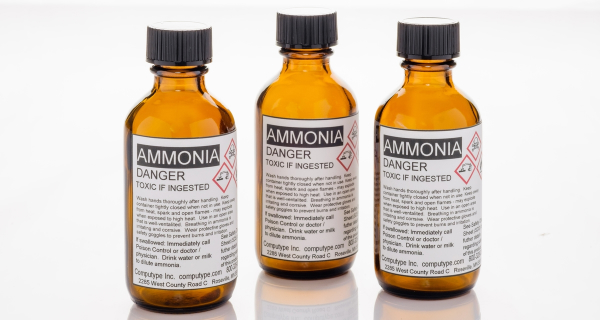
Our OSHA-compliant labels are essential for maintaining a safe and compliant workplace. Designed to meet the Hazard Communication Standard (HCS), these labels provide clear instructions and warnings about chemical hazards. With easy-to-read formats and durable materials, our OSHA labels ensure that your employees are well-informed and protected, helping you avoid regulatory penalties and enhance workplace safety.
HMIS labels are crucial for internal hazard communication within your facility. These labels use a simple, color-coded system to identify health, flammability, and physical hazards, making them easy for employees to understand at a glance. Our HMIS labels are durable and customizable, ensuring they remain visible and effective in conveying safety information, even in challenging industrial environments.
DOT labels are critical for the safe and compliant transportation of hazardous materials. These labels feature standardized symbols and color codes that communicate the specific risks associated with each material, ensuring safe handling during transit. Our DOT labels are designed to withstand the rigors of transportation, ensuring that your shipments remain clearly marked and compliant with Department of Transportation regulations.
Choosing the right materials and printing methods is critical for the effectiveness of HazCom labels. The durability of the label, its legibility, and its ability to communicate essential safety information all depend on selecting the appropriate materials and design elements. Understanding these factors ensures that your labels remain compliant, readable, and durable across various environments and applications.
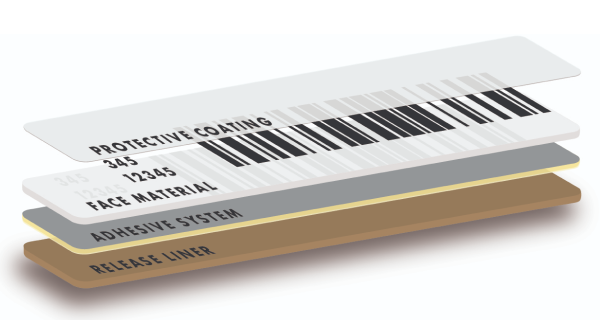
Choosing the right material for your hazard labels ensures they withstand harsh conditions. Polyester and vinyl are popular choices for environments that involve exposure to chemicals, moisture, or extreme temperatures, as they offer excellent durability and resistance to degradation. Adhesives are equally important, as they ensure the label remains securely attached to surfaces, even in harsh conditions.
The choice of label material and adhesive should be tailored to the specific needs of your industry, taking into account factors like surface type, exposure to chemicals, and environmental conditions. Properly selecting these components not only helps maintain the label’s integrity but also ensures that critical safety information remains visible and compliant with regulatory standards.
Hazard communication labels convey critical details that help workers understand the risks and take appropriate precautions. Each element on the label serves a specific purpose, from identifying the chemical to describing the hazards and necessary safety measures. By clearly communicating this information, hazard labels play a vital role in protecting employees and maintaining regulatory standards.
Standardized symbols or pictograms visually represent the nature of the hazard, such as a flame for flammability or a skull and crossbones for toxicity. These icons ensure that the hazard is understood.
Colors quickly indicate the type of hazard, making it easier for workers to identify risks at a glance. For example, red might signal flammability, while blue could denote health hazards.
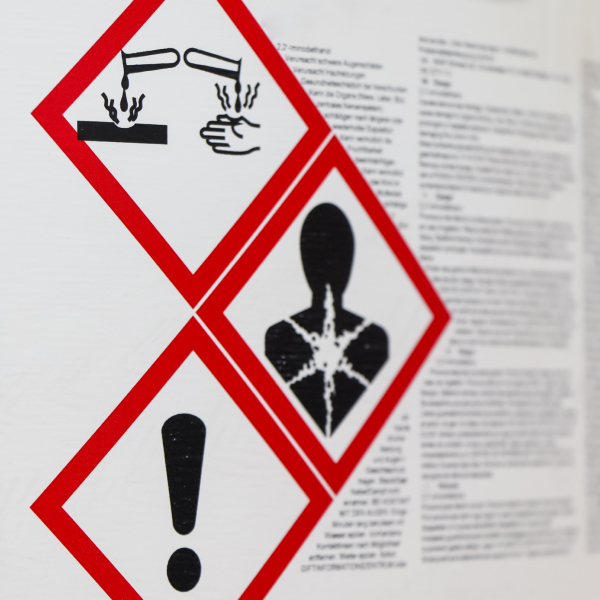
Proper storage and management of hazardous chemicals are essential for maintaining a safe and compliant workplace. Key aspects of safe chemical storage include the segregation of incompatible substances, controlling access to storage areas, and using appropriate storage containers.
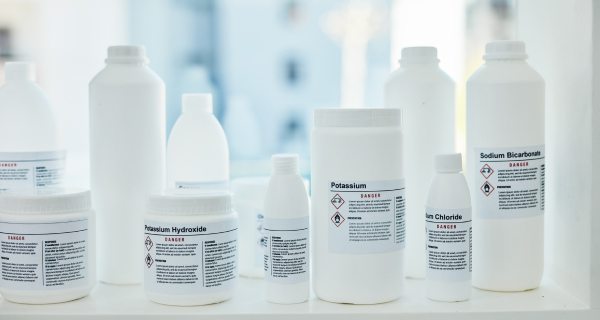
Proper segregation and access control are vital to safely managing hazardous chemicals in any workplace. Incompatible chemicals must be stored separately to prevent dangerous reactions, which could lead to fires, explosions, or toxic releases. Additionally, access to these materials should be restricted to trained and authorized personnel to reduce the risk of accidental exposure or misuse.
Barcode labels enable tracking by uniquely identifying chemicals and managing who can access storage areas, ensuring compliance with safety standards and regulations. Effective segregation and access control are more than just regulatory requirements. By prioritizing these elements, you can safeguard your employees and protect your facility.
Different industries face unique challenges when it comes to hazard communication, requiring tailored labeling solutions. Customizing hazard communication labels ensures that industry-specific hazards are clearly communicated and regulatory requirements are met. From manufacturing to healthcare, effective labeling is key to maintaining safety and compliance across diverse environments.
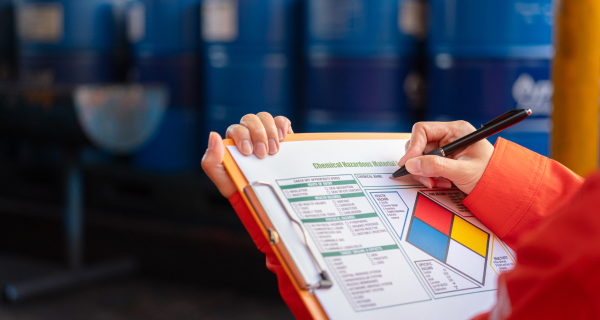
Hazard communication requirements can vary significantly across different industries, for example, chemical manufacturing might require detailed chemical symbols and specific precautionary statements, while the healthcare industry may need multi-language labels to accommodate diverse staff and patient populations.
In the transportation and logistics sector, labels often need to meet both GHS and DOT standards, ensuring safe handling and compliance during transit. Customizing HazCom labels to fit these specific industry needs not only enhances safety but also ensures that all regulatory requirements are met. By tailoring labels to the unique hazards and environments of your industry, you can improve the clarity and relevance of hazard communication, reducing the risk of accidents.
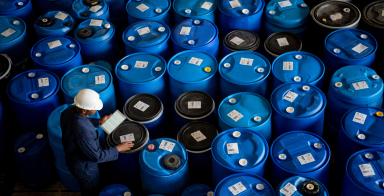
In chemical manufacturing, hazard communication labels must withstand exposure to corrosive substances, solvents, and extreme temperatures. These labels are essential for identifying chemical hazards, ensuring that workers are aware of potential risks and proper handling procedures. Compliance with GHS and OSHA standards is crucial, as these labels must clearly communicate the dangers associated with each substance.
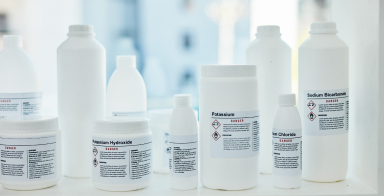
Laboratories require hazard communication labels that endure frequent contact with a variety of chemicals and solvents. Labels must remain legible and intact to ensure accurate identification of hazardous substances and proper safety protocols. Adhering to GHS and other regulatory standards, these labels help protect lab personnel by providing clear warnings and instructions, ensuring a safe working environment.

In the automotive industry, hazard communication labels must resist exposure to fuels, oils, and harsh cleaning agents. These labels play a vital role in conveying safety information related to chemicals used in vehicle manufacturing and maintenance. Meeting GHS and OSHA requirements, they ensure that workers handle materials safely, reducing the risk of accidents and maintaining compliance with safety regulations.

Have questions? We’re here to help.
Contact us to connect with a specialist who understands your industry and can provide the right solutions for your business. Let’s start a conversation.
Receive microplates with identifiers already applied, eliminating labeling steps during plate setup and processing. Ensure consistent, durable identification across assays, screening, and storage while reducing manual handling and improving workflow efficiency.
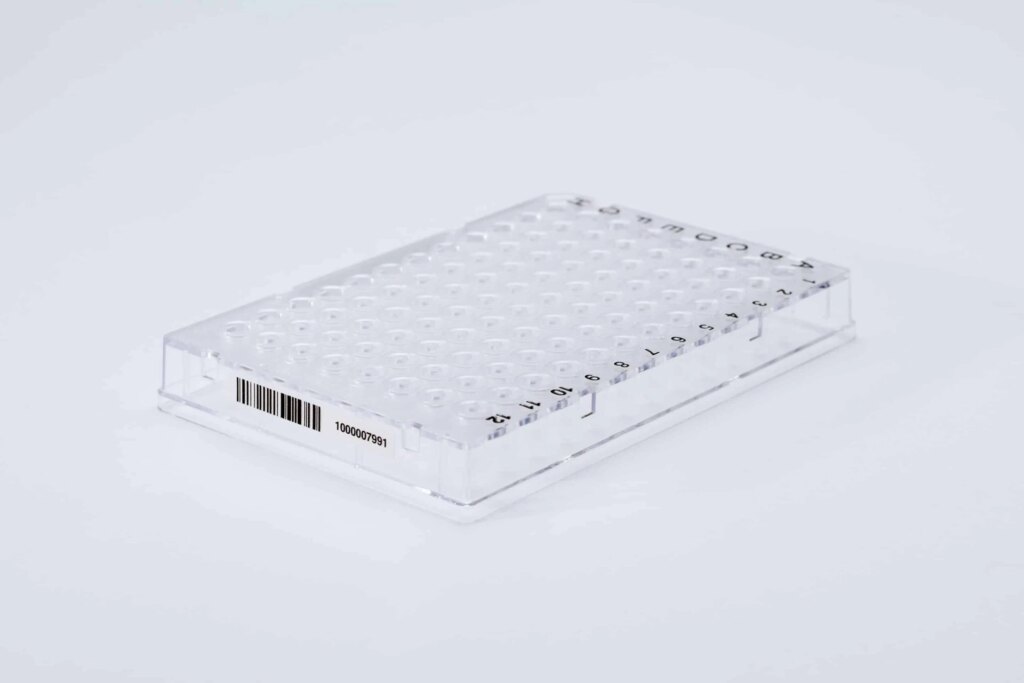
Pre-barcoded microplates arrive ready to use with verified identifiers applied before delivery. This approach removes labeling from your workflow and ensures consistent identification across plate handling, processing, and storage environments.
Eliminate labeling steps during plate setup, loading, and processing workflows.
Use pre-verified plate IDs to maintain accuracy across batches and screening runs.
Receive plates sorted, kitted, or prepared to match assay workflows and laboratory processes.
Pre-barcoded microplates fit high-throughput environments where plates move rapidly through automated workflows and labeling can create delays or variability. This includes automated screening facilities, compound and plate libraries, and CROs running large-scale studies, as well as core labs managing shared plate resources where speed, consistency, and reduced handling drive efficiency and improve data integrity.
Get microplate labels professionally printed with controlled data, advanced converting, and durable materials. Ensure consistent plate identification across batches while eliminating in-house printing and reducing variability in labeling for assays, screening, and high-throughput workflows.
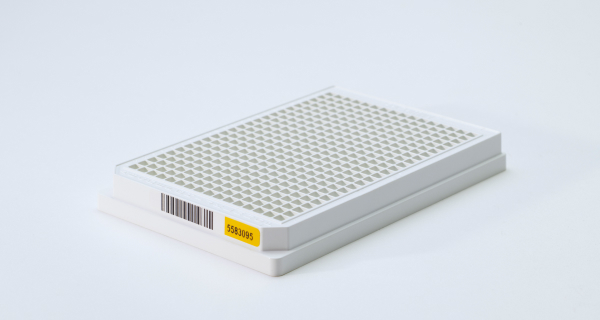
Pre-printed plate labels combine controlled printing, advanced converting, and durable materials to deliver consistent, ready-to-use identification. This approach ensures every plate label meets requirements for data accuracy, layout consistency, and performance across handling and processing.
Receive pre-printed plate labels with guaranteed unique IDs, controlled sequencing, and validated data across batches and runs.
Use color coding to differentiate assays, plate types, or workflows and improve visual organization across plate libraries.
Use engineered label constructions that resist chemicals, handling, and environmental exposure during plate processing and storage.
Pre-printed labeling fits laboratories that run standardized plate workflows with fixed data structures. This includes screening labs running standardized assays, diagnostic labs processing consistent plate formats, and research environments where plate layouts and identifiers remain consistent across runs.
Print microplate labels as needed using live data from laboratory systems. Generate labels during plate setup, sample loading, or assay preparation, with well IDs, plate IDs, and variable data applied at the point of use. This approach supports workflows where plate data changes frequently or requires immediate, accurate identification.
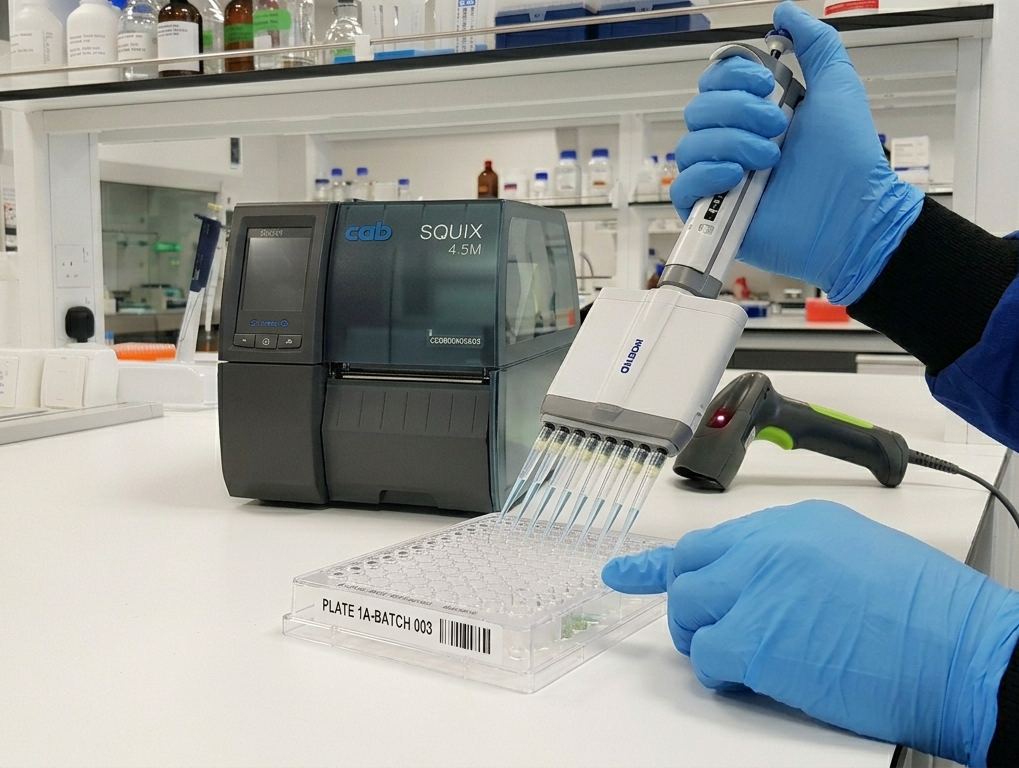
Blank plate labels designed for small formats, flat surfaces, and secure adhesion on plates.
Print high-resolution barcodes and text for plate IDs and sample tracking.
Thermal transfer ribbons produce durable images resistant to chemicals, moisture, and handling.
Apply labels consistently to plates during setup or automated workflows.
Print-on-demand labeling fits laboratories that generate or update plate data in real time. This includes screening labs, genomics workflows, and assay development environments where plates are created, modified, and labeled during processing, and where accurate, immediate identification is required.
Print blood bag labels as needed using live data from blood bank systems. Generate labels during collection, component processing, or labeling steps, with donation identification numbers, product codes, and variable data applied at the point of use. This approach supports workflows where blood data updates in real time and requires immediate, accurate identification.
Set up a complete labeling workflow using the right materials and equipment to print and apply labels directly during blood collection, component processing, and blood bank handling workflows.
Start with blank label stock engineered for flexible PVC blood bags.
Print high-resolution barcodes and text for complex blood label layouts.
Use included thermal transfer ribbons to produce durable barcode labels.
Integrate barcode software to generate ISBT 128 labels and DIN data.
Print-on-demand labeling fits blood banks and collection centers that generate or update donation data in real time. This includes blood collection sites, processing labs, and transfusion services where blood bags are labeled on demand, and workflows require immediate, accurate identification without relying on pre-printed labels.
Get blood bag labels professionally printed with controlled data, advanced converting, and durable materials. Eliminate in-house printing while ensuring every label meets performance requirements for blood bank use, including handling, cold storage, and transfusion.

Pre-printed labeling combines controlled printing, advanced converting, and durable materials to deliver consistent, ready-to-use blood bag labels. This approach removes variability from in-house printing and ensures every label meets requirements for DIN accuracy, barcode performance, and reliable identification across blood bank workflows.
Receive pre-printed labels with guaranteed unique DIN sequences, controlled serialization, and validated data across batches and production runs.
Maintain consistent DIN formats to ensure accurate identification across blood bags, segments, and associated components.
Use engineered label constructions designed to resist edge lift, moisture, and routine handling, helping maintain adhesion and readability throughout blood collection.
Pre-printed labeling fits blood banks and collection centers that manage high volumes of donations and require controlled, repeatable identification. This includes blood collection sites, processing facilities, and transfusion services where standardized labeling, consistent DIN assignment, and stable data support efficient, validated workflows without frequent changes.
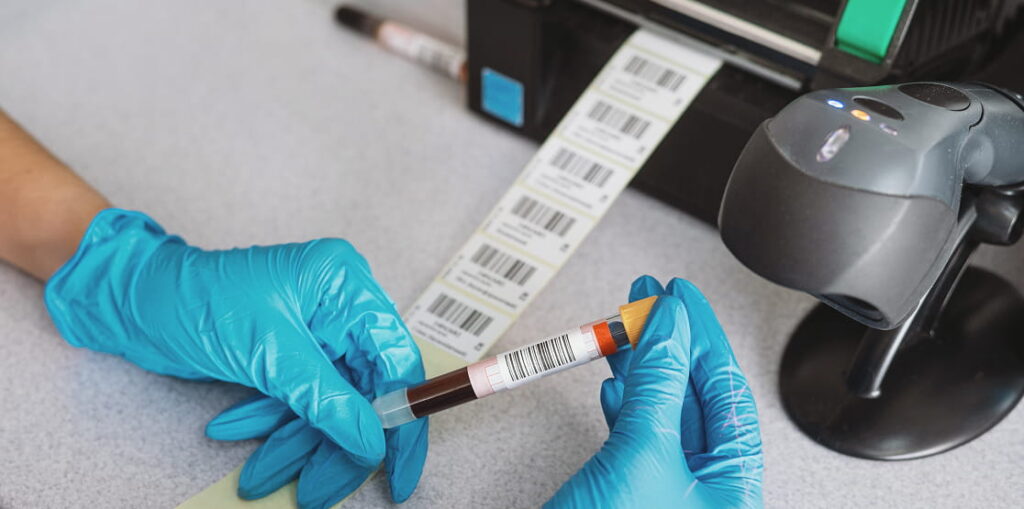
In laboratory environments, data often isn’t final until the last moment—at the bench, at the instrument, or during sample handling. Printing labels on demand helps ensure each tube or vial reflects the most accurate information, while fitting naturally into the way your work actually happens.
In laboratory environments, data often isn’t final until the last moment—at the bench, at the instrument, or during sample handling. Printing labels on demand helps ensure each tube or vial reflects the most accurate information, while fitting naturally into the way your work actually happens.
In laboratory environments, data often isn’t final until the last moment—at the bench, at the instrument, or during sample handling. Printing labels on demand helps ensure each tube or vial reflects the most accurate information, while fitting naturally into the way your work actually happens.
Compatible resin ribbons ensuring clear, durable print for barcodes and text
Compatible resin ribbons ensuring clear, durable print for barcodes and text
In laboratory environments, data often isn’t final until the last moment—at the bench, at the instrument, or during sample handling. Printing labels on demand helps ensure each tube or vial reflects the most accurate information, while fitting naturally into the way your work actually happens.
In laboratory environments, data often isn’t final until the last moment—at the bench, at the instrument, or during sample handling. Printing labels on demand helps ensure each tube or vial reflects the most accurate information, while fitting naturally into the way your work actually happens.
Compatible resin ribbons ensuring clear, durable print for barcodes and text
Compatible resin ribbons ensuring clear, durable print for barcodes and text
Compatible resin ribbons ensuring clear, durable print for barcodes and text
Compatible resin ribbons ensuring clear, durable print for barcodes and text
In laboratory environments, data often isn’t final until the last moment—at the bench, at the instrument, or during sample handling. Printing labels on demand helps ensure each tube or vial reflects the most accurate information, while fitting naturally into the way your work actually happens.
In laboratory environments, data often isn’t final until the last moment—at the bench, at the instrument, or during sample handling. Printing labels on demand helps ensure each tube or vial reflects the most accurate information, while fitting naturally into the way your work actually happens.
In laboratory environments, data often isn’t final until the last moment—at the bench, at the instrument, or during sample handling. Printing labels on demand helps ensure each tube or vial reflects the most accurate information, while fitting naturally into the way your work actually happens.
Durable labels that stay attached through handling, storage, or cryogenic conditions
Compatible resin ribbons ensuring clear, durable print for barcodes and text
Compact, consistent, durable thermal transfer printing at the point of use
Label management software to format labels and connect to sample data or LIMS
In laboratory environments, data often isn’t final until the last moment—at the bench, at the instrument, or during sample handling. Printing labels on demand helps ensure each tube or vial reflects the most accurate information, while fitting naturally into the way your work actually happens.
Take advantage of our volume discounts for bulk orders. Reach out to us for a personalized quote tailored to your needs.
"*" indicates required fields