

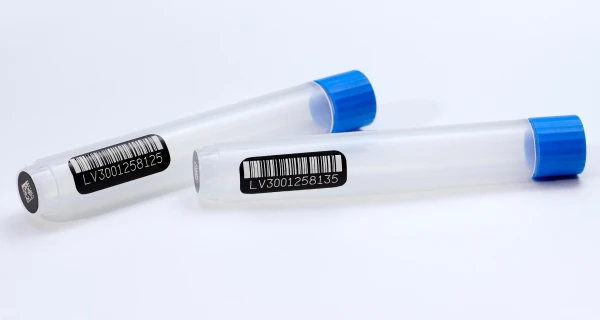
Laser etching, offered through our Labware Prep™ Services program, creates permanent, high-precision markings on glass, metal, plastic, and even wood. The markings match the durability of the material itself, ensuring they last as long as your asset does. Ideal for barcodes, text, and designs, laser etching offers unmatched clarity for critical identification.
Laser etching is a high-precision marking technology that creates durable, high-resolution images by vaporizing the surface of materials like metal, glass, and plastic. Using a hybrid fiber laser and in-house fabricated trays, we ensure consistent image placement, even in challenging spaces. This method supports barcodes, grad lines, fill lines, logos, and text, delivering exceptional clarity for critical identification. With built-in QC systems, laser etching guarantees accuracy for complex applications, including multi-sided marking of plates, racks, and tubes.
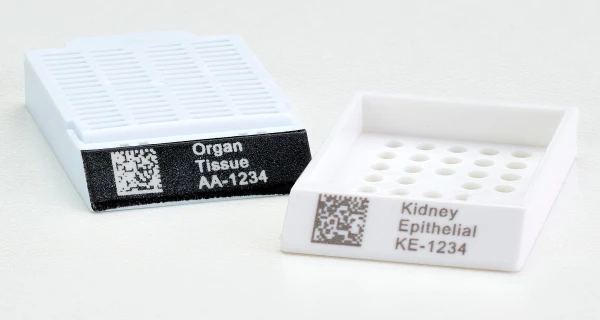
Laser etching uses a hybrid fiber laser to create high-resolution markings by vaporizing the material’s surface. This precision process works on glass, metal, plastic, and other surfaces, producing permanent marks that last as long as the material itself. We use custom-fabricated trays, 3D printed in-house, to ensure accurate and consistent image placement on every piece.
Our QC systems verify multi-sided printing for plates, racks, and tubes, including detailed marking on the sides and bottoms of matrix tubes. Laser etching is ideal for applications where space is limited or where environmental durability is required. From labware to industrial components, laser etching provides unmatched precision for critical identification needs.
Hybrid fiber laser systems enable 3, 4, and 5-sided marking for plates, racks, and tubes. Markings on sides, bottoms, or both ensure clear, precise, and accurate placement. This capability maximizes identification on complex labware and components.
Laser etching produces high-resolution marks, even in limited spaces or on intricate surfaces. Durable barcodes, grad lines, fill lines, logos, and text are created with exceptional clarity. Ideal for applications requiring precision and durability.
Laser etching works seamlessly on glass, metal, plastic, and wood, adapting to the unique properties of each material. Marks remain as durable as the surface itself, ensuring long-lasting identification across diverse applications.
Laser etching offers unmatched versatility, capable of marking a wide range of materials, including glass, plastic, metal, and wood. It is especially suited for uniquely shaped labware, such as tubes and tissue cassettes, where precision and adaptability are essential. While its abrasion resistance varies by material, laser marking on glass delivers exceptional durability and heat resistance.
This method excels in precision and detail, creating high-resolution markings suitable for diverse applications. Laser etching is primarily black, providing excellent contrast for readability across different surfaces. With its flexibility and adaptability, laser etching is an excellent choice for labs requiring a reliable marking method across multiple materials.
350°F
900°F
As resistant as material
Good
Excellent
As resistant as material
Excellent short term resistance
Excellent
As resistant as material
Good
Excellent
Good
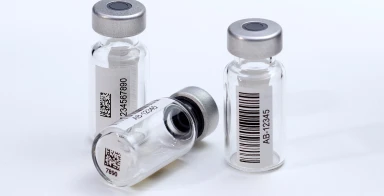
Ceramic labels are permanently fused to glass or metal labware through high-temperature bonding. The result is an impervious, abrasion-resistant mark that withstands extreme conditions. Ideal for high-value assets, ceramic labels ensure reliable, long-term identification.
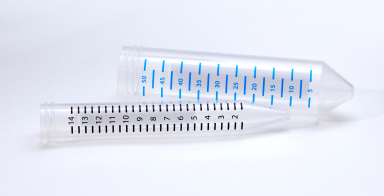
Cured inks deliver versatile, high-resolution markings applied directly to labware surfaces. This technology supports colors, logos, barcodes, and grad lines for maximum customization. Durable and resistant to most chemicals, cured inks are ideal for flexible identification needs.
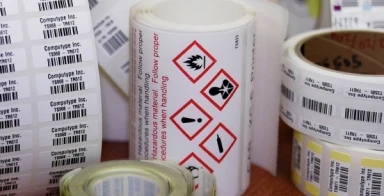
Pressure-sensitive labels offer a fast and flexible solution for labware identification. These adhesive-backed labels can accommodate barcodes, text, and designs, ensuring clear and scannable results. Perfect for temporary or permanent labeling, they balance efficiency and durability.
Watch our engaging video to see firsthand how our meticulous prep process can elevate your lab's efficiency and precision. From barcoding to kitting, our process reduces errors and boosts productivity. Discover the benefits of a tailored approach to labware preparation and let us take care of the details, so you can focus on your critical research and development tasks.

Have questions? We’re here to help.
Contact us to connect with a specialist who understands your industry and can provide the right solutions for your business. Let’s start a conversation.
Receive microplates with identifiers already applied, eliminating labeling steps during plate setup and processing. Ensure consistent, durable identification across assays, screening, and storage while reducing manual handling and improving workflow efficiency.
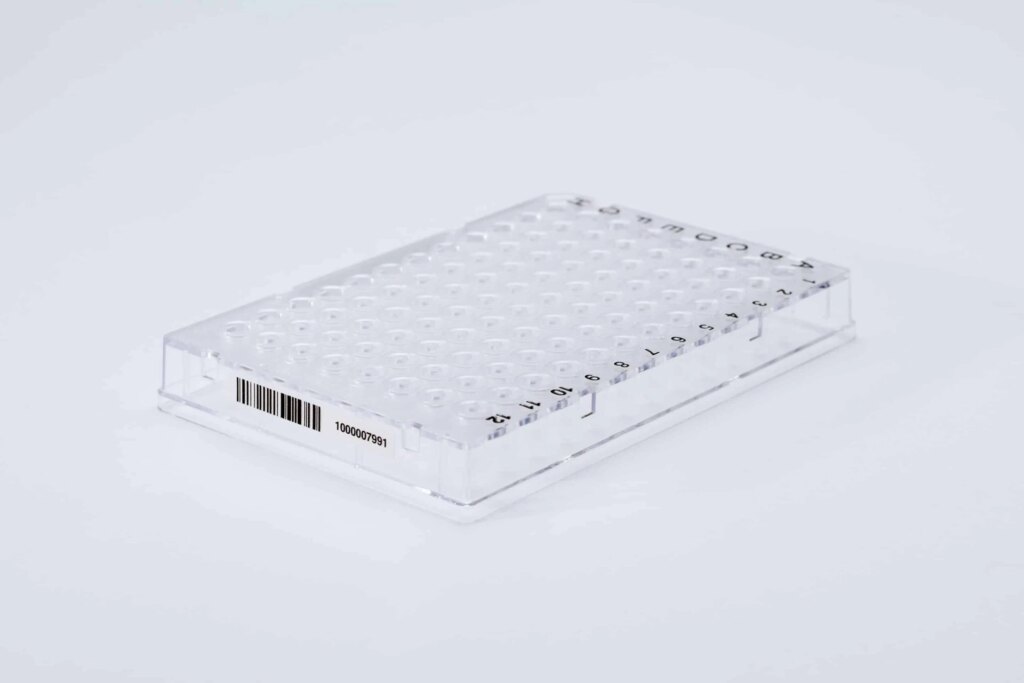
Pre-barcoded microplates arrive ready to use with verified identifiers applied before delivery. This approach removes labeling from your workflow and ensures consistent identification across plate handling, processing, and storage environments.
Eliminate labeling steps during plate setup, loading, and processing workflows.
Use pre-verified plate IDs to maintain accuracy across batches and screening runs.
Receive plates sorted, kitted, or prepared to match assay workflows and laboratory processes.
Pre-barcoded microplates fit high-throughput environments where plates move rapidly through automated workflows and labeling can create delays or variability. This includes automated screening facilities, compound and plate libraries, and CROs running large-scale studies, as well as core labs managing shared plate resources where speed, consistency, and reduced handling drive efficiency and improve data integrity.
Get microplate labels professionally printed with controlled data, advanced converting, and durable materials. Ensure consistent plate identification across batches while eliminating in-house printing and reducing variability in labeling for assays, screening, and high-throughput workflows.
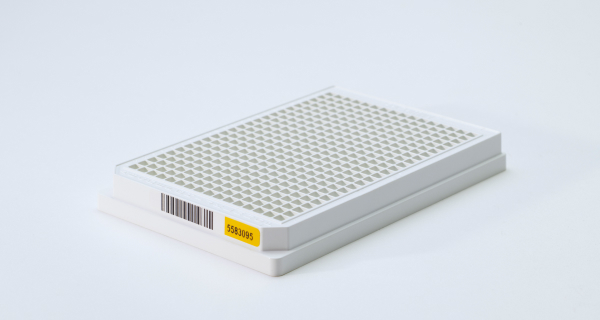
Pre-printed plate labels combine controlled printing, advanced converting, and durable materials to deliver consistent, ready-to-use identification. This approach ensures every plate label meets requirements for data accuracy, layout consistency, and performance across handling and processing.
Receive pre-printed plate labels with guaranteed unique IDs, controlled sequencing, and validated data across batches and runs.
Use color coding to differentiate assays, plate types, or workflows and improve visual organization across plate libraries.
Use engineered label constructions that resist chemicals, handling, and environmental exposure during plate processing and storage.
Pre-printed labeling fits laboratories that run standardized plate workflows with fixed data structures. This includes screening labs running standardized assays, diagnostic labs processing consistent plate formats, and research environments where plate layouts and identifiers remain consistent across runs.
Print microplate labels as needed using live data from laboratory systems. Generate labels during plate setup, sample loading, or assay preparation, with well IDs, plate IDs, and variable data applied at the point of use. This approach supports workflows where plate data changes frequently or requires immediate, accurate identification.
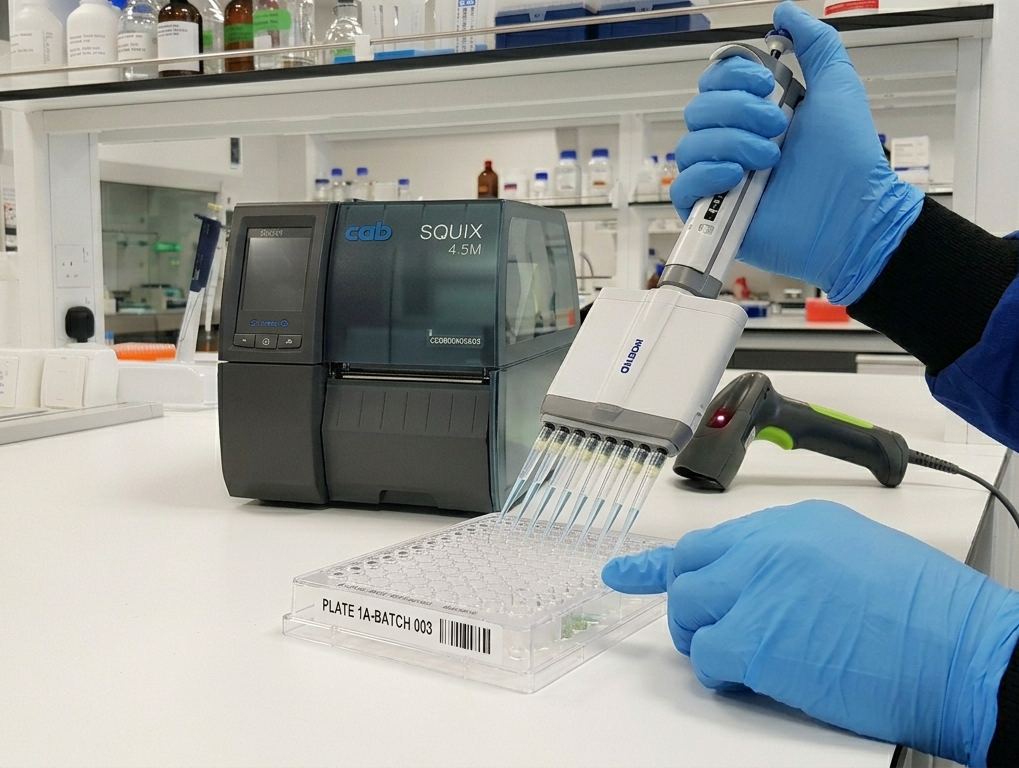
Blank plate labels designed for small formats, flat surfaces, and secure adhesion on plates.
Print high-resolution barcodes and text for plate IDs and sample tracking.
Thermal transfer ribbons produce durable images resistant to chemicals, moisture, and handling.
Apply labels consistently to plates during setup or automated workflows.
Print-on-demand labeling fits laboratories that generate or update plate data in real time. This includes screening labs, genomics workflows, and assay development environments where plates are created, modified, and labeled during processing, and where accurate, immediate identification is required.
Print blood bag labels as needed using live data from blood bank systems. Generate labels during collection, component processing, or labeling steps, with donation identification numbers, product codes, and variable data applied at the point of use. This approach supports workflows where blood data updates in real time and requires immediate, accurate identification.
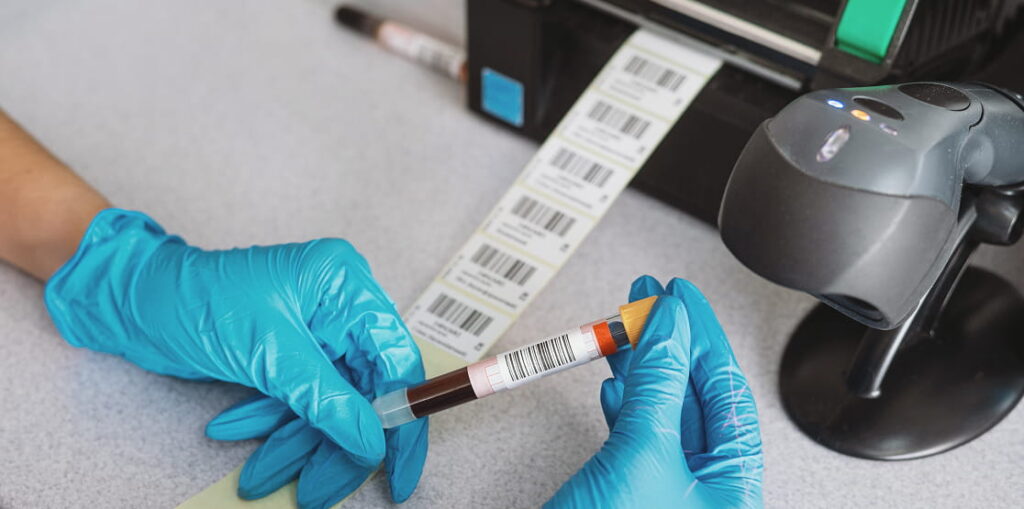
Set up a complete labeling workflow using the right materials and equipment to print and apply labels directly during blood collection, component processing, and blood bank handling workflows.
Start with blank label stock engineered for flexible PVC blood bags.
Print high-resolution barcodes and text for complex blood label layouts.
Use included thermal transfer ribbons to produce durable barcode labels.
Integrate barcode software to generate ISBT 128 labels and DIN data.
Print-on-demand labeling fits blood banks and collection centers that generate or update donation data in real time. This includes blood collection sites, processing labs, and transfusion services where blood bags are labeled on demand, and workflows require immediate, accurate identification without relying on pre-printed labels.
Get blood bag labels professionally printed with controlled data, advanced converting, and durable materials. Eliminate in-house printing while ensuring every label meets performance requirements for blood bank use, including handling, cold storage, and transfusion.
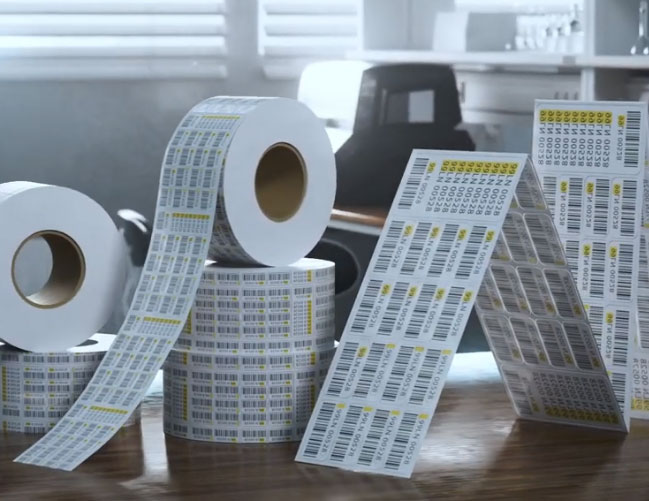
Pre-printed labeling combines controlled printing, advanced converting, and durable materials to deliver consistent, ready-to-use blood bag labels. This approach removes variability from in-house printing and ensures every label meets requirements for DIN accuracy, barcode performance, and reliable identification across blood bank workflows.
Receive pre-printed labels with guaranteed unique DIN sequences, controlled serialization, and validated data across batches and production runs.
Maintain consistent DIN formats to ensure accurate identification across blood bags, segments, and associated components.
Use engineered label constructions designed to resist edge lift, moisture, and routine handling, helping maintain adhesion and readability throughout blood collection.
Pre-printed labeling fits blood banks and collection centers that manage high volumes of donations and require controlled, repeatable identification. This includes blood collection sites, processing facilities, and transfusion services where standardized labeling, consistent DIN assignment, and stable data support efficient, validated workflows without frequent changes.
In laboratory environments, data often isn’t final until the last moment—at the bench, at the instrument, or during sample handling. Printing labels on demand helps ensure each tube or vial reflects the most accurate information, while fitting naturally into the way your work actually happens.
In laboratory environments, data often isn’t final until the last moment—at the bench, at the instrument, or during sample handling. Printing labels on demand helps ensure each tube or vial reflects the most accurate information, while fitting naturally into the way your work actually happens.
In laboratory environments, data often isn’t final until the last moment—at the bench, at the instrument, or during sample handling. Printing labels on demand helps ensure each tube or vial reflects the most accurate information, while fitting naturally into the way your work actually happens.
Compatible resin ribbons ensuring clear, durable print for barcodes and text
Compatible resin ribbons ensuring clear, durable print for barcodes and text
In laboratory environments, data often isn’t final until the last moment—at the bench, at the instrument, or during sample handling. Printing labels on demand helps ensure each tube or vial reflects the most accurate information, while fitting naturally into the way your work actually happens.
In laboratory environments, data often isn’t final until the last moment—at the bench, at the instrument, or during sample handling. Printing labels on demand helps ensure each tube or vial reflects the most accurate information, while fitting naturally into the way your work actually happens.
Compatible resin ribbons ensuring clear, durable print for barcodes and text
Compatible resin ribbons ensuring clear, durable print for barcodes and text
Compatible resin ribbons ensuring clear, durable print for barcodes and text
Compatible resin ribbons ensuring clear, durable print for barcodes and text
In laboratory environments, data often isn’t final until the last moment—at the bench, at the instrument, or during sample handling. Printing labels on demand helps ensure each tube or vial reflects the most accurate information, while fitting naturally into the way your work actually happens.
In laboratory environments, data often isn’t final until the last moment—at the bench, at the instrument, or during sample handling. Printing labels on demand helps ensure each tube or vial reflects the most accurate information, while fitting naturally into the way your work actually happens.
In laboratory environments, data often isn’t final until the last moment—at the bench, at the instrument, or during sample handling. Printing labels on demand helps ensure each tube or vial reflects the most accurate information, while fitting naturally into the way your work actually happens.
Durable labels that stay attached through handling, storage, or cryogenic conditions
Compatible resin ribbons ensuring clear, durable print for barcodes and text
Compact, consistent, durable thermal transfer printing at the point of use
Label management software to format labels and connect to sample data or LIMS
In laboratory environments, data often isn’t final until the last moment—at the bench, at the instrument, or during sample handling. Printing labels on demand helps ensure each tube or vial reflects the most accurate information, while fitting naturally into the way your work actually happens.
Take advantage of our volume discounts for bulk orders. Reach out to us for a personalized quote tailored to your needs.
"*" indicates required fields