

Pressure sensitive labeling supports identification across environments that expose materials to chemicals, temperature extremes, abrasion, and sterilization. Durable labels maintain adhesion, structural stability, and barcode clarity throughout production, storage, handling, and long-term use. Understanding the conditions labels must withstand helps align material selection, adhesive performance, and print durability with real-world application demands.
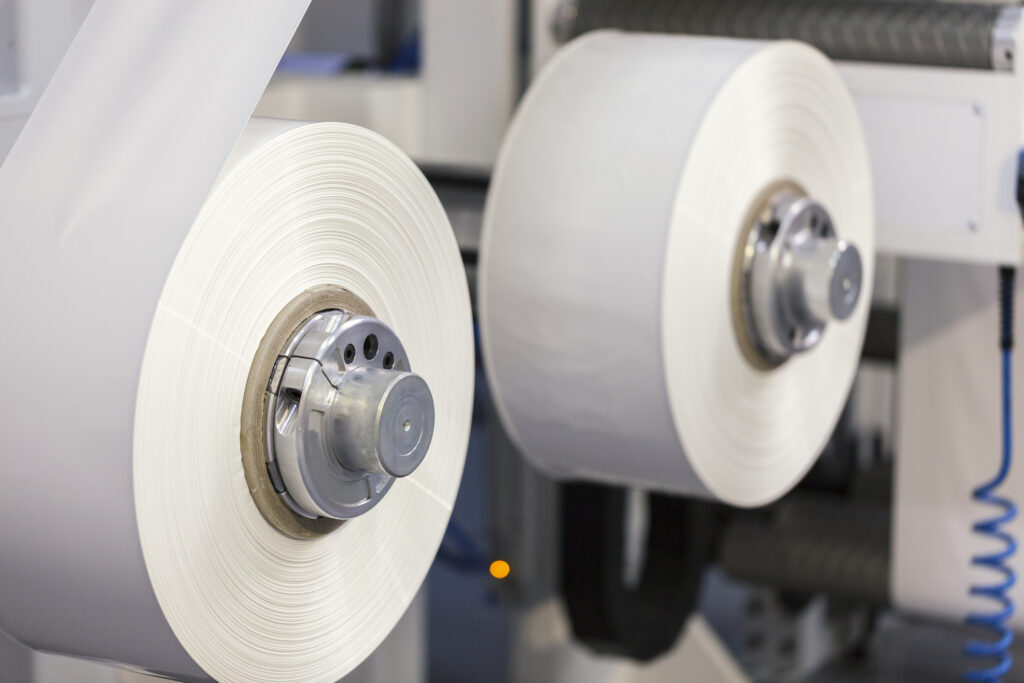
Pressure-sensitive adhesive labels operate in environments that challenge adhesives, coatings, and print durability. Chemical contact, elevated temperatures, ultra-low storage, abrasion, and sterilization cycles introduce distinct mechanical and chemical stresses. Durable adhesive labels must maintain bond strength, dimensional stability, and barcode clarity throughout production, storage, handling, and long-term use.
Solvents, acids, alcohols, and cleaning agents attack both adhesive bonds and printed surfaces. Wipe-down protocols, reagent spills, or degreasing processes can cause edge lift, barcode smearing, or coating breakdown. Labels must preserve adhesion and scan accuracy on tubes, containers, and industrial parts that encounter routine chemical exposure.
Curing ovens, wave soldering, powder coating, and high-temperature assembly stages expose labels to sustained thermal stress. Heat can distort face stocks, cause adhesive flow, or fade printed data. Labels must remain dimensionally stable and legible throughout these production cycles, especially on automotive, electronic, or coated components.
Frequent handling, sliding contact, and surface friction wear down unprotected print layers. Equipment racks, warehouse totes, and tool housings create constant physical interaction. Labels must shield serial numbers, asset IDs, and compliance data from scratching and surface damage during operational use.
Ultra-low storage conditions cause many adhesives to harden and lose flexibility. Liquid nitrogen, dry ice transport, and freezer storage create contraction and mechanical stress at the bond line. Labels must maintain adhesion and barcode readability on tubes and vials during long-term preservation and repeated cold handling.
Steam sterilization and autoclave cycles combine heat, pressure, and moisture in a single event. These forces stress adhesives and distort unprotected print. Labels applied to labware or reusable medical components must retain bond strength and legibility after repeated sterilization cycles.
Request a sample and validate label performance under your specific chemical, thermal, cryogenic, or sterilization conditions.
Reliable pressure sensitive labels begin with proven performance. Our in-house label testing lab evaluates materials, adhesives, and printed constructions under real-world stress to confirm durability before production. By validating adhesion, chemical resistance, temperature tolerance, and barcode quality, we reduce risk, prevent field failures, and deliver labels engineered for long-term performance.
We perform rigorous label testing against chemicals, abrasion, extreme temperatures, and sterilization to prevent field failures.
All validation is conducted under ISO 9001-certified processes, ensuring traceability, repeatability, and industry-recognized quality management.
We validate performance across extreme temperatures, from liquid nitrogen cryo storage to high-heat curing, covering the widest range of environments.
Our pressure sensitive label testing includes peel, shear, and tack analysis to ensure durable substrate adhesion.
Chemical exposure is one of the leading causes of label failure in laboratories, hospitals, and industrial environments. To verify chemical resistance, labels are exposed to a wide spectrum of solvents, reagents, and cleaning solutions. Testing involves submersion, repeated wiping, or spray exposure with substances such as alcohols, xylene, DMSO, acids, bases, oils, and disinfectants. After treatment, the labels are examined for print degradation, discoloration, adhesive lift, or edge penetration. Evaluation covers both the face stock and printed image, since even if the adhesive holds, a blurred or dissolved barcode can compromise traceability. Labels that pass chemical resistance testing provide assurance that critical data will remain intact despite contact with aggressive agents. This is especially vital in regulated settings where legibility and scan reliability must be maintained through repeated cleaning, sterilization, or chemical handling.
Temperature extremes challenge both adhesives and face stocks in unique ways. To validate performance, labels are subjected to controlled cycles of high heat and deep cold. Cryogenic testing can involve storage in liquid nitrogen vapor phase or mechanical freezers down to –196°C, while heat testing may reach several hundred degrees Celsius for materials applied to glassware, metal, or ceramic surfaces. Labels are monitored for cracking, embrittlement, delamination, or adhesive failure as temperatures fluctuate. Freeze-thaw cycling is often included to simulate real-world handling, where containers move in and out of cold storage. High-heat validation may also include dry ovens or heated block surfaces to ensure that print remains legible and adhesives maintain cohesion. Passing this test ensures that labels can be relied upon in extreme environments such as cryo-banking, autoclaves, industrial furnaces, and automotive under-hood components.
An adhesive must provide consistent, long-term bonding across many substrates and environments. To validate this, we use a range of standardized tests. Peel adhesion tests measure the force required to remove a label from a surface at a set angle (usually 90° or 180°) and speed, providing insight into initial tack and ultimate bond strength. Shear testing evaluates cohesive strength by applying a constant load parallel to the bond line to determine how well the adhesive resists slippage under stress. Tack testing quantifies the adhesive’s ability to make immediate contact and form a bond, which is critical for low-temperature or high-speed applications. Labels are also exposed to environmental cycling — changes in temperature, humidity, or UV exposure — to observe any edge lifting, adhesive migration, or residue upon removal. These evaluations are conducted on multiple surfaces, from high-energy glass and metals to difficult low-surface-energy plastics. By combining laboratory measurements with simulated real-world conditions, adhesive performance testing ensures labels deliver secure adhesion for the life of the product without compromising removability or clean release when required.
Long-term durability is difficult to evaluate in real time, so accelerated aging techniques are used to predict a label’s performance over months or years. Labels are exposed to controlled cycles of heat, humidity, and UV light to simulate extended storage or usage conditions. The process allows engineers to assess potential changes in adhesive tack, face stock flexibility, or image clarity before failures occur in the field. Labels are then inspected for yellowing, cracking, edge lift, or fading of printed information. Data from these tests are cross-referenced with real-world conditions to ensure accuracy in predictions. This is especially critical for industries with long product lifecycles, such as automotive, aerospace, and medical devices, where traceability must be maintained for years. Passing accelerated aging validation provides confidence that labels will not degrade prematurely and ensures compliance with warranties, regulatory retention requirements, and archival integrity.
Labels in circulation are often exposed to abrasion from handling, storage, or mechanical processing. Abrasion resistance testing subjects labels to rubbing, scraping, or contact under controlled pressure and frequency to replicate real-world wear. Both face stock and printed image are evaluated for resilience against smudging, scratching, or surface erosion. Barcode labels are tested for continued scan reliability after cycles of abrasion, while human-readable information is checked for legibility. In some cases, testing includes additional stress factors such as exposure to dirt, dust, or cleaning cloths. Abrasion resistance is especially important in industrial environments, logistics centers, and laboratories where containers are handled repeatedly. A label that passes ensures not only physical durability but also confidence that the data it carries will survive heavy use without the need for relabeling.
Share your label challenges and performance expectations. We’ll match you with solutions tested to endure your processes, ensuring durability, readability, and compliance from day one.
Label materials define durability. We engineer every component—film, coating, and liner—to protect printed data and maintain adhesion in harsh environments. Using polyester, polypropylene, and specialty films, these label materials withstand chemicals, abrasion, and temperature extremes while ensuring optimal print quality and long-term legibility.
Uncoated paper face stocks are the industry standard for low-cost, high-volume labels. They accept most printing methods but lack resistance to moisture, chemicals, or abrasion. Best suited for shipping labels, retail tags, and short-life applications. When paired with strong adhesives, paper can still perform reliably under light handling.
Polypropylene labels balance flexibility with chemical and moisture resistance. They resist tearing, making them suitable for healthcare, laboratory, and industrial uses where durability is needed without the rigidity of polyester. They are widely compatible with thermal transfer and digital printing. Variants include clear PP for no-label look and white PP for high contrast.
Polyester labels excel in demanding industrial settings. Their dimensional stability prevents shrinkage or stretching, even in high heat. PET films withstand abrasion, oils, solvents, and UV exposure, making them ideal for asset tracking, electronics, and outdoor use. Often paired with resin ribbons, they deliver long-lasting barcodes and identification in harsh conditions.
Polyimide films are engineered for survival in reflow soldering and wave soldering processes. With heat resistance exceeding 300°C, they retain print and adhesive integrity where other face stocks fail. Common in circuit board manufacturing, polyimide labels are compatible with high-resolution printing and withstand harsh solvents, providing durable identification under extreme stress.
Polyethylene labels offer high flexibility and low stiffness, allowing them to move with squeezable bottles, tubes, and flexible packaging. PE’s low surface energy can pose adhesion challenges, requiring adhesives with enhanced tackifiers. They are lightweight, moisture-resistant, and suitable for health, beauty, and consumer goods labeling where flexibility and resilience are needed.
Vinyl labels combine flexibility with weatherability, adhering to curved, rough, or irregular surfaces. They offer strong UV resistance, making them excellent for outdoor signs, safety labels, and equipment marking. Vinyl’s plasticizer content enhances flexibility but requires adhesive systems designed to resist migration. Available in both rigid and conformable grades for varied applications.
Dimensional stability determines whether a label shrinks, curls, or distorts under heat, cold, or moisture. Stable synthetic films preserve barcode accuracy and print integrity.
Surface treatments and coatings influence ink anchorage and ribbon transfer. Matching the facestock to the print method preserves image density and durability.
Tensile strength and flexibility affect how labels perform on curved, textured, or dynamic surfaces. Proper material selection prevents cracking, tearing, and lift.
Dimensional stability determines whether a label holds its shape when exposed to heat, humidity, or chemical contact. In durable labeling, even a fraction of a millimeter of shrinkage or expansion can misalign barcodes, distort graphics, or cause edge lift that leads to contamination or peeling. Films like polyester and polyimide are favored for their low thermal expansion and moisture uptake, ensuring precision in automated application and long-term scanning accuracy. Engineers tune coatings, caliper, and lamination processes to balance flexibility with tight tolerance control. Without dimensional stability, printed data can drift or fail to scan, compromising identification in critical environments like electronics, automotive parts, and laboratory instruments.
The surface energy of a face stock directly impacts how adhesives bond to it. High-energy surfaces such as metals and glass encourage wet-out and strong adhesion, while low-surface-energy plastics like polypropylene or polyethylene resist bonding. Label engineers modify surface chemistry through primers, coatings, or corona treatment to ensure compatibility between face stock and adhesive. If surface energy isn’t properly engineered, even a high-performance adhesive can fail—labels may bubble, lift, or shear under minor stress. Controlling surface energy ensures cohesive label construction where each layer—ink, coating, and adhesive—forms a unified, durable system suited for its application environment.
Thermal stability defines how a face stock endures exposure to heat during printing, application, and service life. Materials with high thermal tolerance maintain their mechanical integrity and image clarity under stress, while unstable films can warp, curl, or discolor. In durable label systems, thermal stability ensures barcode readability after solder reflow, sterilization, or automotive heat cycling. Engineers use stable polymers like polyimide or PET and crosslink coatings that resist distortion. Poor thermal performance leads to print fading, delamination, or adhesion failure—problems that compromise traceability where temperatures fluctuate or exceed 100°C. Heat resistance isn’t just about surviving—it’s about preserving function and identification accuracy over time.
Chemical resistance determines how a label stands up to solvents, cleaners, fuels, and reagents. For durable labels, this property often separates functional identification from rapid degradation. Without it, print can smear, topcoats can soften, and adhesives can dissolve, erasing barcodes or safety data. Engineers design multilayer systems that protect printed information—using resistant topcoats, laminates, and polymer films that crosslink with resin ribbons for chemical durability. Whether labeling lab vials exposed to ethanol or automotive parts washed in degreasers, chemical resistance ensures identification stays readable and secure through repeated contact. It’s an essential trait for compliance, safety, and long-term asset tracking.
Flexibility and conformability define how well a face stock adapts to curves, textures, or irregular surfaces without lifting or cracking. Rigid films may perform on flat panels but fail on tubing, wires, or contoured components. Durable labels rely on engineered polymers with balanced elongation and modulus to stretch slightly without deformation, maintaining adhesion and print legibility under stress. In applications like medical tubing, cable harnesses, or labware, conformability ensures consistent barcode readability and no trapped air or edge separation. When engineered correctly, flexible face stocks create seamless bonds across any geometry—critical for labeling reliability where surface shape is never predictable.

Durable label adhesives form lasting bonds with metal, glass, plastic, and rubber surfaces, even under extreme temperature or chemical exposure. These industrial adhesives are formulated for permanent adhesion and stability. Whether used in manufacturing, lab, or warehouse settings, they ensure label durability, traceability, and performance over time.
Acrylics are the industry standard for pressure-sensitive labels. They bond well to most surfaces, resist yellowing from UV exposure, and maintain strength across a wide temperature range. Available in emulsion or solvent-based chemistries, acrylic adhesives are ideal for durable labeling in labs, industrial environments, and outdoor applications where longevity matters.
Rubber-based adhesives are formulated for maximum tack and fast bonding, especially on low-energy or rough surfaces. They excel in quick-stick applications like tire tread, warehouse labels, and curved plastics. However, they lack UV, chemical, and high-temperature resistance, making them best for short- to medium-term indoor applications.
Engineered adhesives address applications where standard chemistries fail. Cryogenic adhesives remain tacky at -196°C for biobank storage. High-temperature adhesives endure soldering processes and automotive heat. Removable adhesives allow clean peel-off without residue. Each specialty system is tuned to specific challenges, ensuring labels survive or release exactly as required.
Solvent-based adhesives use organic solvents to dissolve acrylic or rubber polymers, creating highly durable bonds. Once applied, the solvent evaporates, leaving a dense adhesive film with excellent chemical, UV, and high-temperature resistance. These adhesives are ideal for automotive, electronics, and outdoor labels, though they require stricter handling and environmental controls.
Emulsion adhesives disperse polymers in water, creating a safer, more environmentally friendly system. They are widely used across healthcare, logistics, and consumer labeling due to their balance of adhesion, cost, and compliance. While less chemical- and heat-resistant than solvents, emulsion adhesives are the workhorse choice for general-purpose pressure-sensitive labels.
Hot melt adhesives are solid formulations melted during coating, then cooled to form a bond. They deliver strong initial tack and wet-out, even on low-energy or rough surfaces, making them ideal for warehouse, tire, and industrial labels. However, they have limited resistance to high heat, solvents, and outdoor exposure.

Adhesive tack determines how quickly a pressure sensitive label bonds on contact. Proper tack selection improves wet-out, handling strength, and early-stage durability.
Pressure sensitive adhesives build strength over time. Accounting for dwell time ensures full bond development before exposure to stress, chemicals, or temperature extremes.
Permanent and removable pressure sensitive adhesives serve different lifecycle needs. Choosing the correct adhesive prevents residue, surface damage, or premature failure.
Tack defines how quickly a pressure-sensitive adhesive grips a surface. High-tack adhesives bond instantly, while lower-tack systems allow repositioning before full cure. In durable labeling, initial contact determines long-term success—if tack is too low, a label may lift before the adhesive has time to wet out; too high, and it can trap air or misalign. Engineers tune tack by adjusting polymer type and coating weight to match surface energy and application speed. A metal asset tag applied by machine needs immediate grip, while a large polymer label applied manually might need forgiving tack. Tack isn’t about “stickiness” alone—it’s the balance between controlled flow and fast adhesion that sets the stage for lasting bond strength.
Adhesion strengthens over time as the adhesive flows into microscopic surface irregularities. This period—called dwell time—can range from seconds to 24 hours depending on the formulation and substrate. For durable labels, dwell time is critical because early stress or exposure can break a partially formed bond. A label applied to a curved or textured surface, for example, gains full strength only after the adhesive has conformed completely. Engineering the right dwell behavior ensures that once cured, the label remains immovable through vibration, heat, or moisture. Ignoring dwell considerations leads to creeping edges, early lift, or total failure when the label is exposed to solvents or motion before full bond development.
Surface energy governs how well an adhesive wets—or spreads—across a surface. Metals and glass have high surface energy, allowing easy wet-out and strong adhesion. Low-surface-energy (LSE) plastics like polypropylene or polyethylene repel adhesives, causing beading, poor coverage, and eventual label lift. Durable label engineering starts by matching adhesive chemistry to the substrate: acrylics for high-energy surfaces, rubber-modified or specially primed systems for LSE plastics. Wet-out can also be improved through corona or plasma treatment to temporarily raise surface energy before labeling. Without proper pairing, even a strong adhesive can’t bond—it’s like trying to paint water on wax. Proper wet-out design ensures the label’s bond survives mechanical stress, heat cycles, and cleaning agents long after application.
Peel strength measures the force required to remove a label from its surface. It’s the most visible indicator of how “durable” a label feels, but its importance goes deeper. A label with inadequate peel strength can fail when exposed to moisture, vibration, or temperature fluctuations; too much, and it may tear or damage sensitive equipment on removal. Engineers optimize peel strength by controlling adhesive chemistry, coating thickness, and dwell development to balance removability with endurance. In industrial and laboratory environments, high peel strength ensures labels remain secure through handling and cleaning, preventing identification loss, barcode errors, and costly re-work.
Shear strength defines an adhesive’s resistance to sliding forces. Where peel tests measure detachment, shear tests measure slippage—how well a label resists slow movement when weight, heat, or vibration try to shift it sideways. Low shear strength leads to creeping labels, misaligned barcodes, or curling edges, especially on vertical or curved surfaces. In durable labels for metal components, tire assemblies, or lab vials, high shear strength ensures the label remains fixed exactly where applied. Engineers achieve this by reinforcing polymer cohesion and selecting crosslinking systems that maintain internal structure even under stress. Proper shear performance prevents slow failures that compromise readability or traceability months after application.
Durable labels must endure everything from cryogenic freezers to engine compartments. Service temperature defines where an adhesive remains functional after application, while thermal resistance determines how it survives heat, cold, and cycling in between. Acrylic adhesives maintain stability across a wide range, while rubber-based systems excel in low-temperature grip but can soften under heat. Selecting the wrong chemistry risks embrittlement, oozing, or adhesive failure that destroys the label’s integrity. In engineered label systems, thermal resistance is balanced with face-stock stability and ink durability to ensure performance throughout manufacturing, sterilization, and field use. Simply put, temperature resilience is what separates a lasting identification label from a disposable sticker.
Get quick answers to common questions about durable labels, adhesives, and materials. Learn how to choose the right label for your environment, what factors influence adhesion, and how to ensure long-term performance. This durable labels FAQ covers testing, temperature resistance, and material compatibility for reliable labeling results.
Pressure-sensitive labels are self-adhesive labels that bond to a surface when pressure is applied—no heat, water, or solvent activation needed. The adhesive forms an instant bond as it wets out the surface, adapting to its texture and energy level. This construction usually includes multiple layers: a face stock for print or imaging, an adhesive engineered for the surface, and a release liner for easy handling. Together, these layers create a versatile labeling system that can be applied by hand or automatically. Because they work on so many materials—from metal to plastic—they’re used in nearly every industry where reliable identification is critical.
Durability depends on how well each label component is engineered for the environment it faces. Heat, cold, moisture, abrasion, and chemical exposure all break down materials differently, so durability starts with choosing the right combination of face stock, adhesive, and coating. Testing plays a key role—labels are exposed to simulated use conditions to confirm print legibility, adhesion, and resistance over time. Protective layers such as laminates or topcoats can further extend life by shielding the print and surface from damage. When labels are designed for their real-world conditions, they continue performing long after standard options fail.
Surface energy determines how easily an adhesive can spread—or “wet out”—across a surface. High-energy surfaces like metals and glass allow adhesives to flow smoothly, forming strong, consistent bonds. Low-energy materials such as polypropylene or silicone repel adhesives, making bonding more difficult without special formulations. To ensure success, adhesives are matched to the surface type and sometimes paired with surface treatments like plasma or corona to temporarily raise energy levels. Understanding this relationship between surface energy and adhesive behavior ensures labels adhere securely from the moment of application through years of use.
Dwell time is the period right after application when the adhesive continues to flow and build strength. Even though labels feel bonded immediately, full adhesion develops gradually as the adhesive wets out the surface. A label applied under the right pressure but given too little time to set can lift, curl, or fail under stress. In contrast, proper dwell time ensures the bond stabilizes and reaches peak performance. Whether labels are applied manually or by automation, accounting for dwell time helps guarantee lasting adhesion and consistent performance in production and in the field.
Chemicals can attack every part of a label—the ink, coating, face stock, or adhesive—causing smudging, fading, or bond failure. Alcohols, solvents, cleaners, and fuels are especially aggressive, softening or dissolving materials not designed to resist them. Chemical-resistant labels use stable polymers, protective coatings, and crosslinked adhesives that stay intact even after repeated exposure. The right construction keeps text and barcodes legible and prevents delamination or adhesive breakdown. For industries like labs, automotive, and manufacturing, chemical resistance isn’t just an enhancement—it’s essential for traceability and compliance.
Every environment presents unique challenges—temperature extremes, chemical contact, moisture, or abrasion. To ensure reliability, labels are engineered specifically for those conditions. That starts with understanding how and where the label will be used, then selecting materials and adhesives tested for those demands. Laboratory labels, for example, must withstand liquid nitrogen or autoclave sterilization, while industrial labels might need to survive UV exposure or cleaning solvents. By pairing material expertise with environmental testing, labels are validated before deployment, ensuring they perform exactly as required in the conditions they were built for.

Have questions? We’re here to help.
Contact us to connect with a specialist who understands your industry and can provide the right solutions for your business. Let’s start a conversation.
Take advantage of our volume discounts for bulk orders. Reach out to us for a personalized quote tailored to your needs.
"*" indicates required fields