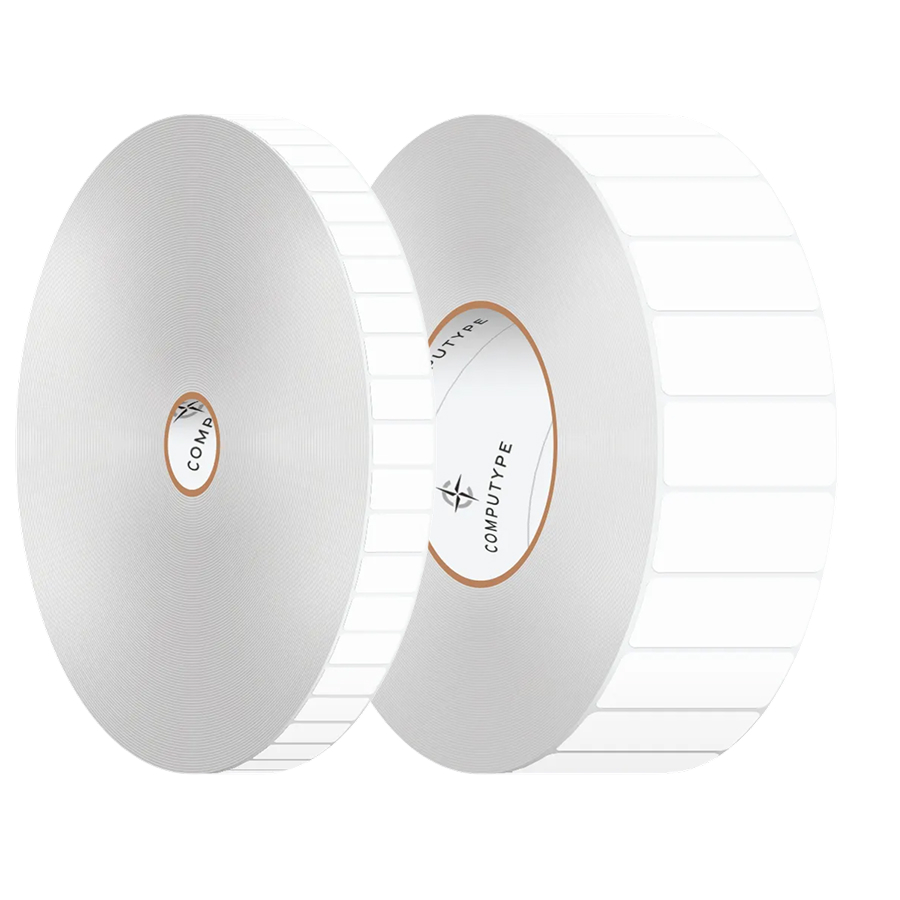
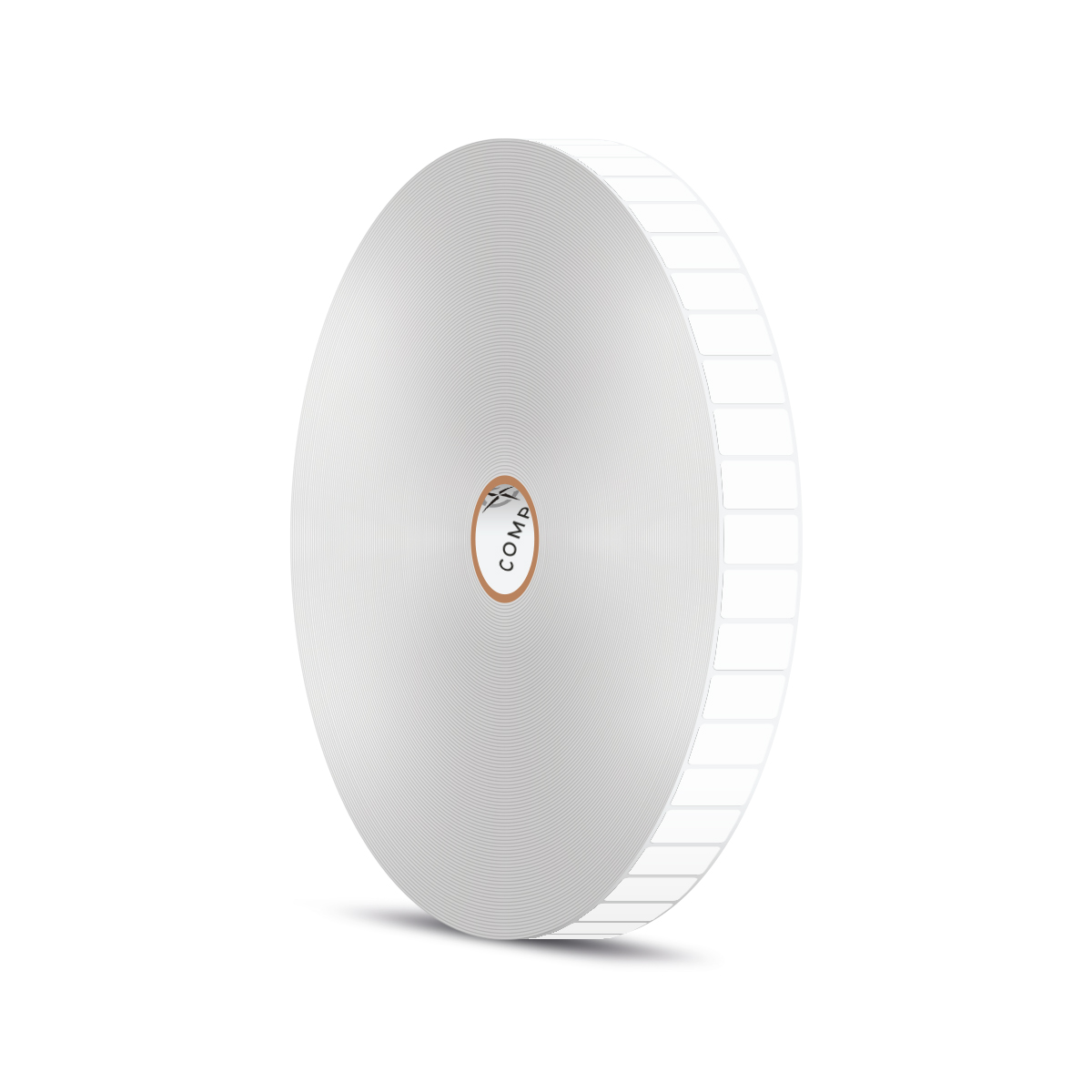
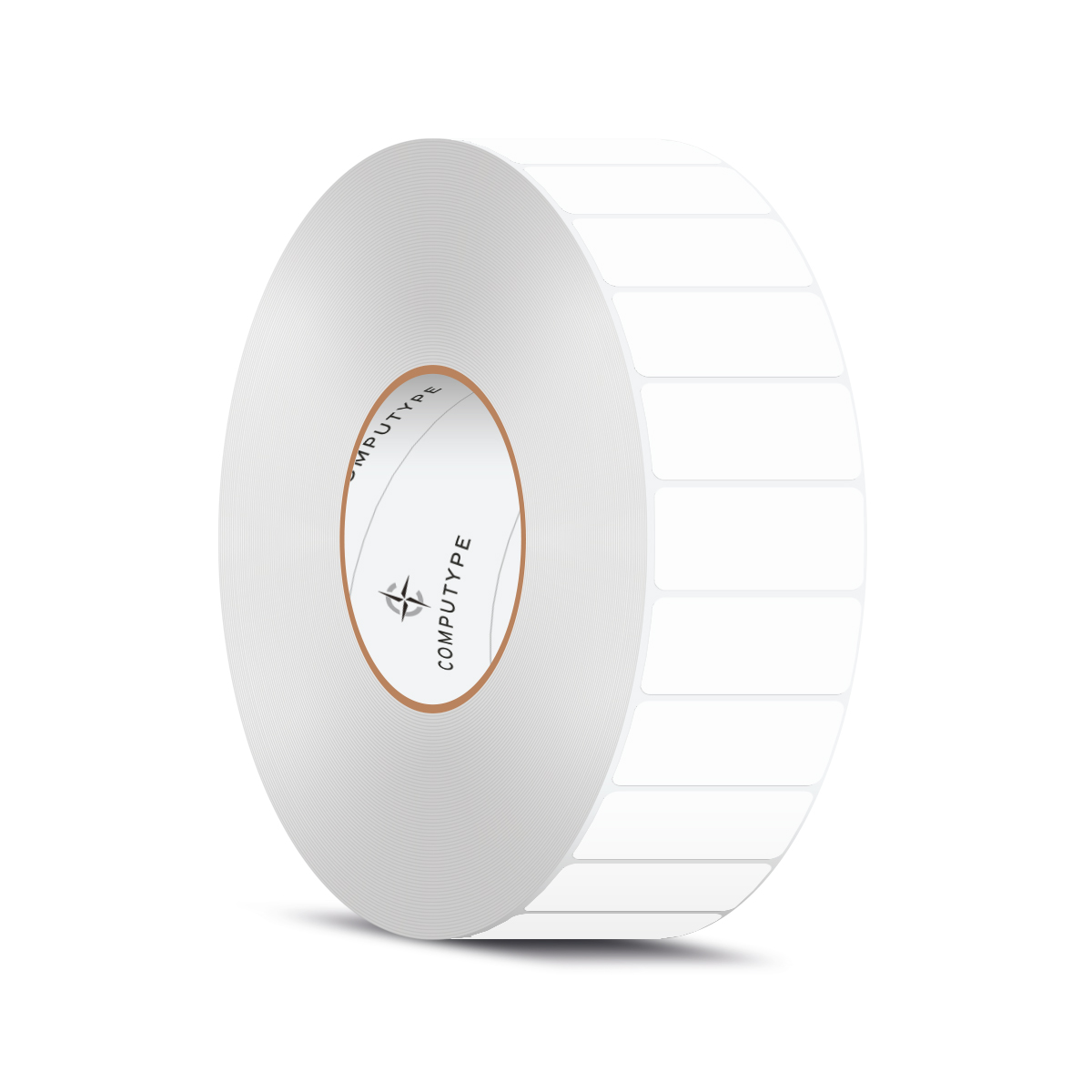
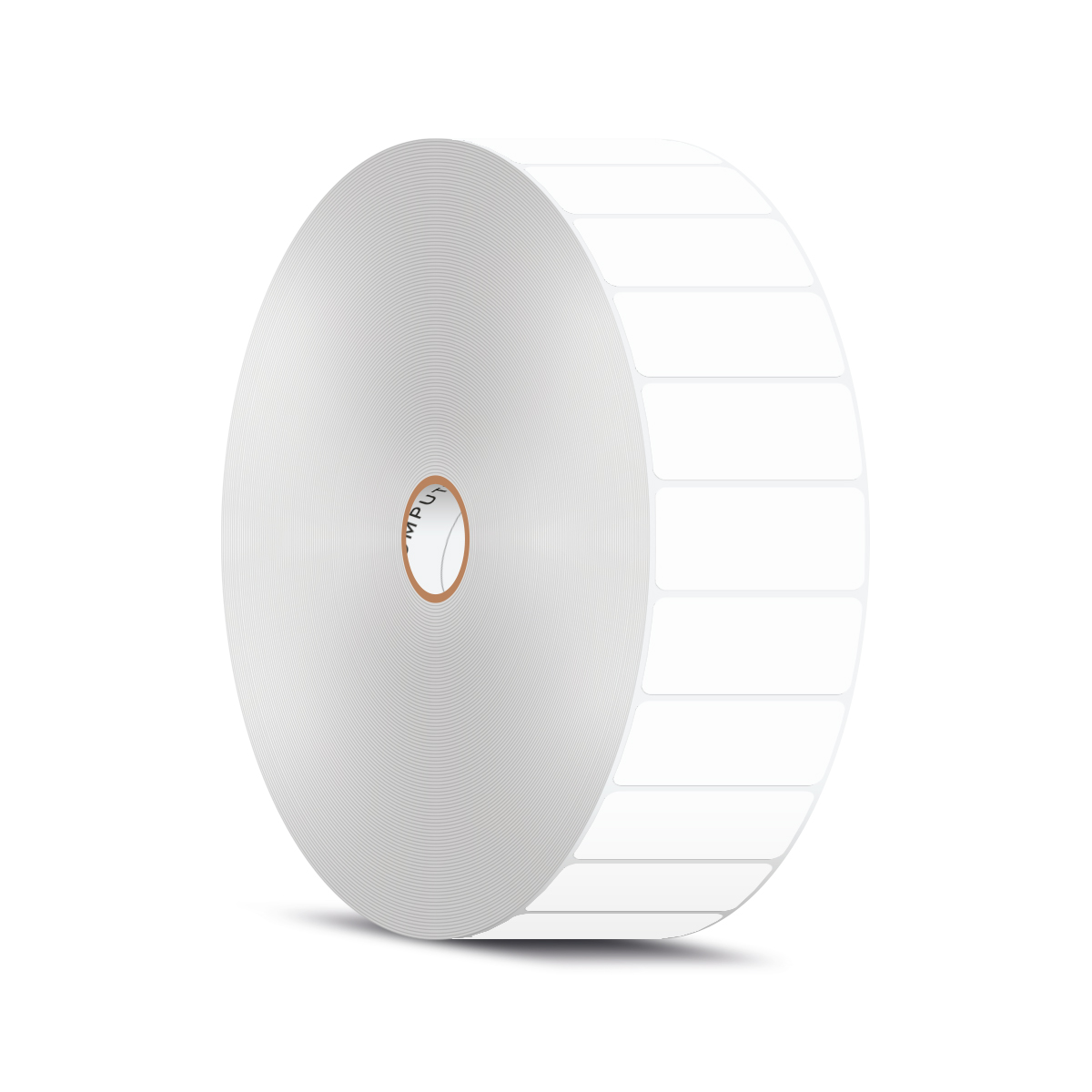
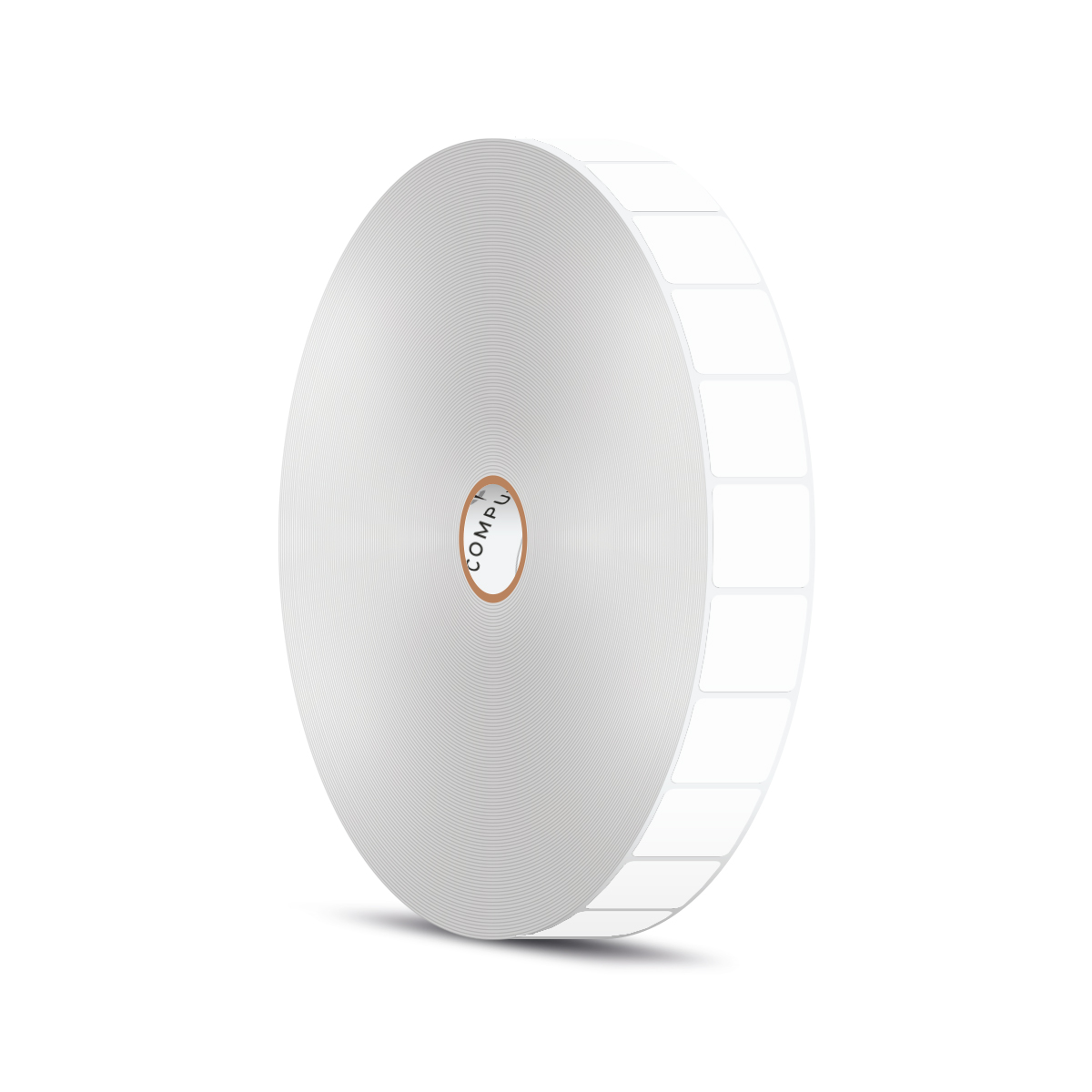
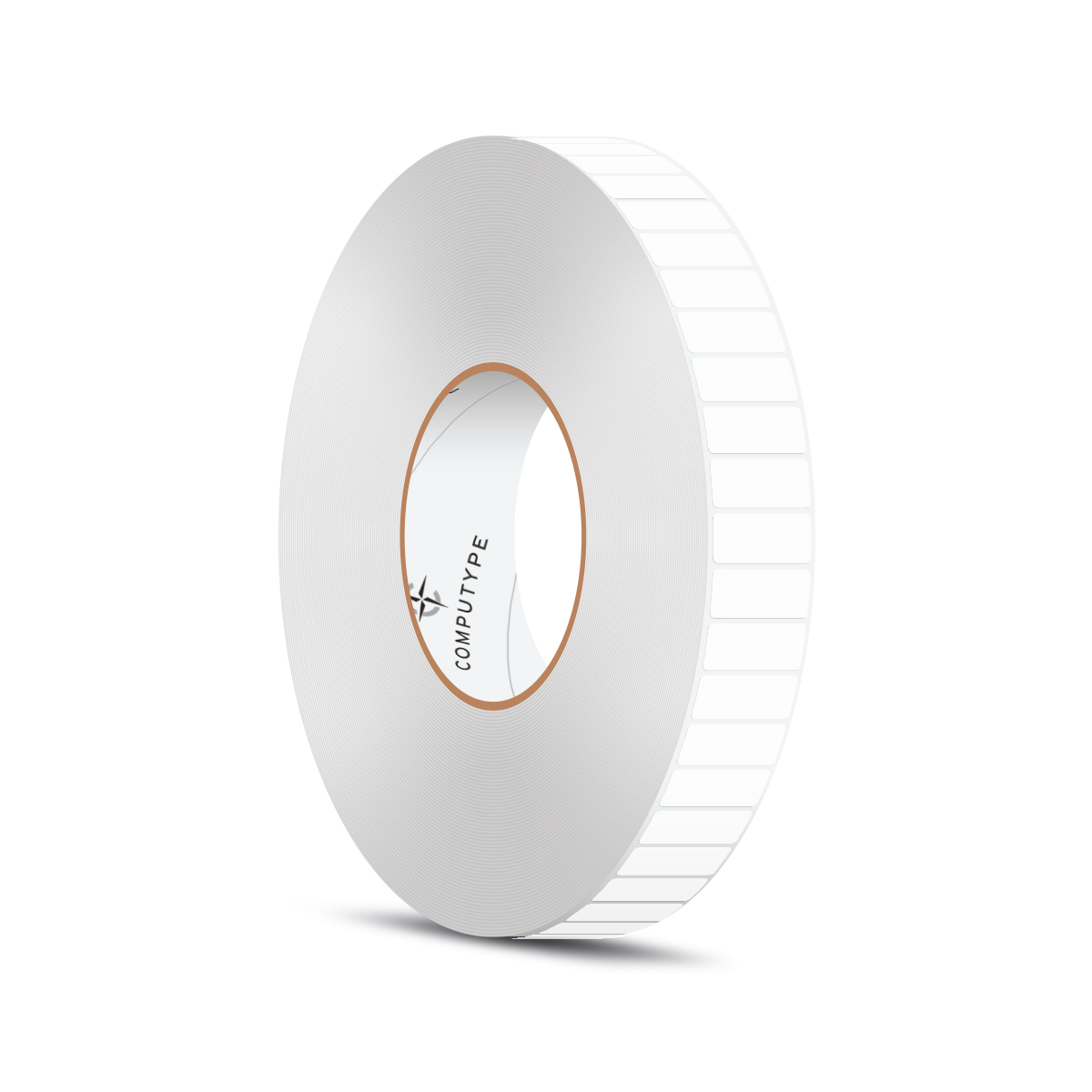
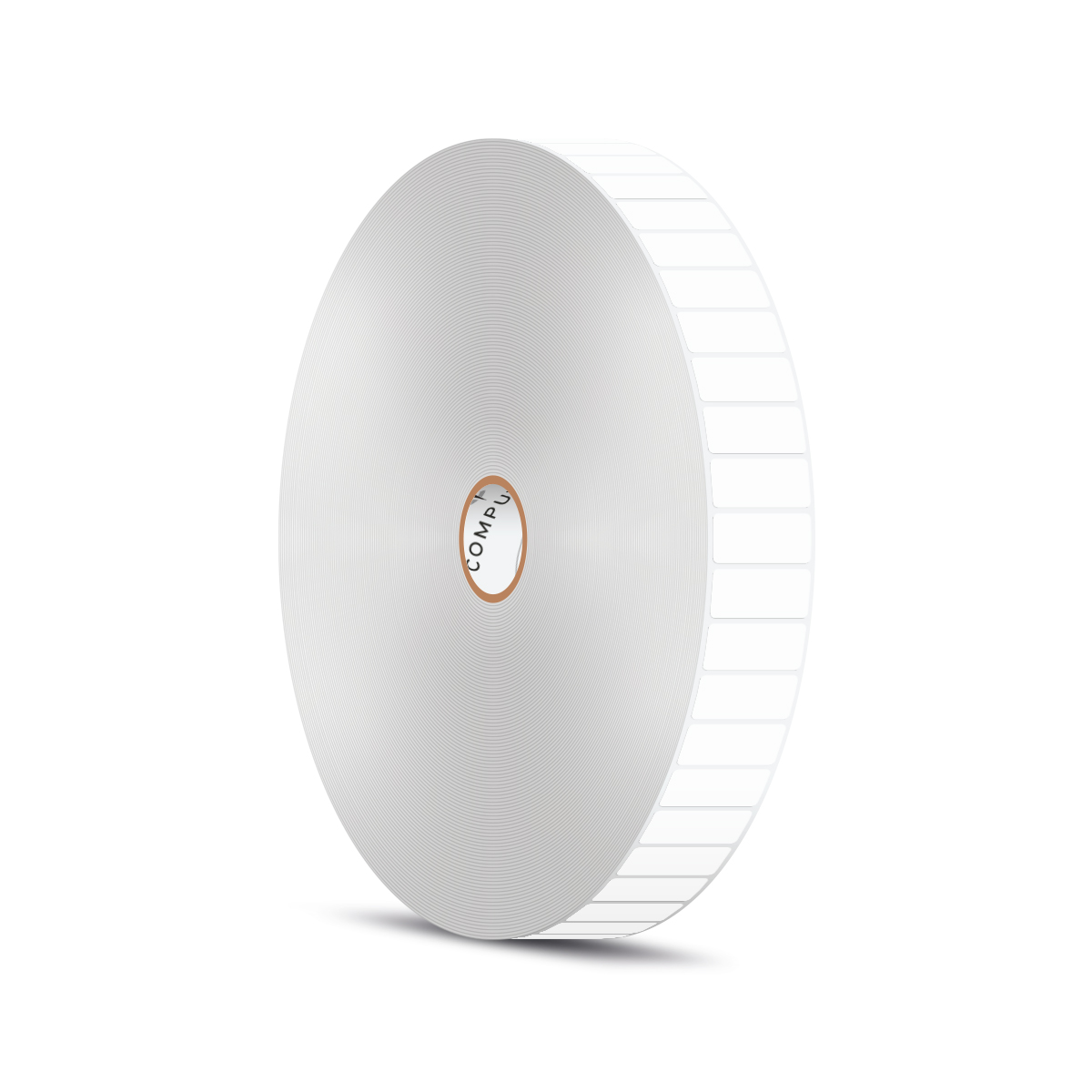
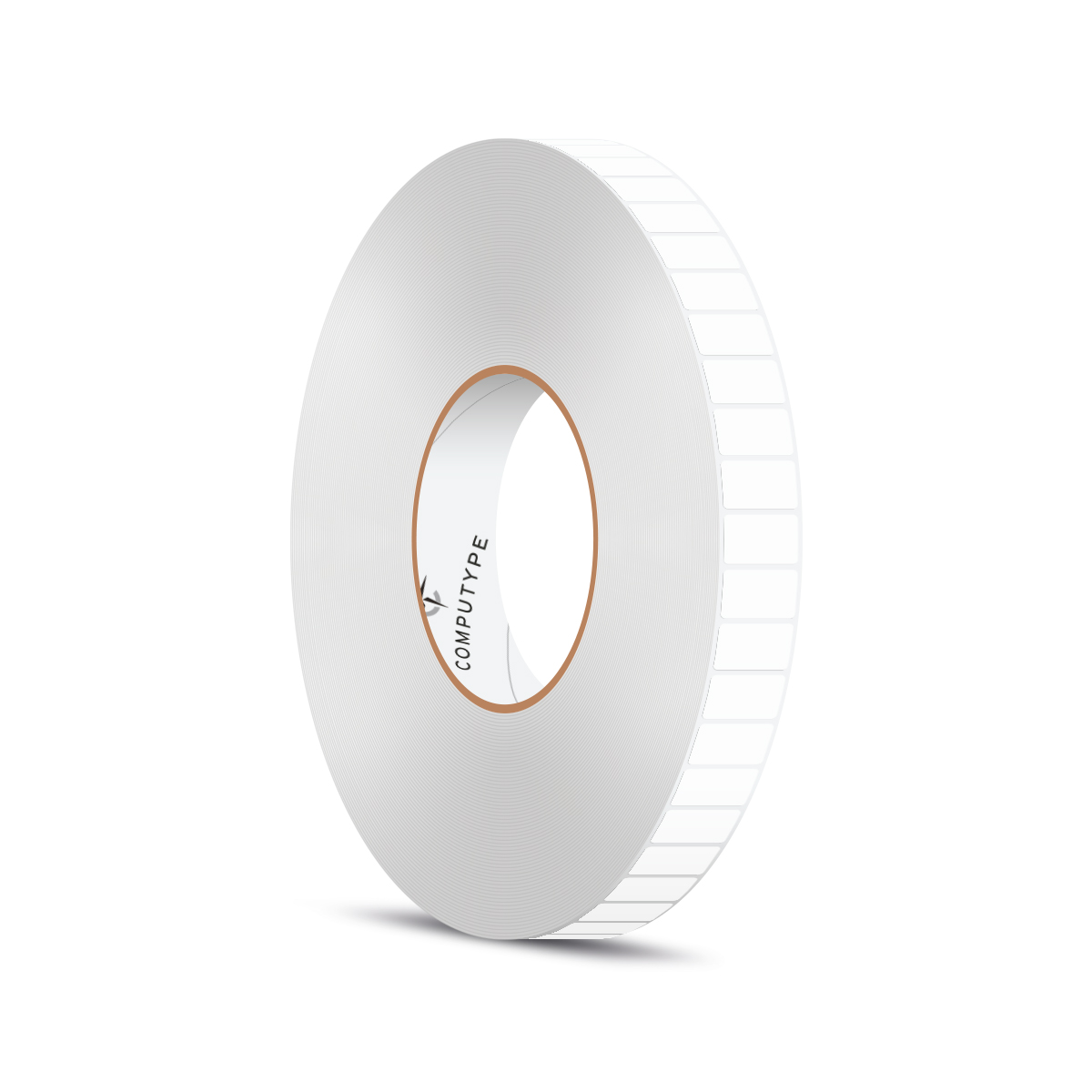
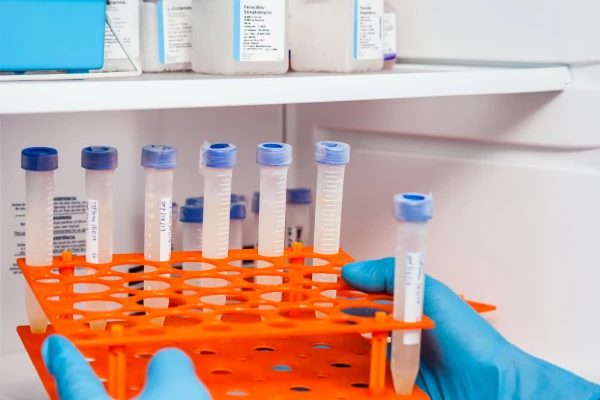
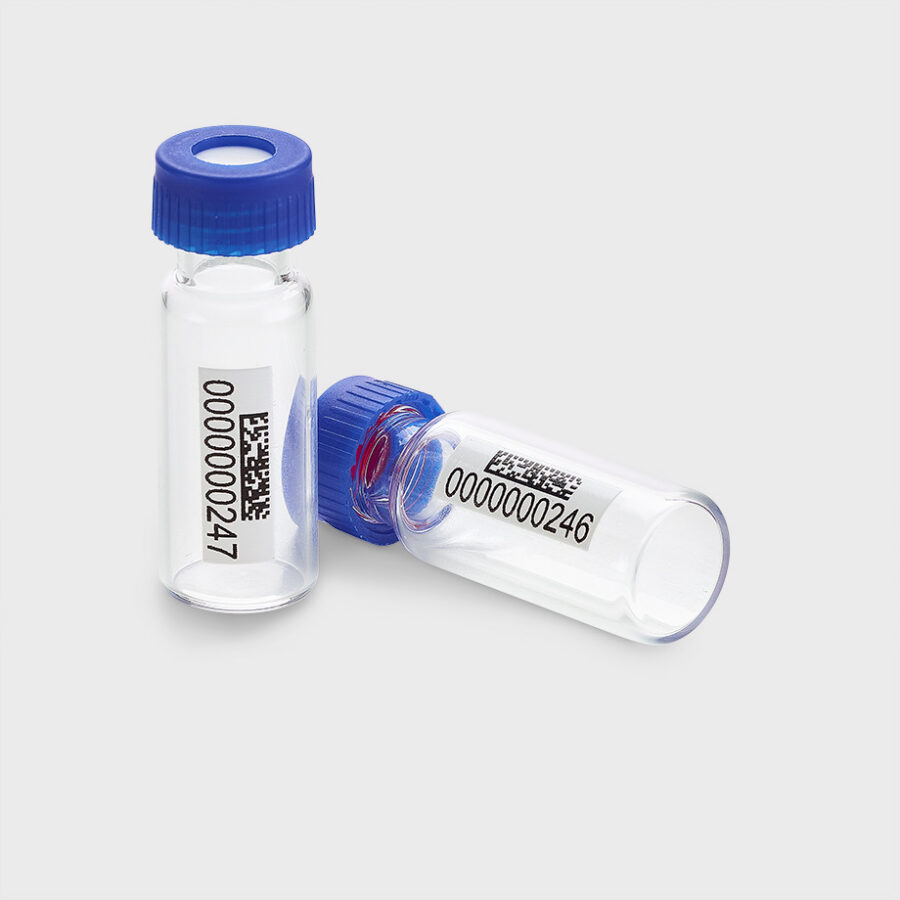
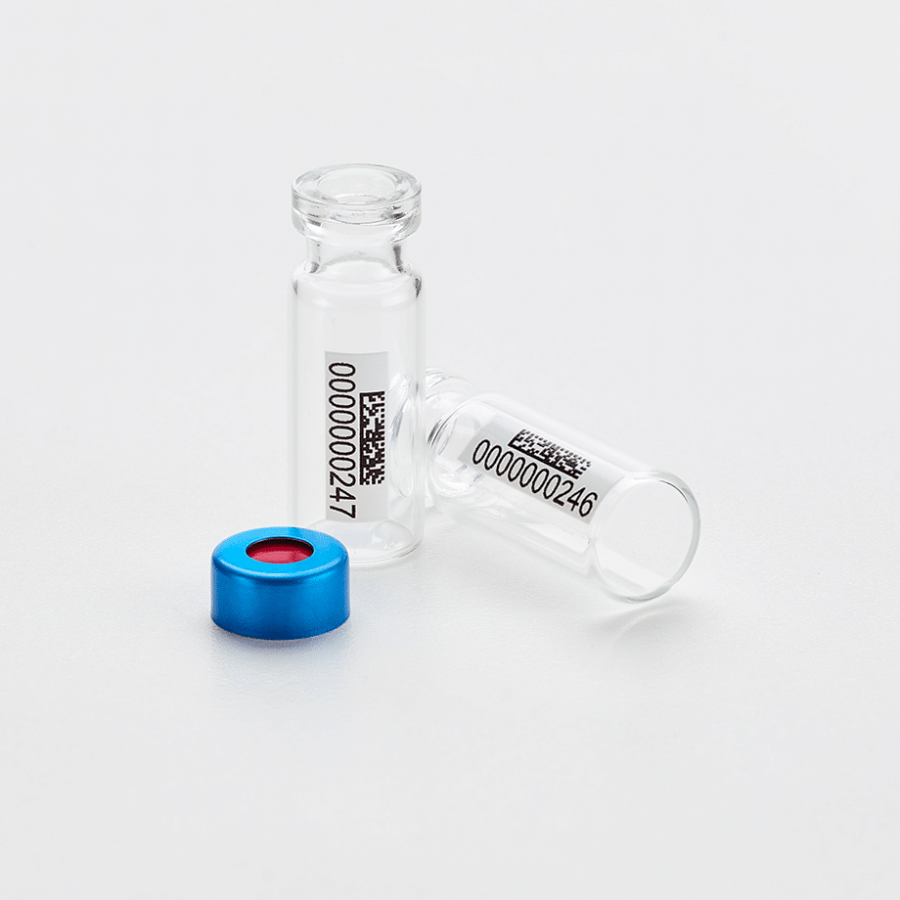
These cryogenic tube labels are designed for long-term laboratory cold-storage environments. Performance is maintained through extended cryogenic exposure, with secure adhesion and clear legibility on tubes, vials, racks, and other laboratory containers at temperatures down to -150 °C.
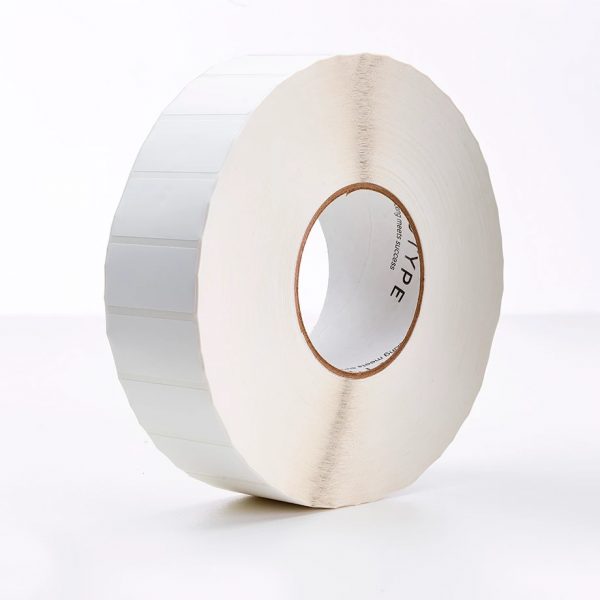
Label formats support common cryovial sizes and secondary storage systems. 3″ printer core configurations are compatible with automatic application, supporting efficient labeling in high-throughput workflows.
cryo label rolls
These cryo labels use a white matte polyethylene face stock engineered for vapor-phase nitrogen, dry ice, and ultra-low freezer storage. A permanent rubber adhesive delivers strong initial tack and secure bonding on tubes, vials, and common laboratory containers. This construction maintains adhesion and print legibility down to –150 °C, supporting reliable identification throughout cryogenic workflows.
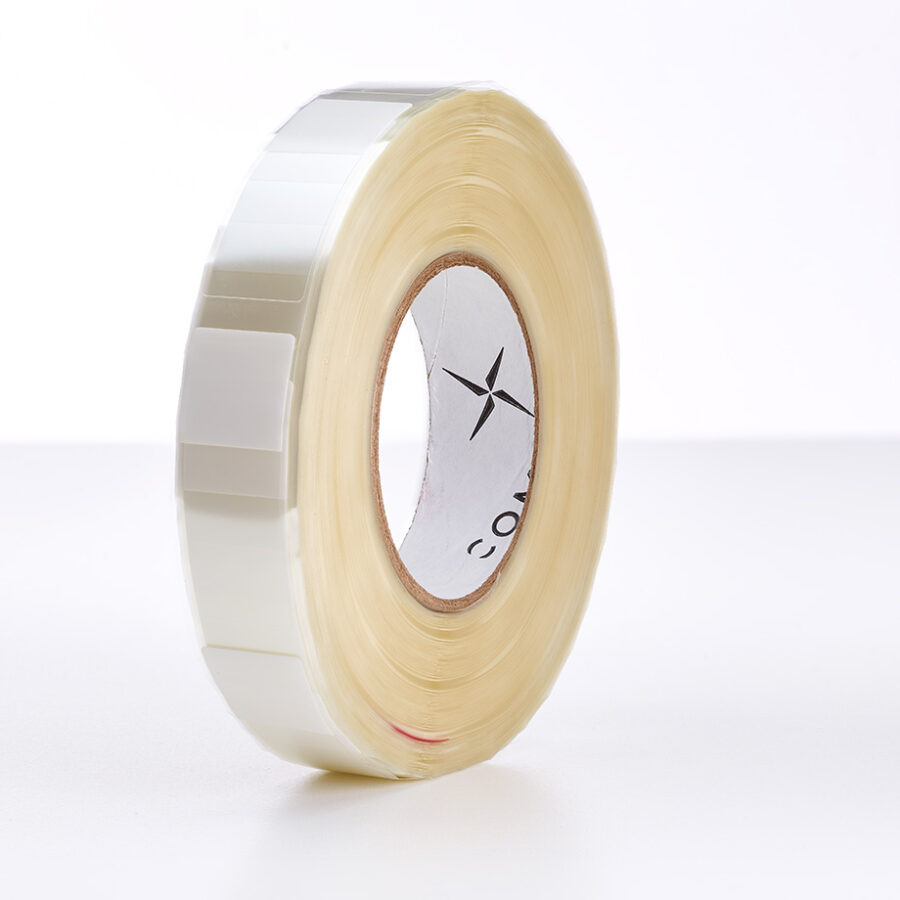
resin transfer ribbons
A compatible thermal-transfer ribbon is included because reliable cryogenic labeling depends on matching the label surface, ribbon formulation, and printer output. Using an incompatible ribbon often results in weak images, smearing, or barcode degradation during cold storage. The matched ribbon produces dense, durable barcodes and text that remain readable through vapor-phase nitrogen exposure and dry ice handling.
Applies in freezer conditions.
Cryo labels apply at -20 °C (-4 °F) and maintains adhesion and legibility down to -150 °C (-238 °F).
Strong adhesion to small-diameter vials.
Permanent rubber adhesive grips curved tube surfaces without winging, edge lift, or flagging over time.
Extended ultra-low freezer cryogenic storage.
Label materials maintain adhesion and legibility during prolonged storage beyond standard -80 °C freezer conditions.
Cryogenic adhesive label materials and durability.
Cryogenic storage places sustained stress on label materials that standard freezer labels are not designed to withstand. At temperatures approaching -150 °C, adhesives can lose tack, face stocks can become brittle, and printed images can crack, smear, or fade—especially on small-diameter cryovials and curved tube surfaces.
These cryogenic tube labels balance flexibility and adhesive performance to maintain legibility and adhesion through long-term cold storage, dry ice handling, and vapor-phase nitrogen exposure.
cryogenic resistance
These cryo labels are engineered to remain adhered and legible in ultra-low temperature storage down to –150 °C. The label construction resists cracking, embrittlement, and image degradation during long-term freezer and cryogenic storage. This stability supports reliable identification through repeated freeze–thaw cycles and extended storage durations.
Laboratory workflows routinely expose labels to aggressive solvents and reagents. These cryogenic labels withstand exposure to DMSO, acetone, methanol, and isopropyl alcohol without compromising adhesion or print clarity. Chemical and solvent resistance helps preserve barcode readability during sample preparation, handling, and reorganization.
Cryo labels experience friction during rack storage, freezer boxes, drawer systems, and gloved handling. The label surface resists scuffing and edge wear, while matched thermal-transfer ribbon imaging helps prevent smearing or image loss. Abrasion resistance supports consistent identification as samples move through daily laboratory workflows.
polyethylene cryo label
These cryo labels use a white matte polyethylene face stock engineered for cryogenic storage and handling. The material remains flexible at ultra-low temperatures, helping prevent cracking or embrittlement during freezer and cryogenic workflows. The surface supports high-contrast printing for clear barcode and text readability.
permanent rubber adhesive
A permanent rubber adhesive delivers strong initial tack and long-term adhesion in cold environments. Rubber adhesive chemistry allows the label to conform to curved tube and vial surfaces, maintaining secure contact through vapor-phase nitrogen, dry ice exposure, and freezer storage. This adhesive performance helps prevent lifting as samples move through handling and retrieval.
tight mandrel adhesion
Cryo labels are engineered to perform on tight mandrels, including small-diameter tubes and vials used in cryogenic storage. The construction resists winging, edge lift, and flagging on curved surfaces, even after extended cold exposure. Reliable mandrel performance helps maintain barcode position and readability throughout storage and handling.
resin thermal ribbon
A resin thermal-transfer ribbon is used to produce durable printed images suitable for cryogenic workflows. Resin ink delivers superior resistance to smearing, abrasion, and chemical contact compared to wax or wax-resin formulations. This print durability helps preserve barcode readability through handling, storage, and routine laboratory use.
cryo label compliance
Label materials comply with FDA 21 CFR 175.105 requirements for indirect contact applications and align with RoHS 2011/65/EU restrictions on hazardous substances. These standards support use in regulated laboratory environments. REACH and SVHC status can be confirmed upon request.
Contact us to connect with a specialist who understands your industry and can provide the right solutions for your business. Let’s start a conversation.