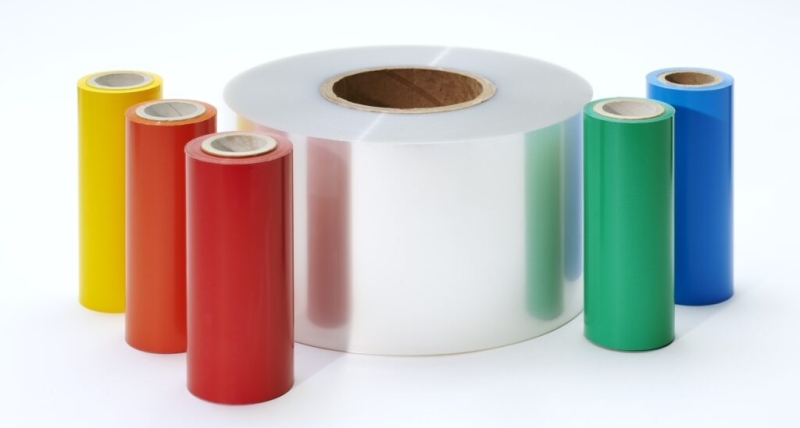
air spring labels
Pre-cure rubber air spring labels.
Durable pre-cure rubber air spring labels are designed to withstand the full vulcanization process while becoming part of the finished component. Applied before curing, these labels maintain legibility through heat, pressure, and chemical exposure. They provide reliable identification directly on the rubber, even across complex geometries and demanding air spring manufacturing environments.
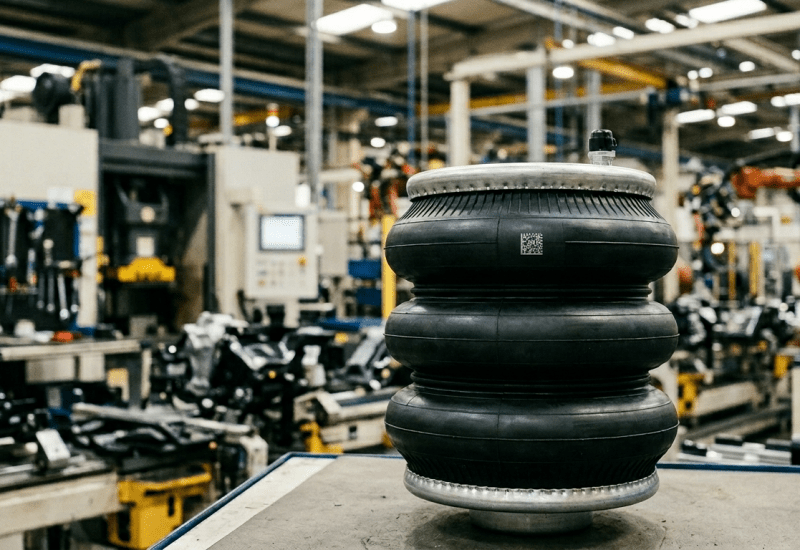
Pre-printed labels for convoluted air springs.
Pre-printed labels for convoluted air springs are engineered to perform across flexible, multi-lobed bellows that expand and compress in use. These labels are applied pre-cure and built to remain intact through vulcanization and repeated motion. From standard constructions to more flexible formats, they support consistent identification without compromising the performance of the air spring.
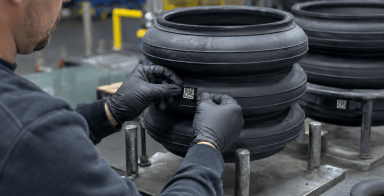
pre-cure application
Pre-cure labels withstand vulcanization heat and pressure, integrating with the rubber air spring bellows during curing for long-term identification.
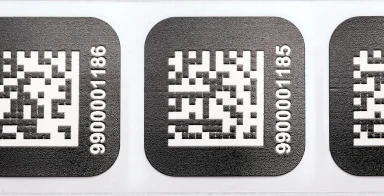
Pre-printed barcode labels provide consistent barcodes and human-readable data, supporting reliable identification for all air spring label designs.
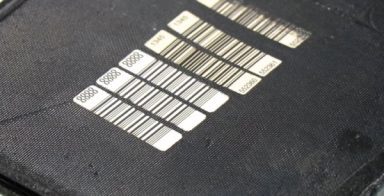
Label constructions engineered for rubber adhesion, maintaining performance through flexing, compression, and repeated motion on convoluted air springs.
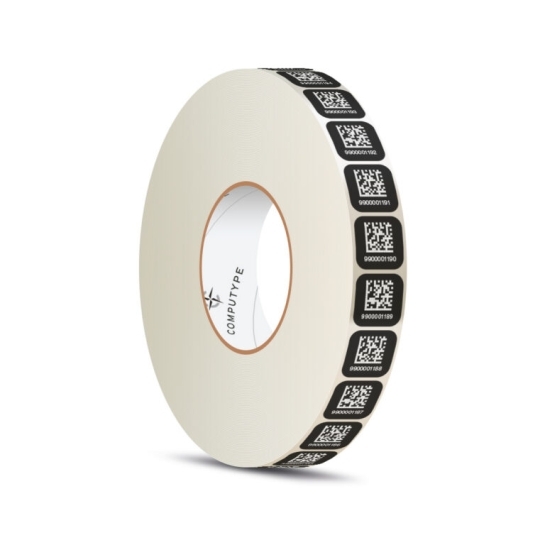

Preferred Air Spring Labels.
- custom sizes, 2d barcodes, extreme durability
Pre-cure rubber air spring labels designed for consistent pre-printed 2D barcode and ID performance through vulcanization. Built for broad compatibility across common air spring constructions, delivering dependable long-term identification.
Flexible Air Spring Labels.
- custom sizes, 2d barcodes, thin construction
A thinner pre-cure rubber label construction with pre-printed 2D barcodes, designed for convoluted air springs and complex geometries requiring high conformability. Maintains performance through vulcanization while supporting durable identification in service.
Engineered label solutions for industrial rubber.
Durable labels for industrial rubber are engineered to meet the thermal, mechanical, and chemical demands of curing and long-term use. Materials, adhesives, and constructions are selected and validated to perform through vulcanization and ongoing flex cycles. Custom options allow labels to be tailored for specific rubber formulations, geometries, and manufacturing processes.
Tested for vulcanization and curing performance.
Air spring labels perform through vulcanization, maintaining legibility and adhesion across rubber air spring manufacturing processes.
Engineered for rubber adhesion and flex cycles.
Label constructions maintain rubber adhesion through compression and repeated flexing on convoluted air springs during long-term service.
Custom label constructions for air springs.
Custom pre-cure rubber labels are engineered for specific air spring geometries, materials, and manufacturing requirements.
Custom Air Spring Labels.
- custom fit
- engineered materials
- flexible printing
Custom air spring labels match your rubber compounds, air spring designs, and curing process for consistent identification.
Custom die-cut sizes, shapes, and formats
Adhesives, coatings, and laminates for vulcanization
Pre-printed, partial, or on-demand
Align label constructions with your air spring process to ensure reliable identification through curing and long-term use.
vulcanization safe labels
Air spring labels must withstand one of the most demanding stages of manufacturing: vulcanization. Pre-cure rubber labels are applied before molding and pass through the full vulcanization process with the air spring, becoming an integrated part of the finished component rather than a secondary label applied afterward.
Years of experience with pre-cure rubber labeling have led to label constructions designed specifically for the heat, pressure, and material movement involved in air spring manufacturing. This approach eliminates many of the challenges associated with post-cure labeling, including edge lift, delamination, and inconsistent adhesion on cured rubber surfaces.
The result is durable identification that remains legible and scannable through curing, handling, assembly, and service. Manufacturers use vulcanization-safe labels to place identification directly on the air spring itself, creating a permanent connection between the component and its tracking information.
pre-printed labels
Air spring labels do more than identify a component. They connect each air spring to production records, quality data, and traceability systems throughout manufacturing and service. Reliable identification starts with accurate data management and consistent barcode quality.
Pre-printed labels provide high-contrast 2D barcodes and human-readable information without the complexity of in-process printing. Controlled sequencing ensures each label carries a unique identifier, helping manufacturers avoid duplicate numbers, missing sequences, and other data integrity issues that can disrupt traceability programs.
Barcode quality and sequence integrity remain critical long after the label enters production. Pre-printed air spring labels maintain readability through vulcanization, handling, assembly, and installation while arriving ready for application. Manufacturers gain consistent identification, dependable barcode performance, and confidence that each air spring carries the correct information from the start.
label performance testing
Successful air spring labeling depends on more than selecting a material from a data sheet. Rubber compounds, curing conditions, label constructions, and performance requirements all influence long-term results. Testing helps confirm that a label performs as expected before it enters production.
A dedicated engineering laboratory supports evaluation of label materials, adhesives, barcode quality, and overall construction performance. Testing can include vulcanization simulations, adhesion analysis, hot peel testing, abrasion resistance, barcode verification, and other evaluations that measure how a label responds to real manufacturing and service conditions.
This testing capability helps guide material selection and validate performance across different air spring designs and production processes. By evaluating labels under representative conditions, manufacturers gain greater confidence that identification remains attached, legible, and scannable throughout the life of the component.
convoluted air springs
Convoluted air springs present unique labeling challenges due to their multi-lobed bellows design. Tight curves, deep contours, and repeated compression cycles place greater demands on label constructions than flatter or less complex air spring geometries.
Pre-cure rubber labels must conform to these surfaces while maintaining clear identification through molding, vulcanization, handling, and service. Label thickness, flexibility, and construction design all influence how well a label performs on smaller lobes, tighter radii, and other challenging areas of the bellows.
Flexible label constructions can improve conformity on highly contoured surfaces while supporting long-term barcode readability and identification performance. By matching the label construction to the air spring geometry, manufacturers can achieve more consistent results across a wide range of convoluted air spring designs.
rolling lobe air springs
Rolling lobe and sleeve air springs create different labeling challenges than convoluted designs. As the rubber rolls across the piston during operation, the label must withstand continuous movement while maintaining clear, reliable identification throughout the life of the component.
Label construction plays an important role in long-term performance. Factors such as label thickness, flexibility, placement location, and air spring geometry can all influence how a label performs in service. Selecting the appropriate construction helps support consistent barcode readability and identification durability across demanding operating conditions.
Pre-cure rubber labels provide a durable identification method by becoming part of the finished component during vulcanization. Manufacturers use this approach to place tracking and traceability information directly on the air spring while supporting long-term performance in rolling lobe and sleeve air spring applications.
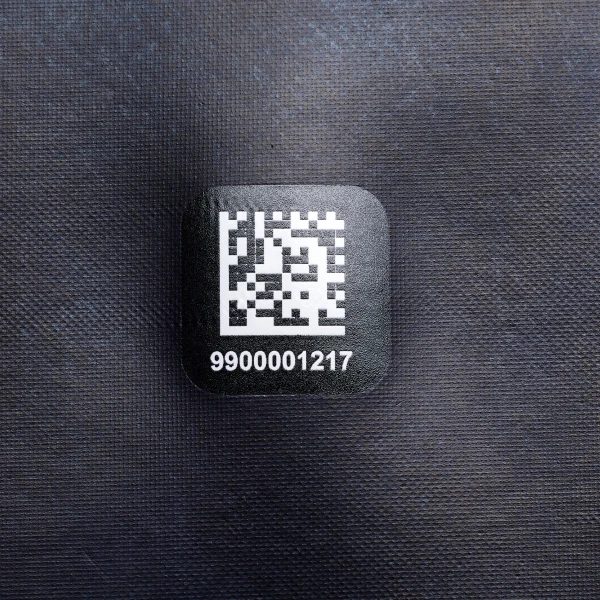
Additional rubber and automotive solutions.
Additional rubber and automotive label solutions extend beyond air springs to support a wide range of demanding applications. This includes pre-cure labels for tire components, bladders, and drive belts, as well as durable identification for other rubber products. Each solution is designed to align with the performance requirements and manufacturing processes of the specific application.

drive belt marking
Drive belt marking solutions provide durable, clear identification. Designed to withstand the rigors of high-temperature and high-friction environments.
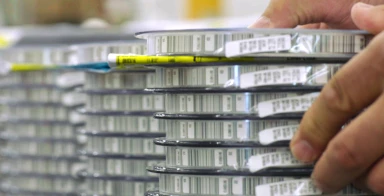
tire bead labels
Tire bead labels are built to survive high temperatures and curing processes. They provide reliable tracking throughout tire manufacturing.

automotive part labels
Durable labels for automotive parts ensure clear identification in challenging environments. They withstand heat, chemicals, and mechanical wear.

Let’s get labeling.
Have questions? We’re here to help.
Contact us to connect with a specialist who understands your industry and can provide the right solutions for your business. Let’s start a conversation.