
$0.00
0

In the dynamic landscape of laboratory operations, precision and efficiency are paramount. Handheld barcode scanners have emerged as indispensable tools, streamlining processes and enhancing data accuracy. In this comprehensive guide, we’ll explore the different types of handheld barcode scanners, delve into the intricacies of 1D and 2D scanners, discuss desirable qualities, highlight potential pitfalls, and showcase examples from Zebra Technologies. Ultimately, we’ll uncover why handheld barcode scanners are invaluable assets in laboratory settings.

Types of Barcode Scanners

Barcode scanners come in various types to cater to different business needs. Laser barcode scanners use a laser beam to read barcodes quickly and accurately, making them ideal for high-volume scanning in retail and manufacturing. 2D imaging scanners, on the other hand, capture images of entire barcodes and can read both 1D and 2D codes, offering versatility for applications like healthcare and retail. Now, let’s delve into these two types in more detail:

Laser Barcode Scanners: Laser barcode scanners are designed for precision and speed. They work by emitting a laser beam that reflects off the barcode and is captured by a light-sensitive sensor. The scanner then deciphers the reflected light to decode the information contained in the barcode. These scanners excel in high-volume environments, where fast and accurate scanning is crucial. They are commonly used in retail for point-of-sale transactions and in manufacturing and logistics for efficient inventory tracking.

2D Imaging Scanners: 2D imaging scanners, also known as area imagers, are highly versatile. They capture an image of the entire barcode using a camera or sensor array and then employ specialized software to decode the information. Unlike laser scanners, they can read both 1D and 2D barcodes, including QR codes. This versatility makes them valuable in various industries, including healthcare for patient identification, document management for scanning documents with barcodes, and retail for decoding QR codes on mobile devices. 2D imaging scanners are preferred when flexibility in barcode reading angles and orientations is required.

Key Features to Ensure Successful Scans

When selecting handheld barcode scanners for laboratory use, certain key features apply to both 1D and 2D scanners.

  • Scan Speed: Choose scanners with high-speed capabilities to maintain operational efficiency.
  • Connectivity Options: Ensure scanners have reliable connectivity options compatible with existing systems.
  • Durability: Prioritize durable scanners capable of withstanding the demanding lab environment.
  • Software Compatibility: Select scanners that seamlessly integrate with existing laboratory management software.
  • Regular Maintenance: Establish a routine maintenance schedule, including cleaning the scanner and updating firmware, to prevent performance issues.

Potential Pitfalls to Avoid

Being aware of potential pitfalls is equally important in making informed decisions. Poor print quality can affect barcode readability, leading to errors in data capture. Compatibility issues may arise if the chosen scanner is not compatible with existing software or systems, leading to integration challenges. Lack of user training can result in errors and inefficiencies, emphasizing the importance of comprehensive training programs to ensure staff proficiency with the scanners.

Why Laboratories Use Handheld Barcode Scanners

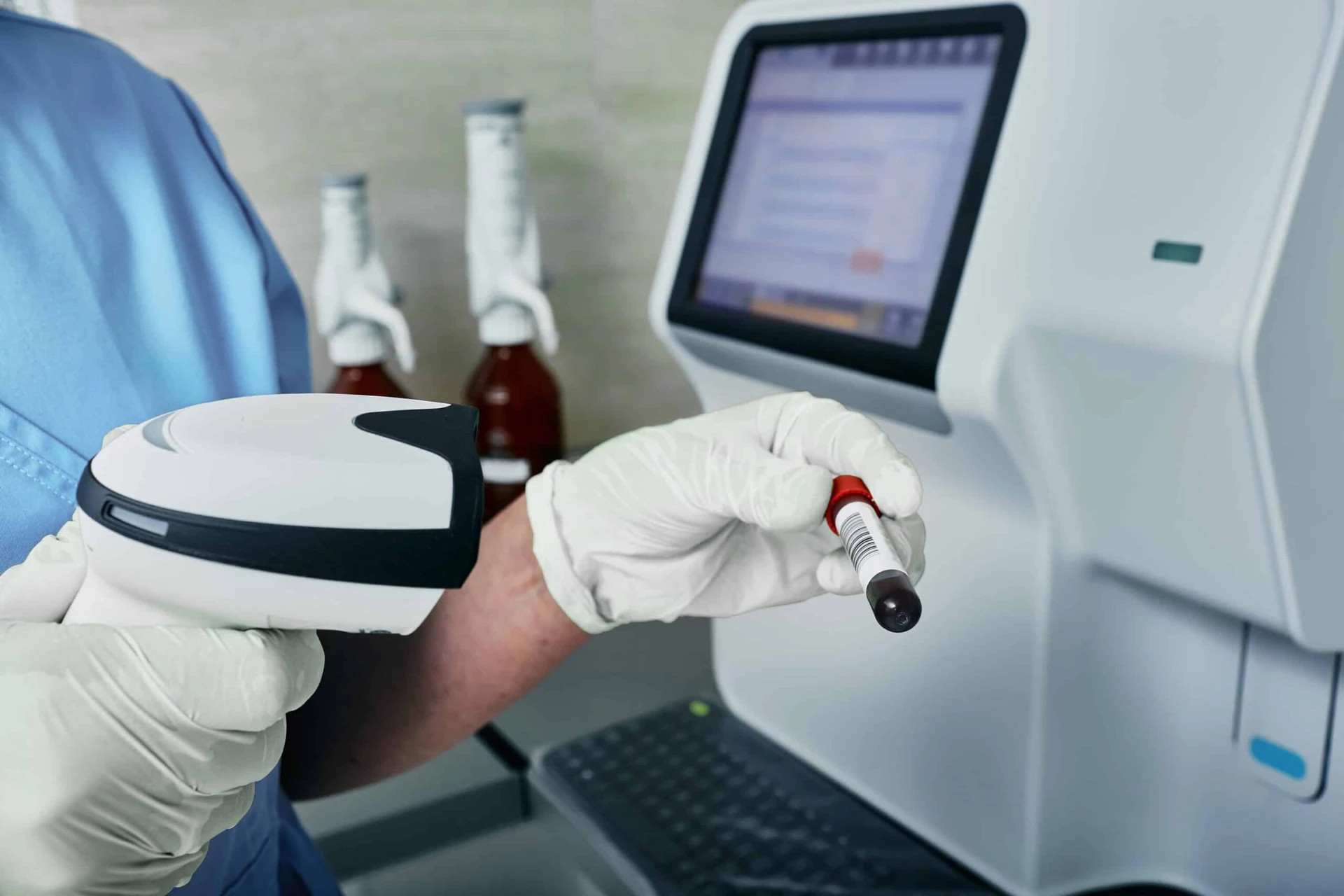
In laboratory settings, handheld barcode scanners play a transformative role. They facilitate accurate and efficient tracking of individual samples, ensuring precise data entry and reducing the risk of errors. Laboratories leverage these scanners for the organization and management of supplies, such as reagents and consumables, contributing to streamlined processes and efficient workflows. The scanners also contribute to enhanced data accuracy, a critical factor in scientific research. Additionally, the swift identification and tracking of laboratory equipment further enhance efficiency in daily operations, ensuring that equipment is utilized optimally.

Zebra Scanners

Zebra Technologies offers exemplary handheld barcode scanners that cater to a range of needs. The Zebra LS2208, a high-performance 1D scanner, is ideal for swift tasks such as inventory management and equipment identification. Its durability ensures longevity in demanding laboratory environments. The Zebra DS2200 Series, with both 1D and 2D capabilities, excels in complex data capture tasks and adaptive scanning. Its versatility makes it suitable for diverse applications within laboratory settings.

In the landscape of barcode scanning, exemplary devices like the Zebra LS2208 play a pivotal role. Engineered by Zebra Technologies, a leader in automatic identification solutions, the LS2208 is a prime example of a 1D barcode scanner that excels in various laboratory applications.

The Zebra LS2208 boasts the following features:

  • Rapid Scanning: With a high-performance scan rate, the LS2208 ensures swift and accurate data capture, making it ideal for applications where speed is essential, such as inventory management.
  • Durable Design: Built to withstand the rigors of daily use, the LS2208 is known for its robust construction. Its durable design ensures longevity in demanding environments, providing a reliable solution for continuous scanning needs within laboratories.
  • Ease of Use: Featuring a user-friendly design, the LS2208 is easy to operate, reducing the learning curve for users. This is particularly important in fast-paced laboratory settings where efficiency is crucial.

Taking identification and tracking to the next level, Zebra’s DS2200 series stands out as a prime example of versatile barcode scanners suitable for intricate tasks in laboratories.

The DS2200 series encompasses both 1D and 2D scanning capabilities, providing a comprehensive solution for various applications. Key features include:

  • Data Versatility: With the ability to read both 1D and 2D barcodes, including QR codes, the DS2200 series offers enhanced data versatility. Laboratories can leverage this capability for tracking complex samples, managing multiple data points, and ensuring a broader range of identification possibilities.
  • Rapid and Accurate Scanning: Similar to its 1D counterpart, the DS2200 series maintains a high-performance scan rate, ensuring rapid and accurate data capture. This is crucial for efficiency in tasks that demand precision, such as sample tracking and inventory management.
  • Adaptive Scanning Technology: The DS2200 series incorporates adaptive scanning technology, allowing it to excel in varying lighting conditions. This ensures reliable performance even in environments with suboptimal lighting, a common consideration in laboratory settings.
  • User-Friendly Design: Building on Zebra’s commitment to user-friendly design, the DS2200 series is easy to use, making it accessible to a wide range of users. Intuitive operation reduces the likelihood of errors during scanning, contributing to overall operational efficiency.

In conclusion, handheld barcode scanners, exemplified by Zebra LS2208 and DS2200 series, are indispensable assets in laboratories, enhancing efficiency, accuracy, and overall productivity..

Handheld Barcode Scanners for Laboratories

In the dynamic landscape of laboratory operations, precision and efficiency are paramount. Handheld barcode scanners have emerged as indispensable tools, streamlining processes and enhancing data accuracy. In this comprehensive guide, we’ll explore the different types of handheld barcode scanners, delve into the intricacies of 1D and 2D scanners, discuss desirable qualities, highlight potential pitfalls, and showcase examples from Zebra Technologies. Ultimately, we’ll uncover why handheld barcode scanners are invaluable assets in laboratory settings.

Types of Barcode Scanners

Barcode scanners come in various types to cater to different business needs. Laser barcode scanners use a laser beam to read barcodes quickly and accurately, making them ideal for high-volume scanning in retail and manufacturing. 2D imaging scanners, on the other hand, capture images of entire barcodes and can read both 1D and 2D codes, offering versatility for applications like healthcare and retail. Now, let’s delve into these two types in more detail:

Laser Barcode Scanners: Laser barcode scanners are designed for precision and speed. They work by emitting a laser beam that reflects off the barcode and is captured by a light-sensitive sensor. The scanner then deciphers the reflected light to decode the information contained in the barcode. These scanners excel in high-volume environments, where fast and accurate scanning is crucial. They are commonly used in retail for point-of-sale transactions and in manufacturing and logistics for efficient inventory tracking.

2D Imaging Scanners: 2D imaging scanners, also known as area imagers, are highly versatile. They capture an image of the entire barcode using a camera or sensor array and then employ specialized software to decode the information. Unlike laser scanners, they can read both 1D and 2D barcodes, including QR codes. This versatility makes them valuable in various industries, including healthcare for patient identification, document management for scanning documents with barcodes, and retail for decoding QR codes on mobile devices. 2D imaging scanners are preferred when flexibility in barcode reading angles and orientations is required.

Key Features to Ensure Successful Scans

When selecting handheld barcode scanners for laboratory use, certain key features apply to both 1D and 2D scanners.

  • Scan Speed: Choose scanners with high-speed capabilities to maintain operational efficiency.
  • Connectivity Options: Ensure scanners have reliable connectivity options compatible with existing systems.
  • Durability: Prioritize durable scanners capable of withstanding the demanding lab environment.
  • Software Compatibility: Select scanners that seamlessly integrate with existing laboratory management software.
  • Regular Maintenance: Establish a routine maintenance schedule, including cleaning the scanner and updating firmware, to prevent performance issues.

Potential Pitfalls to Avoid

Being aware of potential pitfalls is equally important in making informed decisions. Poor print quality can affect barcode readability, leading to errors in data capture. Compatibility issues may arise if the chosen scanner is not compatible with existing software or systems, leading to integration challenges. Lack of user training can result in errors and inefficiencies, emphasizing the importance of comprehensive training programs to ensure staff proficiency with the scanners.

Why Laboratories Use Handheld Barcode Scanners

In laboratory settings, handheld barcode scanners play a transformative role. They facilitate accurate and efficient tracking of individual samples, ensuring precise data entry and reducing the risk of errors. Laboratories leverage these scanners for the organization and management of supplies, such as reagents and consumables, contributing to streamlined processes and efficient workflows. The scanners also contribute to enhanced data accuracy, a critical factor in scientific research. Additionally, the swift identification and tracking of laboratory equipment further enhance efficiency in daily operations, ensuring that equipment is utilized optimally.

Zebra Scanners

Zebra Technologies offers exemplary handheld barcode scanners that cater to a range of needs. The Zebra LS2208, a high-performance 1D scanner, is ideal for swift tasks such as inventory management and equipment identification. Its durability ensures longevity in demanding laboratory environments. The Zebra DS2200 Series, with both 1D and 2D capabilities, excels in complex data capture tasks and adaptive scanning. Its versatility makes it suitable for diverse applications within laboratory settings.

In the landscape of barcode scanning, exemplary devices like the Zebra LS2208 play a pivotal role. Engineered by Zebra Technologies, a leader in automatic identification solutions, the LS2208 is a prime example of a 1D barcode scanner that excels in various laboratory applications.

The Zebra LS2208 boasts the following features:

  • Rapid Scanning: With a high-performance scan rate, the LS2208 ensures swift and accurate data capture, making it ideal for applications where speed is essential, such as inventory management.
  • Durable Design: Built to withstand the rigors of daily use, the LS2208 is known for its robust construction. Its durable design ensures longevity in demanding environments, providing a reliable solution for continuous scanning needs within laboratories.
  • Ease of Use: Featuring a user-friendly design, the LS2208 is easy to operate, reducing the learning curve for users. This is particularly important in fast-paced laboratory settings where efficiency is crucial.

Taking identification and tracking to the next level, Zebra’s DS2200 series stands out as a prime example of versatile barcode scanners suitable for intricate tasks in laboratories.

The DS2200 series encompasses both 1D and 2D scanning capabilities, providing a comprehensive solution for various applications. Key features include:

  • Data Versatility: With the ability to read both 1D and 2D barcodes, including QR codes, the DS2200 series offers enhanced data versatility. Laboratories can leverage this capability for tracking complex samples, managing multiple data points, and ensuring a broader range of identification possibilities.
  • Rapid and Accurate Scanning: Similar to its 1D counterpart, the DS2200 series maintains a high-performance scan rate, ensuring rapid and accurate data capture. This is crucial for efficiency in tasks that demand precision, such as sample tracking and inventory management.
  • Adaptive Scanning Technology: The DS2200 series incorporates adaptive scanning technology, allowing it to excel in varying lighting conditions. This ensures reliable performance even in environments with suboptimal lighting, a common consideration in laboratory settings.
  • User-Friendly Design: Building on Zebra’s commitment to user-friendly design, the DS2200 series is easy to use, making it accessible to a wide range of users. Intuitive operation reduces the likelihood of errors during scanning, contributing to overall operational efficiency.

In conclusion, handheld barcode scanners, exemplified by Zebra LS2208 and DS2200 series, are indispensable assets in laboratories, enhancing efficiency, accuracy, and overall productivity..

0
    0
    Your Cart
    Your cart is emptyReturn to Shop

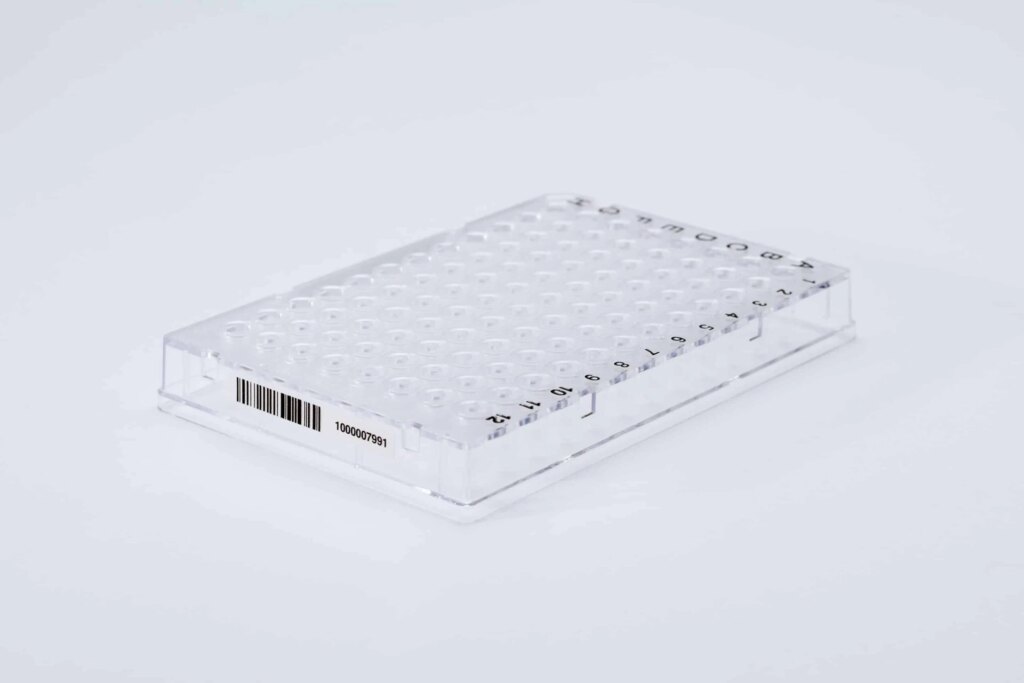
    Use pre-barcoded microplates for ready-to-use identification.

    Receive microplates with identifiers already applied, eliminating labeling steps during plate setup and processing. Ensure consistent, durable identification across assays, screening, and storage while reducing manual handling and improving workflow efficiency.

    Pre-barcoded microplates for ultimate laboratory efficiency.

    Pre-barcoded microplates arrive ready to use with verified identifiers applied before delivery. This approach removes labeling from your workflow and ensures consistent identification across plate handling, processing, and storage environments.

    laboratory efficiency

    Eliminate labeling steps during plate setup, loading, and processing workflows.

    consistent identification

    Use pre-verified plate IDs to maintain accuracy across batches and screening runs.

    integrated services

    Receive plates sorted, kitted, or prepared to match assay workflows and laboratory processes.

    Pre-barcoded microplates fit high-throughput environments where plates move rapidly through automated workflows and labeling can create delays or variability. This includes automated screening facilities, compound and plate libraries, and CROs running large-scale studies, as well as core labs managing shared plate resources where speed, consistency, and reduced handling drive efficiency and improve data integrity.

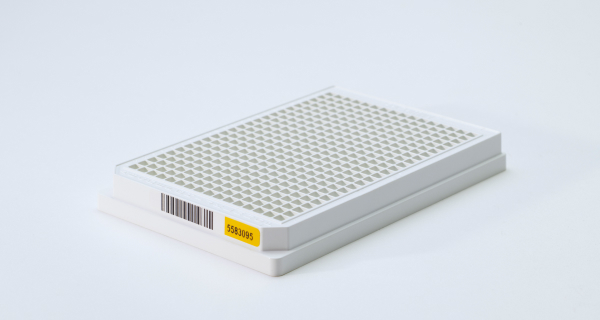
    Order pre-printed microplate labels with consistent accuracy.

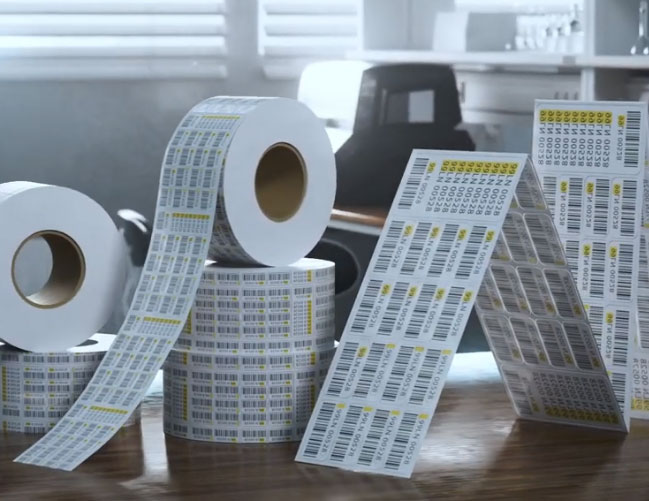
    Get microplate labels professionally printed with controlled data, advanced converting, and durable materials. Ensure consistent plate identification across batches while eliminating in-house printing and reducing variability in labeling for assays, screening, and high-throughput workflows.

    Professionally printed custom microplate labels.

    Pre-printed plate labels combine controlled printing, advanced converting, and durable materials to deliver consistent, ready-to-use identification. This approach ensures every plate label meets requirements for data accuracy, layout consistency, and performance across handling and processing.

    unique ids

    Receive pre-printed plate labels with guaranteed unique IDs, controlled sequencing, and validated data across batches and runs.

    custom design

    Use color coding to differentiate assays, plate types, or workflows and improve visual organization across plate libraries.

    durable finishing

    Use engineered label constructions that resist chemicals, handling, and environmental exposure during plate processing and storage.

    Pre-printed labeling fits laboratories that run standardized plate workflows with fixed data structures. This includes screening labs running standardized assays, diagnostic labs processing consistent plate formats, and research environments where plate layouts and identifiers remain consistent across runs.

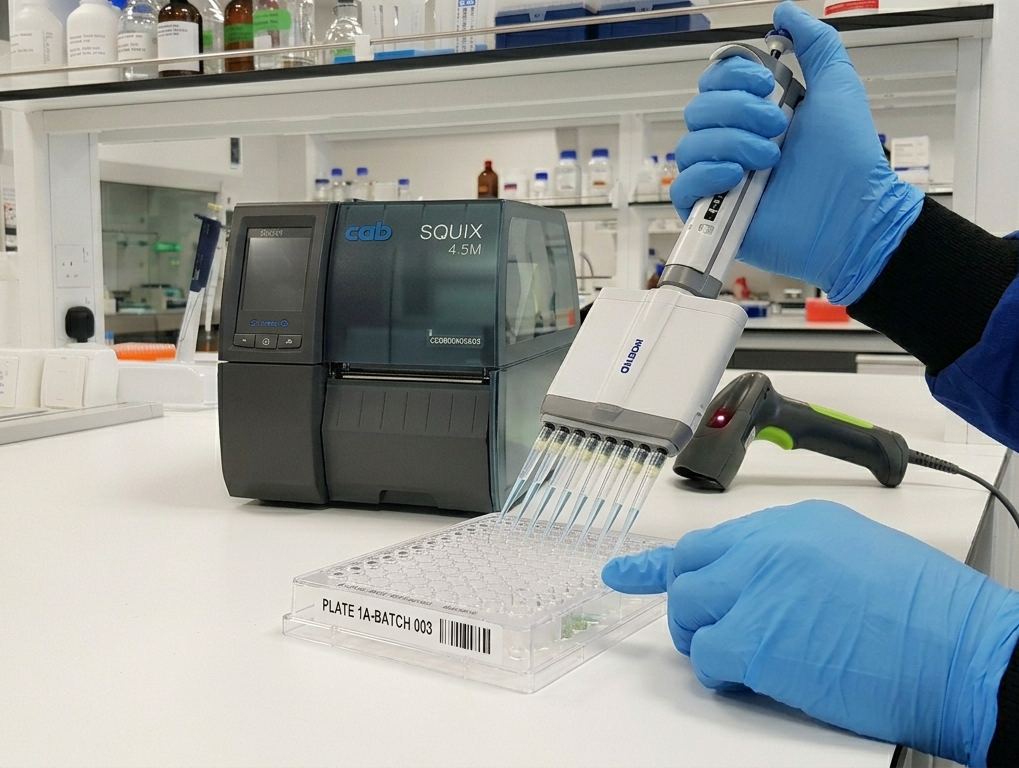
    Print microplate labels on demand with real-time data.

    Print microplate labels as needed using live data from laboratory systems. Generate labels during plate setup, sample loading, or assay preparation, with well IDs, plate IDs, and variable data applied at the point of use. This approach supports workflows where plate data changes frequently or requires immediate, accurate identification.

    A simple setup can integrate real-time labeling directly into your workflow.

    durable labels

    Blank plate labels designed for small formats, flat surfaces, and secure adhesion on plates.

    label printers

    Print high-resolution barcodes and text for plate IDs and sample tracking.

    compatible ribbons

    Thermal transfer ribbons produce durable images resistant to chemicals, moisture, and handling.

    microplate labelers

    Apply labels consistently to plates during setup or automated workflows.

    Print-on-demand labeling fits laboratories that generate or update plate data in real time. This includes screening labs, genomics workflows, and assay development environments where plates are created, modified, and labeled during processing, and where accurate, immediate identification is required.

    Print blood bag labels at collection points.

    Print blood bag labels as needed using live data from blood bank systems. Generate labels during collection, component processing, or labeling steps, with donation identification numbers, product codes, and variable data applied at the point of use. This approach supports workflows where blood data updates in real time and requires immediate, accurate identification.

    A simple setup can integrate real-time labeling directly into your workflow.

    Set up a complete labeling workflow using the right materials and equipment to print and apply labels directly during blood collection, component processing, and blood bank handling workflows.

    durable labels

    Start with blank label stock engineered for flexible PVC blood bags.

    label printers

    Print high-resolution barcodes and text for complex blood label layouts.

    compatible ribbons

    Use included thermal transfer ribbons to produce durable barcode labels.

    label software

    Integrate barcode software to generate ISBT 128 labels and DIN data.

    Print-on-demand labeling fits blood banks and collection centers that generate or update donation data in real time. This includes blood collection sites, processing labs, and transfusion services where blood bags are labeled on demand, and workflows require immediate, accurate identification without relying on pre-printed labels.

    Control blood bag labeling with pre-printed formats.

    Get blood bag labels professionally printed with controlled data, advanced converting, and durable materials. Eliminate in-house printing while ensuring every label meets performance requirements for blood bank use, including handling, cold storage, and transfusion.

    Guarantee no duplicates with professionally printed blood bag labels.

    Pre-printed labeling combines controlled printing, advanced converting, and durable materials to deliver consistent, ready-to-use blood bag labels. This approach removes variability from in-house printing and ensures every label meets requirements for DIN accuracy, barcode performance, and reliable identification across blood bank workflows.

    consistency at scale

    Receive pre-printed labels with guaranteed unique DIN sequences, controlled serialization, and validated data across batches and production runs.

    accurate din formats

    Maintain consistent DIN formats to ensure accurate identification across blood bags, segments, and associated components.

    durable finsihing

    Use engineered label constructions designed to resist edge lift, moisture, and routine handling, helping maintain adhesion and readability throughout blood collection.

    Pre-printed labeling fits blood banks and collection centers that manage high volumes of donations and require controlled, repeatable identification. This includes blood collection sites, processing facilities, and transfusion services where standardized labeling, consistent DIN assignment, and stable data support efficient, validated workflows without frequent changes.

    Support accurate workflows with real-time labeling.

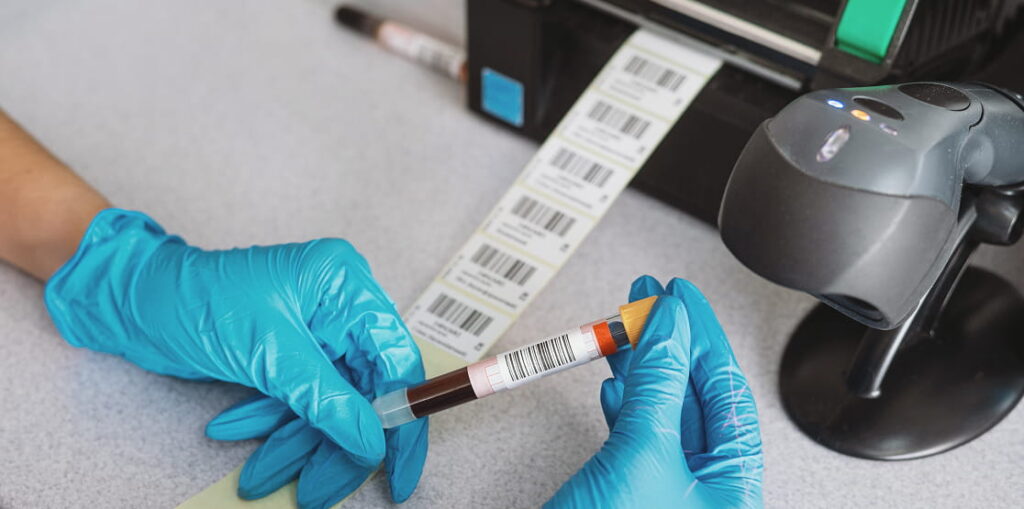
    In laboratory environments, data often isn’t final until the last moment—at the bench, at the instrument, or during sample handling. Printing labels on demand helps ensure each tube or vial reflects the most accurate information, while fitting naturally into the way your work actually happens.

    Support accurate workflows with real-time labeling.

    In laboratory environments, data often isn’t final until the last moment—at the bench, at the instrument, or during sample handling. Printing labels on demand helps ensure each tube or vial reflects the most accurate information, while fitting naturally into the way your work actually happens.

    A simple setup can integrate real-time labeling directly into your workflow.

    In laboratory environments, data often isn’t final until the last moment—at the bench, at the instrument, or during sample handling. Printing labels on demand helps ensure each tube or vial reflects the most accurate information, while fitting naturally into the way your work actually happens.

    compatible ribbons

    Compatible resin ribbons ensuring clear, durable print for barcodes and text

    compatible ribbons

    Compatible resin ribbons ensuring clear, durable print for barcodes and text

    In laboratory environments, data often isn’t final until the last moment—at the bench, at the instrument, or during sample handling. Printing labels on demand helps ensure each tube or vial reflects the most accurate information, while fitting naturally into the way your work actually happens.

    Support accurate workflows with real-time labeling.

    In laboratory environments, data often isn’t final until the last moment—at the bench, at the instrument, or during sample handling. Printing labels on demand helps ensure each tube or vial reflects the most accurate information, while fitting naturally into the way your work actually happens.

    A simple setup can integrate real-time labeling directly into your workflow.

    compatible ribbons

    Compatible resin ribbons ensuring clear, durable print for barcodes and text

    compatible ribbons

    Compatible resin ribbons ensuring clear, durable print for barcodes and text

    compatible ribbons

    Compatible resin ribbons ensuring clear, durable print for barcodes and text

    compatible ribbons

    Compatible resin ribbons ensuring clear, durable print for barcodes and text

    In laboratory environments, data often isn’t final until the last moment—at the bench, at the instrument, or during sample handling. Printing labels on demand helps ensure each tube or vial reflects the most accurate information, while fitting naturally into the way your work actually happens.

    Support accurate workflows with real-time labeling.

    In laboratory environments, data often isn’t final until the last moment—at the bench, at the instrument, or during sample handling. Printing labels on demand helps ensure each tube or vial reflects the most accurate information, while fitting naturally into the way your work actually happens.

    A simple setup can integrate real-time labeling directly into your workflow.

    In laboratory environments, data often isn’t final until the last moment—at the bench, at the instrument, or during sample handling. Printing labels on demand helps ensure each tube or vial reflects the most accurate information, while fitting naturally into the way your work actually happens.

    durable labels

    Durable labels that stay attached through handling, storage, or cryogenic conditions

    compatible ribbons

    Compatible resin ribbons ensuring clear, durable print for barcodes and text

    reliable printer

    Compact, consistent, durable thermal transfer printing at the point of use

    label software

    Label management software to format labels and connect to sample data or LIMS

    In laboratory environments, data often isn’t final until the last moment—at the bench, at the instrument, or during sample handling. Printing labels on demand helps ensure each tube or vial reflects the most accurate information, while fitting naturally into the way your work actually happens.

    Request a quote

    Take advantage of our volume discounts for bulk orders. Reach out to us for a personalized quote tailored to your needs.

    "*" indicates required fields

    This field is for validation purposes and should be left unchanged.