$0.00
0

What is an ISO/ANSI Barcode Score and What Does it Mean?

If youโ€™re involved in purchasing barcodes youโ€™ve probably heard of an ISO/ANSI score, but what exactly are these scores? And what do they mean? Here at Computype we want to make sure our customers understand what they are investing in and when it comes to ISO/ANSI scores, things can become a little bit tricky. An A-grade might be the best grade, but ironically it might not mean the best solution for your purposes. The goal of this discussion is to help you better understand what an ISO/ANSI score is, how itโ€™s calculated, and what that might mean for your barcode solution.

What is ISO/ANSI and what is an ISO/ANSI barcode score?

ANSI is the acronym for The American National Standard Institute, an organization that develops systems of standardization for a wide array of products, services, and systems in the United States. Their goal is to improve the standard of living and the global competitiveness of US businesses through standardization, and so they created the ANSI barcode test. The ANSI barcode test was later taken over by the International Standards Organization (ISO), who stretches their goal of business standardization to a global level.

In their efforts to create norms and guidelines for businesses in nearly every sector, they have created a test and scoring system for barcodes. The ISO/ANSI barcode test is essentially a test of print quality. The quality of print is one of the biggest factors affecting barcode readability so it only makes sense that a test of symbol performance would focus on print quality. Simply put, the ISO/ANSI barcode score refers to the level of print quality of individual barcodes; however, print quality is only one of many factors that go into the readability and scannability of your barcodes.

How is the score calculated?

To those unfamiliar with the determining factors of high quality print and the environmental influencers that can impact the readability of barcodes, the scoring system can be difficult to decipher. This is why itโ€™s important to understand how the test is run, how the scores are determined, and what they represent.

Lighting and scan speeds are controlled throughout the duration of the test. The barcodes are scanned as they run flat beneath a single-line scanner tethered above at a specific angle. As the codes are scanned they are tested on nine parameters of print quality:

1. Edge determination
2. Minimum reflectance
3. Minimum edge contrast
4. Symbol contrast
5. Modulation
6. Defects
7. Decodability
8. Decode
9. Quiet zones

The symbols are scanned a total of ten times and receive a grade for each scan on each parameter. Some parameters are scored on a pass or fail (A or F) basis, and others are scored on a scale from A-F.

Once the scores are gathered, the test device will look at each parameter, take the lowest of the ten scores received, and assign that score to that parameter. For example, a symbol that receives eight Aโ€™s, one B, and one C for Edge Determination gets a final score of C on that parameter.

The next step leads us to the overall score, and is calculated differently depending on the test operator. Most commonly the score is calculated by taking the lowest of the parameter scores and declaring that the overall score of the barcode. For example, if the barcode from before scored an A on every parameter other than edge determination it would receive a C-grade since the lowest scoring parameter was graded C.

Even though it is an uncommon approach, it should be mentioned that some test operators will average out the parameter grades. This means that if the same barcode from before was brought to a different facility where parameter scores are averaged it would receive an A-grade, a pretty dramatic difference. The method of averaging scores isnโ€™t specifically mentioned in the ISO/ANSI barcode testing instructions, so itโ€™s not as commonly used and more than likely your barcode provider is using the lowest parameter score as the final grade.

What does my score mean?

Imagine youโ€™re back in school and itโ€™s the beginning of a new semester. Your chemistry professor is describing the grading system for the class. This professor splits up your classwork into nine categories for grading: participation, essays, textbook assignments, journaling, in class activities, labs, quizzes, exams and presentations, there are ten assignments in each category. Say this professor grades each category based on the lowest scoring assignment of each category, then picks the lowest scoring category for your overall grade in the class. Would you drop the class?

I certainly would.

Why? A lot of reasons, one of them being that it doesnโ€™t seem quite fair to be graded solely on my worst performing assignment. What if I wrote that horrible essay while pulling an all-nighter? Or maybe Iโ€™m just not a good public speaker. Receiving a grade based solely on your lowest point of performance can feel unfair.

Sure, barcodes arenโ€™t college students but the grade received essentially reflects on the barcodeโ€™s lowest point of performance similar to that chemistry professors grading system.

In addition to the highly focused grading system, the test is performed under strict conditions that likely donโ€™t apply to your work processes. A few ways the testing environment is likely to differ from your work environment include the scanner, the scanner orientation, re-scannability and lighting conditions. Your label supplier will need to know what these conditions are like in your facility so they can help you determine which range of grades will work with your processes.

Type of Scanner

The type of scanner used in the ISO/ANSI test is a single-line scanner. Although single-line scanners are still used today, they are used very rarely as more robust reading technologies have become widely available. Common scanning technologies like rastering scanners and CCD (photo) scanners compile several high quality images of a barcode in a single scan to create the highest level of readability even if the barcode itself is poor quality. These types of readers are often able to read F-scoring barcodes with little to no trouble. So, before requesting A-grade barcodes, ensure your reader requires high quality barcodes to perform, otherwise the investment may not be worth it.

Scan Angle

The scan angle is controlled during the ISO/ANSI test, tethered above the barcodes the scanner remains at a consistent angle for the entirety of the test. This is great for consistency in a test, however itโ€™s not how your processes likely run (unless youโ€™re using automation, which we will get to). In most real-life cases the scan angle can be adjusted and the label rescanned if the original scan angle was not acceptable. In the case of automation, though the scan angle is fixed and the label canโ€™t be rescanned unless removed and scanned by hand, the scanner within the automation equipment isnโ€™t likely to be a single-line scanner making it less likely to require rescanning due to poor scan angle.

Lighting

An environmental factor which is highly controlled during the ISO/ANSI barcode test is lighting. Even if lighting is controlled in your facility itโ€™s unlikely to be set to the same specifications the ISO/ANSI test requires. Light levels affect the readability of barcodes by obscuring the contrast through reflection and shadow; in your facility you are likely able to make adjustments to the lighting, move barcodes into better lighting or have access to high quality scanners that can work under poor lighting conditions.

Re-scannability

Although itโ€™s far from ideal, we mentioned that in most real-world scenarios there is an opportunity to re-scan the barcode label. Even with automation the labeled object can be removed and scanned with a hand scanner or placed back in line to be scanned again. Rescanning is far from desirable and with proper scanning equipment, lighting and a good scan angle it can typically be avoided completely.

During the ISO/ANSI test the barcodes are scanned a total of ten times, however, the lowest of those scores becomes the overall barcode grade, reflecting on the worst-case scanning scenario while excluding any positive results. This could mean the barcode was read on the first, second, and third scan, maybe it only misread on the seventh scan. Essentially the ISO/ANSI score canโ€™t tell you exactly how likely it is your barcode will read on the first scan with all factors in mind; in fact in most cases itโ€™s more likely your barcode will read on the first scan than the test results will reflect.

Unless your facility is scanning barcodes under the same exact conditions as the ISO/ANSI test there are a lot of opportunities to improve the readability of your barcodes after theyโ€™ve been printed. In most cases your facility is already set up with these opportunities to improve readability. Itโ€™s very likely your facility is using either a rastering or CCD scanner and your operators have the ability to adjust lighting, modify scan angles or rescan if something goes wrong.

The ISO/ANSI score does serve the purpose of providing proof of the print quality of barcodes, and print quality is a major determining factor of readability. But the ISO/ANSI barcode grade doesnโ€™t necessarily reflect on the readability of your barcode as a whole. There are many more factors that go into how readable your barcodes will be in real-world applications. In some cases barcodes arenโ€™t even able to grade above a C due to the inks, substrates or laminates used in making them, but they are able to scan consistently with the right tools and environment.

If youโ€™re working with a reputable barcode label supplier and manufacturer you can rely on them to provide quality products. What is most important is not the ISO/ANSI grade of your barcodes, but that your barcode supplier is interested in learning about your processes so they can help you to assess your needs and find the best solution.

0
    0
    Your Cart
    Your cart is emptyReturn to Shop

    High-impact belt branding with pre-printed films.

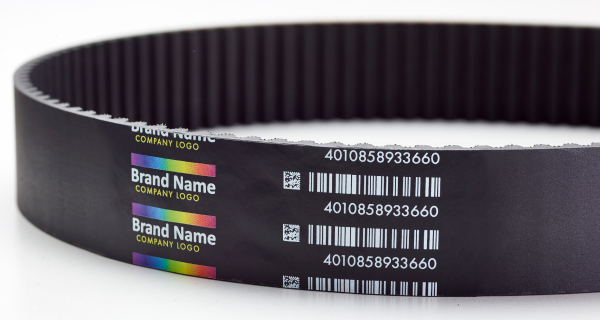
    Pre-printed belt marking films deliver bold, consistent branding and high-resolution graphics across repeat manufacturing applications. These solutions support detailed imagery, precise color matching, and uniform visual presentation for product lines requiring fixed branding, standardized identification, and elevated product appearance.

    Professionally printed high-resolution rubber belt branding films.

    Pre-printed belt marking films support more detailed and visually controlled designs than standard ribbon-based marking systems. These solutions enable complex graphics, consistent color reproduction, and elevated product presentation across repeat manufacturing applications.

    photorealistic graphics

    High-resolution printing supports detailed imagery, gradients, and complex visual elements beyond the capabilities of standard ribbon-based marking systems

    custom color matching

    Match specific brand colors and visual standards across belt product lines, packaging systems, and broader manufacturing identification programs

    consistent production

    Pre-printed films maintain uniform logos, layouts, and visual presentation across large production volumes and repeat manufacturing applications

    Pre-printed films are commonly used for permanent logos, product branding, belt sizes, standardized identifiers, and highly detailed visual designs. Advanced printing capabilities support precise color control, sharp graphic definition, and complex imagery that extends beyond standard ribbon-based marking.

    Print belt marking films with critical production data.

    Print-on-demand belt marking gives manufacturers the flexibility to apply critical production data directly within active manufacturing workflows. These systems support information that cannot be predefined, including slab location codes, manufacturer dates, lot information, production identifiers, and changing product data across belt runs and manufacturing environments.

    A simple setup can integrate real-time labeling directly into your workflow.

    durable films

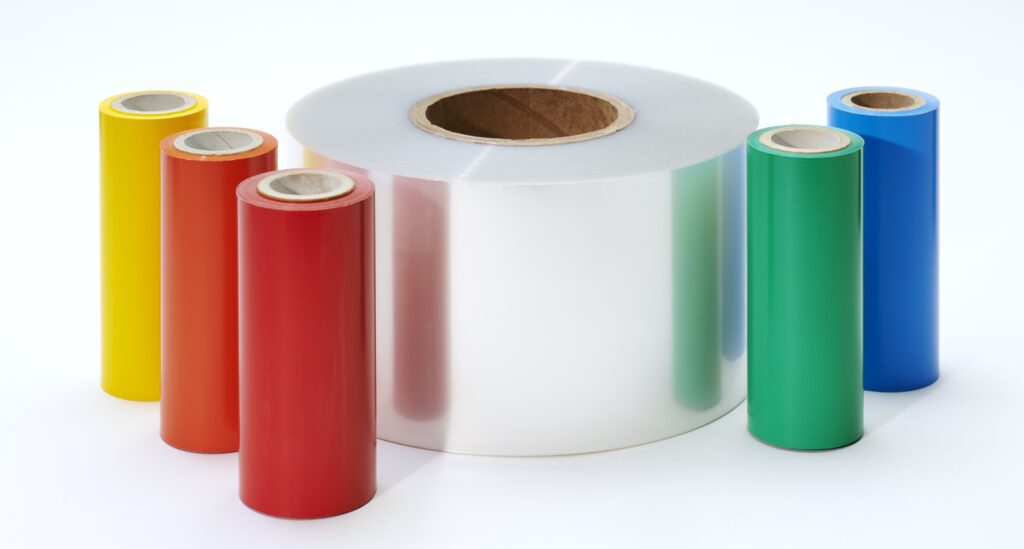
    Start with blank transfer films engineered for durable rubber belt marking.

    label software

    Create belt marking formats using label design and barcode software.

    compatible ribbons

    Use included thermal transfer ribbons to produce durable vibrant labels.

    industrial printers

    Use an industrial thermal transfer printer engineered for high duty cycles.

    Print-on-demand systems are designed for manufacturing environments where belt information changes continuously throughout production. Rather than relying on fixed inventory or pre-printed stock, these systems support dynamic marking requirements tied to production scheduling, traceability, and operational control.

    Reduce operational complexity with pre-printed labels.

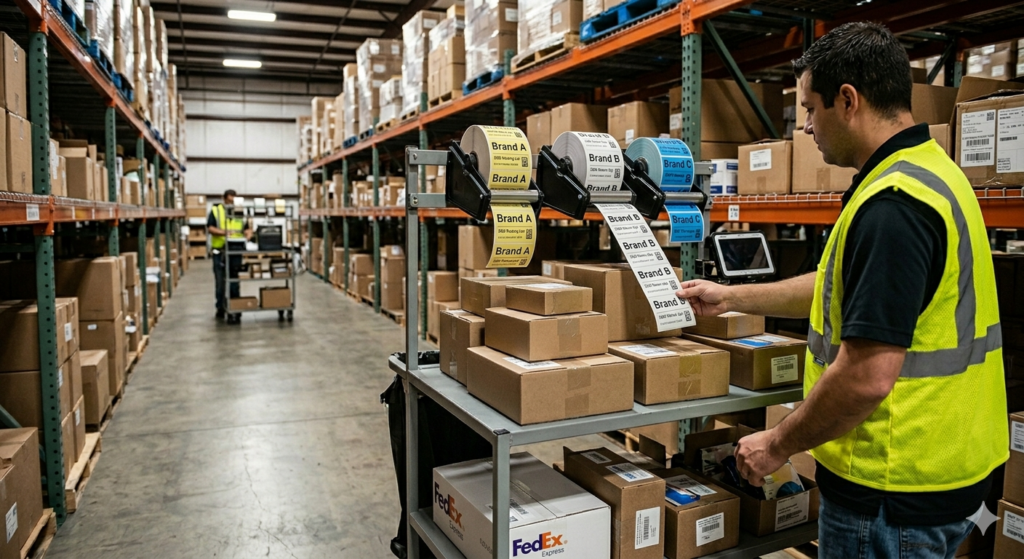
    Use pre-printed warehouse labels to apply location IDs, pallet labels, and sequential label sets without managing printing in-house. This path works best when your data is defined and your warehouse layout follows a structured system.

    A simple setup can integrate real-time labeling directly into your workflow.

    Plan your labeling system in advance, then receive labels ready to apply across your warehouse. This approach shifts the work from daily printing to upfront setup and production.

    consistency at scale

    Apply the same label formats, barcodes, and ID structures across racks, pallets, and storage locations without variation.

    efficient operations

    Eliminate the need for printers, ribbons, software, and label inventory by using labels that arrive ready to apply and scan.

    sequence management

    Use sequential beam labels and serialized label sets to maintain ordered location IDs and guarantee no duplicates.

    Use pre-printed labels when your warehouse layout is defined, your location IDs are established, and you need consistent labeling across large areas or multiple facilities. This approach supports structured storage systems, standardized pallet tracking, and efficient label rollout.

    Print labels when inventory data changes in real time.

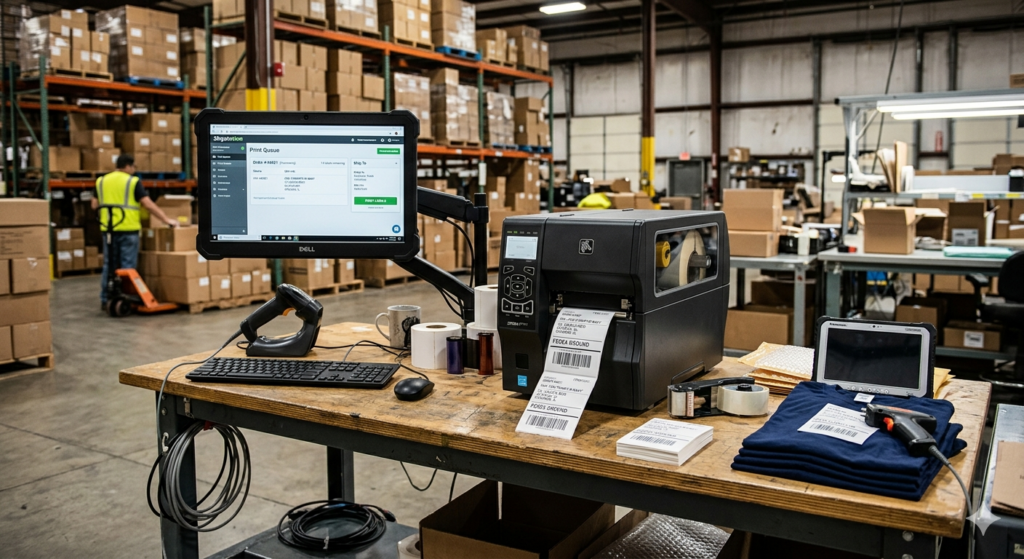
    Print warehouse labels in-house to create location IDs, pallet labels, and LPN labels as your warehouse changes. This path gives you direct control over how labels are created, updated, and applied across racks, bins, totes, and pallets.

    A simple setup can integrate real-time labeling directly into your workflow.

    durable labels

    Start with blank label stock engineered for racks, bins, totes, and pallets.

    label software

    Create warehouse label formats using label design and barcode software.

    compatible ribbons

    Use included thermal transfer ribbons to produce durable barcode labels.

    label printers

    Use a thermal transfer printer designed for warehouse label printing and daily use.

    Use print-on-demand labels when your warehouse layout changes, your team manages location IDs internally, or you need labels immediately without waiting on production. This approach supports flexible workflows, evolving storage systems, and real-time pallet and container tracking.

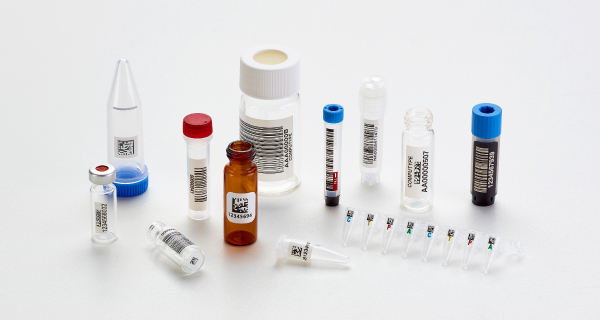
    Receive pre-barcoded tubes immediately ready-to-use.

    Receive tubes and vials with identifiers already applied through direct marking or integrated labeling. Eliminate labeling steps entirely while ensuring durable, consistent identification across storage, handling, and laboratory workflows.

    Pre-barcoded tubes for extreme durability and precision placement.

    Pre-barcoded labware removes labeling from your workflow entirely. Tubes arrive ready to use with verified identifiers, supporting faster processing, reduced handling, and consistent sample identification across storage and laboratory operations.

    consistency at scale

    Use pre-verified barcodes and markings to ensure consistent, accurate sample identification across all tubes and batches.

    efficient lab management

    Eliminate labeling steps and reduce manual handling during sample collection, processing, and storage workflows.

    labware prepโ„ข services

    Receive labware sorted, packaged, and prepared to match your workflow, including options like tare weighing and kit assembly.

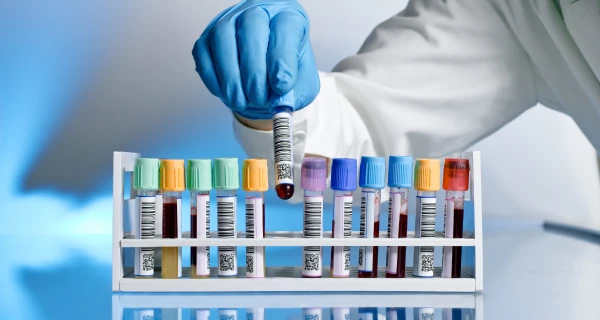
    Pre-barcoded labware fits high-throughput environments where labeling becomes a bottleneck or source of error. This includes biobanks managing large sample collections, clinical labs processing high volumes of patient samples, and research or CRO environments running automated or repeatable workflows where speed, consistency, and reduced handling drive efficiency and data integrity.

    Order pre-printed tube labels for guaranteed accuracy.

    Get tube labels professionally printed with controlled data, advanced converting, and durable materials. Eliminate in-house printing while ensuring every label meets performance requirements for laboratory use, including chemical exposure, handling, and storage conditions.

    Professionally printed laboratory tube labels for custom, sequential labels.

    Pre-printed labeling combines controlled printing, advanced converting, and durable materials to deliver consistent, ready-to-use tube labels. This approach removes variability from in-house printing and ensures every label meets your requirements for data accuracy and performance.

    unique ids

    Receive pre-printed labels with guaranteed unique barcode sequences, controlled serialization, and validated data across batches and production runs.

    custom design

    Use custom colors to organize samples, differentiate workflows, and improve visual identification across racks, boxes, and storage systems.

    durable finishing

    Use engineered label constructions with precoats and topcoats that improve resistance to chemicals, moisture, and routine laboratory handling.

    Pre-printed labeling fits laboratories that manage high volumes of consistent samples and require controlled, repeatable identification. This includes clinical labs processing patient samples, diagnostic labs running standardized assays, and research labs preparing large batches of tubes for studies or long-term storage where data does not change.

    Print tube labels on demand with real-time data.

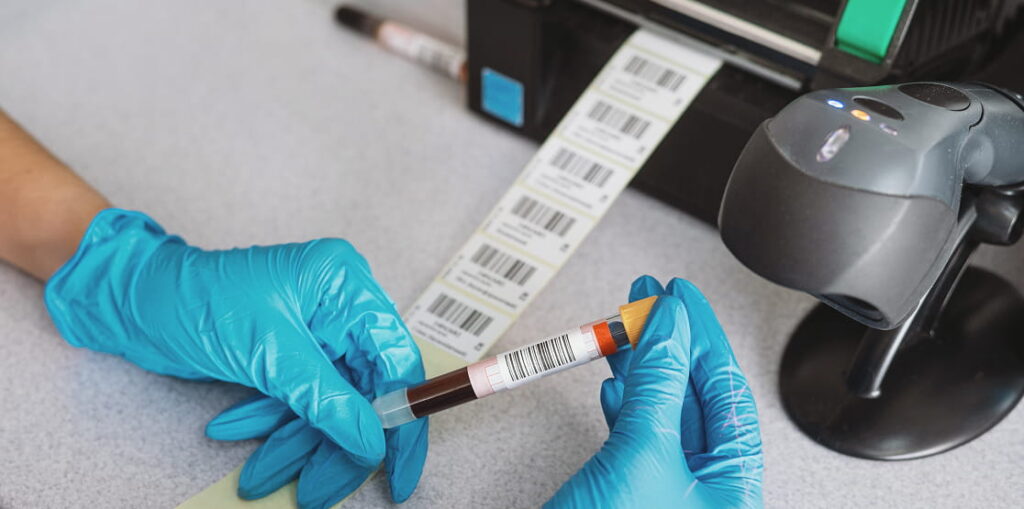
    Print tube labels as needed using live data from laboratory systems. Generate labels during sample collection, aliquoting, or processing, with unique identifiers, timestamps, and variable data applied at the point of use. This approach supports workflows where sample data changes frequently or requires immediate, accurate identification.

    A simple setup can integrate real-time labeling directly into your workflow.

    Set up a complete labeling workflow using the right materials and equipment to print and apply labels directly during laboratory processes.

    durable labels

    Start with blank label stock engineered for small diameter tubes and vials.

    label printers

    Print high-resolution barcodes and text for small-format tube labels.

    compatible ribbons

    Use included thermal transfer ribbons to produce durable barcode labels.

    tube labelers

    Integrate tube label applicators for automated print-and-apply labeling.

    Print-on-demand labeling fits laboratories that generate or modify sample data in real time. This includes research labs, clinical labs, and diagnostic environments where samples are collected, processed, and labeled on demand, and where workflows require immediate identification without waiting for pre-printed labels.

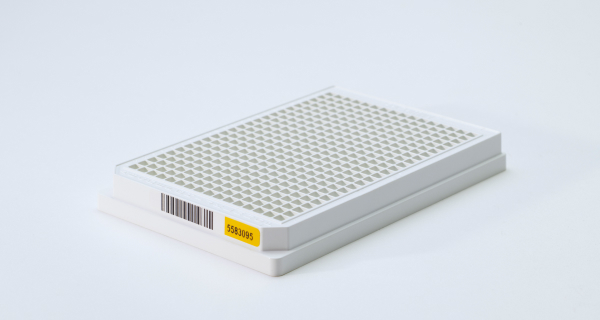
    Use pre-barcoded microplates for ready-to-use identification.

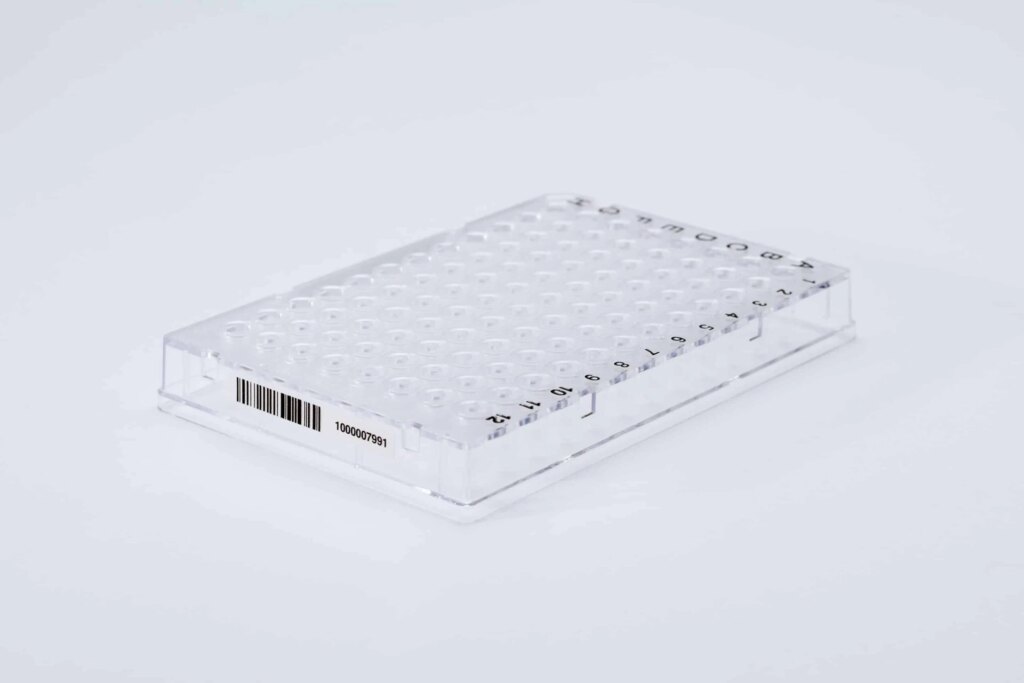
    Receive microplates with identifiers already applied, eliminating labeling steps during plate setup and processing. Ensure consistent, durable identification across assays, screening, and storage while reducing manual handling and improving workflow efficiency.

    Pre-barcoded microplates for ultimate laboratory efficiency.

    Pre-barcoded microplates arrive ready to use with verified identifiers applied before delivery. This approach removes labeling from your workflow and ensures consistent identification across plate handling, processing, and storage environments.

    laboratory efficiency

    Eliminate labeling steps during plate setup, loading, and processing workflows.

    consistent identification

    Use pre-verified plate IDs to maintain accuracy across batches and screening runs.

    integrated services

    Receive plates sorted, kitted, or prepared to match assay workflows and laboratory processes.

    Pre-barcoded microplates fit high-throughput environments where plates move rapidly through automated workflows and labeling can create delays or variability. This includes automated screening facilities, compound and plate libraries, and CROs running large-scale studies, as well as core labs managing shared plate resources where speed, consistency, and reduced handling drive efficiency and improve data integrity.

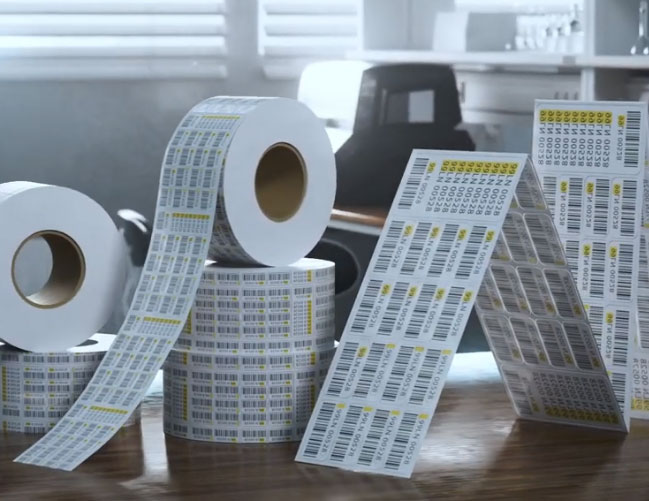
    Order pre-printed microplate labels with consistent accuracy.

    Get microplate labels professionally printed with controlled data, advanced converting, and durable materials. Ensure consistent plate identification across batches while eliminating in-house printing and reducing variability in labeling for assays, screening, and high-throughput workflows.

    Professionally printed custom microplate labels.

    Pre-printed plate labels combine controlled printing, advanced converting, and durable materials to deliver consistent, ready-to-use identification. This approach ensures every plate label meets requirements for data accuracy, layout consistency, and performance across handling and processing.

    unique ids

    Receive pre-printed plate labels with guaranteed unique IDs, controlled sequencing, and validated data across batches and runs.

    custom design

    Use color coding to differentiate assays, plate types, or workflows and improve visual organization across plate libraries.

    durable finishing

    Use engineered label constructions that resist chemicals, handling, and environmental exposure during plate processing and storage.

    Pre-printed labeling fits laboratories that run standardized plate workflows with fixed data structures. This includes screening labs running standardized assays, diagnostic labs processing consistent plate formats, and research environments where plate layouts and identifiers remain consistent across runs.

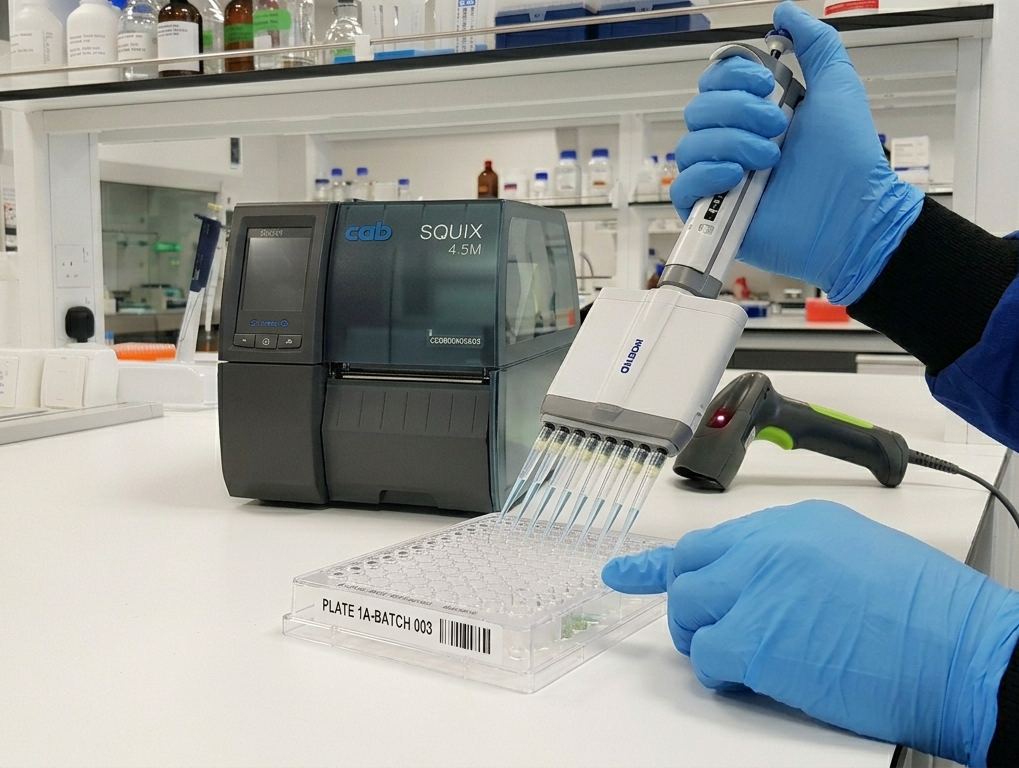
    Print microplate labels on demand with real-time data.

    Print microplate labels as needed using live data from laboratory systems. Generate labels during plate setup, sample loading, or assay preparation, with well IDs, plate IDs, and variable data applied at the point of use. This approach supports workflows where plate data changes frequently or requires immediate, accurate identification.

    A simple setup can integrate real-time labeling directly into your workflow.

    durable labels

    Blank plate labels designed for small formats, flat surfaces, and secure adhesion on plates.

    label printers

    Print high-resolution barcodes and text for plate IDs and sample tracking.

    compatible ribbons

    Thermal transfer ribbons produce durable images resistant to chemicals, moisture, and handling.

    microplate labelers

    Apply labels consistently to plates during setup or automated workflows.

    Print-on-demand labeling fits laboratories that generate or update plate data in real time. This includes screening labs, genomics workflows, and assay development environments where plates are created, modified, and labeled during processing, and where accurate, immediate identification is required.

    Print blood bag labels at collection points.

    Print blood bag labels as needed using live data from blood bank systems. Generate labels during collection, component processing, or labeling steps, with donation identification numbers, product codes, and variable data applied at the point of use. This approach supports workflows where blood data updates in real time and requires immediate, accurate identification.

    A simple setup can integrate real-time labeling directly into your workflow.

    Set up a complete labeling workflow using the right materials and equipment to print and apply labels directly during blood collection, component processing, and blood bank handling workflows.

    durable labels

    Start with blank label stock engineered for flexible PVC blood bags.

    label printers

    Print high-resolution barcodes and text for complex blood label layouts.

    compatible ribbons

    Use included thermal transfer ribbons to produce durable barcode labels.

    label software

    Integrate barcode software to generate ISBT 128 labels and DIN data.

    Print-on-demand labeling fits blood banks and collection centers that generate or update donation data in real time. This includes blood collection sites, processing labs, and transfusion services where blood bags are labeled on demand, and workflows require immediate, accurate identification without relying on pre-printed labels.

    Control blood bag labeling with pre-printed formats.

    Get blood bag labels professionally printed with controlled data, advanced converting, and durable materials. Eliminate in-house printing while ensuring every label meets performance requirements for blood bank use, including handling, cold storage, and transfusion.

    Guarantee no duplicates with professionally printed blood bag labels.

    Pre-printed labeling combines controlled printing, advanced converting, and durable materials to deliver consistent, ready-to-use blood bag labels. This approach removes variability from in-house printing and ensures every label meets requirements for DIN accuracy, barcode performance, and reliable identification across blood bank workflows.

    consistency at scale

    Receive pre-printed labels with guaranteed unique DIN sequences, controlled serialization, and validated data across batches and production runs.

    accurate din formats

    Maintain consistent DIN formats to ensure accurate identification across blood bags, segments, and associated components.

    durable finsihing

    Use engineered label constructions designed to resist edge lift, moisture, and routine handling, helping maintain adhesion and readability throughout blood collection.

    Pre-printed labeling fits blood banks and collection centers that manage high volumes of donations and require controlled, repeatable identification. This includes blood collection sites, processing facilities, and transfusion services where standardized labeling, consistent DIN assignment, and stable data support efficient, validated workflows without frequent changes.

    Support accurate workflows with real-time labeling.

    In laboratory environments, data often isnโ€™t final until the last momentโ€”at the bench, at the instrument, or during sample handling. Printing labels on demand helps ensure each tube or vial reflects the most accurate information, while fitting naturally into the way your work actually happens.

    Support accurate workflows with real-time labeling.

    In laboratory environments, data often isnโ€™t final until the last momentโ€”at the bench, at the instrument, or during sample handling. Printing labels on demand helps ensure each tube or vial reflects the most accurate information, while fitting naturally into the way your work actually happens.

    A simple setup can integrate real-time labeling directly into your workflow.

    In laboratory environments, data often isnโ€™t final until the last momentโ€”at the bench, at the instrument, or during sample handling. Printing labels on demand helps ensure each tube or vial reflects the most accurate information, while fitting naturally into the way your work actually happens.

    compatible ribbons

    Compatible resin ribbons ensuring clear, durable print for barcodes and text

    compatible ribbons

    Compatible resin ribbons ensuring clear, durable print for barcodes and text

    In laboratory environments, data often isnโ€™t final until the last momentโ€”at the bench, at the instrument, or during sample handling. Printing labels on demand helps ensure each tube or vial reflects the most accurate information, while fitting naturally into the way your work actually happens.

    Support accurate workflows with real-time labeling.

    In laboratory environments, data often isnโ€™t final until the last momentโ€”at the bench, at the instrument, or during sample handling. Printing labels on demand helps ensure each tube or vial reflects the most accurate information, while fitting naturally into the way your work actually happens.

    A simple setup can integrate real-time labeling directly into your workflow.

    compatible ribbons

    Compatible resin ribbons ensuring clear, durable print for barcodes and text

    compatible ribbons

    Compatible resin ribbons ensuring clear, durable print for barcodes and text

    compatible ribbons

    Compatible resin ribbons ensuring clear, durable print for barcodes and text

    compatible ribbons

    Compatible resin ribbons ensuring clear, durable print for barcodes and text

    In laboratory environments, data often isnโ€™t final until the last momentโ€”at the bench, at the instrument, or during sample handling. Printing labels on demand helps ensure each tube or vial reflects the most accurate information, while fitting naturally into the way your work actually happens.

    Support accurate workflows with real-time labeling.

    In laboratory environments, data often isnโ€™t final until the last momentโ€”at the bench, at the instrument, or during sample handling. Printing labels on demand helps ensure each tube or vial reflects the most accurate information, while fitting naturally into the way your work actually happens.

    A simple setup can integrate real-time labeling directly into your workflow.

    In laboratory environments, data often isnโ€™t final until the last momentโ€”at the bench, at the instrument, or during sample handling. Printing labels on demand helps ensure each tube or vial reflects the most accurate information, while fitting naturally into the way your work actually happens.

    durable labels

    Durable labels that stay attached through handling, storage, or cryogenic conditions

    compatible ribbons

    Compatible resin ribbons ensuring clear, durable print for barcodes and text

    reliable printer

    Compact, consistent, durable thermal transfer printing at the point of use

    label software

    Label management software to format labels and connect to sample data or LIMS

    In laboratory environments, data often isnโ€™t final until the last momentโ€”at the bench, at the instrument, or during sample handling. Printing labels on demand helps ensure each tube or vial reflects the most accurate information, while fitting naturally into the way your work actually happens.

    Request a quote

    Take advantage of our volume discounts for bulk orders. Reach out to us for a personalized quote tailored to your needs.

    "*" indicates required fields
    This field is for validation purposes and should be left unchanged.