
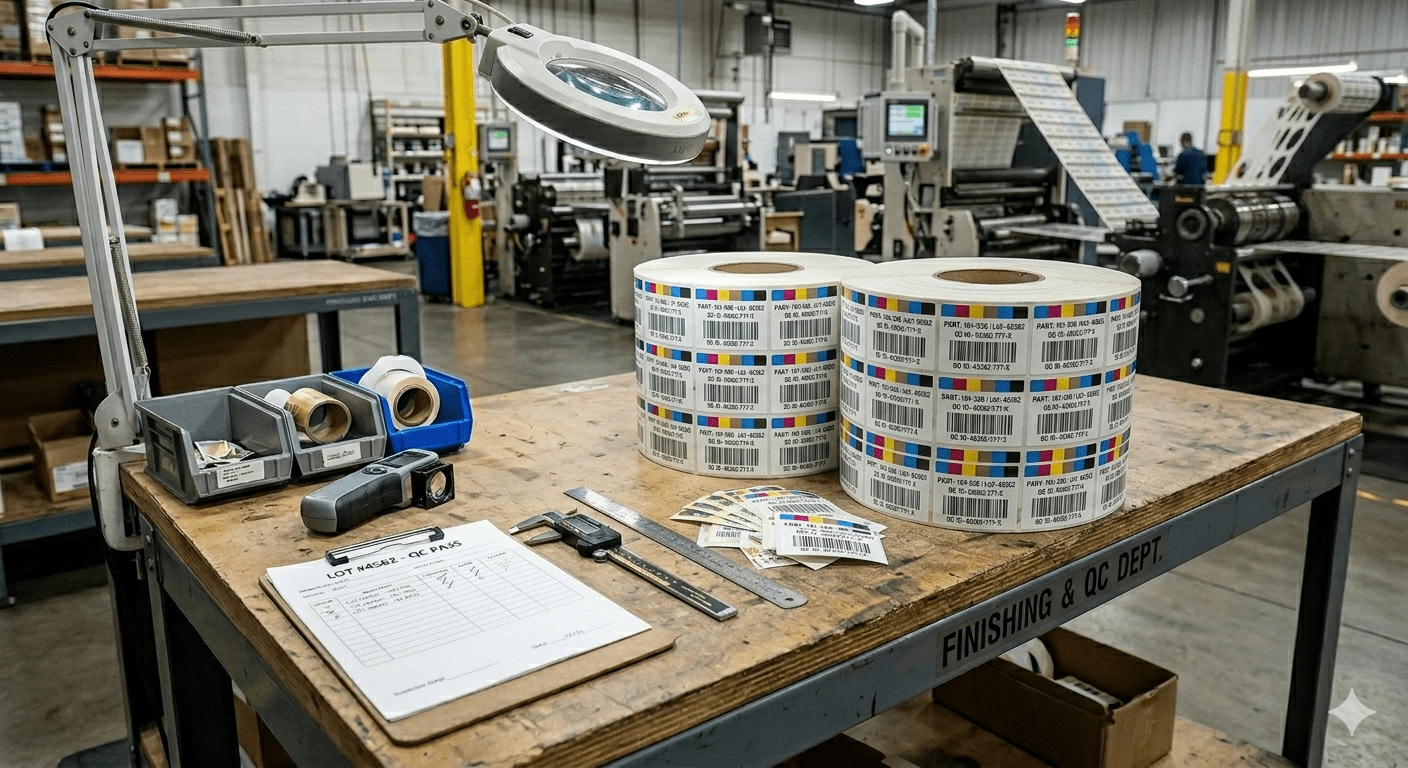
When evaluating custom label manufacturers, it is easy to focus on comparing companies first. But what matters most is how well a label performs in your environment. Exposure to moisture, chemicals, temperature changes, and handling all impact how well a label holds up over time.
Not all labels are built the same. Materials, adhesives, printing methods, and finishing all play a role in label durability and performance. Understanding these factors makes it easier to compare manufacturers based on what actually matters, not just what is listed in a catalog.
To make the comparison easier, we evaluated five custom label manufacturers based on materials, customization, printing technologies, and finishing capabilities. The table below breaks down how they stack up so you can quickly find the right fit.
company
customization
materials
printing
best fit
1
Application-driven customization across materials and adhesives for exact use conditions
Paper, polypropylene, polyethylene, polyester, polyimide, vinyl, nylon
Flexographic, digital offset, digital inkjet, thermal transfer
Performance-driven applications and complex labeling environments
2
Broad customization across packaging formats with flexible materials and design
Paper, polypropylene, polyester
Flexographic, digital, thermal, lithographic
Consumer products and packaging
3
Customization within defined options for shapes, materials, and finishes
Paper, polypropylene, polyester, vinyl
Flexographic and digital
Packaging and branding focused applications
4
Limited customization for standard sizes, materials, and formats
Paper, polypropylene, polyester, vinyl
Flexographic and digital
Quick turn projects and standard label needs
5
Minimal customization for standard thermal label sizes and formats
Paper and polypropylene
Thermal transfer and digital
Warehousing, logistics, and barcode labeling
Computype
Computype takes a different approach than most custom label manufacturers. Rather than starting with a catalog of standard products, the focus is placed on how the label will actually be used. That includes evaluating the environment, the surface, the workflow, and the long-term performance requirements before a solution is defined.
This becomes especially important when labels need to do more than just look good. Many applications involve multiple stress factors at once. Exposure to chemicals, temperature changes, abrasion, and automated handling can all impact performance. Designing with those combined conditions in mind helps avoid common failure points.
Capabilities extend beyond materials and printing. A wide range of face stocks are available, including paper and multiple film options, along with several printing methods that support both high-volume production and variable data. On the converting side, flexibility in shapes, formats, and finishing allows labels to fit into real workflows, supported by verification steps like counting, grading, and gap checking.
Additional capabilities such as clean room production, barcode verification systems, and support for regulated environments add another layer of control. This helps ensure labels remain consistent, readable, and reliable in critical applications.
Material and Print Capabilities
Broad material selection including paper and durable films, supporting a wide range of applications from standard labeling to more demanding environments. Flexographic, digital offset, digital inkjet, and thermal transfer printing, allowing for both high-volume production and variable data requirements.
Converting and Finishing
Advanced converting and finishing capabilities include custom die cutting, perforating, slitting, multi-layer constructions, and flexible formats such as rolls, sheets, and fan-folded stacks. Verification steps like counting, grading, and gap checking support consistency and downstream automation.
Best Fit
Applications where label performance is critical, especially in challenging environments that require durability, consistency, and seamless integration into existing workflows.
Resource Label Group
Resource Label Group operates as a large network of label companies across North America. Their strength comes from scale, offering a wide range of packaging and labeling solutions across many industries, especially consumer products.
They provide a mix of pressure-sensitive labels, shrink sleeves, and packaging formats, which makes them a strong option for brands looking to manage multiple packaging components through one supplier. Their focus is often on design, branding, and production at scale rather than highly specialized label performance.
Because they operate as a network of companies, capabilities can vary depending on the location and division you work with. This can work well for large programs but may require more coordination for highly specific needs.
Material and Print Capabilities
Supports common label materials with a mix of flexographic, digital, thermal, and lithographic printing.
Converting and Finishing
Standard converting with decorative finishes like embossing, foil stamping, and coatings focused on visual presentation.
Best Fit
Consumer product labeling and packaging programs that require scale, branding, and multiple label formats.
Consolidated Label
Consolidated Label is known for quick turnaround times and a wide range of customization options. They make it easy for customers to order labels in different shapes, materials, and finishes, which work well for businesses managing multiple product lines.
Their strength is in flexibility and accessibility. Customers can move quickly from design to production, making them a good fit for packaging and branding applications where speed and appearance are important.
While they offer durable materials, the focus is typically on decorative and consumer-facing labels rather than highly specialized performance requirements.
Material and Print Capabilities
Offers paper and film materials with digital and flexographic printing.
Converting and Finishing
Standard converting with decorative finishes like laminates, gloss, and foil options.
Best Fit
Consumer products, packaging, and applications where design flexibility and presentation are a priority.
Discount Labels
Discount Labels is built around speed and efficiency. Their model focuses on delivering custom labels quickly through a nationwide distributor network, making them a strong option when turnaround time is the main priority.
They offer a wide selection of materials and standard customization options, along with fast production timelines. This approach works well for projects that fit within common label formats and do not require extensive engineering or specialized construction.
Because the focus is on speed and volume, more complex requirements may need to be adapted to existing capabilities rather than built from the ground up.
Material and Print Capabilities
Supports common materials with flexographic and digital printing.
Converting and Finishing
Standard die cutting and finishing designed for fast, high-volume output.
Best Fit
Fast turnaround projects, distributor programs, and consumer packaging labels.
Smith Corona
Smith Corona focuses heavily on thermal labeling and barcode solutions. Their model is centered on producing high-volume labels at competitive prices, supported by a vertically integrated manufacturing setup.
This makes them a strong option for warehousing, logistics, and applications where cost and consistency are key. Their product line is built around standard formats designed to work with thermal printers, which helps simplify ordering and production.
The tradeoff is less flexibility when it comes to materials, shapes, and specialized performance needs. For applications that require more customization or durability across multiple conditions, options may be more limited.
Material and Print Capabilities
Primarily paper and polypropylene materials with thermal transfer and digital printing.
Converting and Finishing
Basic converting with standard formats such as fanfold labels.
Best Fit
Warehousing, logistics, and high-volume barcode labeling.
Choosing the Right Label Manufacturer
Not all custom label manufacturers approach labeling the same way. Some focus on speed and volume. Others prioritize catalog options and ease of ordering. And some take a more application-driven approach, building labels around how they will actually be used.
The right choice comes down to what your label needs to do. If your application is straightforward and fits within standard formats, many manufacturers can get the job done. But when labels need to perform in more demanding conditions or fit into a specific workflow, those differences start to matter.
Computype stands out by focusing on how labels perform in real environments, not just how they are produced. By aligning materials, adhesives, print methods, and converting with the application, the result is a label that works the way it should from day one and continues to perform over time.
If you are evaluating custom label manufacturers, take a closer look at how each company approaches your specific use case. The better a label is matched to your environment and process, the fewer issues you will run into down the line. Take the next step and see how the right label performs in your environment. Request a sample or connect with a labeling expert to walk through your requirements.
Connect with our labelling experts today
Blog article form
"*" indicates required fields