Xylene Resistant Microscope Slide Labels – 0.875″ x 0.5625″ – 1″ Printer
From $234.13
/ kit
Kit Contents:
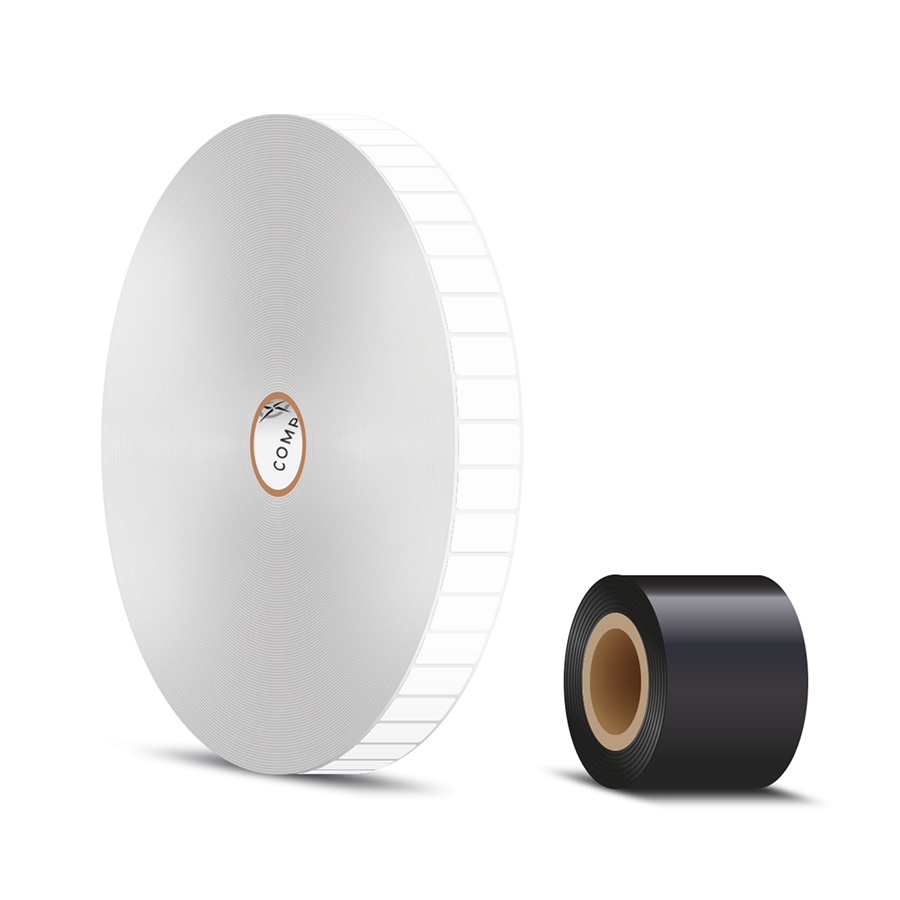
- 1 roll of 3500 labels
- 1 thermal transfer ribbon
| Kit Quantity | Price Per Kit |
|---|---|
| 2-5 | $234.13 |
| 6-10 | $195.11 |
Xylene resistant labels for histology slide identification.
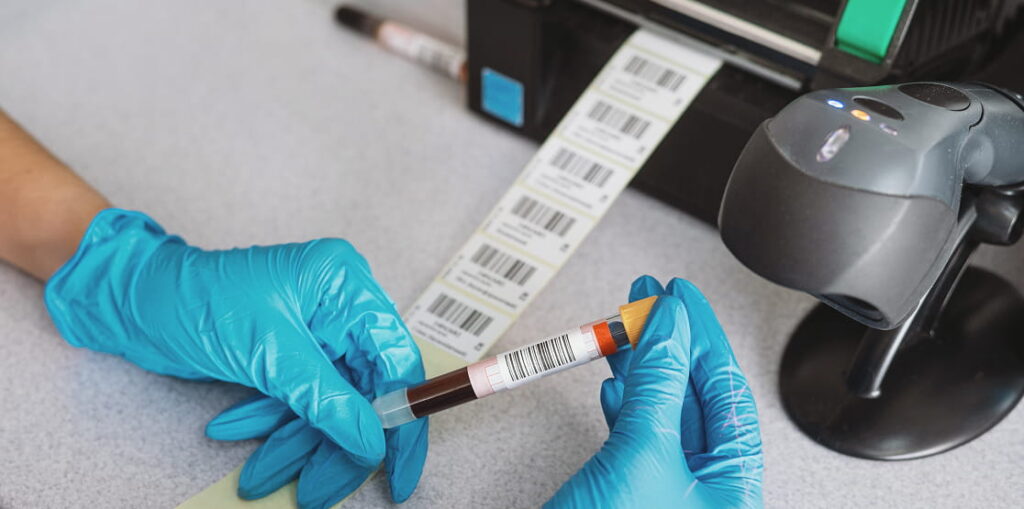
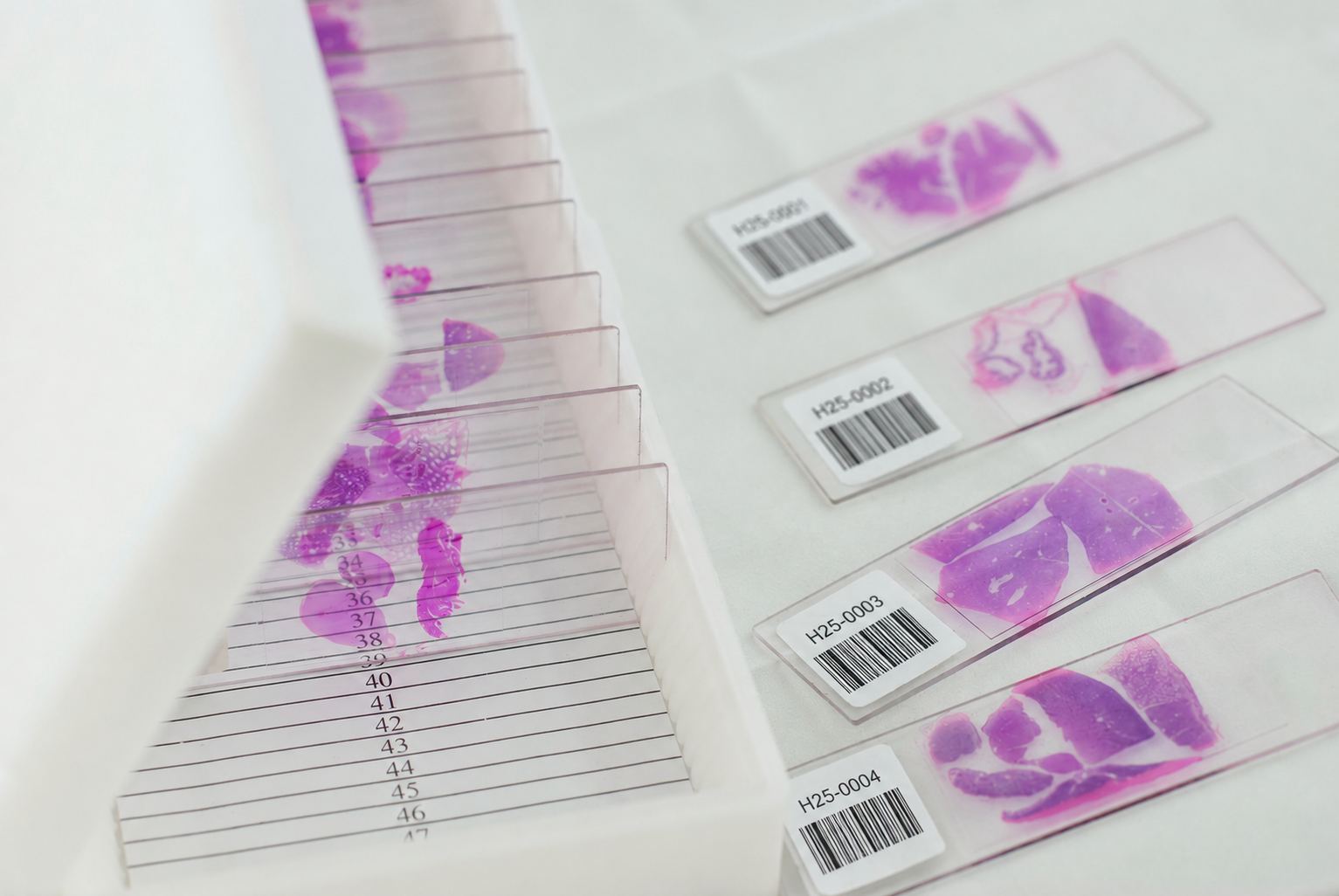
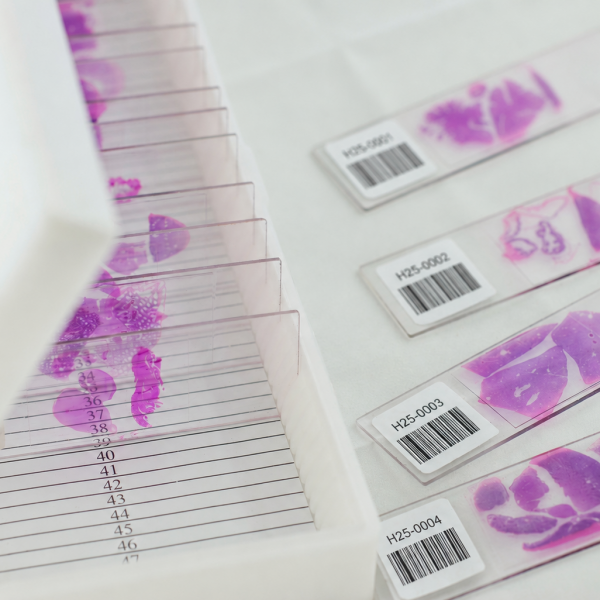
Histology laboratories require microscope slide labels that remain legible and securely bonded throughout tissue preparation and staining. During common protocols such as H&E staining, slides encounter xylene, alcohol, elevated temperatures, and repeated handling. Xylene resistant microscope slide labels support consistent specimen identification while maintaining barcode readability through processing, staining, scanning, and long-term archiving.
microscope slide labels
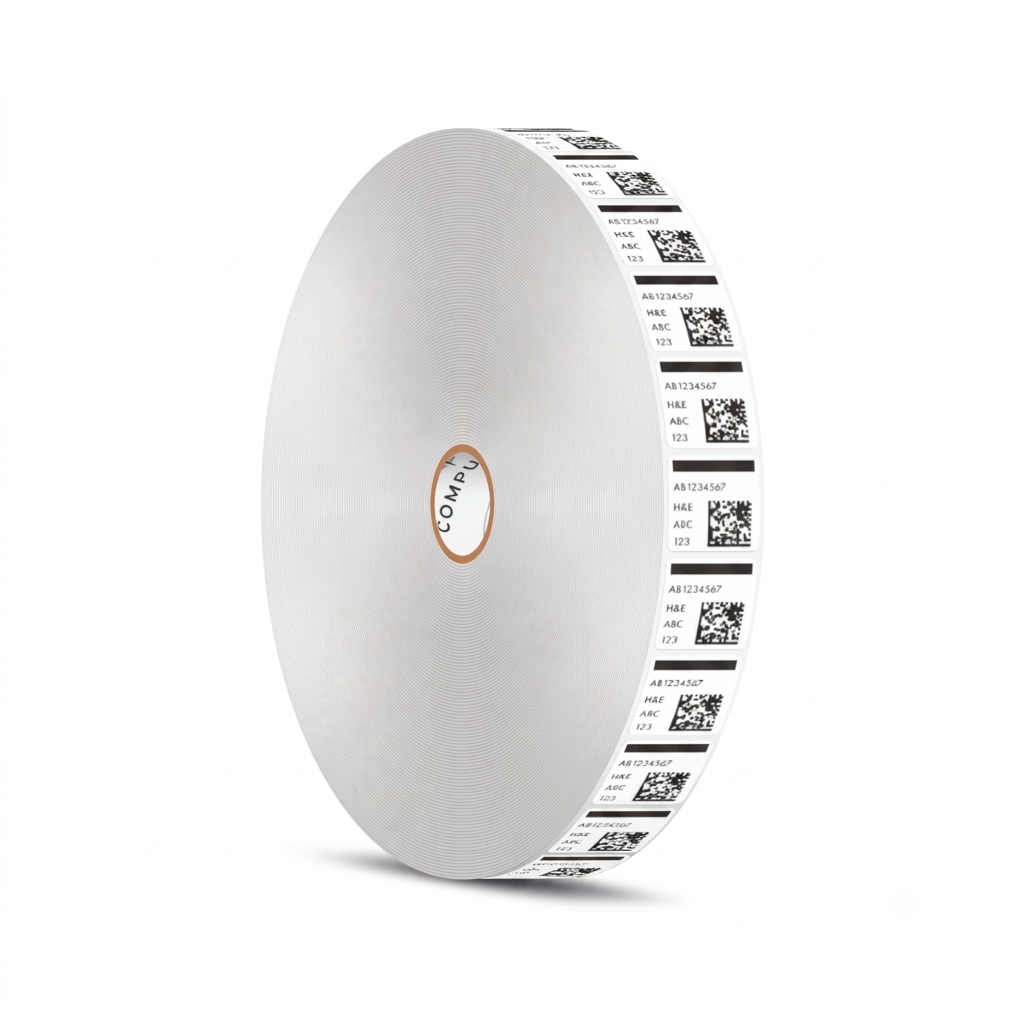
White gloss microscope slide labels combine durable synthetic facestock with a permanent specialty adhesive to support reliable identification on glass slides. This construction resists xylene, staining reagents, and elevated temperatures while maintaining strong adhesion and high-contrast thermal transfer barcode printing throughout histology preparation and slide processing workflows.
resin transfer ribbons
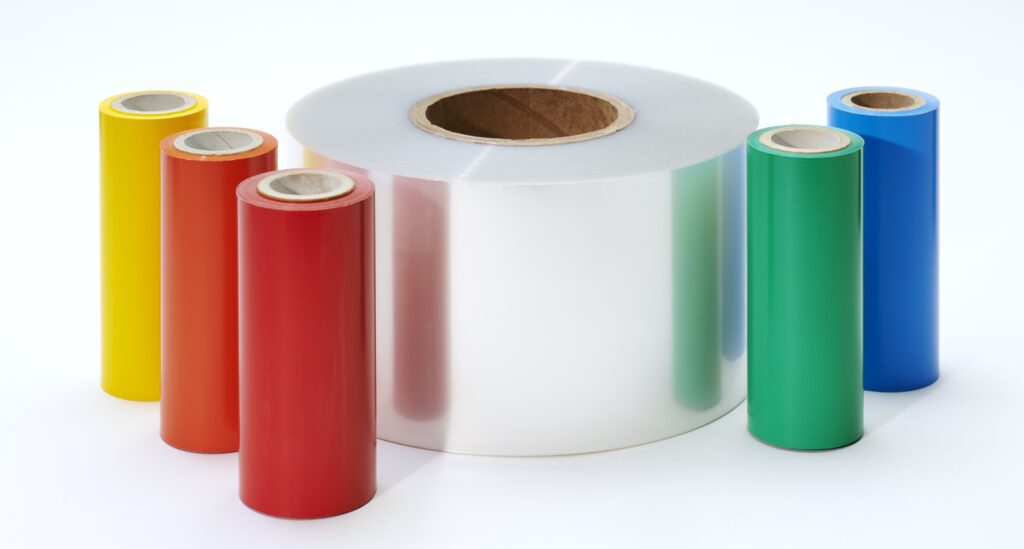
Resin ribbons designed for microscope slide labels ensure durable printing on polyester microscope slide labels. Using ribbons engineered for compatibility with both the printer and the label material improves chemical resistance, print clarity, and barcode performance. Proper ribbon selection helps maintain readable specimen identification.
Xylene resistant labels for histology staining.
Durable microscope slide label materials maintain adhesion and readable barcodes when slides encounter xylene during tissue clearing and staining procedures.
High-temperature durability for slide processing.
Engineered label constructions tolerate heat from slide drying ovens and staining equipment without curling or adhesive failure.
Secure adhesion on glass microscope slides.
Permanent specialty adhesive bonds securely to glass slides, helping laboratories maintain consistent specimen identification throughout staining and storage.
Durable slide labels built for solvent exposure.
Histology slide labels must endure aggressive solvents, elevated temperatures, and constant handling throughout specimen preparation and staining. Durable construction combined with a specialty adhesive provides reliable adhesion to glass slides while protecting printed specimen identification during H&E staining, solvent exposure, and routine laboratory processing.
Histology workflows expose microscope slides to xylene and other aggressive solvents during tissue clearing and staining. Synthetic face stock resists chemical degradation while maintaining adhesion and readable barcode printing throughout slide preparation and staining procedures.
Slide preparation commonly involves drying ovens, heated staining equipment, and antigen retrieval processes. Durable materials tolerate elevated temperatures up to 300°F without curling, shrinking, or compromising adhesive performance on glass slides.
Laboratory technicians routinely handle, scan, and archive microscope slides throughout diagnostic workflows. Durable label construction protects printed specimen information from scratching, smudging, and wear during routine slide handling and storage.
durable label materials
Xylene resistant microscope slide labels use durable face stocks, protective coatings, and permanent adhesives designed for laboratory workflows involving harsh histology chemicals and solvent exposure. Xylene can quickly damage standard paper labels, distort printed information, weaken adhesives, or reduce barcode readability during slide preparation and staining procedures.
These materials support reliable slide identification throughout staining, processing, transport, storage, and laboratory handling. Durable thermal transfer coatings help maintain sharp barcode definition and clear text while resisting chemical exposure, moisture, abrasion, and repeated handling common in histology environments.
Material construction also plays an important role in long-term print performance. Specialized thermal transfer surfaces support durable resin ribbon imaging capable of resisting solvent contact without excessive smearing or image breakdown. Combined with compatible adhesives and ribbon formulations, these label materials help maintain dependable slide identification performance in xylene-intensive laboratory applications.
label performance testing
Xylene resistant microscope slide labels undergo performance testing focused on solvent resistance, print durability, and adhesion stability during histology and laboratory processing workflows. Exposure to xylene and related chemicals can quickly compromise standard label constructions, especially when combined with heat, moisture, and repeated handling.
Testing helps evaluate how label materials, adhesives, and printed images respond to solvent exposure, abrasion, temperature variation, staining procedures, and routine laboratory contact. Small-format microscope slide labels require highly consistent print performance because even minor image degradation can affect barcode scanning, sample identification, and workflow efficiency.
Testing also evaluates compatibility between the label material, resin ribbon, and printer configuration used during thermal transfer printing. These combined elements influence image transfer quality, ribbon release, print durability, and feeding consistency. Validating the complete combination helps support dependable xylene-resistant labeling performance while reducing common printing and durability issues in histology environments.
resin transfer ribbon
Thermal transfer microscope slide labels rely on the right ribbon combination to produce sharp, durable print that stays readable through handling, storage, staining, and processing. These labels include a compatible resin transfer ribbon selected to match the label material, coating, and intended environment. Resin ribbons create highly durable images with strong resistance to abrasion, moisture, chemicals, and smudging compared to standard wax formulations.
Ribbon compatibility affects more than print quality. The ribbon must release correctly from the label surface, transfer cleanly at the proper heat settings, and maintain consistent barcode and text definition across small slide label formats. Treating ribbons as interchangeable often leads to poor image durability, excessive printhead wear, ribbon wrinkling, or inconsistent scans.
Each ribbon pairing supports reliable thermal transfer performance while helping maintain image clarity throughout laboratory workflows, storage conditions, and downstream processing steps.
printer compatibility
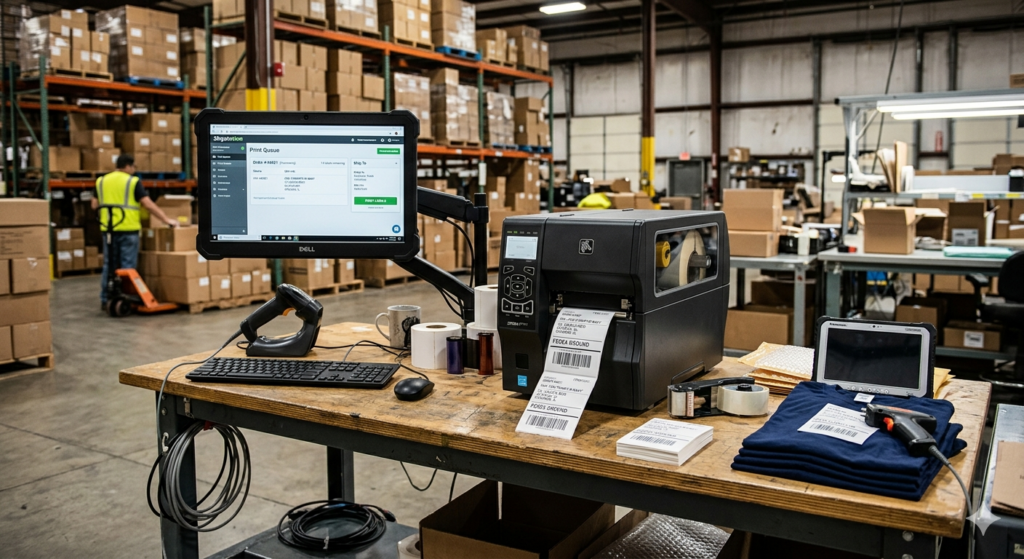
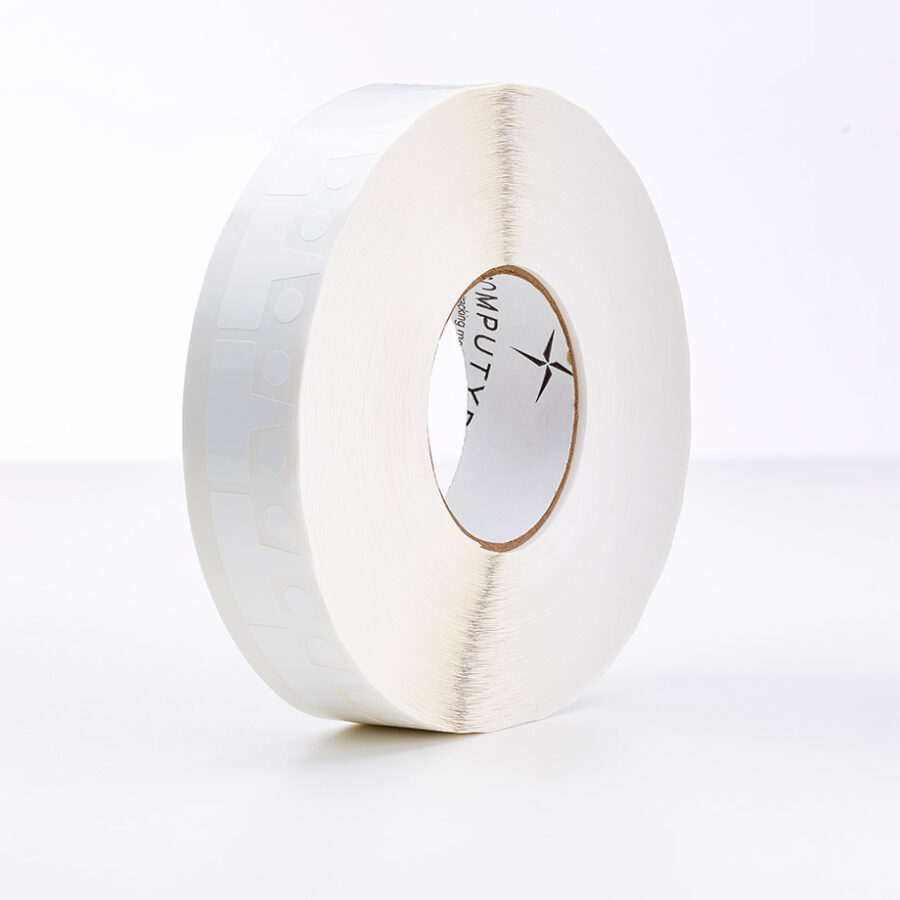
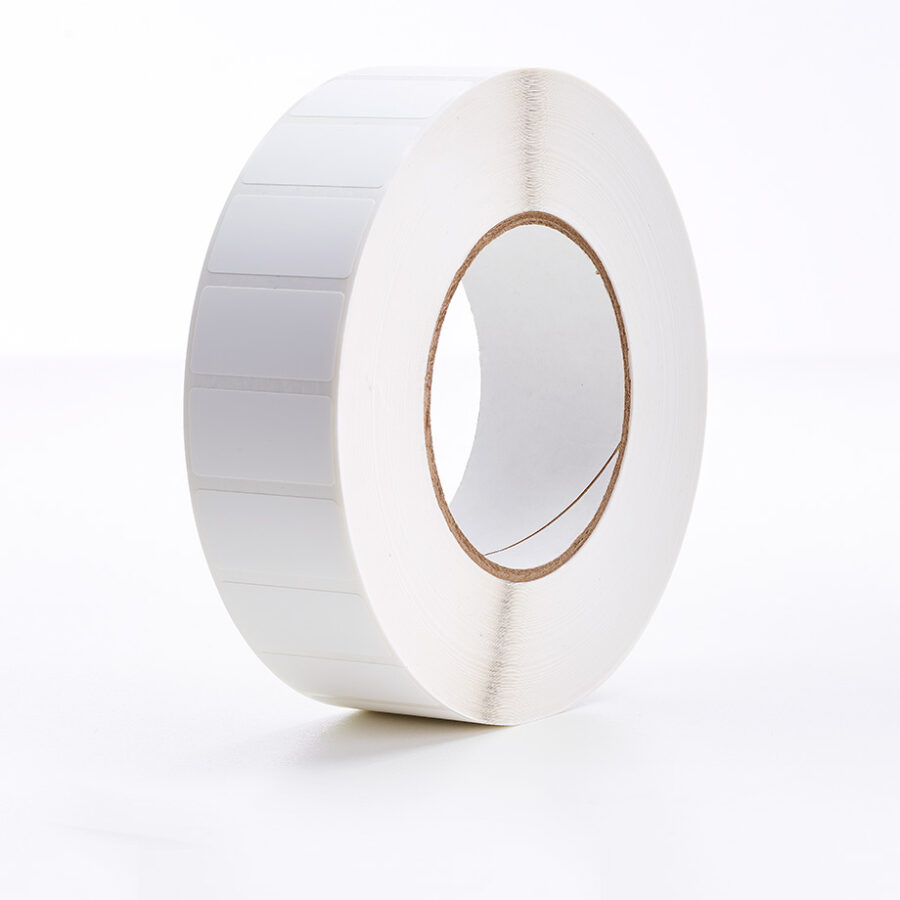
These microscope slide labels use a 1-inch core configuration designed for compact desktop thermal transfer printers commonly used in laboratory environments, including printers such as the Zebra ZD Series and TSC TC Series. Label construction, ribbon selection, adhesive performance, and printer settings all work together to support smooth feeding, accurate print placement, and consistent barcode quality.
Compatibility between the label, ribbon, and printer plays a major role in long-term print reliability. Labels that appear similar on paper can respond very differently under heat, pressure, and print speed variations. Ribbon coatings, printer calibration, media thickness, and adhesive characteristics all influence performance during printing and application.
These label and ribbon combinations undergo testing with preferred printer models to help reduce feeding issues, ribbon tracking problems, print inconsistencies, and barcode failures while maintaining dependable performance on small-format microscope slide labels.

Let’s get labeling.
Have questions? We’re here to help.
Contact us to connect with a specialist who understands your industry and can provide the right solutions for your business. Let’s start a conversation.