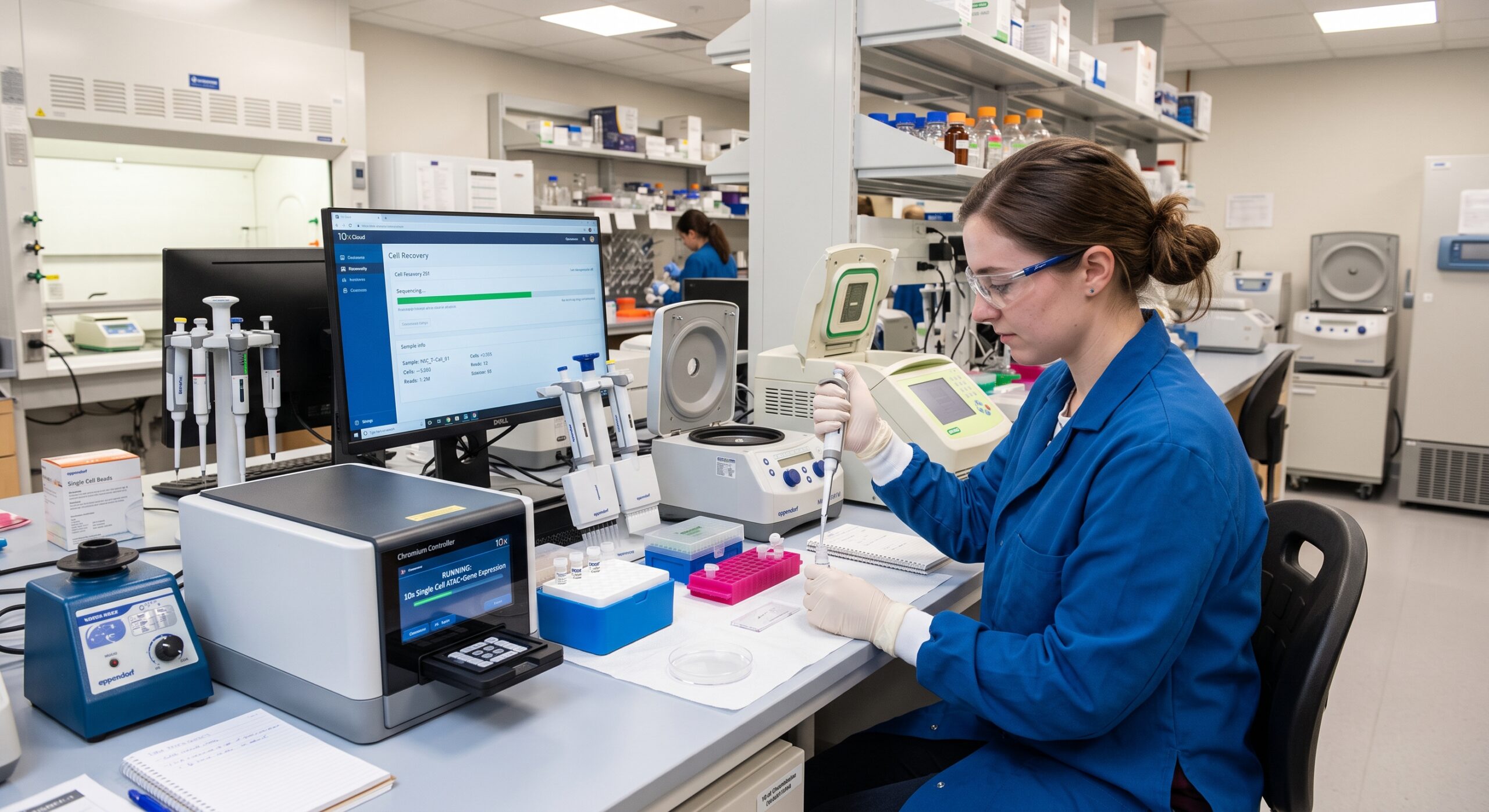
Single-cell sequencing takes identification to an extraordinary level, using molecular barcodes to distinguish individual cells and connect sequencing reads to their source. But before any of that happens, researchers still need to identify something much more tangible: the physical samples moving through the lab.
As researchers divide samples and move material between containers, aliquot labels give each resulting sample a distinct physical identity while preserving its connection to the original source. Those samples may eventually move into increasingly small labware, where PCR labels identify tubes, strips and plates through preparation and downstream processing. Barcode size, label materials, storage conditions and sample volume all shape that identification strategy before a sample ever reaches sequencing.
It starts with a physical sample.
Before a sample reaches a single-cell assay, researchers need a reliable way to identify the physical material in front of them. That material can take many forms depending on the study and workflow, from tissue and blood to prepared cell or nuclei suspensions. Whatever the starting point, its identity needs to connect the physical sample with the information recorded about it.
That connection can start with something as simple as a Sample ID on a tube. The physical label doesn’t need to carry every piece of information associated with the sample. A unique identifier can connect the container to a much richer digital record, while custom text gives researchers useful information they can read without scanning. Color coding can add another visual cue when a workflow benefits from distinguishing sample groups, batches or other predefined categories.
For workflows that require greater consistency or higher throughput, pre-barcoded labware can establish that identity before samples enter the process. Tubes and plates can arrive with unique barcodes, human-readable identifiers and other required information already applied or directly marked. Instead of creating and applying identifiers as samples move through the lab, researchers can start with labware that already has a unique, machine-readable identity.
One sample can quickly become many.
A single physical sample doesn’t always stay that way for long. During single-cell sample preparation, researchers may isolate cells or nuclei, divide material into aliquots, transfer samples between containers or create separate preparations for different parts of an experiment. One starting sample can quickly produce several related physical items moving through the lab.
That creates an identification challenge beyond simply knowing what each tube contains. Researchers also need to distinguish one aliquot or derived sample from another while maintaining its connection to the original source. In sample management, these connections often form parent-child relationships: the original sample acts as the parent, while aliquots and other materials derived from it become children. Further processing can add additional generations and relationships.
Giving every physical item a unique identifier helps preserve those distinctions. Two aliquots from the same sample may share important information, but they still represent two separate objects that can move to different locations, undergo different processes or serve different purposes.
Unique or serialized barcodes provide that individual identity, while digital records maintain the relationships between identifiers. Custom text and color coding can add useful visual context, and pre-barcoded tubes or plates can establish unique identities before researchers divide or transfer the sample.
The container gets smaller—and the workflow gets bigger.
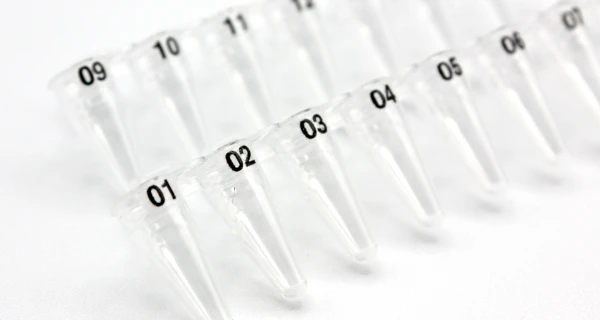
As samples move through preparation, researchers may leave larger collection and storage containers behind and begin working with much smaller labware. Single-cell workflows can involve microcentrifuge tubes, 0.2 mL PCR tubes and strips, and 96-well plates, depending on the method and stage of preparation. At the same time, aliquoting and higher-throughput processing can increase the number of individual samples and containers that researchers need to distinguish.
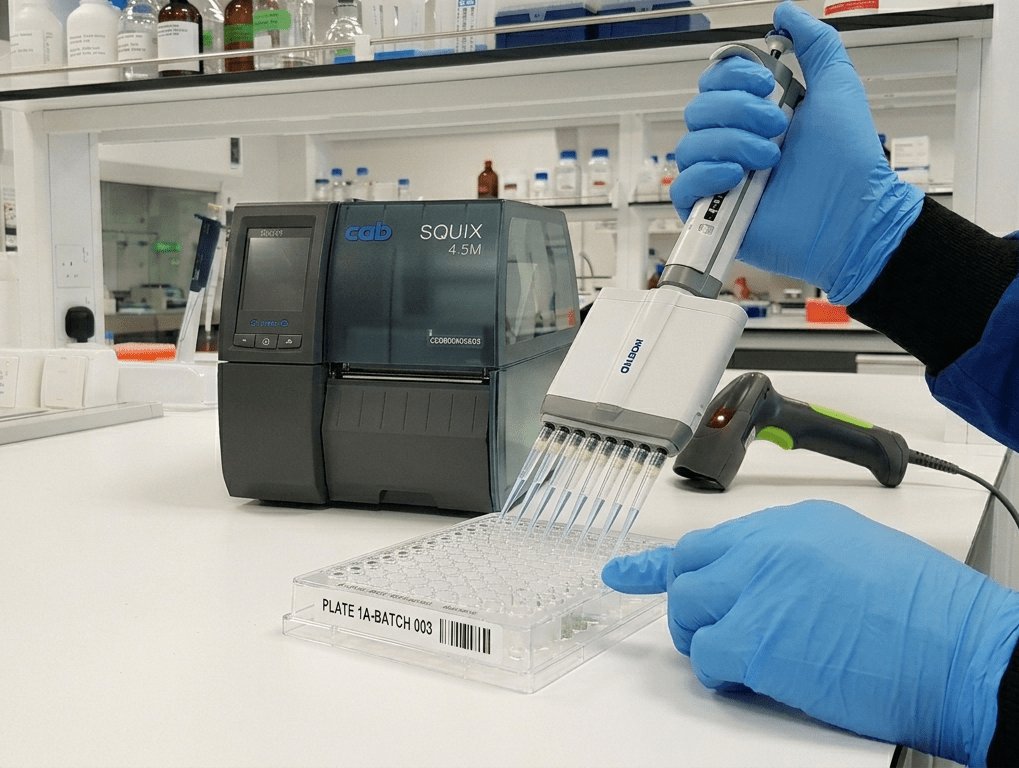
Small labware leaves little room for identification. A label needs to fit the available surface without interfering with normal handling, and a machine-readable code needs enough space and print quality for reliable scanning. Tiny, curved PCR tubes make those requirements especially demanding.
Labels designed specifically for small-format labware can fit identifiers into these limited spaces. Compact 2D barcodes such as Data Matrix codes can encode unique IDs in a small area, while high-resolution printing helps maintain the crisp edges and spacing that scanners need to decode the symbol. Tube-and-cap label sets can also carry identification onto the top of a tube when the workflow benefits from an additional visible or scannable identifier.
As sample volumes grow, pre-barcoded tubes, strips and plates can reduce the amount of identification work researchers need to complete during sample preparation. Instead of fitting another labeling task into an increasingly busy workflow, labs can start with uniquely identified labware sized and configured for the containers they already use.
Some samples have to wait.
Not every sample moves directly from preparation into a single-cell assay. Researchers may cryopreserve cells or other material for later single-cell processing, store samples while coordinating experiments, or hold prepared materials under the conditions required by a specific protocol. When a workflow includes cold or cryogenic storage, the physical identifier has to withstand those conditions along with the sample.
Cold storage places demands on both the label material and its adhesive. The label needs to remain attached and readable as temperatures drop, while the adhesive needs to maintain a reliable bond to the tube or vial. Moisture and frost can complicate that bond even further, particularly when researchers need to identify material that has already reached frozen storage.
This makes the timing of label application just as important as the eventual storage temperature. Operating temperature describes the conditions a label can withstand after application, while application temperature describes how cold the surface can be when someone applies it. A label rated for -80°C storage, for example, may still require application at a much warmer temperature.
Labs can account for those conditions in several ways. Cryogenic label constructions can support samples that receive their identifiers before entering cold storage, while specialized adhesives can address already-frozen surfaces when relabeling becomes necessary. Researchers still need a dry, frost-free application surface so the adhesive can make direct contact with the container. Wrap-around constructions provide another option for small tubes by extending the label around the container and allowing part of the construction to overlap itself.

Identification needs to scale with the workflow.
As sample volumes grow, identification becomes a process that labs need to manage deliberately. Researchers still need to generate unique identifiers, match them to the correct containers, maintain readable placement and connect each physical item to the right record. A method that works well for a handful of tubes can demand considerably more time and attention when a workflow expands to hundreds or thousands of samples.
Standardization can remove some of that work before it reaches the bench. Pre-barcoded labware gives each container a unique identity in advance, while professionally printed label sets can provide controlled sequences of unique barcodes without requiring researchers to generate and print every identifier themselves. Labs that need to add variable information on demand can standardize label formats, barcode symbologies and printing processes so researchers work from an established system rather than creating identifiers from scratch.
Higher-volume operations can take that approach further with automated label application. Tube labelers can print and apply identifiers consistently, while equipment designed for integration with robotic handling can support workflows where samples already move through increasingly automated processes.
The right approach depends on the labware, sample volume, storage conditions and workflow surrounding the assay. For one lab, that might mean fitting a readable Data Matrix code onto a 0.2 mL PCR tube. For another, it might mean identifying cryogenic samples before they enter long-term storage. At greater scale, it could mean receiving thousands of tubes with unique identifiers already applied.
Single-cell sequencing may push biological identification down to the individual cell, but reliable sample identification still starts at a much more familiar scale. Tubes, plates and physical samples need identifiers designed for how researchers actually handle, store and process them. Building that strategy around the workflow—from the first physical sample onward—creates a stronger foundation for everything that follows.
Ready to build a sample identification strategy around your workflow? Fill out this discovery form to tell us what you’re working with, and we’ll help you find the right approach.
Connect with our labelling experts today
Blog article form
"*" indicates required fields