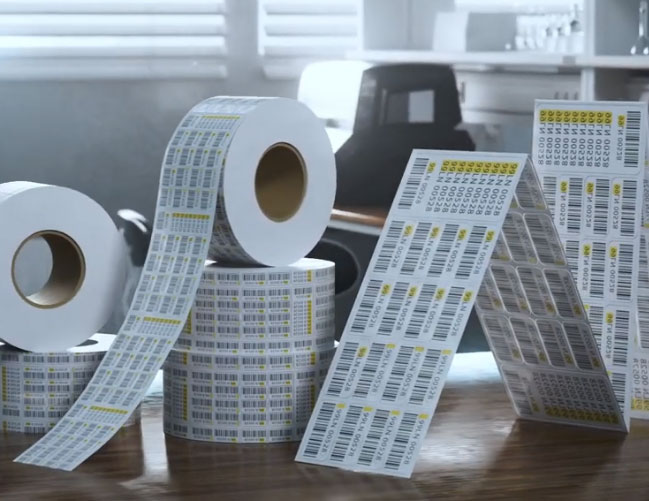
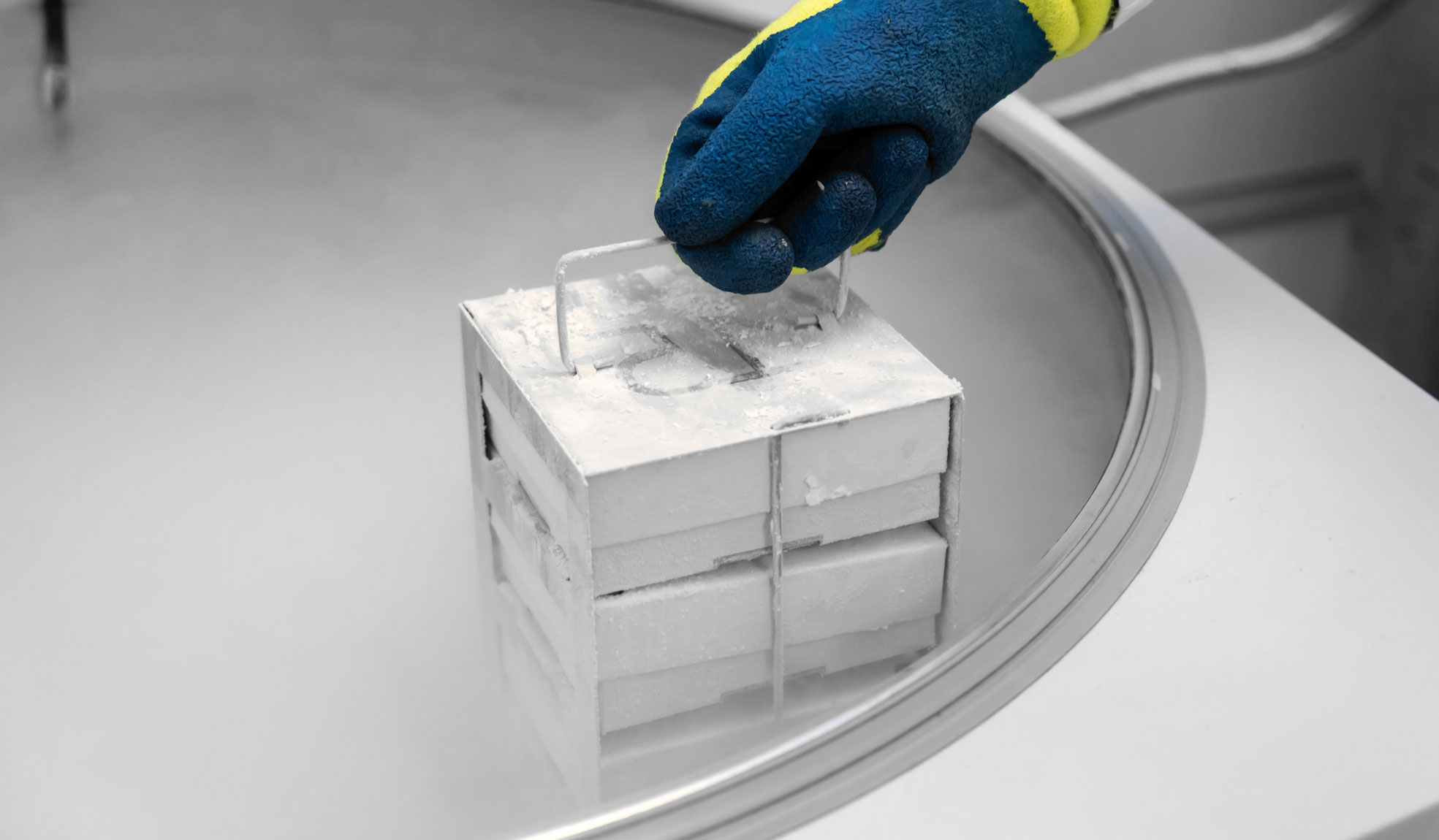
Cryogenic labeling is essential for tracking and identifying frozen samples in biobanks, research labs, and pharmaceutical storage, but not all labels perform reliably in extreme cold. Many labs experience labels peeling off, curling, fading, or even becoming brittle and cracking—problems that can lead to lost samples, scanning errors, and costly relabeling efforts. Even cryogenic-rated labels can fail if they are applied incorrectly, exposed to moisture, or paired with the wrong adhesive for the conditions.
Understanding why cryo labels fail is the first step to preventing these issues. In this guide, we’ll break down the most common cryogenic label failures, explain why they happen, and provide practical solutions to ensure your labels remain secure, scannable, and intact through deep-freeze storage, liquid nitrogen exposure, and freeze-thaw cycles. If you’ve ever had a label fall off, become unreadable, or shift in storage, this article will help you fix the problem and prevent it from happening again.
1. Labels falling off, peeling, or shifting in storage.
One of the most frustrating failures in cryogenic labeling is when labels seem fine at first but later peel off, curl at the edges, or shift position in storage. A label that falls off isn’t just an inconvenience—it can mean losing track of valuable samples, requiring relabeling, or even rendering samples unusable if they can no longer be identified. This issue can happen immediately after freezing or develop gradually over time as the label is exposed to extreme cold, condensation, and handling. Even when labels stay attached, curling edges and shifting barcodes can interfere with scanning, causing misreads or requiring manual data entry, which slows down lab workflows.
Why This Happens
The most common reason labels fall off in cryogenic storage is adhesive failure. Many adhesives are designed to perform at room temperature or in refrigeration, but cryogenic storage requires high shear strength and low-temperature bonding to prevent peeling. Another major issue is cold flow, where the adhesive gradually shifts or moves under extreme cold conditions, causing the label to slide out of place over time. Thermal contraction of the face stock can also play a role—if the label material shrinks at a different rate than the tube, edges may lift or the entire label may lose contact.
Condensation is another critical factor. If there is any moisture or frost on the tube when the label is applied, the adhesive cannot make proper contact with the surface, leading to weak adhesion that worsens over time. Additionally, labels applied at the wrong temperature—for example, applying a label that requires a 5°C minimum application temperature onto a frozen tube at -80°C—will fail to bond properly, even if the label is rated for cryogenic storage.
How to Prevent Labels from Falling Off in Cryogenic Storage
Preventing peeling, curling, or shifting starts with selecting the right materials and applying the label correctly. Choosing a cryogenic-grade adhesive with high cohesive strength and cold resistance ensures that the label forms a permanent bond even at ultra-low temperatures. Proper application techniques also play a huge role in ensuring labels remain securely attached for long-term storage.
- Use cryogenic labels with high shear strength to prevent movement
- Ensure labels have low-temperature bonding properties to work in extreme cold
- Wipe tubes completely dry before applying labels to prevent condensation issues
- Apply labels at the correct application temperature, not just the operating temperature
- Use wrap-around labels that adhere to themselves for extra security
- Choose labels with dimensional stability to prevent shrinkage in ultra-low temperatures
What to Do If a Label Falls Off Anyway
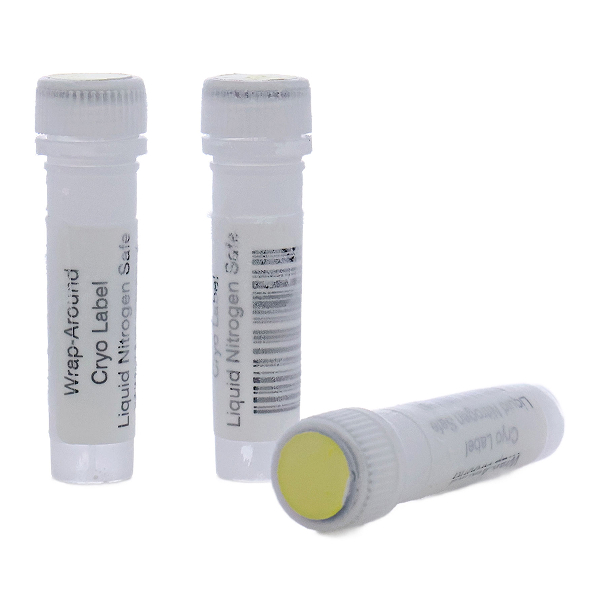
Even with the right materials and proper technique, labels can still fail due to unexpected conditions in storage. If a label starts peeling or curling at the edges, try pressing it back down while the tube is still cold—sometimes the adhesive can re-engage if it wasn’t fully bonded during application. If the label has completely detached, it must be reapplied or replaced immediately to avoid sample loss. In high-risk situations, a backup identification method—such as over-labeling with a Wrap-Around Tube Label or using an etched or printed identifier on the tube itself—can help ensure that sample identification is never compromised.
Next, we’ll look at another common issue: labels that won’t stick to frozen surfaces at all, and what you can do if you’re trying to apply a label to an already-frozen tube.
2. Adhesives not bonding to frozen surfaces.
When labeling frozen tubes, one of the biggest challenges is that most labels— even most cryogenic labels—won’t adhere properly to an already frozen surface. This isn’t necessarily a failure of the label itself but rather a mismatch between the label’s design and its intended use. Cryogenic labels are often engineered to survive ultra-low storage temperatures, but that doesn’t mean they can be applied at those temperatures. If a label isn’t formulated to bond at frozen application temperatures, it won’t grip the surface, leading to immediate lifting or complete detachment.
Why This Happens
The main reason most labels won’t stick to frozen surfaces is adhesive activation temperature. Standard cryo labels typically require application at room temperature or slightly chilled conditions, allowing the adhesive to flow and wet out to form a strong bond. When applied to a frozen tube, these adhesives remain rigid and inactive, preventing them from fully anchoring to the surface.
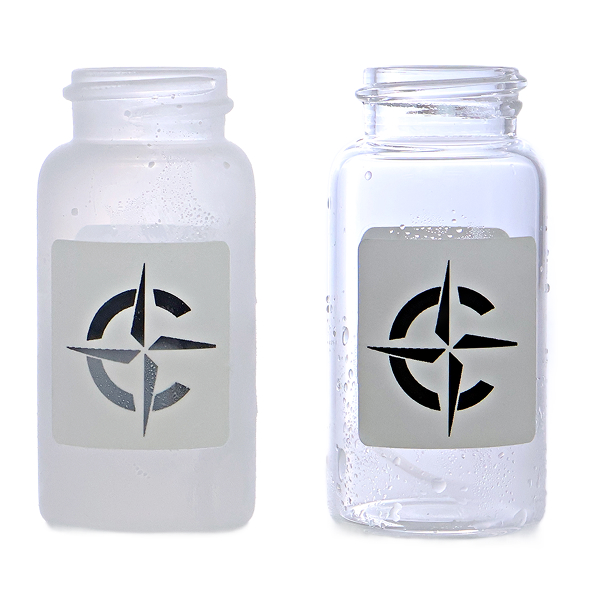
Frost and condensation further complicate adhesion. The moment a frozen tube is removed from storage, it attracts moisture from the air, forming a thin layer of ice or frost. Since nothing sticks to water, this barrier prevents the label from making direct contact with the tube. Even if a label appears to hold at first, as the frost melts or refreezes, the bond weakens, and the label will likely detach.
How to Prevent Labels from Failing on Frozen Surfaces
If labeling frozen tubes is unavoidable, the key is to use a label designed for frozen application. Most cryo labels cannot be applied below freezing, so assuming any cryogenic label will work in this scenario is a common mistake. Labels formulated for frozen surfaces use specialized adhesives that activate at ultra-low temperatures, ensuring an immediate and lasting bond, even at -80°C.
- Always check the application temperature of a label before use
- If possible, apply labels before freezing rather than after
- Wipe tubes completely dry to remove frost before labeling
- Use a frozen-surface cryo label designed to bond at -80°C
- Consider wrap-around labels that adhere to themselves for added security
What to Do If a Label Won’t Stick to a Frozen Tube
If a label refuses to adhere, forcing it won’t help—it’s not designed for that condition. Instead, the best option is to switch to a frozen-surface cryo label that is engineered for immediate bonding at cryogenic temperatures. Another alternative is to use a Wrap-Around Tube Label, which doesn’t rely solely on surface adhesion—instead, it adheres to itself, locking the label securely in place.
Next, we’ll look at another frustrating failure: labels that stay on but become unreadable due to barcode smearing, fading, or print degradation in cryogenic storage.
3. Printed barcode fading, or becoming unscannable.
A label that stays attached but can’t be scanned or read is just as problematic as one that falls off. In cryogenic storage, labels are exposed to moisture, frost, handling, and extreme temperatures, all of which can damage printed barcodes or text over time. Even if a label appears fine at first, if the print fades, smears, or distorts, it can lead to misidentification, scanning failures, and costly relabeling efforts.
Why This Happens
The most common cause of barcode failure is poor ink adhesion. In cryogenic environments, some label materials have low surface energy, making it difficult for standard inks to fully bond. If the label’s face stock isn’t top-coated for thermal transfer printing, the print may appear sharp initially but fade or smear over time, especially when exposed to moisture or handling.
Lack of protective coatings or laminates can also lead to degradation. Frost, condensation, and frequent handling can wear down printed barcodes, making them increasingly difficult to scan. Labels stored in liquid nitrogen (-196°C) or exposed to repeated freeze-thaw cycles are especially vulnerable if they don’t have an added protective layer.
How to Prevent Labels from Becoming Unreadable
Ensuring long-term barcode readability starts with choosing the right label face stock and print method. Some materials hold ink better than others, and using the right thermal transfer ribbon and protective coatings can prevent print degradation.
- Use top-coated face stocks that improve ink adhesion
- Print with resin-based thermal transfer ribbons for maximum durability
- Consider self-laminating labels to seal and protect barcodes
- Store labels in a dry environment to reduce condensation risks
- Use polyester labels, which resist moisture and abrasion better than polypropylene
What to Do If a Barcode Becomes Unreadable
If a barcode has already faded or smeared, attempt scanning from different angles or with different lighting—some scanners can still read partially damaged barcodes. If the label can’t be scanned, the best approach is to apply a secondary label over the damaged one, ensuring the new barcode is fully readable. In cases where samples are frequently handled, switching to a self-laminating cryo label can prevent future print degradation.
Next, we’ll look at a different kind of label failure: labels that become brittle and crack in cryogenic storage, leading to damaged or detached identification.
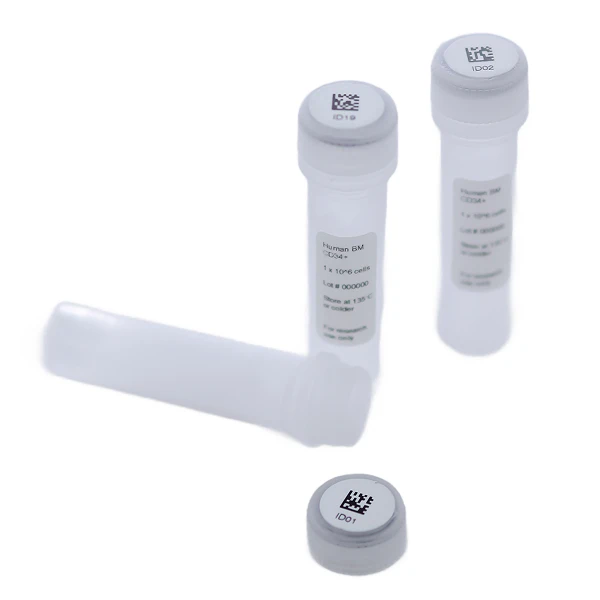
4. Label face stocks becoming brittle or cracking.
A label that remains attached but becomes stiff, brittle, or cracks in cryogenic storage is a serious problem. If a label breaks apart, it can lead to barcode distortion, scanning issues, or complete detachment, making sample identification difficult or impossible. This issue often develops over time as labels are repeatedly exposed to extreme cold, handled, or moved between different storage conditions. A cracked label is not only at risk of falling off, but it can also leave fragmented pieces behind, contaminating storage racks or lab equipment.
Why This Happens
The primary cause of label brittleness is incompatible face stock selection. Some materials, especially those with low flexibility at ultra-low temperatures, become rigid and prone to cracking or shattering when exposed to deep freeze conditions. If a label’s dimensional stability isn’t rated for cryogenic storage, it may experience excessive shrinkage, which puts stress on the material, causing it to split or fracture over time.
Another factor is physical stress from handling. In high-throughput labs, samples are frequently retrieved, scanned, and placed back into storage, putting mechanical strain on labels. If a label lacks sufficient durability and tensile strength, it may develop small fractures that eventually spread and cause complete failure.
How to Prevent Labels from Becoming Brittle or Cracking
To avoid this issue, it’s crucial to select a face stock engineered for cryogenic conditions. Materials that are too rigid or too thin may not withstand extreme cold, while those with high flexibility and impact resistance perform better in liquid nitrogen and ultra-low freezer storage.
- Use polyester or polypropylene face stocks designed for cryogenic conditions
- Choose labels with high flexibility and impact resistance
- Avoid materials that shrink excessively in extreme cold
- Consider laminated labels for added durability and structural integrity
- Ensure labels have sufficient thickness to withstand handling stress
What to Do If a Label Becomes Brittle or Cracks
If a label has minor cracks but remains readable, apply a clear laminate or over-label to reinforce it and prevent further damage. If the label begins to break apart or has already detached, relabel the sample immediately using a material with better cryogenic durability. Labs dealing with frequent sample handling should consider self-laminating cryo labels, which provide added protection against mechanical stress and environmental exposure.
Next, we’ll address a common but often overlooked issue: applying labels at the wrong temperature, which can cause adhesion failures even if the right materials are used.
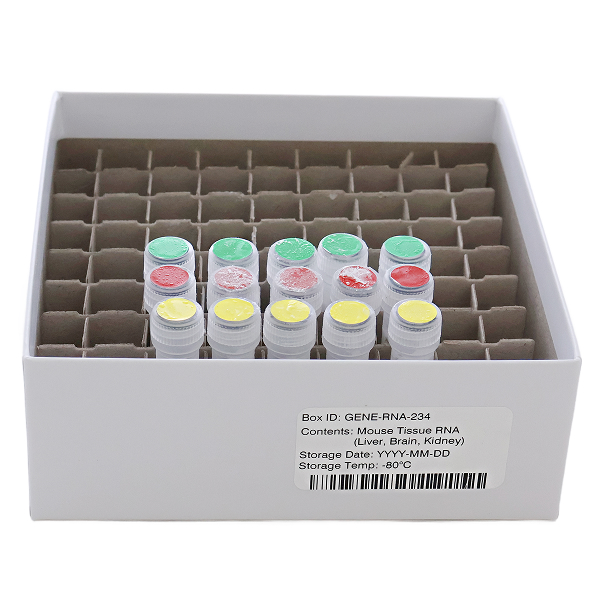
5. Labels failing due to temperature fluctuations or humidity.
Even when using the right cryogenic label, applying it in an uncontrolled environment can still cause failure. If a tube is removed from deep freeze storage and labeled in a warm, humid lab, condensation can form before the label is even applied, weakening adhesion. Likewise, if a tube is labeled at a different temperature than its storage conditions, the label may seem secure at first but later shift, peel, or detach due to thermal expansion and contraction. This issue is especially common in labs that move between temperature zones frequently, such as when processing biobank samples or clinical specimens.
Why This Happens
The main issue is condensation buildup. When a frozen tube is exposed to warmer, humid air, moisture accumulates almost instantly, forming an invisible barrier that prevents the adhesive from fully bonding. Even labels that seem to stick at first may detach later because they never made full contact with the tube’s surface.
Additionally, thermal expansion and contraction can weaken label adhesion over time. If a label is applied while the tube is still adjusting to room temperature, it may bond in a slightly expanded state. Once returned to cryogenic storage, the shrinkage of the tube and label at different rates can cause edge curling, adhesive failure, or shifting.
How to Prevent Label Failures from Temperature Fluctuations
To avoid this issue, labels should always be applied in a controlled environment with minimal temperature swings and humidity exposure. The goal is to ensure the adhesive bonds to the tube in stable conditions, preventing failures caused by moisture or expansion.
- Allow tubes to stabilize to the correct application temperature before labeling
- Label in a low-humidity environment to minimize condensation risks
- Always wipe tubes dry before applying labels
- Avoid exposing tubes to rapid temperature swings before storage
- Use labels with high dimensional stability to prevent shrinkage-related failures
What to Do If a Label Fails Due to Temperature Changes
If condensation caused weak adhesion, try pressing the label down firmly while the tube is still cold—it may still bond if some adhesion occurred. If the label is already lifting or shifting, replace it immediately, making sure to apply the new label in a dry, stable environment. For long-term security, consider using a wrap-around cryo label, which adheres to itself and won’t peel even if minor condensation is present.
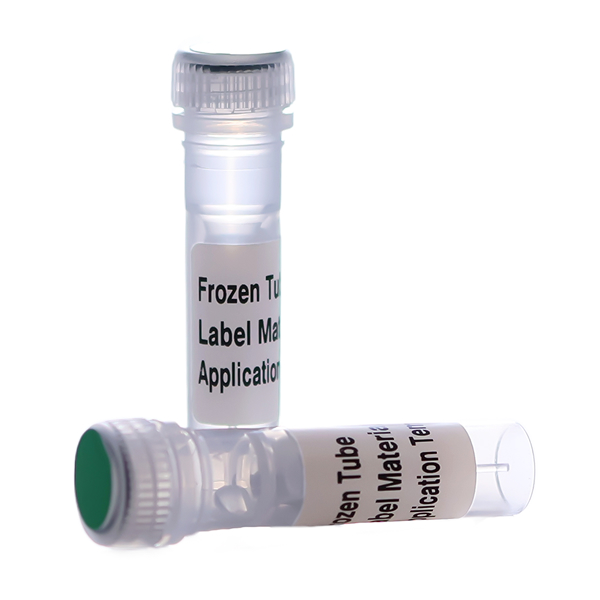
Best practices for cryogenic labeling.
Preventing cryo label failures starts with following the right techniques, using the correct materials, and applying labels in controlled conditions. Even the most durable cryogenic labels can fail if applied incorrectly, exposed to moisture, or paired with the wrong adhesive for the conditions. By following best practices for cryogenic labeling, labs can ensure secure, scannable, and long-lasting sample identification in -80°C freezers, liquid nitrogen storage, and other extreme environments.
Best practices for successful cryogenic labeling
- Choose labels with cryogenic-rated adhesives designed for extreme cold
- Always check the application temperature range before labeling
- Wipe tubes completely dry to remove condensation and frost
- Label samples in a low-humidity, temperature-controlled environment
- Use polyester or polypropylene face stocks with high dimensional stability
- Apply firm even pressure to ensure full adhesive contact
- Avoid rapid temperature shifts that can cause adhesion issues
- Consider wrap-around labels for small tubes and vials
- Print with resin-based thermal transfer ribbons for maximum durability
- Use self-laminating labels to protect barcodes from moisture and abrasion
By following these best practices, labs can eliminate common cryo label failures, ensuring that every sample remains properly labeled and traceable throughout its lifecycle. A well-applied cryogenic label doesn’t just survive in ultra-low temperatures—it stays securely in place, remains scannable, and resists environmental challenges like moisture, handling, and freeze-thaw cycles.
Cryogenic labeling comes with unique challenges, but every failure—whether it’s peeling, smearing, cracking, or shifting—can be prevented with the right materials and proper technique. Choosing a cryogenic-grade adhesive, ensuring correct application temperature, and using durable face stocks are key to long-term sample identification in extreme cold storage.
If your lab needs proven cryogenic labels that won’t fail under pressure, we have a full selection available in our shop. Secure your samples with labels engineered for extreme environments—because in cryogenic storage, every label matters.
Connect with our labelling experts today
Blog article form
"*" indicates required fields