
$0.00
0

4 Reasons to Label Your Specimen Caps

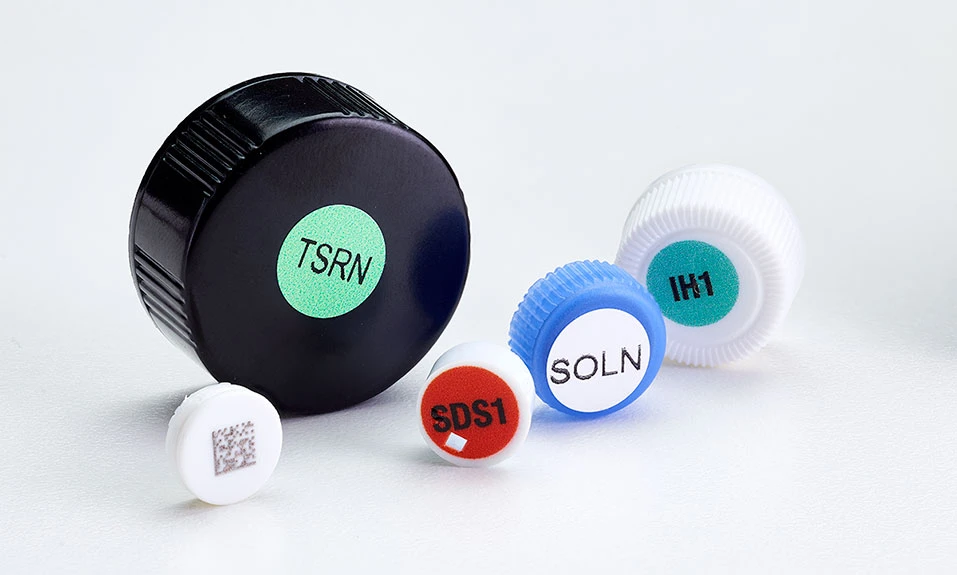
When it comes to sample identification in the lab, most often you’ll find labels applied to the sides of tubes and vials—and for good reason. A long and narrow barcode and line of text fit perfectly along the side of most specimen containers. However, there are situations where this traditional approach simply isn’t enough or might not work at all.

The sides of your specimen containers aren’t the only valuable real estate on your sample containers. This list covers just a few of the ways our customers have optimized their tracking and identification strategy by labeling the closures of their specimen containers.

1. Enable easier scanning from above

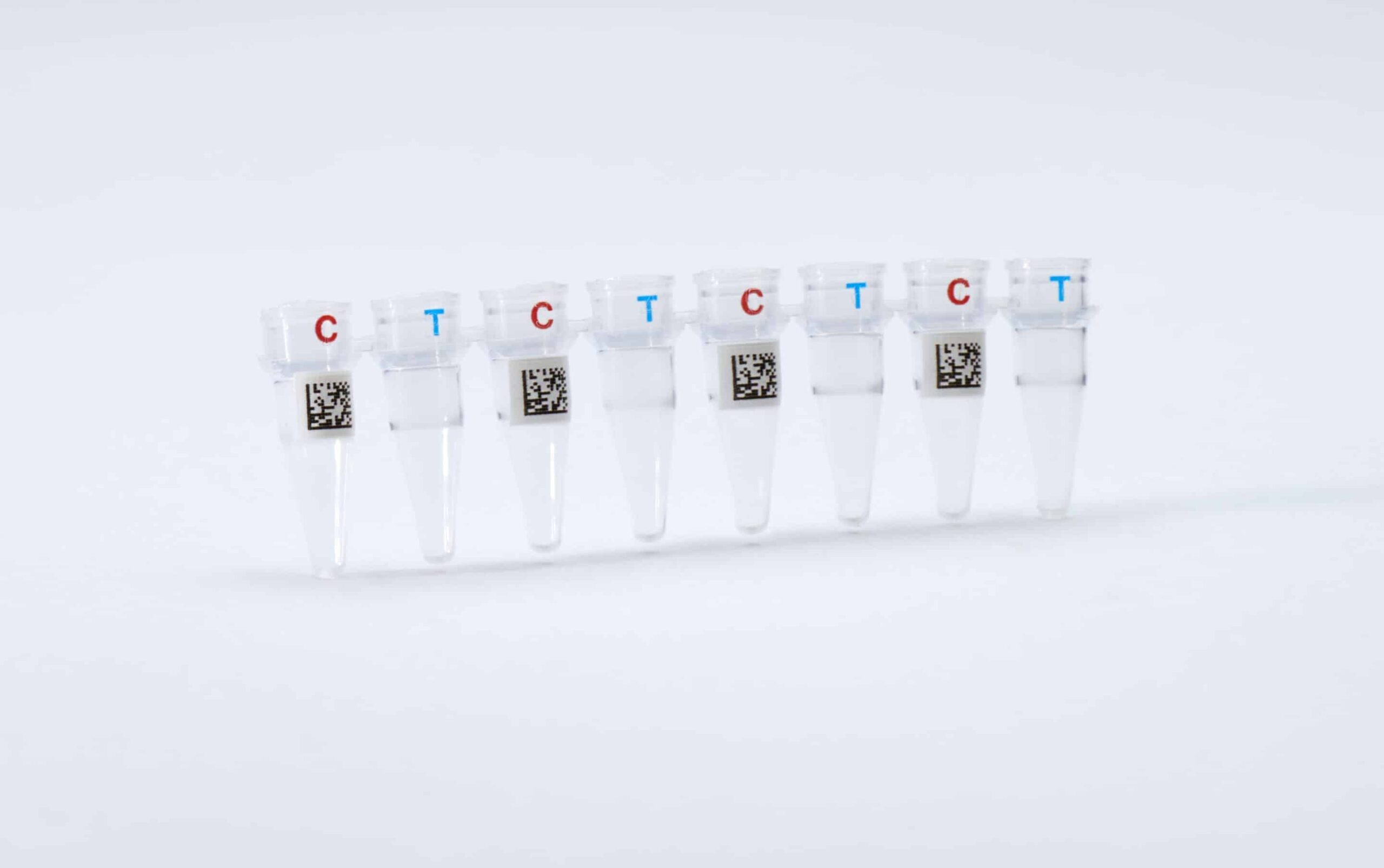
Sometimes the ability to scan specimens from above is ideal, specifically when samples are stored in racks or being processed through certain types of automation. Including a 2D barcode on the caps of your containers can make it significantly easier to scan from above, reducing manual interference and effort.

Individual specimens can be scanned without being removed from their racks or automated processes, and when it comes to automation specifically, scanners can be more strategically placed throughout workflows to minimize, or completely eliminate manual scan points.

2. Maximize data capacity

It’s possible you may want to include more information on your containers than you have room for on a rectangular side label or have different types of information that become available at different times.

You can easily condense your information by opting for a 2D identification bar code on the closure of your tubes, leaving room on the side for other information like a corresponding bar code, a logo, or detailed human readable information.

A dual label system like this can be particularly useful if you need to include patient or sample information that isn’t available until the time of collection alongside tracking information. In cases like these, you might want to order tubes with 2D identification codes pre-applied to the caps then print and apply sample information to the side as it becomes available.
3. Accommodate odd container shapes

Some sample containers, such as conical tubes, can be tricky to label especially at smaller sizes. While there are suitable labels specifically designed for conical shaped tubes, the curves of these and other more unique labware shapes make labels more prone to lifting.

It’s for this reason we typically recommend using a different marking technology such as Cured Ink or Laser when marking uniquely shaped labware, however many of these options are only available pre-applied to labware, which isn’t always feasible.

If your processes require pressure sensitive labels, applying the label to a flat surface, like the top of a cap is going to reduce the likelihood of label lifting.

4. Expand color coding options

Colored caps are commonly used for color-coding, however, your options are limited to the plastic colors your labware supplier offers, which may not be enough for your ideal color-coding strategy.

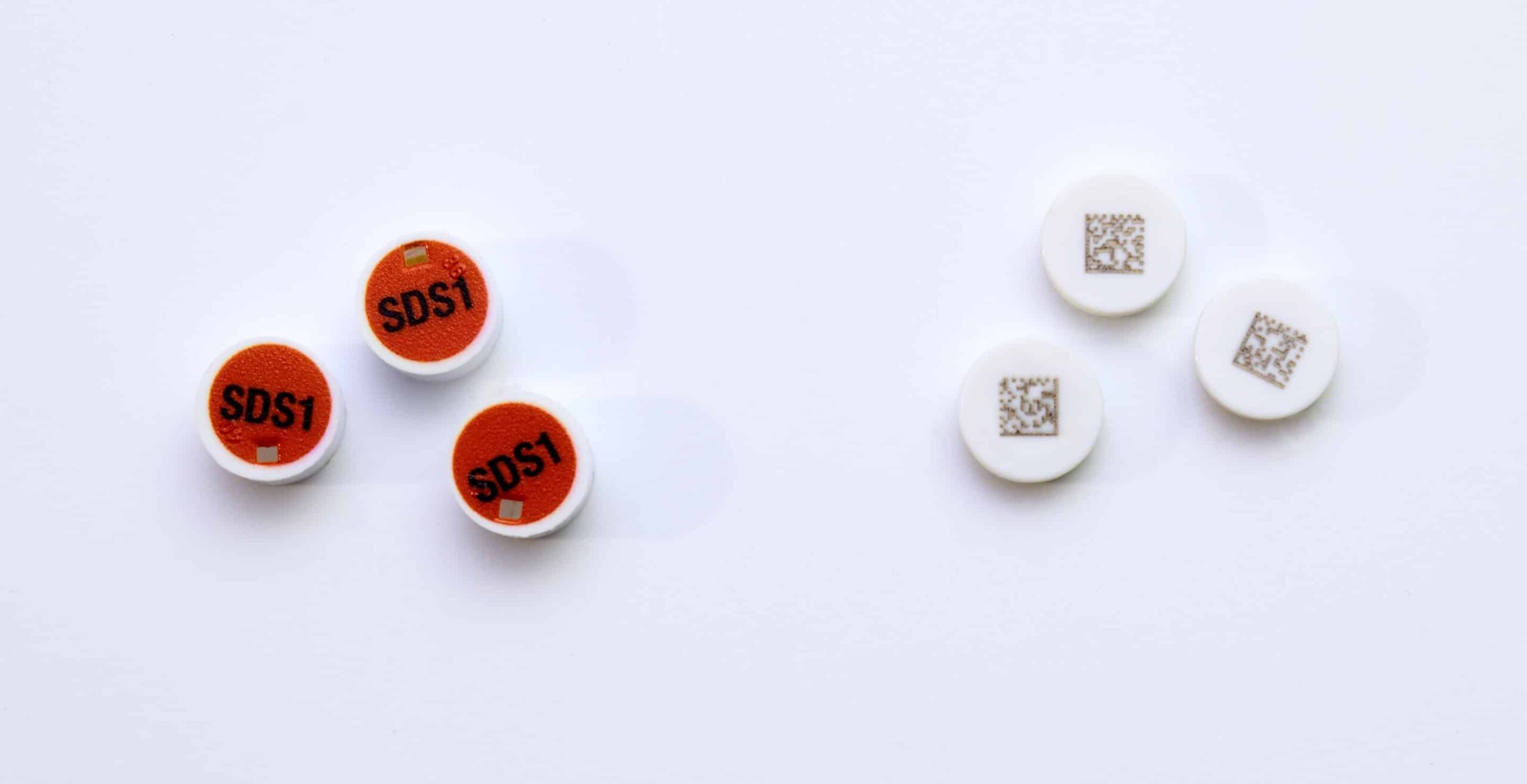
If your color-coding strategy is more complicated than can be accomplished with the options your labware supplier offers, it’s worth looking into a color marking strategy. This could mean colored labels or Cured ink applied directly to your caps. An ink-based strategy gives you near limitless color options.

Using colored labels doesn’t necessarily mean giving up the ability to include additional information on your closures either. Human readable information can easily be printed with a colored background. However, if you need a scannable code on your closure, you’ll want a white background to ensure readability. Depending on the size of your container cap you may be able to feature color in the form of a ring surrounding the code or an icon.
How to label specimen closures

You have options when it comes to labeling the closures of your specimens, though, slightly limited when compared to more traditional side labeling.

At this point in time, benchtop specimen container label applicators aren’t equipped to label the caps or bottoms of tubes and vials. So, when it comes to application method, your choices are manual application or pre-applied.

If your sample containers are on the larger side or you’re dealing with small quantities, a manual strategy might be feasible, however we always recommend pre-applied closure labels since they are often quite small and tricky to apply by hand.

Ordering Pre-marked Labware also widens your options when it comes to marking technology, adding Cured Ink and Laser marking to the list alongside standard pressure sensitive labels. Pressure sensitive labels are a reliable choice whether or not you choose to order Pre-barcoded Labware, however if you’re looking for increased durability Cured Ink and Laser marking are both great options, with Cured Ink being a better choice if you want to include color.

As data needs grow and sample sizes shrink in response to industry trends like automation, the cloud and miniaturization continue to thrive, our tracking and identification solutions need to adapt. Labeling your caps is a cost-effective and simple way to address ever-changing specimen tracking needs that is often overlooked.
0
    0
    Your Cart
    Your cart is emptyReturn to Shop

    Print blood bag labels at collection points.

    Print blood bag labels as needed using live data from blood bank systems. Generate labels during collection, component processing, or labeling steps, with donation identification numbers, product codes, and variable data applied at the point of use. This approach supports workflows where blood data updates in real time and requires immediate, accurate identification.

    A simple setup can integrate real-time labeling directly into your workflow.

    Set up a complete labeling workflow using the right materials and equipment to print and apply labels directly during blood collection, component processing, and blood bank handling workflows.

    durable labels

    Start with blank label stock engineered for flexible PVC blood bags.

    label printers

    Print high-resolution barcodes and text for complex blood label layouts.

    compatible ribbons

    Use included thermal transfer ribbons to produce durable barcode labels.

    label software

    Integrate barcode software to generate ISBT 128 labels and DIN data.

    Print-on-demand labeling fits blood banks and collection centers that generate or update donation data in real time. This includes blood collection sites, processing labs, and transfusion services where blood bags are labeled on demand, and workflows require immediate, accurate identification without relying on pre-printed labels.

    Control blood bag labeling with pre-printed formats.

    Get blood bag labels professionally printed with controlled data, advanced converting, and durable materials. Eliminate in-house printing while ensuring every label meets performance requirements for blood bank use, including handling, cold storage, and transfusion.

    Guarantee no duplicates with professionally printed blood bag labels.

    Pre-printed labeling combines controlled printing, advanced converting, and durable materials to deliver consistent, ready-to-use blood bag labels. This approach removes variability from in-house printing and ensures every label meets requirements for DIN accuracy, barcode performance, and reliable identification across blood bank workflows.

    consistency at scale

    Receive pre-printed labels with guaranteed unique DIN sequences, controlled serialization, and validated data across batches and production runs.

    accurate din formats

    Maintain consistent DIN formats to ensure accurate identification across blood bags, segments, and associated components.

    durable finsihing

    Use engineered label constructions designed to resist edge lift, moisture, and routine handling, helping maintain adhesion and readability throughout blood collection.

    Pre-printed labeling fits blood banks and collection centers that manage high volumes of donations and require controlled, repeatable identification. This includes blood collection sites, processing facilities, and transfusion services where standardized labeling, consistent DIN assignment, and stable data support efficient, validated workflows without frequent changes.

    Support accurate workflows with real-time labeling.

    In laboratory environments, data often isn’t final until the last moment—at the bench, at the instrument, or during sample handling. Printing labels on demand helps ensure each tube or vial reflects the most accurate information, while fitting naturally into the way your work actually happens.

    Support accurate workflows with real-time labeling.

    In laboratory environments, data often isn’t final until the last moment—at the bench, at the instrument, or during sample handling. Printing labels on demand helps ensure each tube or vial reflects the most accurate information, while fitting naturally into the way your work actually happens.

    A simple setup can integrate real-time labeling directly into your workflow.

    In laboratory environments, data often isn’t final until the last moment—at the bench, at the instrument, or during sample handling. Printing labels on demand helps ensure each tube or vial reflects the most accurate information, while fitting naturally into the way your work actually happens.

    compatible ribbons

    Compatible resin ribbons ensuring clear, durable print for barcodes and text

    compatible ribbons

    Compatible resin ribbons ensuring clear, durable print for barcodes and text

    In laboratory environments, data often isn’t final until the last moment—at the bench, at the instrument, or during sample handling. Printing labels on demand helps ensure each tube or vial reflects the most accurate information, while fitting naturally into the way your work actually happens.

    Support accurate workflows with real-time labeling.

    In laboratory environments, data often isn’t final until the last moment—at the bench, at the instrument, or during sample handling. Printing labels on demand helps ensure each tube or vial reflects the most accurate information, while fitting naturally into the way your work actually happens.

    A simple setup can integrate real-time labeling directly into your workflow.

    compatible ribbons

    Compatible resin ribbons ensuring clear, durable print for barcodes and text

    compatible ribbons

    Compatible resin ribbons ensuring clear, durable print for barcodes and text

    compatible ribbons

    Compatible resin ribbons ensuring clear, durable print for barcodes and text

    compatible ribbons

    Compatible resin ribbons ensuring clear, durable print for barcodes and text

    In laboratory environments, data often isn’t final until the last moment—at the bench, at the instrument, or during sample handling. Printing labels on demand helps ensure each tube or vial reflects the most accurate information, while fitting naturally into the way your work actually happens.

    Support accurate workflows with real-time labeling.

    In laboratory environments, data often isn’t final until the last moment—at the bench, at the instrument, or during sample handling. Printing labels on demand helps ensure each tube or vial reflects the most accurate information, while fitting naturally into the way your work actually happens.

    A simple setup can integrate real-time labeling directly into your workflow.

    In laboratory environments, data often isn’t final until the last moment—at the bench, at the instrument, or during sample handling. Printing labels on demand helps ensure each tube or vial reflects the most accurate information, while fitting naturally into the way your work actually happens.

    durable labels

    Durable labels that stay attached through handling, storage, or cryogenic conditions

    compatible ribbons

    Compatible resin ribbons ensuring clear, durable print for barcodes and text

    reliable printer

    Compact, consistent, durable thermal transfer printing at the point of use

    label software

    Label management software to format labels and connect to sample data or LIMS

    In laboratory environments, data often isn’t final until the last moment—at the bench, at the instrument, or during sample handling. Printing labels on demand helps ensure each tube or vial reflects the most accurate information, while fitting naturally into the way your work actually happens.

    Request a Sample

    Request a label product sample to get started.

    "*" indicates required fields

    This field is for validation purposes and should be left unchanged.

    Request a quote

    Take advantage of our volume discounts for bulk orders. Reach out to us for a personalized quote tailored to your needs.

    "*" indicates required fields

    This field is for validation purposes and should be left unchanged.