$0.00
0

How to Achieve the Best Barcode Solution for Your Lab

In a lab setting, correct sample identification is crucial. Every lab should have a solution that improves the accuracy of research results and ensures efficiency. Your lab employees should be able to find what they need, when they need it and be confident it’s marked correctly. Workers in the field of diagnostics and drug discovery are directly impacting lives, leaving no room for mistakes or wasted time.

Depending on your application, environment and processes your ideal barcoding method will vary. Some labs benefit from permanent solutions, others can get by with disposable options that allow for on-the-spot printing and preparation.

Finding the right labeling solution for your lab is a simple way to streamline processes and preserve sample integrity, but first you need to know how to find your ideal match. This post will cover three labeling technologies, their benefits, downsides, costs and ideal applications so you can feel confident in making the right labeling decision for your lab.

Pressure sensitive labels

Traditional adhesive labels have been the most popular barcoding solution in healthcare for decades. They can be printed and applied in the lab by technicians and automation equipment, or they can be pre-printed and supplied directly to your lab. Over the years specialty labels have been engineered to withstand the chemical exposures and extreme temperatures the healthcare environment requires. However, despite pressure sensitive labels having come a long way, they are not a permanent solution.
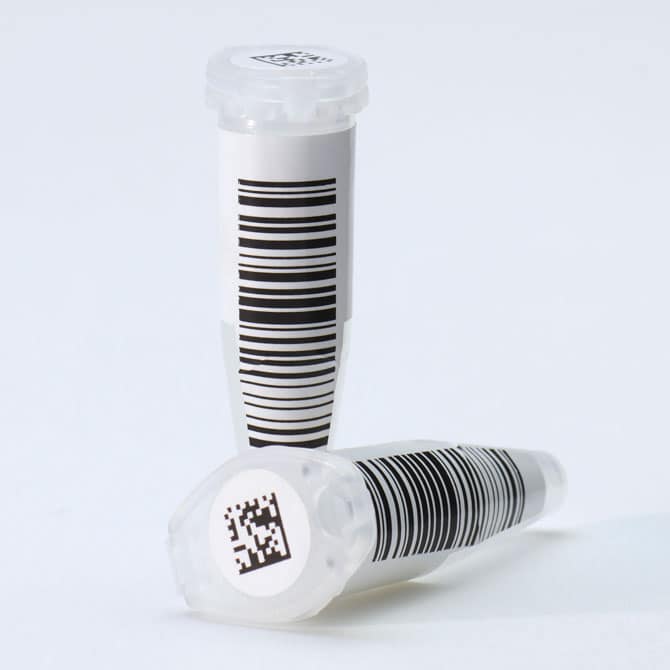
What are the benefits of pressure sensitive labels?

Pressure sensitive labels have a number of benefits. To start there are a variety of different label materials and adhesive types, giving labs options to match their needs. If a lab needs a label that can withstand chemicals and extreme environments they can find one, and if another lab doesn’t they won’t need to invest in labels with those capabilities.

There are also options when it comes to obtaining your pressure sensitive labels, they can be outsourced or printed in-house. In cases where time sensitive or patient specific information needs to be recorded, printing pressure sensitive labels in house is the only option. For labs that prefer pressure sensitive labels and can opt to store only sequential information, outsourcing becomes a practical option that will give your employees more time to focus on research.

In addition to pressure sensitive labels being the most popular option for labware identification, they are also the most accessible. Pressure sensitive labels are typically available with short lead times and reasonable pricing.

What are the downsides of a pressure sensitive labeling strategy?

No matter how strong a label adhesive was engineered to be, it will never be permanent. Some are capable of withstanding years of exposure to chemicals, extreme environments and storage, but the more they come into contact with these things and the longer they are stored, the weaker the adhesive will become.

Adhesives and label materials are also often affected greatly by environmental changes which can impact their weight. If sample weight is an important factor in your lab, pressure sensitive labels may not be an ideal option as the weight of the labels can change over extended periods of storage.

Lastly, pressure sensitive labels add volume to the diameter of the containers they surround, though this might not impact all labs, some specific storage solutions (like racks for example) aren’t able to adapt to the increased diameter of tubes or vials with adhesive labels.

How much do pressure sensitive labels cost?

Since pressure sensitive labels have been the standard in most industries for decades, there are specially engineered labels for all kinds of purposes, even within single industries. Within healthcare alone there are very basic labels for samples with short life spans, labels with special laminates that can handle minor chemical splashes and synthetic labels that can be exposed to DMSO, thrown in the autoclave and stored for ten years.

Labels that are specially engineered to withstand harsh environments tend to be priced higher than standard paper labels due to their reliability and extended lifespan. Labels that aren’t made to last are typically priced lower since they require less in the way of engineering, and are often intended to be disposed of after a short period of time.

Which labs should use pressure sensitive labels?

The ideal lab for pressure sensitive labels is one where samples have a short lifespan or relatively low value. These samples may be stored cryogenically, placed in the autoclave or treated with harsh chemicals, but they won’t be kept around for decades and losing a sample due to poor label quality won’t create a serious loss or workflow interruption.

Additionally, in labs where variable data is critical, pressure sensitive labels are likely necessary since outsourcing only allows for pre-printed barcodes. That said, there are still high quality options and ways to improve how a pressure sensitive label is affixed to your containers.

Direct maΒ­rk identifiers

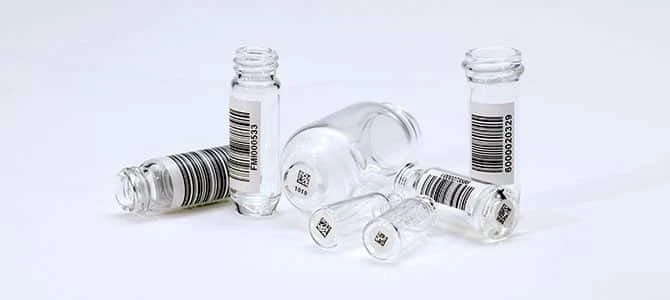
Direct mark is a technology used to mark a container with a semi-permanent barcode or image. The barcode or image is printed right onto your plastic or glass containers using specialized inks or etching processes.

There are a variety of techniques that can be used in order to provide a thin ink coverage that doesn’t affect the outside diameter of the container. The two main categories of these techniques include laser imaging and direct ink transfer. Laser imaging typically involves a laser removing volume from the surface of the container while direct ink transfer involves placing and setting ink onto the surface of the container.
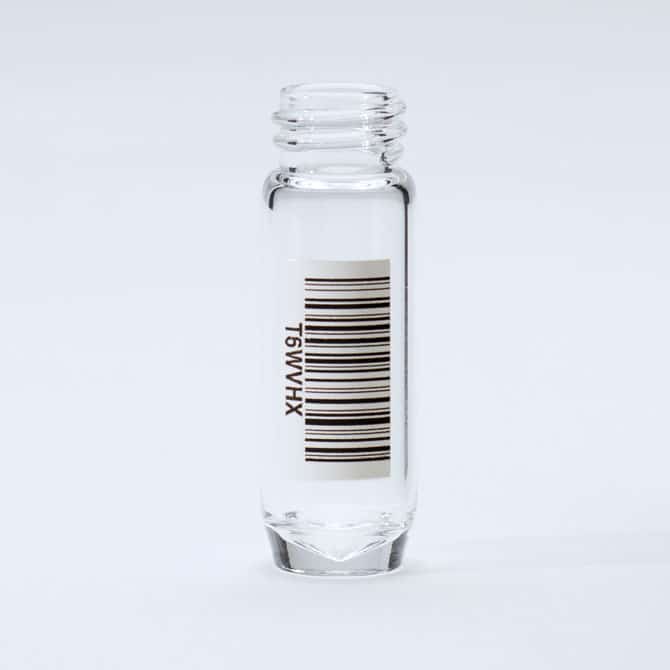
What are the benefits of direct mark?

In comparison to pressure sensitive labels direct mark is a much more permanent and durable barcode labeling option. Using this method ensures the barcode or image on your container will stand up to chemicals, extreme temperatures and extended periods of storage.

Tare-weighing is also much more reliable with direct mark. The inks or etch marks are not affected by humidity or other environmental factors allowing them to be accurately weighed after years of storage.

When inks are used, in combination with the ability to print 360 degrees some unique possibilities that other labeling strategies can’t offer are introduced. With direct mark additional markings can be added to your labware including graduation lines, color coding and brand specific information like logos.

What are the downsides of direct mark identifiers?

Even though direct mark will last through years of storage, extensive chemical and extreme temperature exposures, it’s not entirely permanent. Over time and extensive exposure to harsh conditions the bond between the inks and the container can weaken.

Unlike pressure sensitive labels, direct mark is difficult to replicate in the lab and requires an outsourcing partner to perform. This also implies time sensitive and patient specific information is not able to be printed if using direct mark since your labware will be barcoded & imaged prior to it arriving at the lab.

One way some labs have chosen to use direct mark despite needing variable information is by combining the direct mark strategy with a pressure sensitive strategy. This strategy is often used by labs that want to take advantage of the unique marking abilities of direct mark. They do this by ordering tubes and vials with grad lines, branding, and/or color coding from an outsourcing partner, then take care of the variable requirements in-house with pressure sensitive labels.

How much does direct mark cost?

Computype’s direct mark option is our β€˜middle of the road’ option, both in permanence and price. Similar to pressure sensitive labels, this type of labeling strategy ranges widely in price.

Some labs can keep it simple and stick to black and white barcodes to save on cost while increasing permanence, however most labs are interested in direct mark because of the unique features it has to offer. The cost of direct mark depends entirely on the volume of labware, the amount of information printed on each piece, the type of direct mark technology being used, and whether or not color inks will be used.

That said, direct mark offers a lot of value to your lab. Since direct mark must be outsourced, your lab will save a lot of time and energy on manual and administrative work. This labeling solution is also very reliable when it comes to accuracy, preventing scanning issues throughout the automated workflow.

Which labs should use direct mark?

Labs looking for a more permanent alternative to pressure sensitive labels, wanting to incorporate branding or other markings (grad-lines, color coding, logo’s) onto their labware, or labs that want to eliminate labeling from their facility are great matches for direct mark. Facilities where storage is a concern, whether labels are too large for storage trays or falling off, are also a good match.
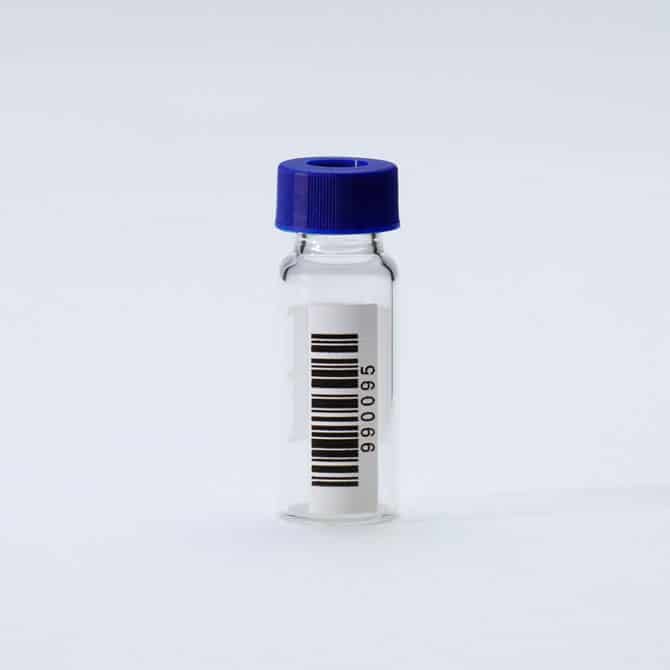
Ceramic identifiers

Ceramic identifiers are a permanent barcode solution specifically designed to be used with glass containers. A barcode printed onto a ceramic label is fired directly onto the container. The extreme heat binds the barcode to the container creating one solid component.

What are the benefits of ceramic identifiers?

When ceramic labels bond to a glass tube or vial they become a part of it, making it impossible to remove without damaging the container itself. This also makes vials marked with this technology incredibly reliable for tare weighing. The weight of a ceramic label can be trusted not to change over time, ensuring precise weight measurement. The ceramic make-up of these labels also gives them the ability to withstand extreme environments and harsh chemicals. Ceramic labels are able to withstand both extreme heat and extreme cold, ranging from about -80 degrees Celsius to 500 degrees Celsius. They are also unaffected by common lab chemicals.

What are the downsides of ceramic identifiers?

Despite these labels being our most permanent they do have a few drawbacks. First, the unique processes necessary for these labels to be made, printed and attached to your labware require time, attention and special equipment. This means, similar to direct mark, you will need to work with an outsourcing partner who will not have access to on-the-spot information and the lead times on ceramic labeled pieces will be longer than those of pressure sensitive or direct mark labeled labware.

Additionally, since the binding process includes both the vial and the label being fired in a kiln, ceramic labels can’t be applied to plastic labware and are only available for glass containers.

How much do ceramic identifiers cost?

Once again, the exact cost of ceramic identifiers is difficult to calculate without context, but due to their permanence, unique materials and preparation process they are a higher price tier option as compared to pressure sensitive and direct mark.

The value of ceramic identifiers lies primarily in their durability. Once the label becomes a part of the labware, it’s able to last as long as the container itself, offering reliable labeling that’s able to withstand just as much as the tube or vial.

Which labs should use ceramic identifiers?

In lab or compound storage settings where samples are extremely valuable and require use of chemical compounds and/or extended storage periods, ceramic labels can really prove their worth. In situations like these, label integrity can’t be compromised, if it is your lab could risk monetary loss. With ceramic labels permanence is ensured through extreme conditions and decades of storage.

Additionally, a consistent weight can be ensured with ceramic labels, making them a great choice when sample weight is critical. The decision to use ceramic labels can also benefit your lab by speeding up your processes. Outsourcing is required for this label method, so additional services such as tare-weighing and sorting can also be completed before your labware arrives.

Choosing the right partner

Your label supplier should learn about the processes your barcode solutions need to accommodate and what specifically you need your barcodes and labware to do.

The right supplier will consider factors such as automation, chemical exposure, temperatures, length of product life and the material construction of your containers, so they can issue a recommendation based on their knowledge of your processes.

Healthcare is a fast-paced and rapidly growing field, but one thing that will remain constant is the need for efficient and accurate identification. Today’s marking technologies are designed with your challenges in mind to help you achieve the right solution.
0
    0
    Your Cart
    Your cart is emptyReturn to Shop

    Receive pre-barcoded labware immediately ready-to-use.

    Receive your labware with identifiers already applied through direct marking or integrated labeling. Eliminate labeling steps entirely while ensuring durable, consistent identification across storage, handling, and laboratory workflows.

    Pre-barcoded labware for extreme durability and precision placement.

    Pre-barcoded labware removes labeling from your workflow entirely. Labware arrives ready to use with verified identifiers, supporting faster processing, reduced handling, and consistent sample identification across storage and laboratory operations.

    consistency at scale

    Use pre-verified barcodes and markings to ensure consistent, accurate sample identification across all tubes and batches.

    efficient lab management

    Eliminate labeling steps and reduce manual handling during sample collection, processing, and storage workflows.

    labware prepβ„’ services

    Receive labware sorted, packaged, and prepared to match your workflow, including options like tare weighing and kit assembly.

    Pre-barcoded labware fits high-throughput environments where labeling becomes a bottleneck or source of error. This includes biobanks managing large sample collections, clinical labs processing high volumes of patient samples, and research or CRO environments running automated or repeatable workflows where speed, consistency, and reduced handling drive efficiency and data integrity.

    Order pre-printed laboratory labels for guaranteed accuracy.

    Get sample labels professionally printed with controlled data, advanced converting, and durable materials. Eliminate in-house printing while ensuring every label meets performance requirements for laboratory use, including chemical exposure, handling, and storage conditions.

    Professionally printed laboratory labels for custom, sequential labels.

    Pre-printed labeling combines controlled printing, advanced converting, and durable materials to deliver consistent, ready-to-use laboratory labels. This approach removes variability from in-house printing and ensures every label meets your requirements for data accuracy and performance.

    unique ids

    Receive pre-printed labels with guaranteed unique barcode sequences, controlled serialization, and validated data across batches and production runs.

    custom design

    Use custom colors to organize samples, differentiate workflows, and improve visual identification across racks, boxes, and storage systems.

    durable finishing

    Use engineered label constructions with precoats and topcoats that improve resistance to chemicals, moisture, and routine laboratory handling.

    Pre-printed labeling fits laboratories that manage high volumes of consistent samples and require controlled, repeatable identification. This includes clinical labs processing patient samples, diagnostic labs running standardized assays, and research labs preparing large batches of tubes for studies or long-term storage where data does not change.

    Print laboratory labels on demand with real-time data.

    Print sample labels as needed using live data from laboratory systems. Generate labels during sample collection, aliquoting, or processing, with unique identifiers, timestamps, and variable data applied at the point of use. This approach supports workflows where sample data changes frequently or requires immediate, accurate identification.

    A simple setup can integrate real-time labeling directly into your workflow.

    Set up a complete labeling workflow using the right materials and equipment to print and apply labels directly during laboratory processes.

    durable labels

    Start with blank label stock engineered for every type of labware.

    label printers

    Print high-resolution barcodes and text for small-format sample labels.

    compatible ribbons

    Use included thermal transfer ribbons to produce durable barcode labels.

    tube labelers

    Integrate tube label applicators for automated print-and-apply labeling.

    Print-on-demand labeling fits laboratories that generate or modify sample data in real time. This includes research labs, clinical labs, and diagnostic environments where samples are collected, processed, and labeled on demand, and where workflows require immediate identification without waiting for pre-printed labels.

    High-impact belt branding with pre-printed films.

    Pre-printed belt marking films deliver bold, consistent branding and high-resolution graphics across repeat manufacturing applications. These solutions support detailed imagery, precise color matching, and uniform visual presentation for product lines requiring fixed branding, standardized identification, and elevated product appearance.

    Professionally printed high-resolution rubber belt branding films.

    Pre-printed belt marking films support more detailed and visually controlled designs than standard ribbon-based marking systems. These solutions enable complex graphics, consistent color reproduction, and elevated product presentation across repeat manufacturing applications.

    photorealistic graphics

    High-resolution printing supports detailed imagery, gradients, and complex visual elements beyond the capabilities of standard ribbon-based marking systems

    custom color matching

    Match specific brand colors and visual standards across belt product lines, packaging systems, and broader manufacturing identification programs

    consistent production

    Pre-printed films maintain uniform logos, layouts, and visual presentation across large production volumes and repeat manufacturing applications

    Pre-printed films are commonly used for permanent logos, product branding, belt sizes, standardized identifiers, and highly detailed visual designs. Advanced printing capabilities support precise color control, sharp graphic definition, and complex imagery that extends beyond standard ribbon-based marking.

    Print belt marking films with critical production data.

    Print-on-demand belt marking gives manufacturers the flexibility to apply critical production data directly within active manufacturing workflows. These systems support information that cannot be predefined, including slab location codes, manufacturer dates, lot information, production identifiers, and changing product data across belt runs and manufacturing environments.

    A simple setup can integrate real-time labeling directly into your workflow.

    durable films

    Start with blank transfer films engineered for durable rubber belt marking.

    label software

    Create belt marking formats using label design and barcode software.

    compatible ribbons

    Use included thermal transfer ribbons to produce durable vibrant labels.

    industrial printers

    Use an industrial thermal transfer printer engineered for high duty cycles.

    Print-on-demand systems are designed for manufacturing environments where belt information changes continuously throughout production. Rather than relying on fixed inventory or pre-printed stock, these systems support dynamic marking requirements tied to production scheduling, traceability, and operational control.

    Reduce operational complexity with pre-printed labels.

    Use pre-printed warehouse labels to apply location IDs, pallet labels, and sequential label sets without managing printing in-house. This path works best when your data is defined and your warehouse layout follows a structured system.

    A simple setup can integrate real-time labeling directly into your workflow.

    Plan your labeling system in advance, then receive labels ready to apply across your warehouse. This approach shifts the work from daily printing to upfront setup and production.

    consistency at scale

    Apply the same label formats, barcodes, and ID structures across racks, pallets, and storage locations without variation.

    efficient operations

    Eliminate the need for printers, ribbons, software, and label inventory by using labels that arrive ready to apply and scan.

    sequence management

    Use sequential beam labels and serialized label sets to maintain ordered location IDs and guarantee no duplicates.

    Use pre-printed labels when your warehouse layout is defined, your location IDs are established, and you need consistent labeling across large areas or multiple facilities. This approach supports structured storage systems, standardized pallet tracking, and efficient label rollout.

    Print labels when inventory data changes in real time.

    Print warehouse labels in-house to create location IDs, pallet labels, and LPN labels as your warehouse changes. This path gives you direct control over how labels are created, updated, and applied across racks, bins, totes, and pallets.

    A simple setup can integrate real-time labeling directly into your workflow.

    durable labels

    Start with blank label stock engineered for racks, bins, totes, and pallets.

    label software

    Create warehouse label formats using label design and barcode software.

    compatible ribbons

    Use included thermal transfer ribbons to produce durable barcode labels.

    label printers

    Use a thermal transfer printer designed for warehouse label printing and daily use.

    Use print-on-demand labels when your warehouse layout changes, your team manages location IDs internally, or you need labels immediately without waiting on production. This approach supports flexible workflows, evolving storage systems, and real-time pallet and container tracking.

    Receive pre-barcoded tubes immediately ready-to-use.

    Receive tubes and vials with identifiers already applied through direct marking or integrated labeling. Eliminate labeling steps entirely while ensuring durable, consistent identification across storage, handling, and laboratory workflows.

    Pre-barcoded tubes for extreme durability and precision placement.

    Pre-barcoded labware removes labeling from your workflow entirely. Tubes arrive ready to use with verified identifiers, supporting faster processing, reduced handling, and consistent sample identification across storage and laboratory operations.

    consistency at scale

    Use pre-verified barcodes and markings to ensure consistent, accurate sample identification across all tubes and batches.

    efficient lab management

    Eliminate labeling steps and reduce manual handling during sample collection, processing, and storage workflows.

    labware prepβ„’ services

    Receive labware sorted, packaged, and prepared to match your workflow, including options like tare weighing and kit assembly.

    Pre-barcoded labware fits high-throughput environments where labeling becomes a bottleneck or source of error. This includes biobanks managing large sample collections, clinical labs processing high volumes of patient samples, and research or CRO environments running automated or repeatable workflows where speed, consistency, and reduced handling drive efficiency and data integrity.

    Order pre-printed tube labels for guaranteed accuracy.

    Get tube labels professionally printed with controlled data, advanced converting, and durable materials. Eliminate in-house printing while ensuring every label meets performance requirements for laboratory use, including chemical exposure, handling, and storage conditions.

    Professionally printed laboratory tube labels for custom, sequential labels.

    Pre-printed labeling combines controlled printing, advanced converting, and durable materials to deliver consistent, ready-to-use tube labels. This approach removes variability from in-house printing and ensures every label meets your requirements for data accuracy and performance.

    unique ids

    Receive pre-printed labels with guaranteed unique barcode sequences, controlled serialization, and validated data across batches and production runs.

    custom design

    Use custom colors to organize samples, differentiate workflows, and improve visual identification across racks, boxes, and storage systems.

    durable finishing

    Use engineered label constructions with precoats and topcoats that improve resistance to chemicals, moisture, and routine laboratory handling.

    Pre-printed labeling fits laboratories that manage high volumes of consistent samples and require controlled, repeatable identification. This includes clinical labs processing patient samples, diagnostic labs running standardized assays, and research labs preparing large batches of tubes for studies or long-term storage where data does not change.

    Print tube labels on demand with real-time data.

    Print tube labels as needed using live data from laboratory systems. Generate labels during sample collection, aliquoting, or processing, with unique identifiers, timestamps, and variable data applied at the point of use. This approach supports workflows where sample data changes frequently or requires immediate, accurate identification.

    A simple setup can integrate real-time labeling directly into your workflow.

    Set up a complete labeling workflow using the right materials and equipment to print and apply labels directly during laboratory processes.

    durable labels

    Start with blank label stock engineered for small diameter tubes and vials.

    label printers

    Print high-resolution barcodes and text for small-format tube labels.

    compatible ribbons

    Use included thermal transfer ribbons to produce durable barcode labels.

    tube labelers

    Integrate tube label applicators for automated print-and-apply labeling.

    Print-on-demand labeling fits laboratories that generate or modify sample data in real time. This includes research labs, clinical labs, and diagnostic environments where samples are collected, processed, and labeled on demand, and where workflows require immediate identification without waiting for pre-printed labels.

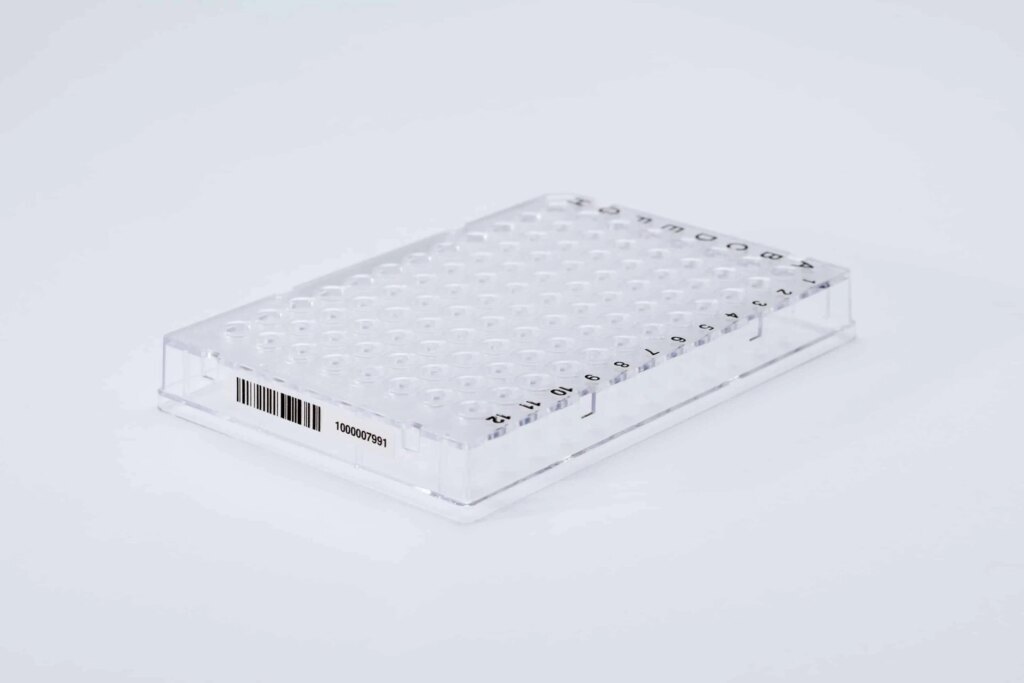
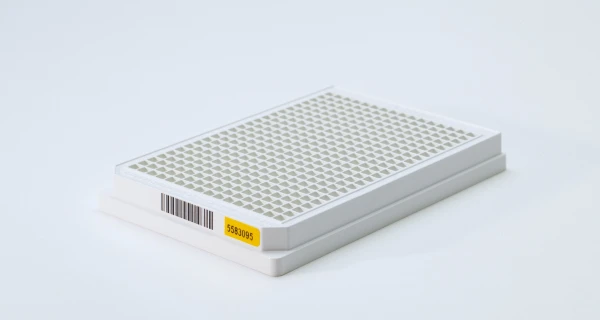
    Use pre-barcoded microplates for ready-to-use identification.

    Receive microplates with identifiers already applied, eliminating labeling steps during plate setup and processing. Ensure consistent, durable identification across assays, screening, and storage while reducing manual handling and improving workflow efficiency.

    Pre-barcoded microplates for ultimate laboratory efficiency.

    Pre-barcoded microplates arrive ready to use with verified identifiers applied before delivery. This approach removes labeling from your workflow and ensures consistent identification across plate handling, processing, and storage environments.

    laboratory efficiency

    Eliminate labeling steps during plate setup, loading, and processing workflows.

    consistent identification

    Use pre-verified plate IDs to maintain accuracy across batches and screening runs.

    integrated services

    Receive plates sorted, kitted, or prepared to match assay workflows and laboratory processes.

    Pre-barcoded microplates fit high-throughput environments where plates move rapidly through automated workflows and labeling can create delays or variability. This includes automated screening facilities, compound and plate libraries, and CROs running large-scale studies, as well as core labs managing shared plate resources where speed, consistency, and reduced handling drive efficiency and improve data integrity.

    Order pre-printed microplate labels with consistent accuracy.

    Get microplate labels professionally printed with controlled data, advanced converting, and durable materials. Ensure consistent plate identification across batches while eliminating in-house printing and reducing variability in labeling for assays, screening, and high-throughput workflows.

    Professionally printed custom microplate labels.

    Pre-printed plate labels combine controlled printing, advanced converting, and durable materials to deliver consistent, ready-to-use identification. This approach ensures every plate label meets requirements for data accuracy, layout consistency, and performance across handling and processing.

    unique ids

    Receive pre-printed plate labels with guaranteed unique IDs, controlled sequencing, and validated data across batches and runs.

    custom design

    Use color coding to differentiate assays, plate types, or workflows and improve visual organization across plate libraries.

    durable finishing

    Use engineered label constructions that resist chemicals, handling, and environmental exposure during plate processing and storage.

    Pre-printed labeling fits laboratories that run standardized plate workflows with fixed data structures. This includes screening labs running standardized assays, diagnostic labs processing consistent plate formats, and research environments where plate layouts and identifiers remain consistent across runs.

    Print microplate labels on demand with real-time data.

    Print microplate labels as needed using live data from laboratory systems. Generate labels during plate setup, sample loading, or assay preparation, with well IDs, plate IDs, and variable data applied at the point of use. This approach supports workflows where plate data changes frequently or requires immediate, accurate identification.

    A simple setup can integrate real-time labeling directly into your workflow.

    durable labels

    Blank plate labels designed for small formats, flat surfaces, and secure adhesion on plates.

    label printers

    Print high-resolution barcodes and text for plate IDs and sample tracking.

    compatible ribbons

    Thermal transfer ribbons produce durable images resistant to chemicals, moisture, and handling.

    microplate labelers

    Apply labels consistently to plates during setup or automated workflows.

    Print-on-demand labeling fits laboratories that generate or update plate data in real time. This includes screening labs, genomics workflows, and assay development environments where plates are created, modified, and labeled during processing, and where accurate, immediate identification is required.

    Print blood bag labels at collection points.

    Print blood bag labels as needed using live data from blood bank systems. Generate labels during collection, component processing, or labeling steps, with donation identification numbers, product codes, and variable data applied at the point of use. This approach supports workflows where blood data updates in real time and requires immediate, accurate identification.

    A simple setup can integrate real-time labeling directly into your workflow.

    Set up a complete labeling workflow using the right materials and equipment to print and apply labels directly during blood collection, component processing, and blood bank handling workflows.

    durable labels

    Start with blank label stock engineered for flexible PVC blood bags.

    label printers

    Print high-resolution barcodes and text for complex blood label layouts.

    compatible ribbons

    Use included thermal transfer ribbons to produce durable barcode labels.

    label software

    Integrate barcode software to generate ISBT 128 labels and DIN data.

    Print-on-demand labeling fits blood banks and collection centers that generate or update donation data in real time. This includes blood collection sites, processing labs, and transfusion services where blood bags are labeled on demand, and workflows require immediate, accurate identification without relying on pre-printed labels.

    Control blood bag labeling with pre-printed formats.

    Get blood bag labels professionally printed with controlled data, advanced converting, and durable materials. Eliminate in-house printing while ensuring every label meets performance requirements for blood bank use, including handling, cold storage, and transfusion.

    Guarantee no duplicates with professionally printed blood bag labels.

    Pre-printed labeling combines controlled printing, advanced converting, and durable materials to deliver consistent, ready-to-use blood bag labels. This approach removes variability from in-house printing and ensures every label meets requirements for DIN accuracy, barcode performance, and reliable identification across blood bank workflows.

    consistency at scale

    Receive pre-printed labels with guaranteed unique DIN sequences, controlled serialization, and validated data across batches and production runs.

    accurate din formats

    Maintain consistent DIN formats to ensure accurate identification across blood bags, segments, and associated components.

    durable finsihing

    Use engineered label constructions designed to resist edge lift, moisture, and routine handling, helping maintain adhesion and readability throughout blood collection.

    Pre-printed labeling fits blood banks and collection centers that manage high volumes of donations and require controlled, repeatable identification. This includes blood collection sites, processing facilities, and transfusion services where standardized labeling, consistent DIN assignment, and stable data support efficient, validated workflows without frequent changes.

    Support accurate workflows with real-time labeling.

    In laboratory environments, data often isn’t final until the last momentβ€”at the bench, at the instrument, or during sample handling. Printing labels on demand helps ensure each tube or vial reflects the most accurate information, while fitting naturally into the way your work actually happens.

    Support accurate workflows with real-time labeling.

    In laboratory environments, data often isn’t final until the last momentβ€”at the bench, at the instrument, or during sample handling. Printing labels on demand helps ensure each tube or vial reflects the most accurate information, while fitting naturally into the way your work actually happens.

    A simple setup can integrate real-time labeling directly into your workflow.

    In laboratory environments, data often isn’t final until the last momentβ€”at the bench, at the instrument, or during sample handling. Printing labels on demand helps ensure each tube or vial reflects the most accurate information, while fitting naturally into the way your work actually happens.

    compatible ribbons

    Compatible resin ribbons ensuring clear, durable print for barcodes and text

    compatible ribbons

    Compatible resin ribbons ensuring clear, durable print for barcodes and text

    In laboratory environments, data often isn’t final until the last momentβ€”at the bench, at the instrument, or during sample handling. Printing labels on demand helps ensure each tube or vial reflects the most accurate information, while fitting naturally into the way your work actually happens.

    Support accurate workflows with real-time labeling.

    In laboratory environments, data often isn’t final until the last momentβ€”at the bench, at the instrument, or during sample handling. Printing labels on demand helps ensure each tube or vial reflects the most accurate information, while fitting naturally into the way your work actually happens.

    A simple setup can integrate real-time labeling directly into your workflow.

    compatible ribbons

    Compatible resin ribbons ensuring clear, durable print for barcodes and text

    compatible ribbons

    Compatible resin ribbons ensuring clear, durable print for barcodes and text

    compatible ribbons

    Compatible resin ribbons ensuring clear, durable print for barcodes and text

    compatible ribbons

    Compatible resin ribbons ensuring clear, durable print for barcodes and text

    In laboratory environments, data often isn’t final until the last momentβ€”at the bench, at the instrument, or during sample handling. Printing labels on demand helps ensure each tube or vial reflects the most accurate information, while fitting naturally into the way your work actually happens.

    Support accurate workflows with real-time labeling.

    In laboratory environments, data often isn’t final until the last momentβ€”at the bench, at the instrument, or during sample handling. Printing labels on demand helps ensure each tube or vial reflects the most accurate information, while fitting naturally into the way your work actually happens.

    A simple setup can integrate real-time labeling directly into your workflow.

    In laboratory environments, data often isn’t final until the last momentβ€”at the bench, at the instrument, or during sample handling. Printing labels on demand helps ensure each tube or vial reflects the most accurate information, while fitting naturally into the way your work actually happens.

    durable labels

    Durable labels that stay attached through handling, storage, or cryogenic conditions

    compatible ribbons

    Compatible resin ribbons ensuring clear, durable print for barcodes and text

    reliable printer

    Compact, consistent, durable thermal transfer printing at the point of use

    label software

    Label management software to format labels and connect to sample data or LIMS

    In laboratory environments, data often isn’t final until the last momentβ€”at the bench, at the instrument, or during sample handling. Printing labels on demand helps ensure each tube or vial reflects the most accurate information, while fitting naturally into the way your work actually happens.

    Request a quote

    Take advantage of our volume discounts for bulk orders. Reach out to us for a personalized quote tailored to your needs.

    "*" indicates required fields

    This field is for validation purposes and should be left unchanged.