$0.00
0

How to Choose Labels for Cryogenic Biological Sample Storage

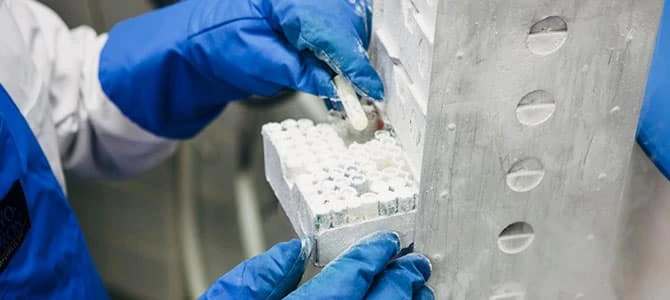
If your lab is utilizing cryogenic storage to preserve biological samples you might find that a reliable labeling solution can take some time and effort to find. Even when applied properly, many labels aren’t able to withstand the harsh conditions of the cryogenic storage environment. Even those that are engineered to stand up to extreme temperatures may have difficulty facing the harsh chemicals or storage time involved in your processes.

Using the wrong labels can lead to wasted time, effort, resources and budget when valuable samples are thrown away due to loss of identity. Computype has engineered thousands of cryogenic labels over the past 40+ years and has the knowledge and experience needed help make sure you are asking the right questions when searching for a great cryogenic label based on your individual needs.

Β 

1. Find the right marking technology

Special care must be taken when marking cryogenic samples for storage. Whether you’re marking your labware with traditional pressure-sensitive labels or a newer technology, you need to ensure your marking method is engineered to withstand your processes. The two most recommended options for cryogenic storage include pressure-sensitive cryo labels and direct mark technologies. Both options can be resilient enough to withstand cryogenic storage but have features that make them best suited for different practices.

Pressure sensitive

Pressure-sensitive is essentially a more sophisticated way of saying sticky labels, which is the most commonly used marking technology for barcodes. Pressure-sensitive labels are popular for a number of reasons, including their ability to be printed in-house, application variety and time tested convenience.

Pressure-sensitive labels have been engineered to suit a wide variety of special applications including cryogenic storage. Cryogenic specific pressure-sensitive labels use special substrates, adhesives and inks to ensure all three stay intact through extended cold temperature storage.

A wide range of cryogenic labels are available with different adjustments made to withstand different storage periods, temperature ranges and chemical exposures. The more resilient the labels are the more engineering they require, typically leading to higher prices in specially engineered labels. The higher cost is no cause for alarm however, since engineered for purpose labels can offer a lot of value to the labs they cater to.

For example, here at Computype we offer a special engineered cryo label with a clear wraparound tab that is engineered to withstand temperatures as low as -196 degrees Celsius, direct and vapor liquid nitrogen exposure and multiple freeze and thaw cycles. For labs who store their samples at -80 degrees for 5 years at a time with minimal freeze and thaw cycles, there might be more value in investing in a cryogenic label with less features for a lower cost, but labs that do store samples at -196 degrees Celsius and frequently freeze and thaw them for testing might find a lot of value in ensuring their samples integrity with wraparound technology.

Direct mark

One thing that’s often overlooked when it comes to choosing marking methods in general, is that there are options outside of traditional pressure-sensitive labels! In fact, the marking technology known as direct mark, isn’t a label at all, but a process that applies necessary markings directly to your tube or vial.

Direct Mark uses special inks and curing processes or laser etching to place barcodes and other markings directly on the sample container. Without the need for adhesives it provides an extremely durable, chemical and fade resistant mark that can be applied to both glass and plastic containers. Since specialized equipment is necessary for this type of container marking it’s typically only offered as part of an outsourcing program, here at Computype we offer direct mark through our Ready Labware Services program.

When it comes to ensuring the lifespan of your marking technology through cryogenic conditions Direct Mark is the most reliable choice, however it’s not reasonable for all labs. Since Direct Mark is an outsource only option, labs that require variable information on-demand would want to stick to a pressure sensitive option they can print and prepare in house.

2. Find the right print technology

Not only do you need to ensure your label will remain attached to the container, but that your markings will remain attached to the label (unless you’re working with Direct Mark!). This is why the print technology is just as important as the vehicle that attaches your printed markings to the container. Let’s take a look at five popular label printing methods and how they stack up.

Written

Many labs continue to use permanent pens to handwrite information onto cryogenic labels, or directly onto the container itself. Though this may be a viable option in certain cases, it is the most time intensive and least chemical resistant printing option. In addition to this method being time consuming we avoid recommending it because it’s not engineered to withstand temperatures as low as -196 degrees C and there is also potential for information to be recorded illegibly. There are simply too many risks involved in handwriting labels for us to recommend this method to any lab.

Direct thermal

Direct thermal print technology involves heat and labels made from heat activated papers or films. The print head heats up in specific areas so as the label passes beneath, the desired information will appear on the label. Direct thermal labels are only affected by heat, not cold so they are a practical option for cryogenic storage, however they are affected by friction and extended exposure to light. If your samples will face any high temperatures, extended light exposure or scratching risks (robotic grippers!) you may want to consider a different print technology.

Laser imaging

Known for its extremely high image quality, laser imaging uses heat and pressure to bond toner powders to paper surfaces. Although laser imaging can provide extremely high quality print imaging you should know that your label options are limited.

Most laser printers are designed to print on sheets rather than rolls, meaning if you often print labels one at a time or in very small quantities you may end up wasting blank labels. Additionally, laser printing isn’t accommodating to all adhesive types. Some adhesives will ooze under the extreme heat and pressure involved in the laser printing process leading to printer damage and/or poor sample integrity. Lastly, labels intended for laser printers are most often made from paper which changes structurally after extended frost exposure and may not stand up to certain lab chemicals. In other words, if you intend on printing in small batches or keeping your samples in cryo strorage for an extended time period, laser is probably not an ideal print option.

Inkjet

Inkjet printers spray ink onto porous label surfaces where it is absorbed. These printers can accommodate a variety of colors while providing fairly high print quality making them a good option when logos or branding information is desired. Inkjet, similar to laser, is limited in materials. Most inkjet labels are paper or similarly porous materials since it’s most responsive to the liquid ink. They also tend to come in sheets rather than rollsβ€”however Epson does offer one at a time inkjet cryo-label printing. Lastly, this print technology is both the slowest and most expensive option. If branding and quantity are important factors in your processes inkjet labels may be a good match, however if speed and label materials are important to you, a different option may serve you better.

Thermal transfer

Thermal transfer printers also employ a heated print head similar to direct thermal print, but rather than utilizing heat reactive labels, the markings are applied to the labels with ink ribbons. Both the labels and the ink ribbon run beneath the print head simultaneously as the print head heats up and presses down on both the label and the ribbon.

As the print head heats the ribbon the ink is stamped onto the label, permanently bonding it to the label. This method of printing creates an extremely durable, clear and resilient image when the right ribbon and label material are matched, which is why we recommend this print technology above all others.

Thermal transfer print technology has been around for a long time and has a history in the medical, and other harsh environment industries. Due to the history of thermal transfer print technologies in healthcare and harsh environment applications, thermal transfer has the widest variety of ink and stock material options to accommodate all sorts of lab practices and exposures including cryogenic storage.

Our recommendations…

The print technology you choose to implement in your lab depends entirely on your processes and application, but we will admit that here at Computype we are a bit biased. When it comes to pressure sensitive labels we only offer thermal transfer print technology because it is the most reliable in harsh environments and most accommodating to label materials. Thermal transfer print technology is also known to provide extremely high quality fine edge barcodes. When the right ink ribbon is matched with the best label material for your practices you can ensure thermal transfer printed labels will stand up to your cryogenic storage and chemical exposures.

Additionally, direct mark is a print technology on its own, printing directly onto the sample container. Direct mark printing is what we recommend to cryo labs whose samples are too valuable, or storage and processing practices are too harsh for pressure sensitive labels. We also recommend direct mark when branding or color coding is important since this print technology can accommodate color.

3. Consider your internal variables

Every lab has their own way of doing things, so it’s important to discuss your processes with your label supplier so you can work together to find a cryo label that will suit your lab. Everything from the containers you use to the amount of time you store your samples will affect which solutions best suit your practices.

Container type

Containers come in a variety of shapes, sizes and materials, all of these need to be kept in mind when choosing your cryo labels.

Although many marking technologies are capable of being applied to glass, glass containers can rarely withstand cryogenic conditions making it necessary that you choose a marking technology that’s compatible with both plastic containers and cryogenic conditions.

The size and shape of your container will affect your choices as well. With basic tubes and vials it’s very important to consider the diameter of your vials, not only to ensure you’re taking advantage of the available surface area, but also because many cryogenic labels use wraparound laminates. Cryogenic labels with wraparound laminates have a clear laminate that extends beyond the label and wraps around the tube, covering the label with a protective layer. Wraparound labels are particularly useful in cryo applications because of the harsh conditions and exposures.

Non-traditional container shapes also need special attention, especially conical tubes and vials. There are labels designed specifically to align with the curvature of conical tubes, but depending on your processes and needs you may want to look into a custom marking solution.

Processing time

The amount of time you are storing your labware is something else to keep in mind when it comes to Β selecting a cryo label. The longer your samples are kept, the more likely your labels are to fall off. This is because the cold temperatures degrade the adhesive. So, the longer you plan on storing your samples the more important it is you choose a label that can hold up for an extended period of time.

Direct Mark is strongly recommended in situations where samples are stored for extended periods of time because the lack of adhesive keeps the barcode attached to the container no matter how long it’s stored.

Exposure

When choosing cryo labels always consider every exposure your samples may encounter. The most common exposures to consider are temperature and chemicals.

Obviously cold temperatures are involved in cryogenic sample storage, but it’s important to consider how cold your freezers are when choosing labels. Some marking strategies are only able to withstand temperatures as low as -80 degrees Celsius and others are able to handle temperatures as cold as -196 degrees Celsius. Some can face direct exposure to liquid nitrogen and others can’t. Take a look at your freezing processes and narrow down your marking options from there based on their ability to withstand your processes.

In addition to cold temperatures your samples are likely to come into contact with chemicals during testing. Most cryo labels can withstand common lab chemicals but you should always let your label supplier know which chemicals are involved in your processes.

Freeze and thaw cycles

As your samples move in and out of storage and testing they will go through freeze and thaw cycles. Throughout the process of freezing and thawing labels will shrink and stretch, affecting their ability to adhere to the surface and sometimes the quality of the print on the label. If it’s common for your samples to undergo repeated freeze and thaw cycles you will need to find a label that can maintain integrity through those processes. If you choose to go with pressure sensitive labels look for ones that can withstand temperatures as low as -196 degrees or consider Direct Mark, as it is unaffected by repeated freezing and thawing.

Variable information

If your processes require variable information to be printed out on the spot you will be limited to using pressure sensitive labels. As previously mentioned, there are a wide variety of pressure sensitive labels special engineered to endure all kinds of cryogenic conditions and testing processes so you should be able to find a trustworthy label no problem despite not having access to direct mark technology. You will just need to ensure you and your lab technicians are following best practices during application to maximize the lifespan and integrity of your sample identification.

By asking your supplier the right questions, you will be able to choose the right cryo labels for your needs. When choosing cryo labels keep in mind the marking technology, print technology and your processes to make sure you are asking the right questions and finding the best solutions. Additionally, by following best practices with your labels you can ensure your sample integrity and improve efficiencies. Wondering where you can find reputable cryogenic labels? Check out our blog post outlining the top cryo label suppliers.

0
    0
    Your Cart
    Your cart is emptyReturn to Shop

    High-impact belt branding with pre-printed films.

    Pre-printed belt marking films deliver bold, consistent branding and high-resolution graphics across repeat manufacturing applications. These solutions support detailed imagery, precise color matching, and uniform visual presentation for product lines requiring fixed branding, standardized identification, and elevated product appearance.

    Professionally printed high-resolution rubber belt branding films.

    Pre-printed belt marking films support more detailed and visually controlled designs than standard ribbon-based marking systems. These solutions enable complex graphics, consistent color reproduction, and elevated product presentation across repeat manufacturing applications.

    photorealistic graphics

    High-resolution printing supports detailed imagery, gradients, and complex visual elements beyond the capabilities of standard ribbon-based marking systems

    custom color matching

    Match specific brand colors and visual standards across belt product lines, packaging systems, and broader manufacturing identification programs

    consistent production

    Pre-printed films maintain uniform logos, layouts, and visual presentation across large production volumes and repeat manufacturing applications

    Pre-printed films are commonly used for permanent logos, product branding, belt sizes, standardized identifiers, and highly detailed visual designs. Advanced printing capabilities support precise color control, sharp graphic definition, and complex imagery that extends beyond standard ribbon-based marking.

    Print belt marking films with critical production data.

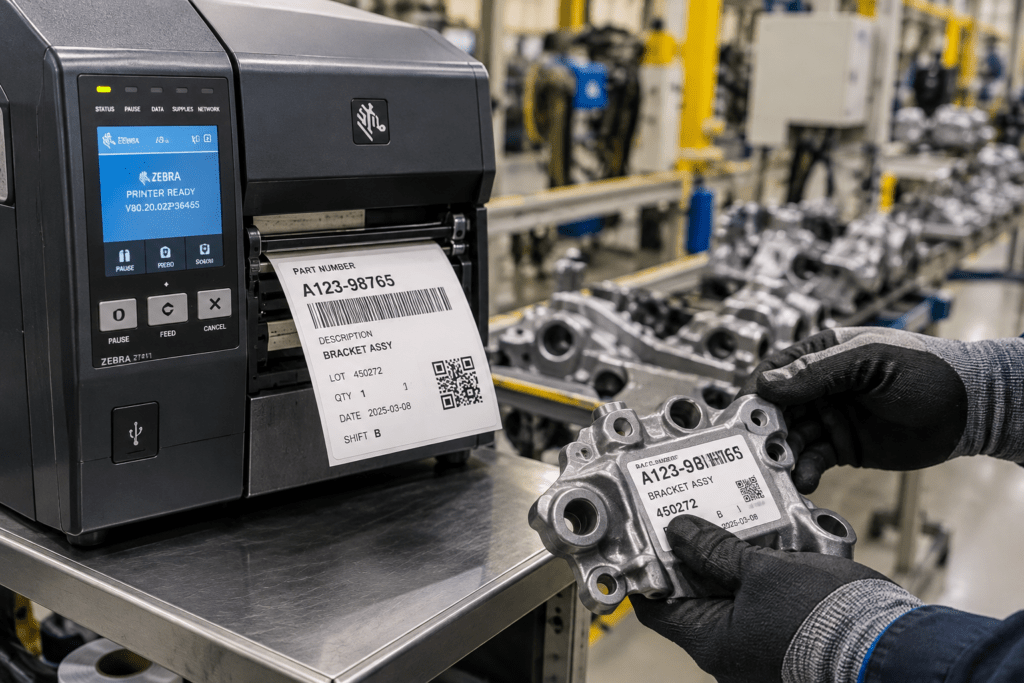
    Print-on-demand belt marking gives manufacturers the flexibility to apply critical production data directly within active manufacturing workflows. These systems support information that cannot be predefined, including slab location codes, manufacturer dates, lot information, production identifiers, and changing product data across belt runs and manufacturing environments.

    A simple setup can integrate real-time labeling directly into your workflow.

    durable films

    Start with blank transfer films engineered for durable rubber belt marking.

    label software

    Create belt marking formats using label design and barcode software.

    compatible ribbons

    Use included thermal transfer ribbons to produce durable vibrant labels.

    industrial printers

    Use an industrial thermal transfer printer engineered for high duty cycles.

    Print-on-demand systems are designed for manufacturing environments where belt information changes continuously throughout production. Rather than relying on fixed inventory or pre-printed stock, these systems support dynamic marking requirements tied to production scheduling, traceability, and operational control.

    Reduce operational complexity with pre-printed labels.

    Use pre-printed warehouse labels to apply location IDs, pallet labels, and sequential label sets without managing printing in-house. This path works best when your data is defined and your warehouse layout follows a structured system.

    A simple setup can integrate real-time labeling directly into your workflow.

    Plan your labeling system in advance, then receive labels ready to apply across your warehouse. This approach shifts the work from daily printing to upfront setup and production.

    consistency at scale

    Apply the same label formats, barcodes, and ID structures across racks, pallets, and storage locations without variation.

    efficient operations

    Eliminate the need for printers, ribbons, software, and label inventory by using labels that arrive ready to apply and scan.

    sequence management

    Use sequential beam labels and serialized label sets to maintain ordered location IDs and guarantee no duplicates.

    Use pre-printed labels when your warehouse layout is defined, your location IDs are established, and you need consistent labeling across large areas or multiple facilities. This approach supports structured storage systems, standardized pallet tracking, and efficient label rollout.

    Print labels when inventory data changes in real time.

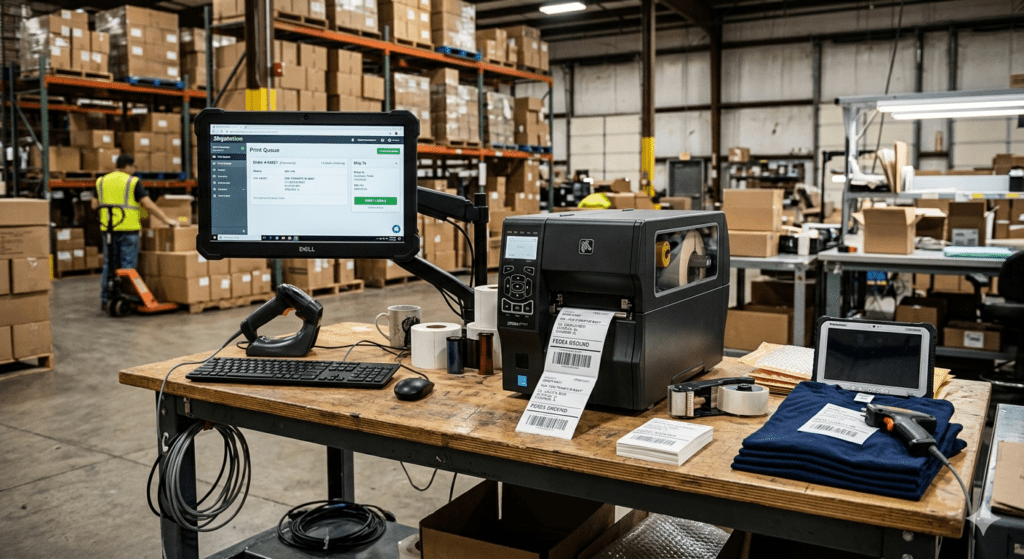
    Print warehouse labels in-house to create location IDs, pallet labels, and LPN labels as your warehouse changes. This path gives you direct control over how labels are created, updated, and applied across racks, bins, totes, and pallets.

    A simple setup can integrate real-time labeling directly into your workflow.

    durable labels

    Start with blank label stock engineered for racks, bins, totes, and pallets.

    label software

    Create warehouse label formats using label design and barcode software.

    compatible ribbons

    Use included thermal transfer ribbons to produce durable barcode labels.

    label printers

    Use a thermal transfer printer designed for warehouse label printing and daily use.

    Use print-on-demand labels when your warehouse layout changes, your team manages location IDs internally, or you need labels immediately without waiting on production. This approach supports flexible workflows, evolving storage systems, and real-time pallet and container tracking.

    Receive pre-barcoded tubes immediately ready-to-use.

    Receive tubes and vials with identifiers already applied through direct marking or integrated labeling. Eliminate labeling steps entirely while ensuring durable, consistent identification across storage, handling, and laboratory workflows.

    Pre-barcoded tubes for extreme durability and precision placement.

    Pre-barcoded labware removes labeling from your workflow entirely. Tubes arrive ready to use with verified identifiers, supporting faster processing, reduced handling, and consistent sample identification across storage and laboratory operations.

    consistency at scale

    Use pre-verified barcodes and markings to ensure consistent, accurate sample identification across all tubes and batches.

    efficient lab management

    Eliminate labeling steps and reduce manual handling during sample collection, processing, and storage workflows.

    labware prepβ„’ services

    Receive labware sorted, packaged, and prepared to match your workflow, including options like tare weighing and kit assembly.

    Pre-barcoded labware fits high-throughput environments where labeling becomes a bottleneck or source of error. This includes biobanks managing large sample collections, clinical labs processing high volumes of patient samples, and research or CRO environments running automated or repeatable workflows where speed, consistency, and reduced handling drive efficiency and data integrity.

    Order pre-printed tube labels for guaranteed accuracy.

    Get tube labels professionally printed with controlled data, advanced converting, and durable materials. Eliminate in-house printing while ensuring every label meets performance requirements for laboratory use, including chemical exposure, handling, and storage conditions.

    Professionally printed laboratory tube labels for custom, sequential labels.

    Pre-printed labeling combines controlled printing, advanced converting, and durable materials to deliver consistent, ready-to-use tube labels. This approach removes variability from in-house printing and ensures every label meets your requirements for data accuracy and performance.

    unique ids

    Receive pre-printed labels with guaranteed unique barcode sequences, controlled serialization, and validated data across batches and production runs.

    custom design

    Use custom colors to organize samples, differentiate workflows, and improve visual identification across racks, boxes, and storage systems.

    durable finishing

    Use engineered label constructions with precoats and topcoats that improve resistance to chemicals, moisture, and routine laboratory handling.

    Pre-printed labeling fits laboratories that manage high volumes of consistent samples and require controlled, repeatable identification. This includes clinical labs processing patient samples, diagnostic labs running standardized assays, and research labs preparing large batches of tubes for studies or long-term storage where data does not change.

    Print tube labels on demand with real-time data.

    Print tube labels as needed using live data from laboratory systems. Generate labels during sample collection, aliquoting, or processing, with unique identifiers, timestamps, and variable data applied at the point of use. This approach supports workflows where sample data changes frequently or requires immediate, accurate identification.

    A simple setup can integrate real-time labeling directly into your workflow.

    Set up a complete labeling workflow using the right materials and equipment to print and apply labels directly during laboratory processes.

    durable labels

    Start with blank label stock engineered for small diameter tubes and vials.

    label printers

    Print high-resolution barcodes and text for small-format tube labels.

    compatible ribbons

    Use included thermal transfer ribbons to produce durable barcode labels.

    tube labelers

    Integrate tube label applicators for automated print-and-apply labeling.

    Print-on-demand labeling fits laboratories that generate or modify sample data in real time. This includes research labs, clinical labs, and diagnostic environments where samples are collected, processed, and labeled on demand, and where workflows require immediate identification without waiting for pre-printed labels.

    Use pre-barcoded microplates for ready-to-use identification.

    Receive microplates with identifiers already applied, eliminating labeling steps during plate setup and processing. Ensure consistent, durable identification across assays, screening, and storage while reducing manual handling and improving workflow efficiency.

    Pre-barcoded microplates for ultimate laboratory efficiency.

    Pre-barcoded microplates arrive ready to use with verified identifiers applied before delivery. This approach removes labeling from your workflow and ensures consistent identification across plate handling, processing, and storage environments.

    laboratory efficiency

    Eliminate labeling steps during plate setup, loading, and processing workflows.

    consistent identification

    Use pre-verified plate IDs to maintain accuracy across batches and screening runs.

    integrated services

    Receive plates sorted, kitted, or prepared to match assay workflows and laboratory processes.

    Pre-barcoded microplates fit high-throughput environments where plates move rapidly through automated workflows and labeling can create delays or variability. This includes automated screening facilities, compound and plate libraries, and CROs running large-scale studies, as well as core labs managing shared plate resources where speed, consistency, and reduced handling drive efficiency and improve data integrity.

    Order pre-printed microplate labels with consistent accuracy.

    Get microplate labels professionally printed with controlled data, advanced converting, and durable materials. Ensure consistent plate identification across batches while eliminating in-house printing and reducing variability in labeling for assays, screening, and high-throughput workflows.

    Professionally printed custom microplate labels.

    Pre-printed plate labels combine controlled printing, advanced converting, and durable materials to deliver consistent, ready-to-use identification. This approach ensures every plate label meets requirements for data accuracy, layout consistency, and performance across handling and processing.

    unique ids

    Receive pre-printed plate labels with guaranteed unique IDs, controlled sequencing, and validated data across batches and runs.

    custom design

    Use color coding to differentiate assays, plate types, or workflows and improve visual organization across plate libraries.

    durable finishing

    Use engineered label constructions that resist chemicals, handling, and environmental exposure during plate processing and storage.

    Pre-printed labeling fits laboratories that run standardized plate workflows with fixed data structures. This includes screening labs running standardized assays, diagnostic labs processing consistent plate formats, and research environments where plate layouts and identifiers remain consistent across runs.

    Print microplate labels on demand with real-time data.

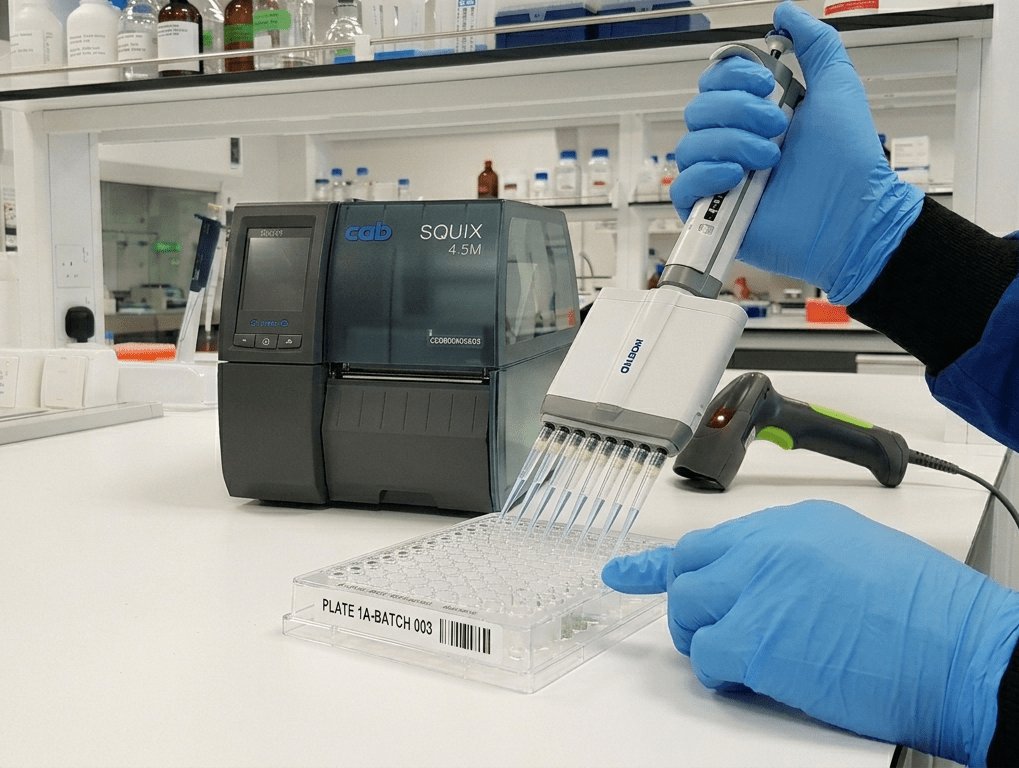
    Print microplate labels as needed using live data from laboratory systems. Generate labels during plate setup, sample loading, or assay preparation, with well IDs, plate IDs, and variable data applied at the point of use. This approach supports workflows where plate data changes frequently or requires immediate, accurate identification.

    A simple setup can integrate real-time labeling directly into your workflow.

    durable labels

    Blank plate labels designed for small formats, flat surfaces, and secure adhesion on plates.

    label printers

    Print high-resolution barcodes and text for plate IDs and sample tracking.

    compatible ribbons

    Thermal transfer ribbons produce durable images resistant to chemicals, moisture, and handling.

    microplate labelers

    Apply labels consistently to plates during setup or automated workflows.

    Print-on-demand labeling fits laboratories that generate or update plate data in real time. This includes screening labs, genomics workflows, and assay development environments where plates are created, modified, and labeled during processing, and where accurate, immediate identification is required.

    Print blood bag labels at collection points.

    Print blood bag labels as needed using live data from blood bank systems. Generate labels during collection, component processing, or labeling steps, with donation identification numbers, product codes, and variable data applied at the point of use. This approach supports workflows where blood data updates in real time and requires immediate, accurate identification.

    A simple setup can integrate real-time labeling directly into your workflow.

    Set up a complete labeling workflow using the right materials and equipment to print and apply labels directly during blood collection, component processing, and blood bank handling workflows.

    durable labels

    Start with blank label stock engineered for flexible PVC blood bags.

    label printers

    Print high-resolution barcodes and text for complex blood label layouts.

    compatible ribbons

    Use included thermal transfer ribbons to produce durable barcode labels.

    label software

    Integrate barcode software to generate ISBT 128 labels and DIN data.

    Print-on-demand labeling fits blood banks and collection centers that generate or update donation data in real time. This includes blood collection sites, processing labs, and transfusion services where blood bags are labeled on demand, and workflows require immediate, accurate identification without relying on pre-printed labels.

    Control blood bag labeling with pre-printed formats.

    Get blood bag labels professionally printed with controlled data, advanced converting, and durable materials. Eliminate in-house printing while ensuring every label meets performance requirements for blood bank use, including handling, cold storage, and transfusion.

    Guarantee no duplicates with professionally printed blood bag labels.

    Pre-printed labeling combines controlled printing, advanced converting, and durable materials to deliver consistent, ready-to-use blood bag labels. This approach removes variability from in-house printing and ensures every label meets requirements for DIN accuracy, barcode performance, and reliable identification across blood bank workflows.

    consistency at scale

    Receive pre-printed labels with guaranteed unique DIN sequences, controlled serialization, and validated data across batches and production runs.

    accurate din formats

    Maintain consistent DIN formats to ensure accurate identification across blood bags, segments, and associated components.

    durable finsihing

    Use engineered label constructions designed to resist edge lift, moisture, and routine handling, helping maintain adhesion and readability throughout blood collection.

    Pre-printed labeling fits blood banks and collection centers that manage high volumes of donations and require controlled, repeatable identification. This includes blood collection sites, processing facilities, and transfusion services where standardized labeling, consistent DIN assignment, and stable data support efficient, validated workflows without frequent changes.

    Support accurate workflows with real-time labeling.

    In laboratory environments, data often isn’t final until the last momentβ€”at the bench, at the instrument, or during sample handling. Printing labels on demand helps ensure each tube or vial reflects the most accurate information, while fitting naturally into the way your work actually happens.

    Support accurate workflows with real-time labeling.

    In laboratory environments, data often isn’t final until the last momentβ€”at the bench, at the instrument, or during sample handling. Printing labels on demand helps ensure each tube or vial reflects the most accurate information, while fitting naturally into the way your work actually happens.

    A simple setup can integrate real-time labeling directly into your workflow.

    In laboratory environments, data often isn’t final until the last momentβ€”at the bench, at the instrument, or during sample handling. Printing labels on demand helps ensure each tube or vial reflects the most accurate information, while fitting naturally into the way your work actually happens.

    compatible ribbons

    Compatible resin ribbons ensuring clear, durable print for barcodes and text

    compatible ribbons

    Compatible resin ribbons ensuring clear, durable print for barcodes and text

    In laboratory environments, data often isn’t final until the last momentβ€”at the bench, at the instrument, or during sample handling. Printing labels on demand helps ensure each tube or vial reflects the most accurate information, while fitting naturally into the way your work actually happens.

    Support accurate workflows with real-time labeling.

    In laboratory environments, data often isn’t final until the last momentβ€”at the bench, at the instrument, or during sample handling. Printing labels on demand helps ensure each tube or vial reflects the most accurate information, while fitting naturally into the way your work actually happens.

    A simple setup can integrate real-time labeling directly into your workflow.

    compatible ribbons

    Compatible resin ribbons ensuring clear, durable print for barcodes and text

    compatible ribbons

    Compatible resin ribbons ensuring clear, durable print for barcodes and text

    compatible ribbons

    Compatible resin ribbons ensuring clear, durable print for barcodes and text

    compatible ribbons

    Compatible resin ribbons ensuring clear, durable print for barcodes and text

    In laboratory environments, data often isn’t final until the last momentβ€”at the bench, at the instrument, or during sample handling. Printing labels on demand helps ensure each tube or vial reflects the most accurate information, while fitting naturally into the way your work actually happens.

    Support accurate workflows with real-time labeling.

    In laboratory environments, data often isn’t final until the last momentβ€”at the bench, at the instrument, or during sample handling. Printing labels on demand helps ensure each tube or vial reflects the most accurate information, while fitting naturally into the way your work actually happens.

    A simple setup can integrate real-time labeling directly into your workflow.

    In laboratory environments, data often isn’t final until the last momentβ€”at the bench, at the instrument, or during sample handling. Printing labels on demand helps ensure each tube or vial reflects the most accurate information, while fitting naturally into the way your work actually happens.

    durable labels

    Durable labels that stay attached through handling, storage, or cryogenic conditions

    compatible ribbons

    Compatible resin ribbons ensuring clear, durable print for barcodes and text

    reliable printer

    Compact, consistent, durable thermal transfer printing at the point of use

    label software

    Label management software to format labels and connect to sample data or LIMS

    In laboratory environments, data often isn’t final until the last momentβ€”at the bench, at the instrument, or during sample handling. Printing labels on demand helps ensure each tube or vial reflects the most accurate information, while fitting naturally into the way your work actually happens.

    Request a quote

    Take advantage of our volume discounts for bulk orders. Reach out to us for a personalized quote tailored to your needs.

    "*" indicates required fields

    This field is for validation purposes and should be left unchanged.